Artwork
A Venetian Squero or Boatyard
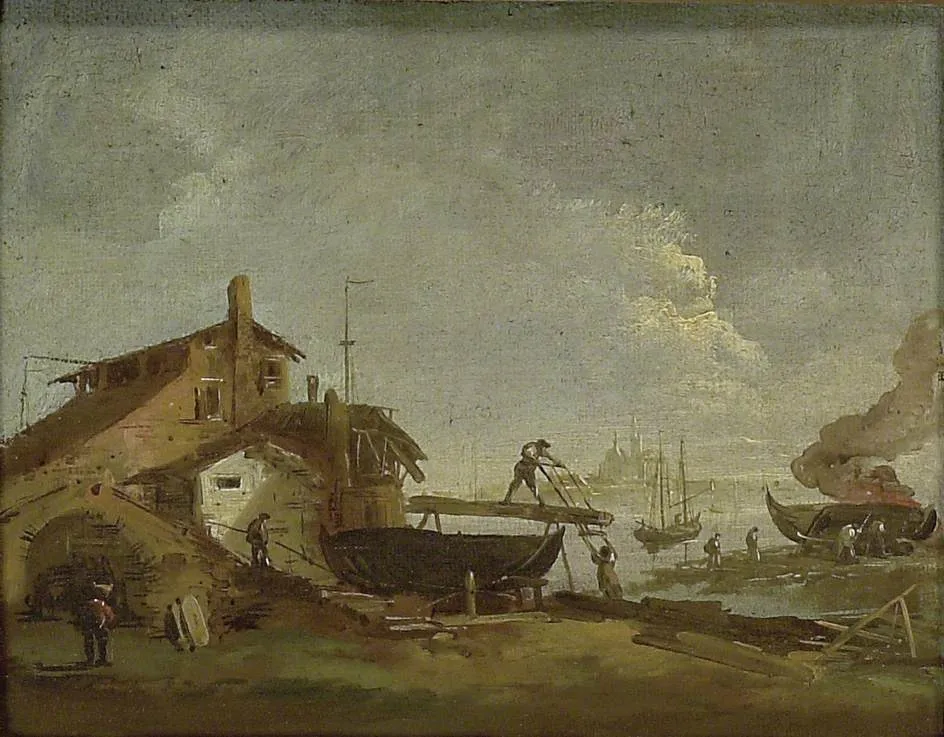
A Venetian Squero or Boatyard is an oil painting by Francesco Guardi. It dates from 1762 and is held in the collection of the Ashmolean Museum.
About this work
Overview
A Venetian Squero or Boatyard is an oil painting created by Francesco Guardi around 1762, depicting a serene Venetian boatyard scene with figures, architecture, and water, characterized by a soft, cloudy grey sky.
Subject & Meaning
The painting captures a tranquil moment in a Venetian boatyard, focusing on everyday activities of men amidst the yard's structures and adjacent water body, conveying a sense of calm industry.
Technique & Style
Guardi employed a fluid, expressive oil painting technique, distinct from Canaletto's influence, utilizing chiaroscuro to create depth and texture through the interplay of soft light and shadow across the scene.
History & Provenance
Painted after 1760, following the death of Guardi's brother Gian Antonio, this work marks a shift in Guardi's style from religious themes to vedute, now part of the Ashmolean Museum's collection.
Context
Emerging from the Venetian School tradition, the painting reflects Guardi's noble background and his family's artistic lineage, alongside his brothers, within 18th-century Venetian art.
Legacy
While the painting's direct legacy is not explicitly outlined in provided sources, as a piece by Guardi, it contributes to the broader appreciation of Venetian vedute and the evolution of landscape painting techniques in the 18th century.
Artist & collection

Artist
Francesco Lazzaro Guardi (Italian pronunciation: ; 5 October 1712 – 1 January 1793) was an Italian painter, nobleman, and a member of the Venetian School.



 Juvenile Shrimpers, Deal
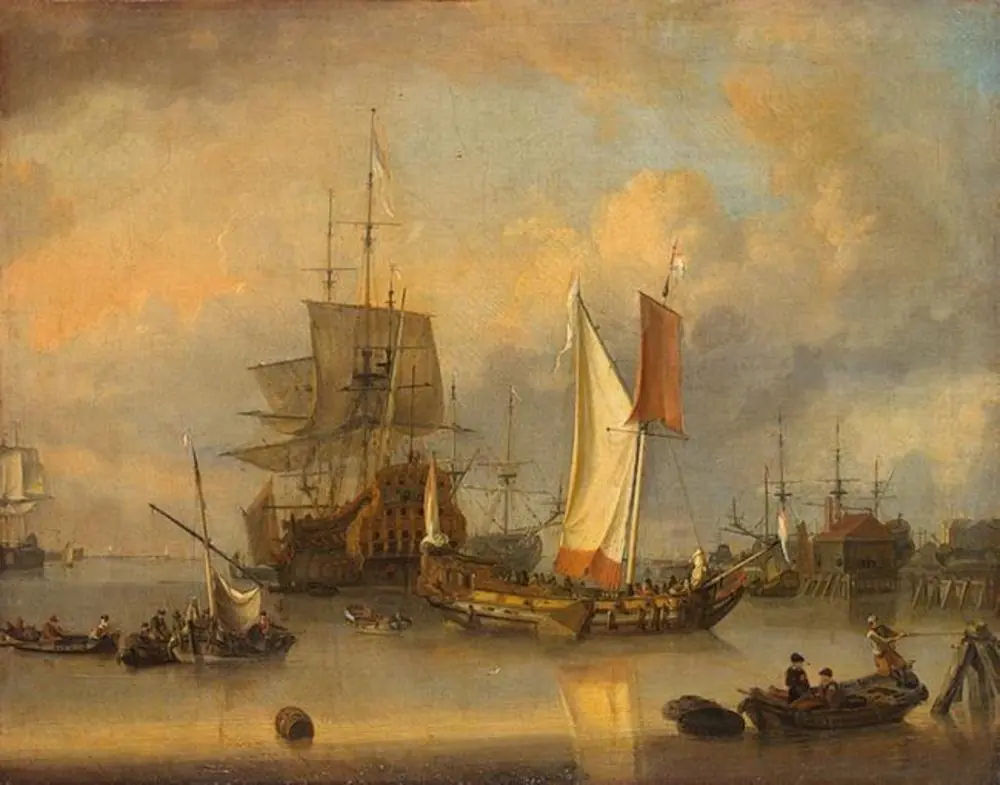 Ships at Sea in Calm Weather
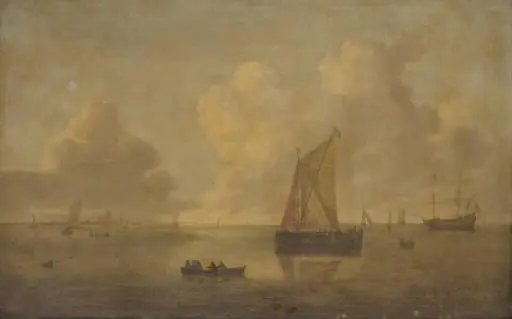 Seascape with a Town in the Background
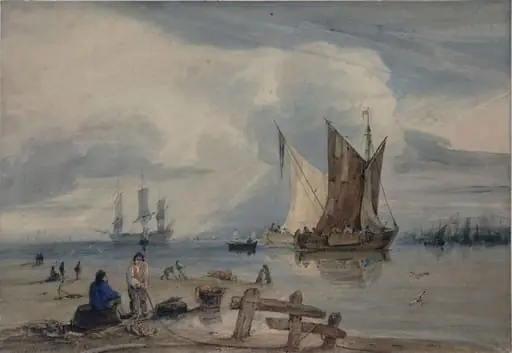 Shipping in a calm, with fishermen on the beach
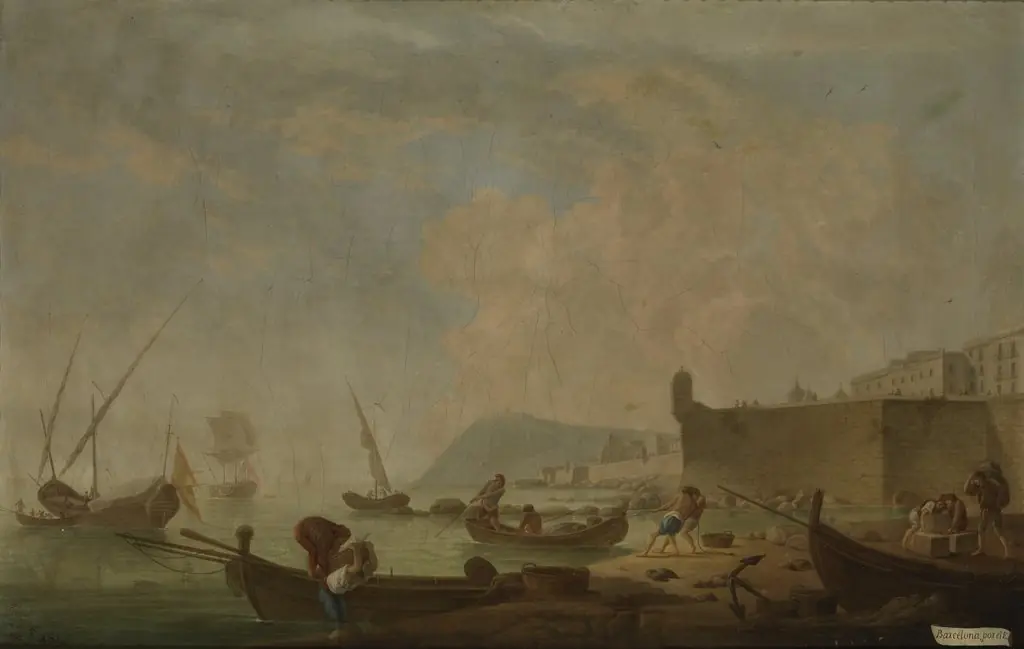 Vista de Barcelona por el Este
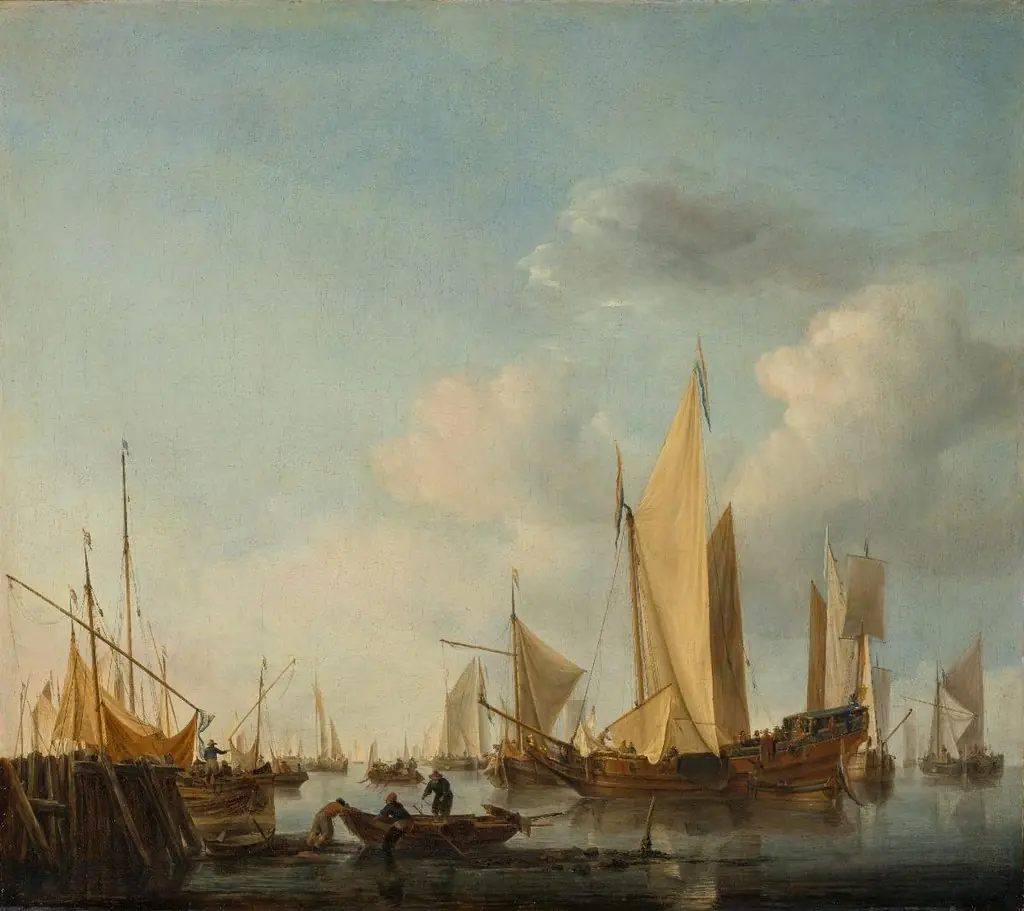 Ruhige See. Eine Staatsjacht, Segelschiffe und Fischerboote vor der Küste
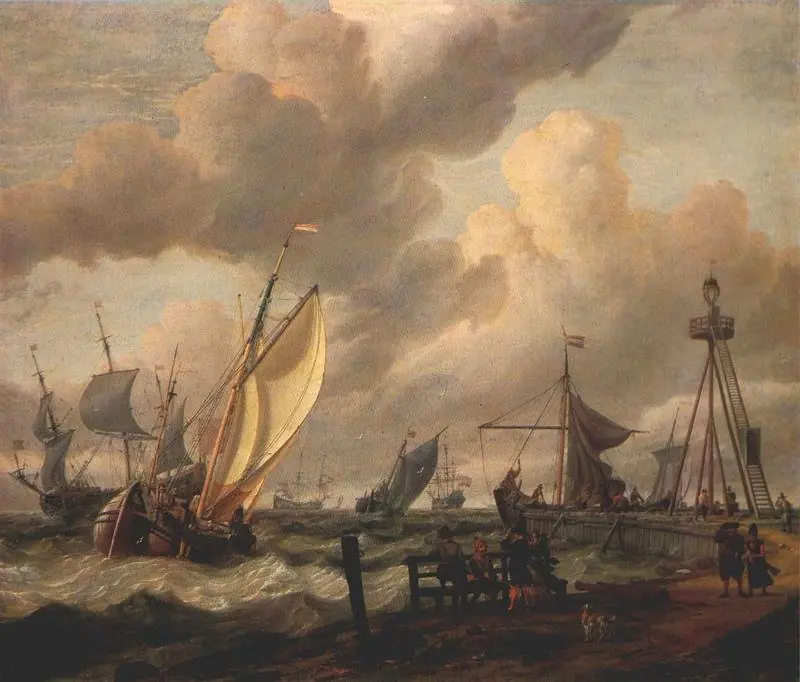 Shipping
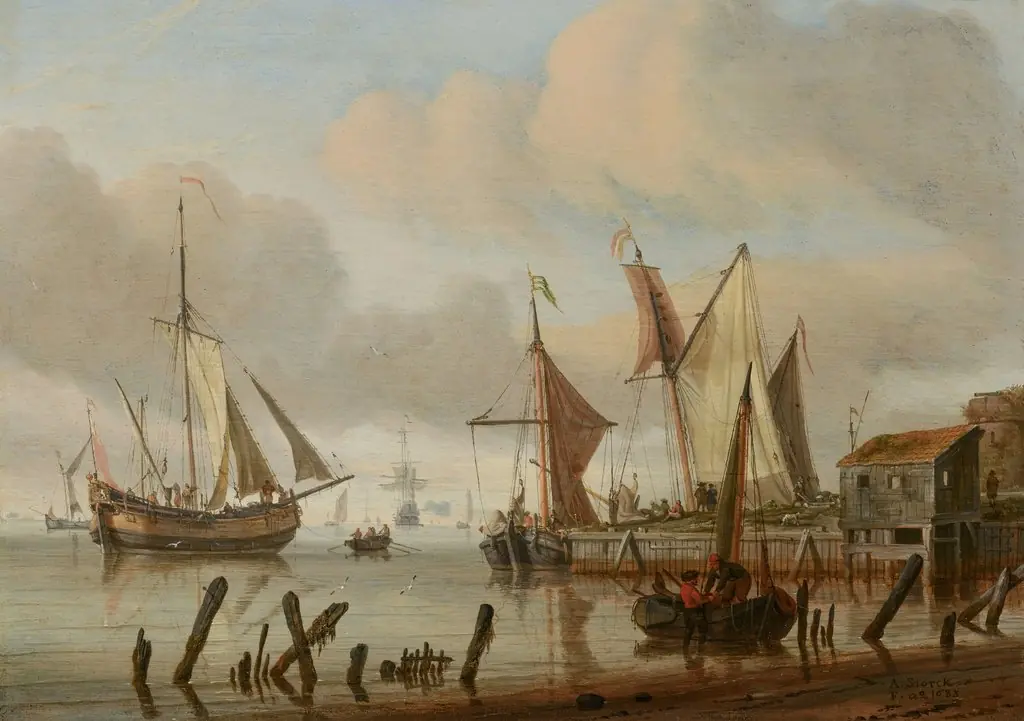 Boats at a Mooring Place
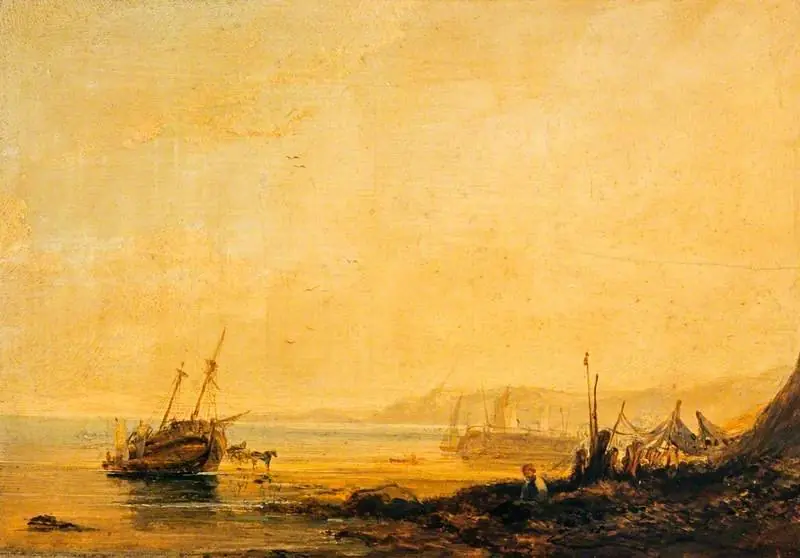 On the East Coast
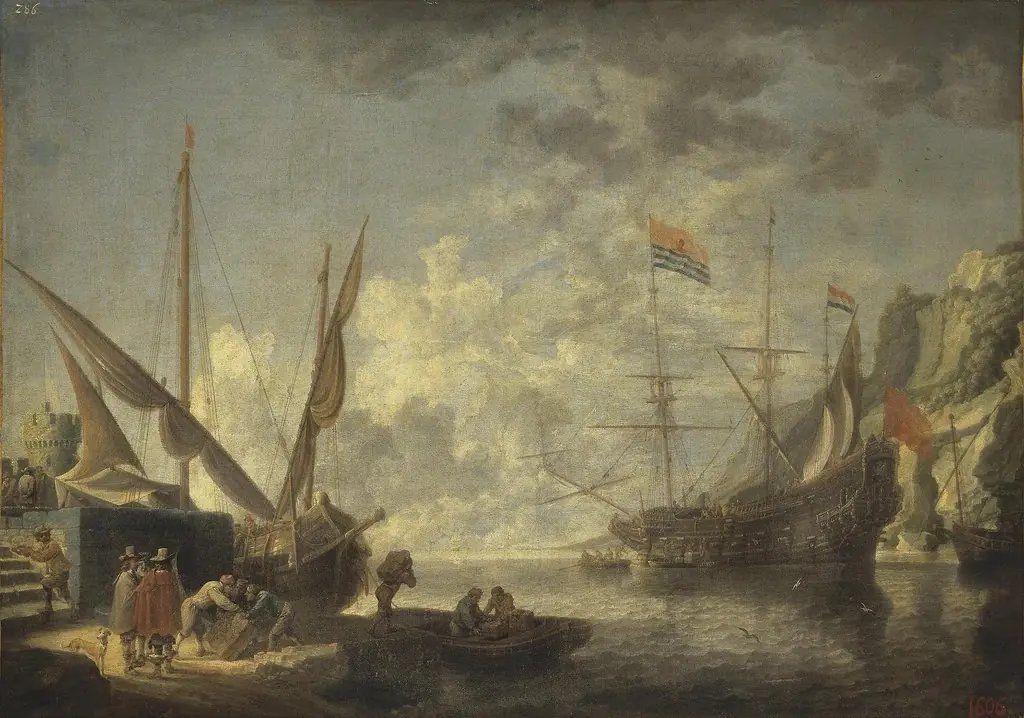 Sea Harbour
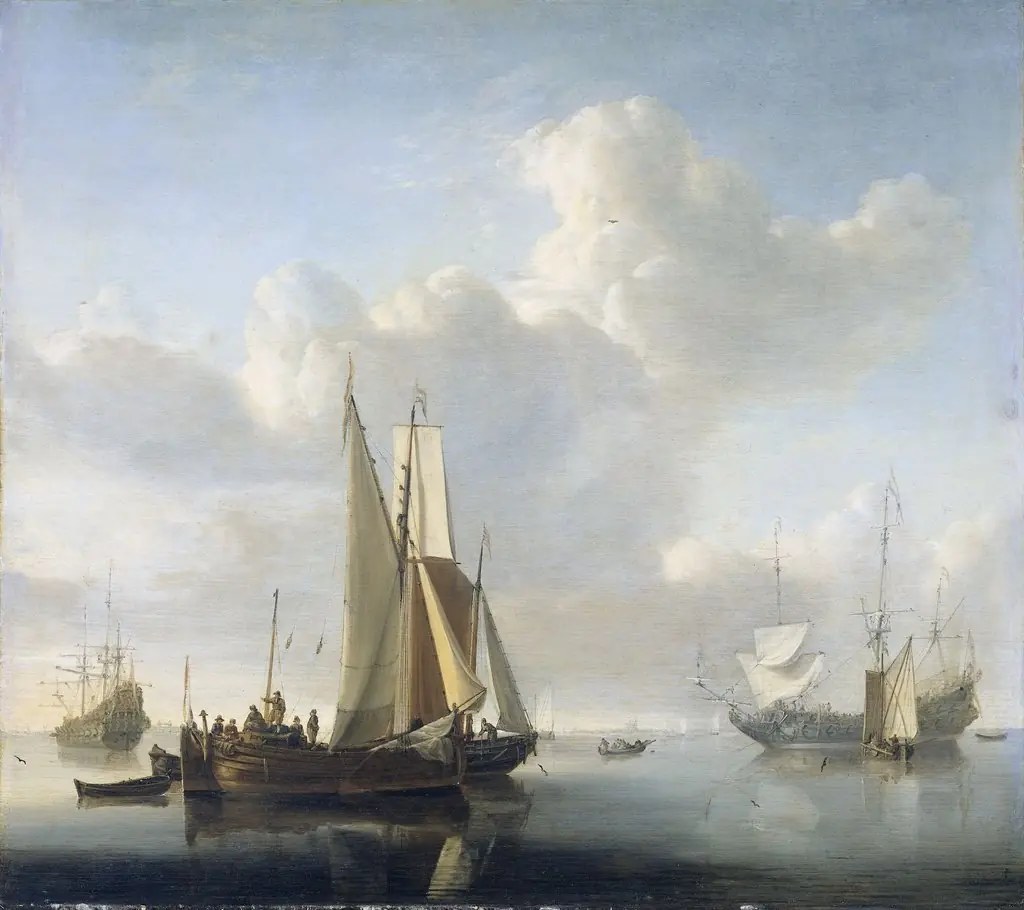 Ships off the coast
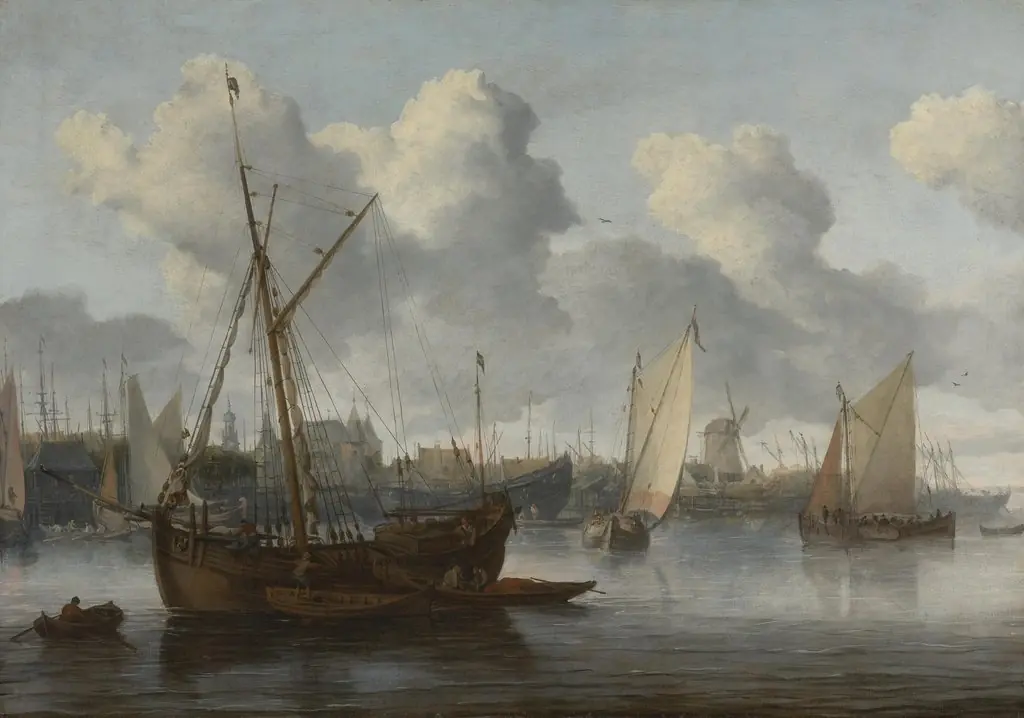 Fishing boats in a harbor