Artwork
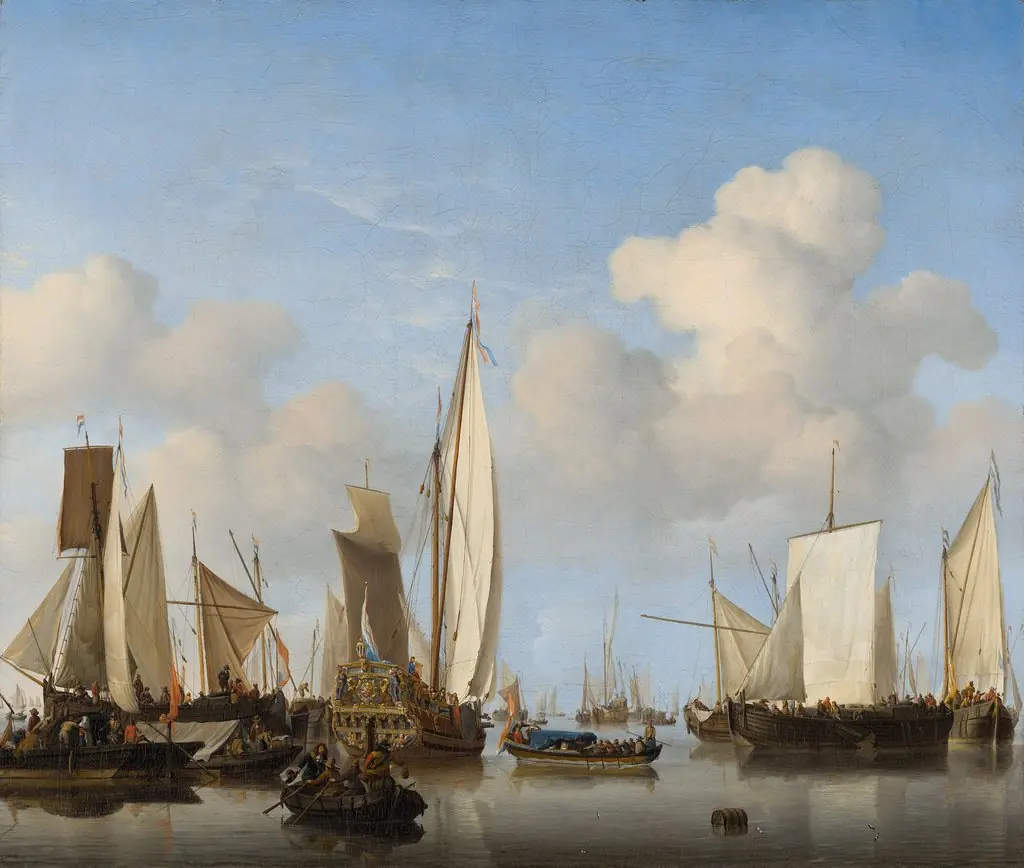
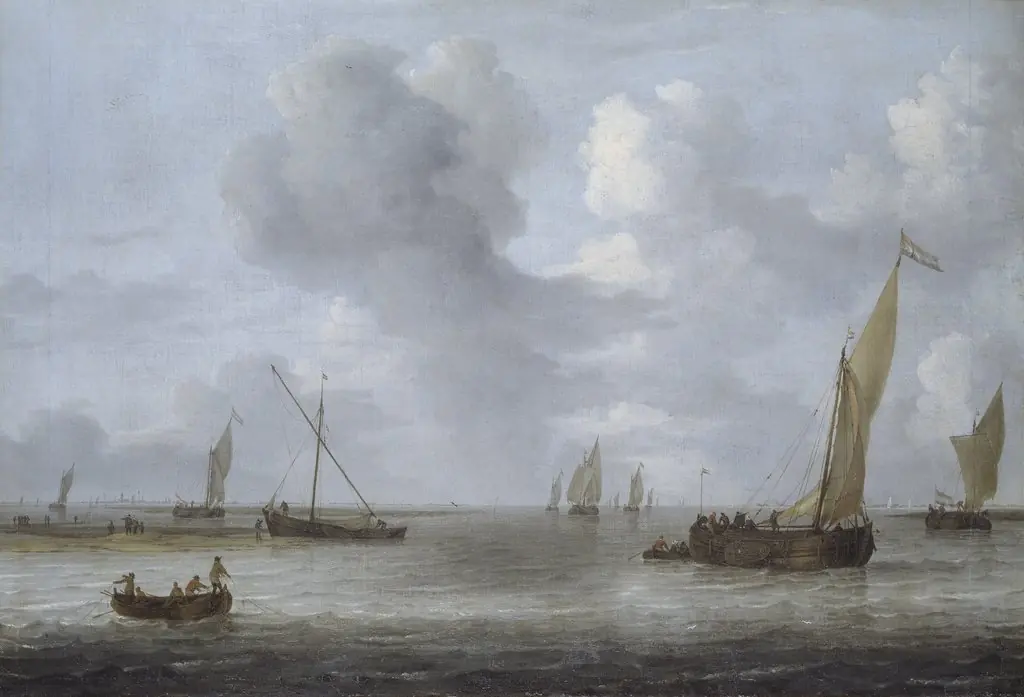
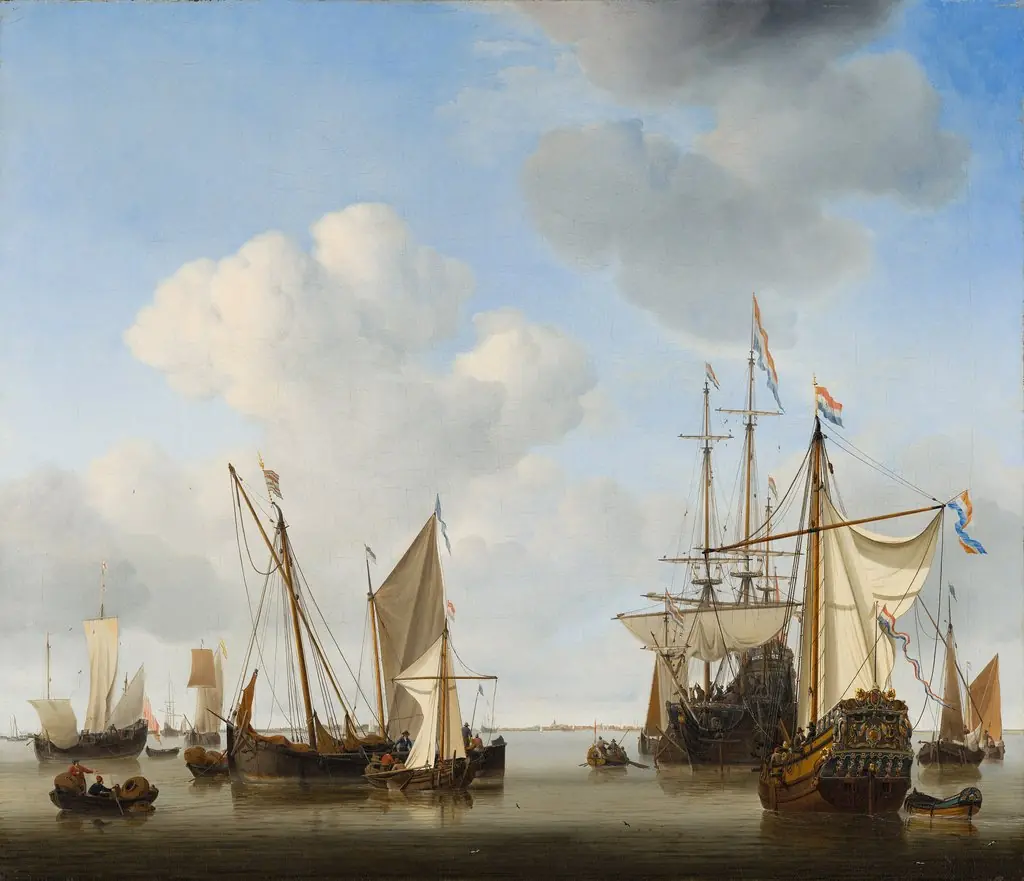
Ruhige See. Eine Staatsjacht, Segelschiffe und Fischerboote vor der Küste
Ruhige See. Eine Staatsjacht, Segelschiffe und Fischerboote vor der Küste is an oil painting by Willem van de Velde the Younger. It dates from 1660 and is held in the collection of the Kunsthaus Zürich.
About this work
Overview
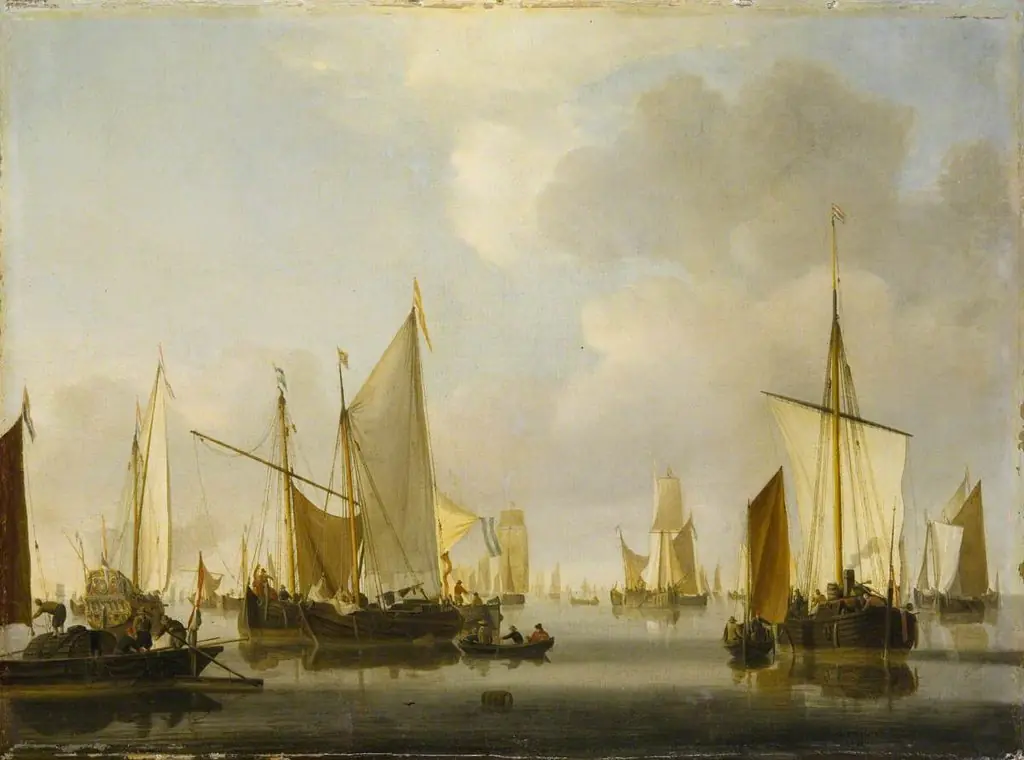
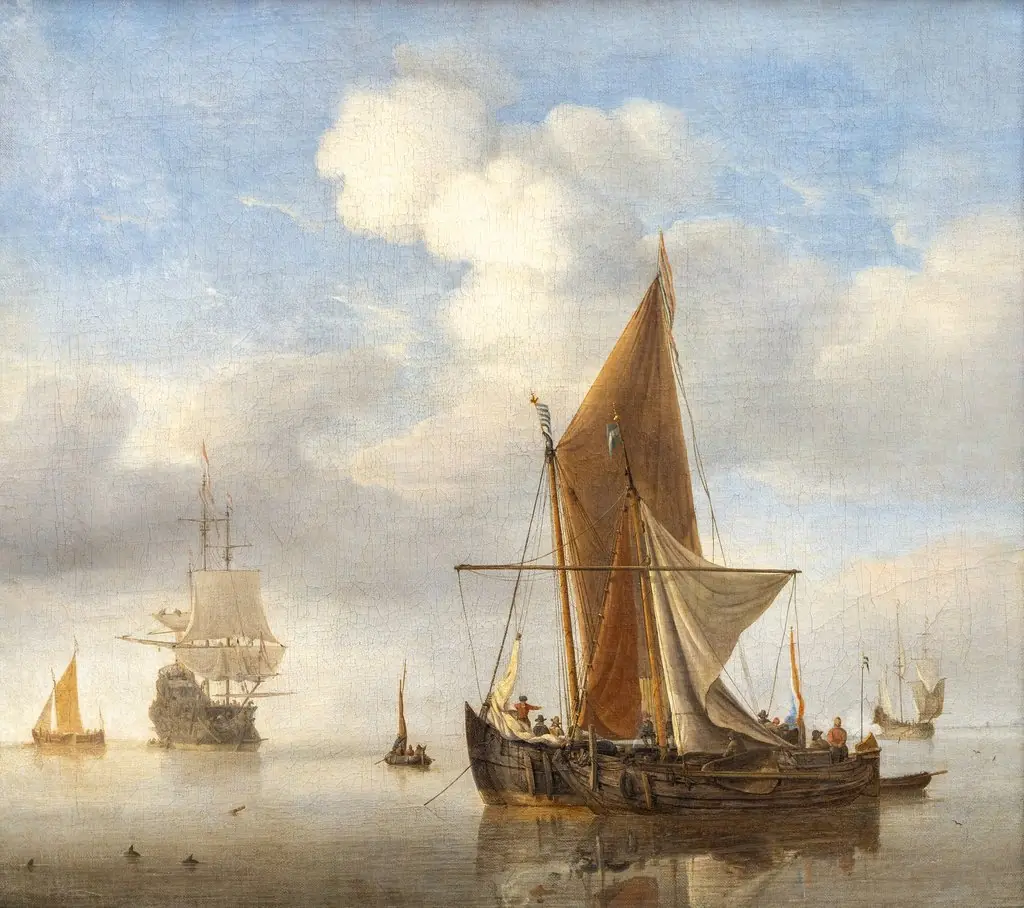
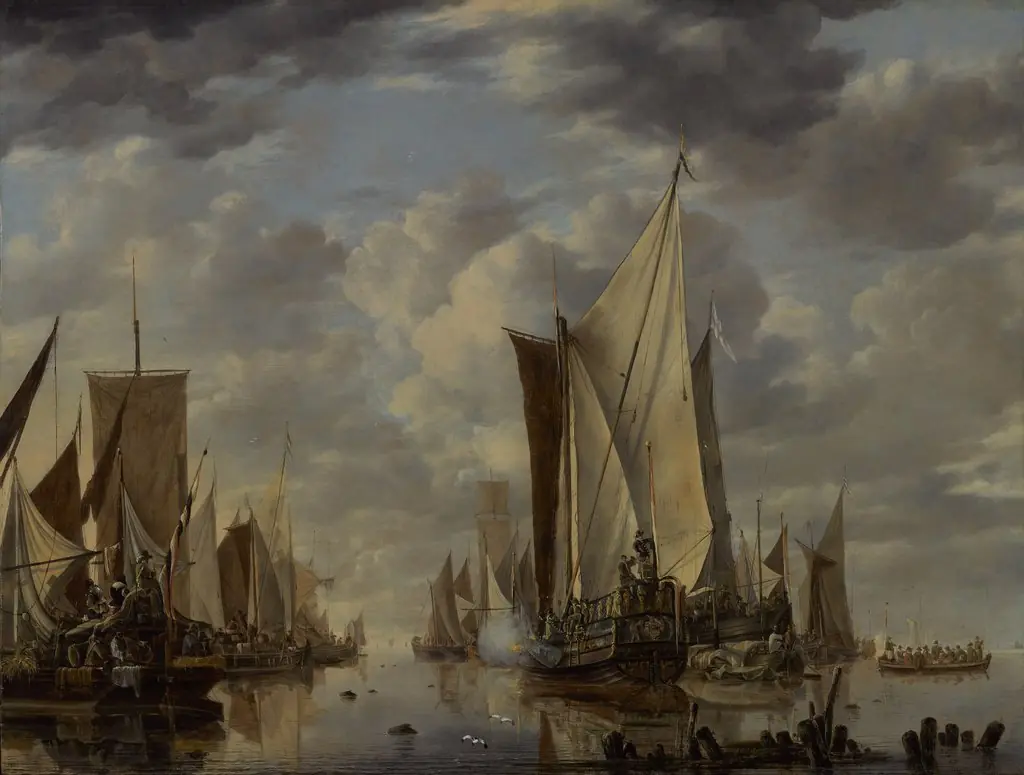
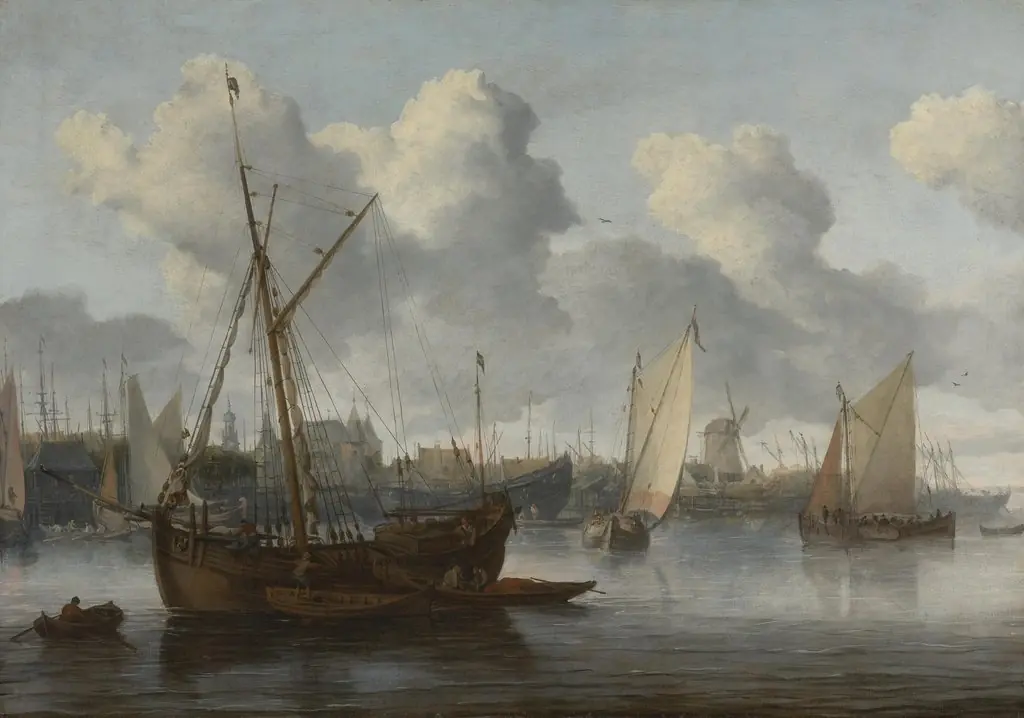
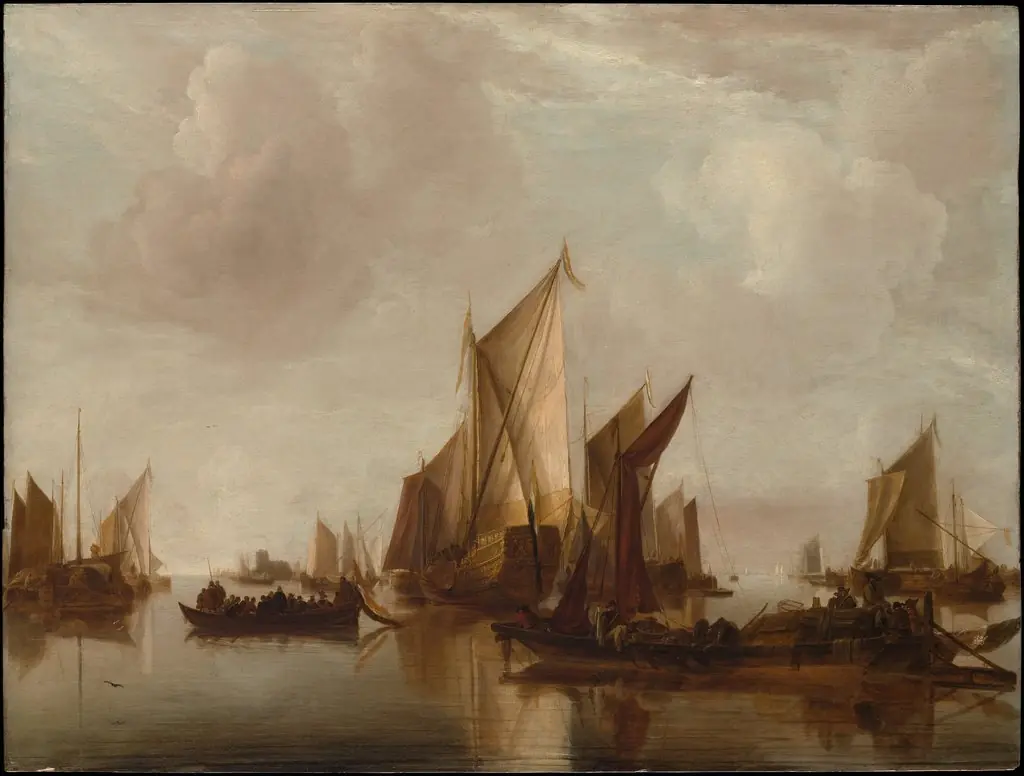
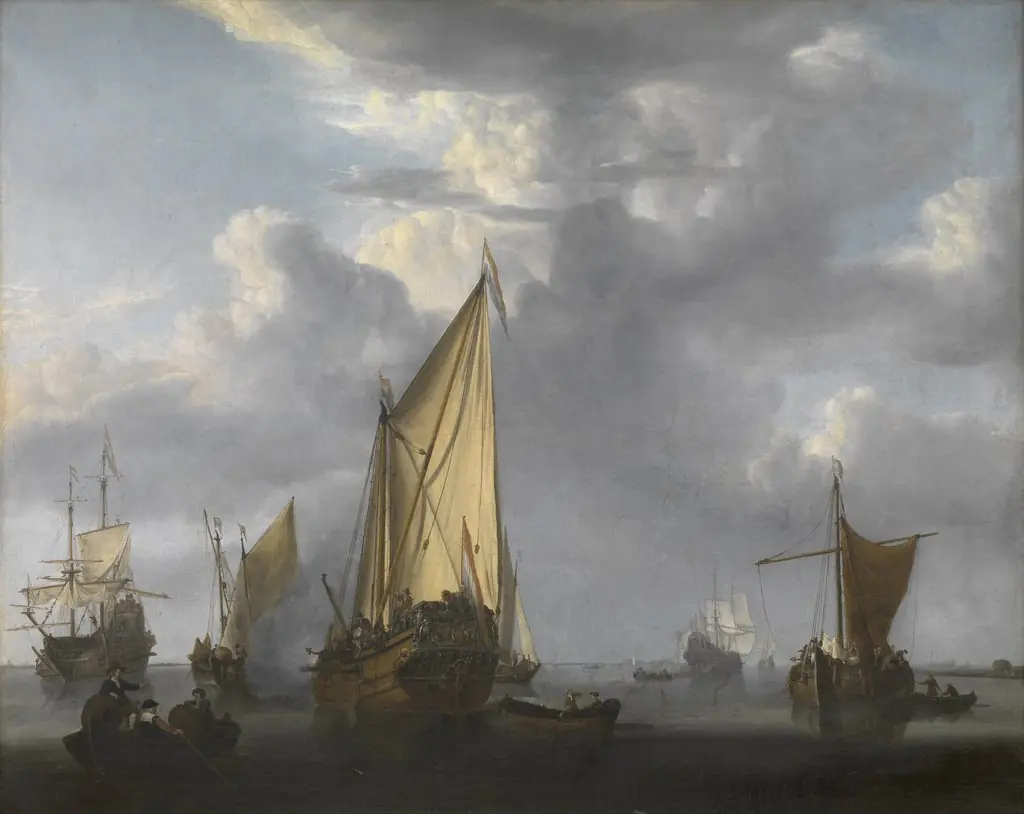
The composition includes a state yacht, several sailing ships, and smaller fishing boats, all rendered with precise detail against a still sea.
Painted in 1660 by Willem van de Velde the Younger, this oil-on-canvas work captures a quiet coastal scene with a variety of vessels. The composition includes a state yacht, several sailing ships, and smaller fishing boats, all rendered with precise detail against a still sea. The painting reflects the artist’s focus on maritime life and his skill in depicting naval architecture with accuracy and calmness.
Subject & Meaning
The scene presents a harmonious maritime ecosystem: a state vessel, commercial sailboats, and working fishing craft coexist peacefully. The presence of a man pushing a rowboat and another standing nearby suggests daily activity, not grandeur or conflict. The absence of storm or struggle emphasizes order and routine, reflecting the Dutch Republic’s reliance on maritime trade and coastal labor during the Golden Age.
Technique & Style
Van de Velde employed fine brushwork to distinguish each vessel’s structure and sail texture, while subtle gradations of light simulate the reflection of sky on calm water. The horizon is low, allowing the sky to dominate and enhance the sense of stillness. Shadows are softly modeled, lending depth without dramatic contrast, consistent with his restrained, observational approach to marine subjects.
History & Provenance
Created during the height of Dutch maritime power, the painting entered the collection of Kunsthaus Zürich in the 20th century. Its journey from 17th-century Amsterdam to Swiss public ownership reflects broader patterns of European art collection. No record of early patrons survives, but its subject matter aligns with the tastes of Dutch merchant elites who valued depictions of naval order and economic vitality.
Context
In 1660, the Dutch Republic was a leading maritime nation, with a fleet supporting trade, fishing, and naval defense. Van de Velde’s work, informed by his father’s expertise in ship rendering, served both documentary and aesthetic purposes. Unlike battle scenes or storms, this tranquil view highlights the quiet productivity of coastal life, a quieter but essential facet of Dutch seafaring culture.
Legacy
Willem van de Velde the Younger’s precise, serene marine paintings influenced later generations of Dutch and British maritime artists. While less dramatic than some contemporaries, his focus on everyday seascapes preserved a detailed visual record of 17th-century vessels and harbor dynamics. This work remains a quiet testament to the discipline and observation that defined his artistic legacy.
Artist & collection
Artist
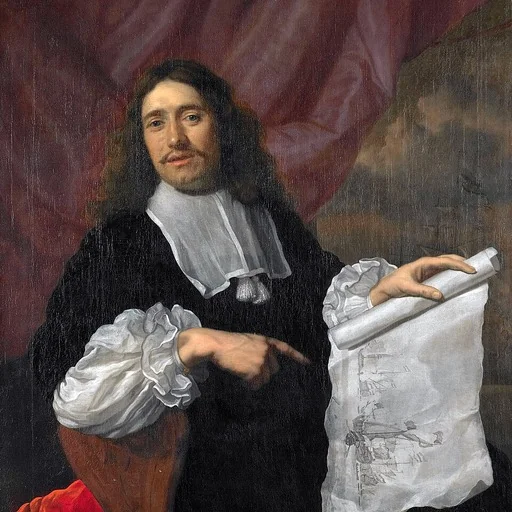
Willem van de Velde the Younger
Willem van de Velde the Younger (18 December 1633 (baptised) – 6 April 1707) was a Dutch painter who specialised in marine art.

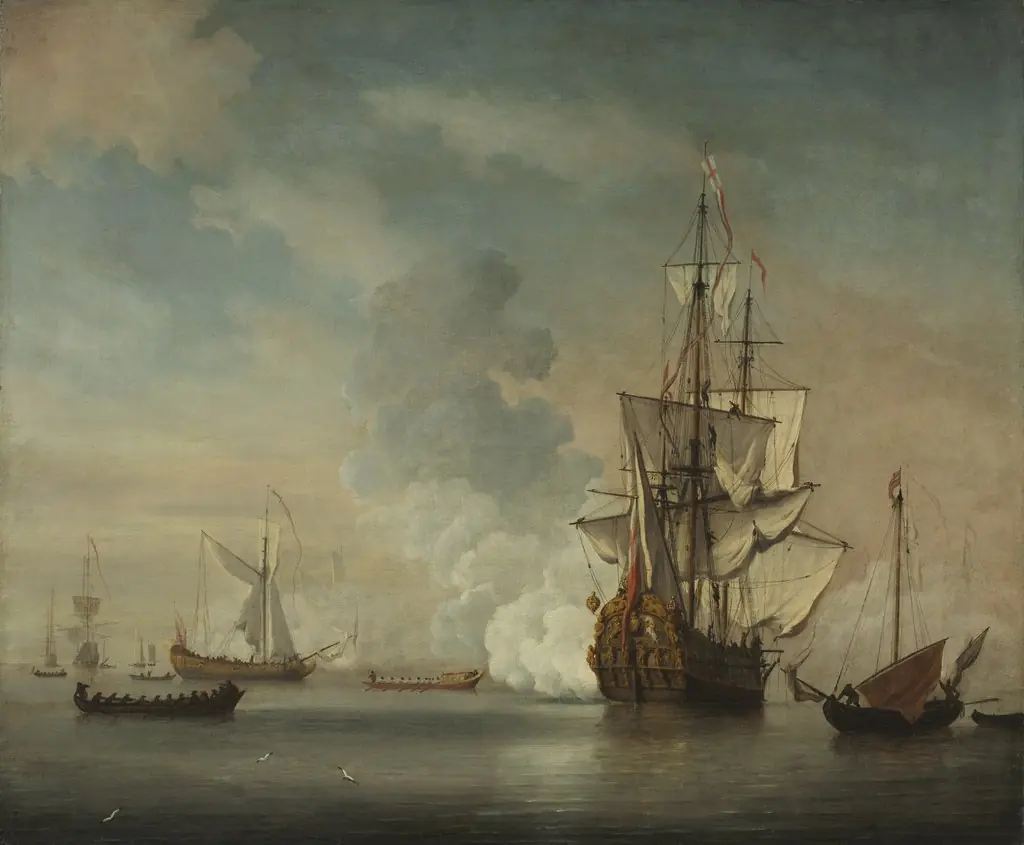 English Warship Firing a Salute
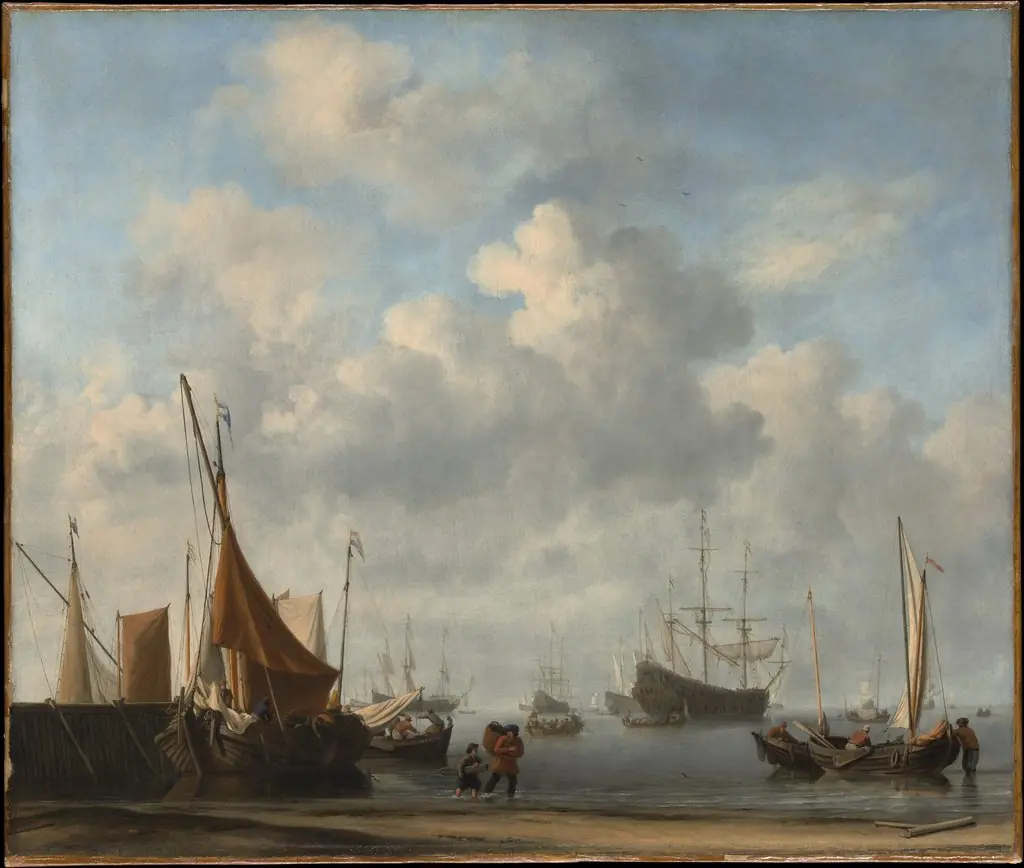 Entrance to a Dutch Port
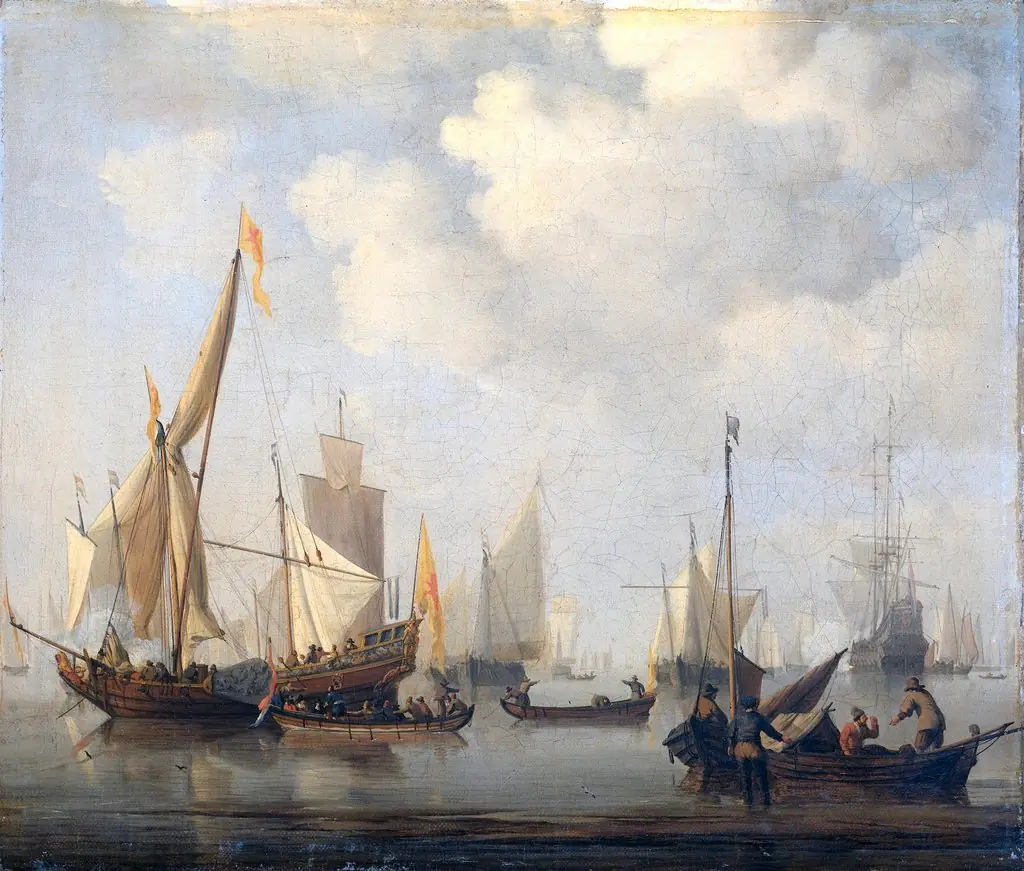 Ships in a calm
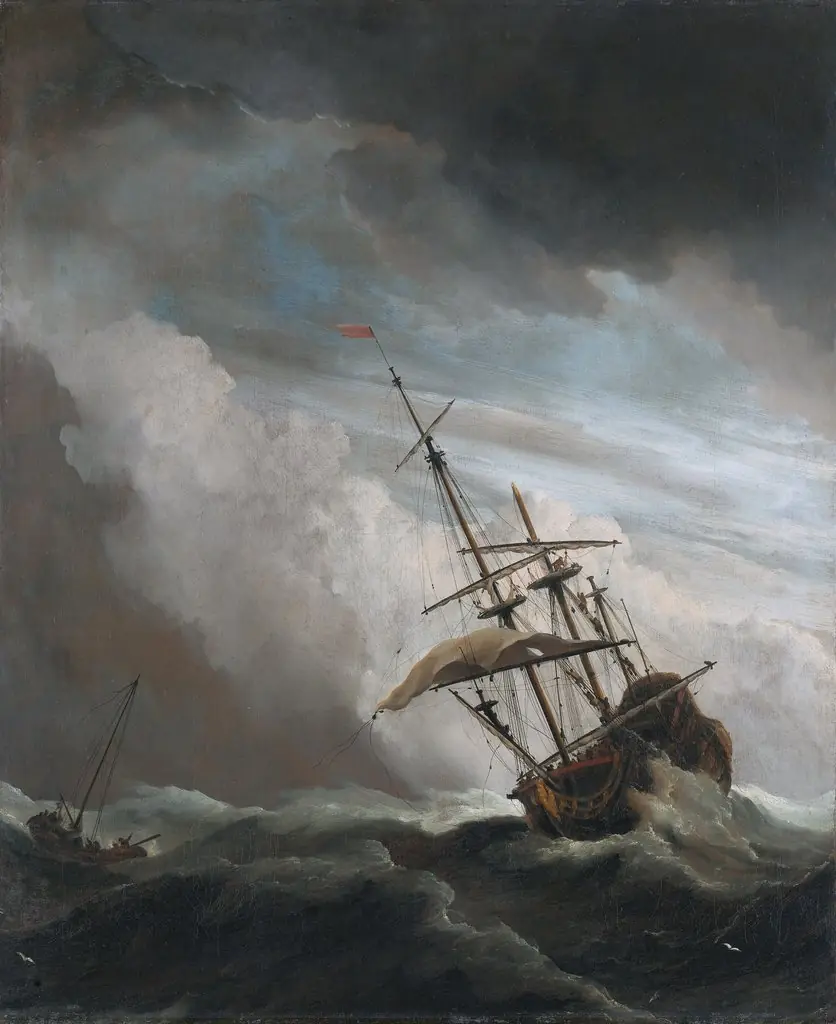 A Ship on the High Seas Caught by a Squall, Known as ‘The Gust’
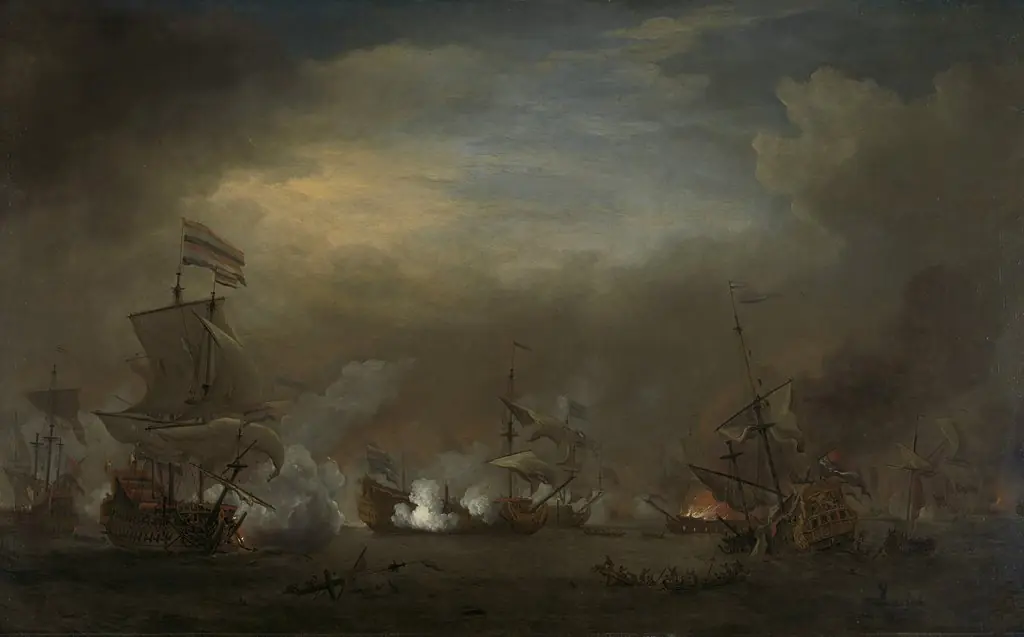 Encounter during the Battle of Kijkduin
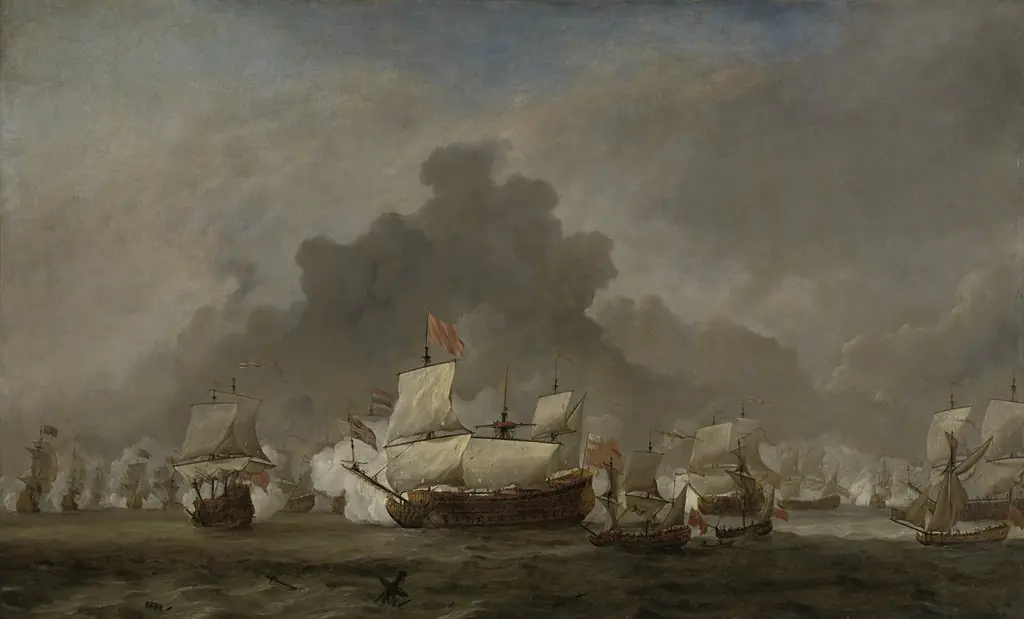 The skirmish of Michiel Adriaensz de Ruyter against the duke of York, commanding the 'Royal Prince'during the Battle of Solebay, 7 June 1672: episode from the Third Anglo-Dutch War (1672-74)
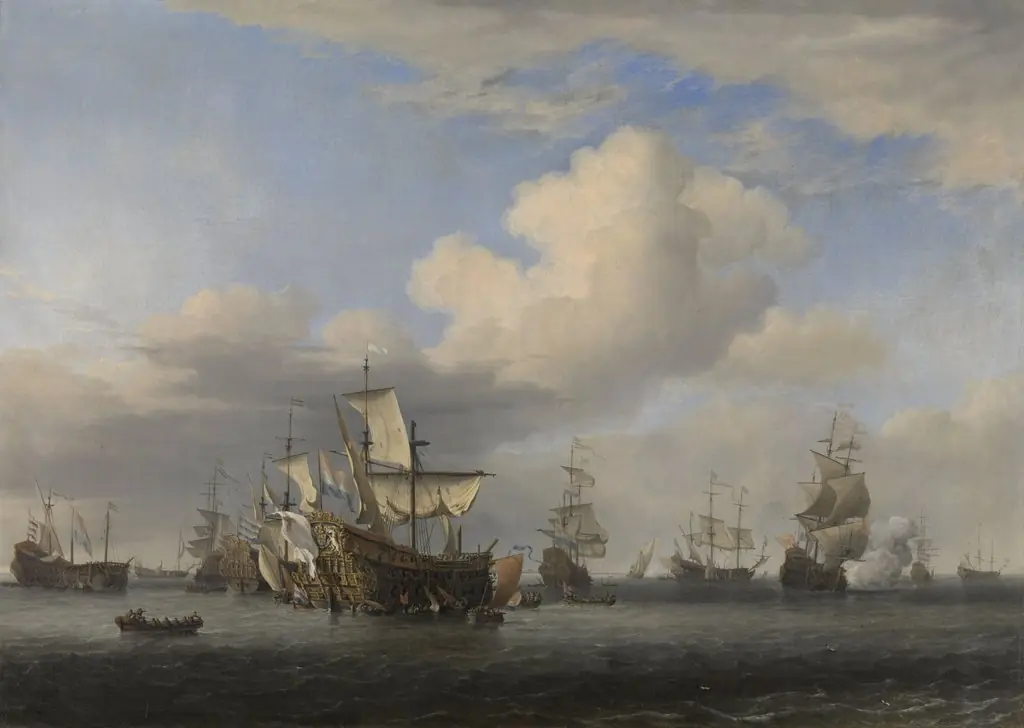 Captured English Ships after the Four Days’ Battle
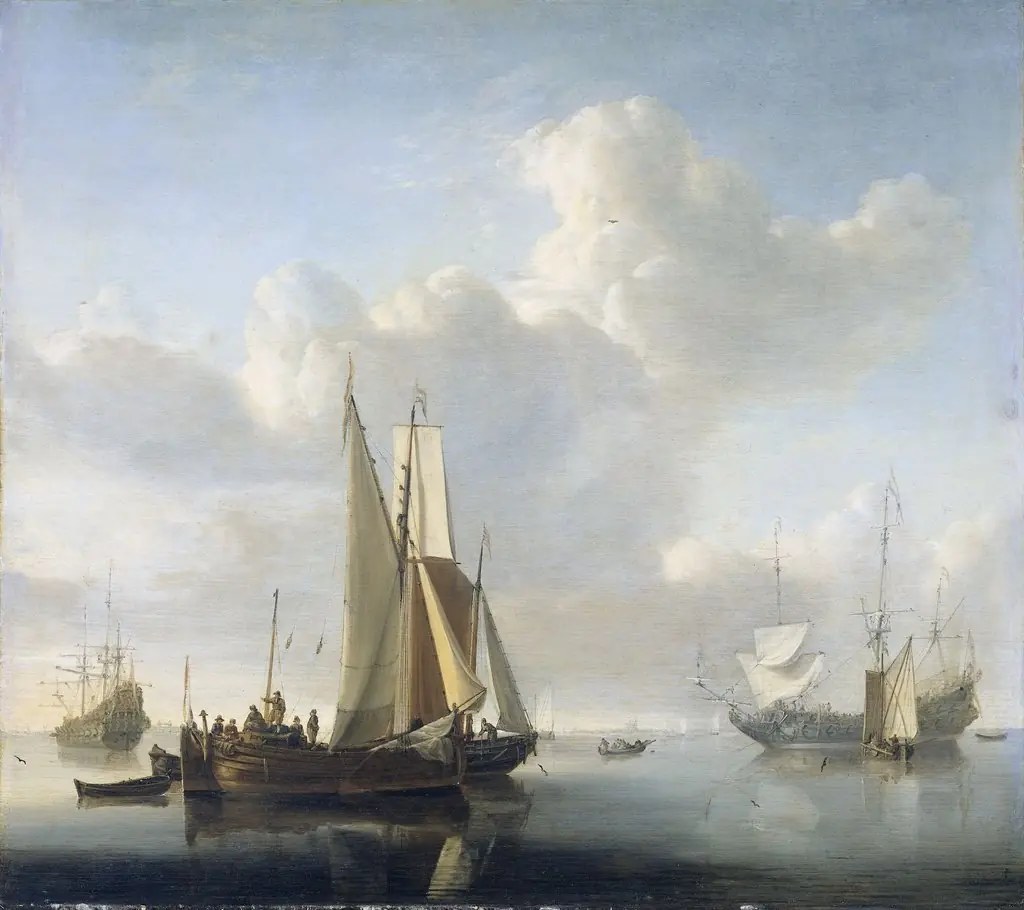 Ships off the coast