Artwork
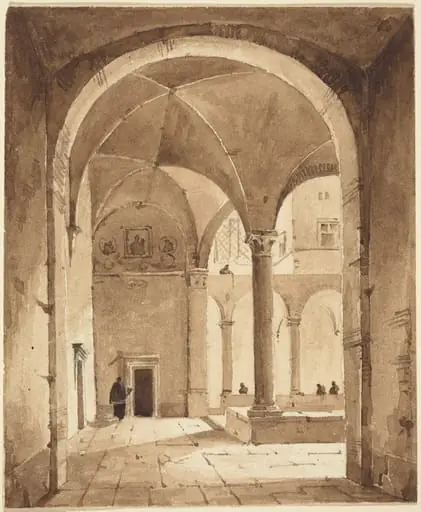
Cloister in Venice
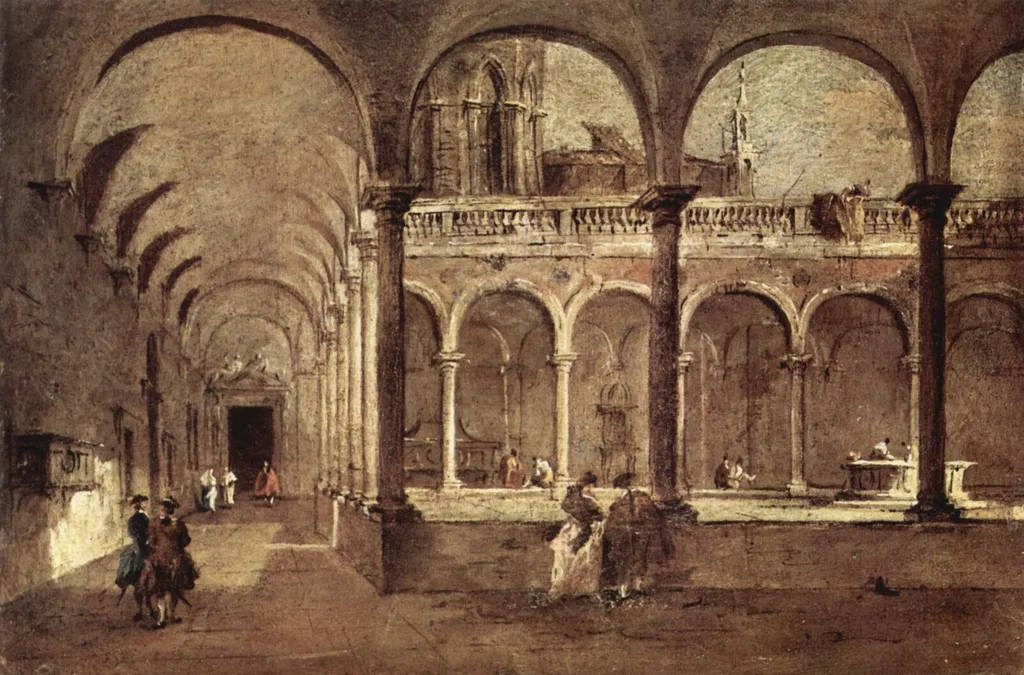
Cloister in Venice is an oil painting by the Rococo painting artist Francesco Guardi. It dates from 1750 and is held in the collection of the Accademia Carrara.
About this work
Overview
This work exemplifies his shift from grand ceremonial views to intimate, luminous observations of everyday Venetian life.
Painted around 1750 by Francesco Guardi, *Cloister in Venice* is an oil-on-canvas veduta that captures a quiet interior space within the city’s monastic architecture. Guardi, a key figure in the later Venetian School, turned increasingly to urban scenes after his brother’s death in 1760, refining a style marked by loose brushwork and atmospheric sensitivity. This work exemplifies his shift from grand ceremonial views to intimate, luminous observations of everyday Venetian life.
Subject & Meaning
The painting portrays a cloistered courtyard, its arched walkways and groin vaults framed by soft daylight filtering through high windows. Figures in period dress move quietly through the space—some seated, others standing—suggesting routine monastic or scholarly activity. The absence of dramatic action emphasizes stillness and solitude, reflecting the contemplative rhythm of religious life in 18th-century Venice, rendered not as spectacle but as lived experience.
Technique & Style
Guardi employed thin, fluid layers of oil paint to suggest texture and light without heavy modeling. The stone surfaces are rendered with subtle variations in tone, while the figures are loosely defined, their forms emerging from the play of light rather than precise outline. The brushwork is agile and suggestive, capturing the diffused glow of the interior and the tactile quality of fabric and masonry, creating a sense of immediacy through atmospheric suggestion rather than rigid detail.
History & Provenance
The painting has remained in institutional hands since at least the 19th century and is now part of the Accademia Carrara’s collection in Bergamo. Its presence there reflects broader 19th-century efforts to preserve and categorize Venetian art, particularly works that documented the city’s architectural heritage. While its early ownership is undocumented, its survival in a public collection underscores its recognition as a representative example of Guardi’s mature veduta style.
Context
In mid-18th-century Venice, the decline of the Republic’s political power coincided with a flourishing interest in documenting its urban fabric. Guardi’s cloister scenes responded to this cultural moment, offering intimate alternatives to the grand vistas of Canaletto. His focus on lesser-known architectural spaces—quiet, unmonumental, and inhabited—reflected a shift toward personal, observational realism in Venetian painting during a period of social and economic transition.
Legacy
Guardi’s *Cloister in Venice* contributed to a redefinition of veduta as a genre capable of conveying mood and quiet narrative, not just topographical accuracy. His emphasis on light, texture, and ephemeral atmosphere influenced later 19th-century painters seeking to capture the emotional resonance of place. Though less celebrated in his time than contemporaries, his work gained renewed appreciation for its poetic restraint and sensitivity to the everyday.
Own this work as a print
Artist & collection

Artist
Francesco Lazzaro Guardi (Italian pronunciation: ; 5 October 1712 – 1 January 1793) was an Italian painter, nobleman, and a member of the Venetian School.

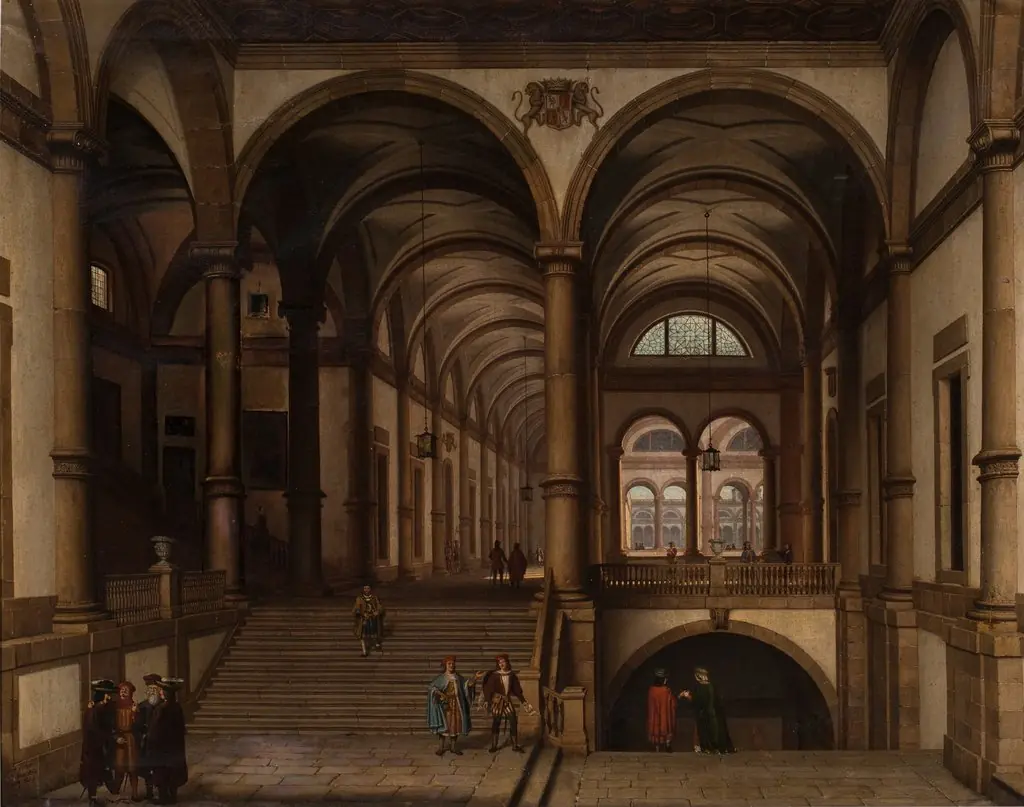 Palacio con galería y espaciosa escalinata de carácter grecorromano
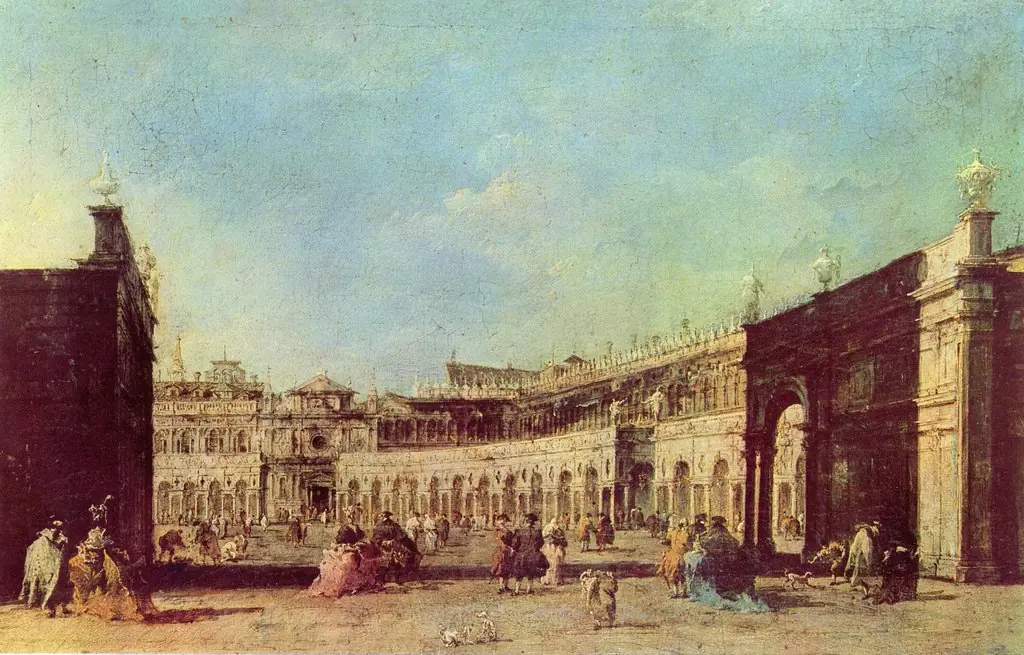 Piazza San Marco
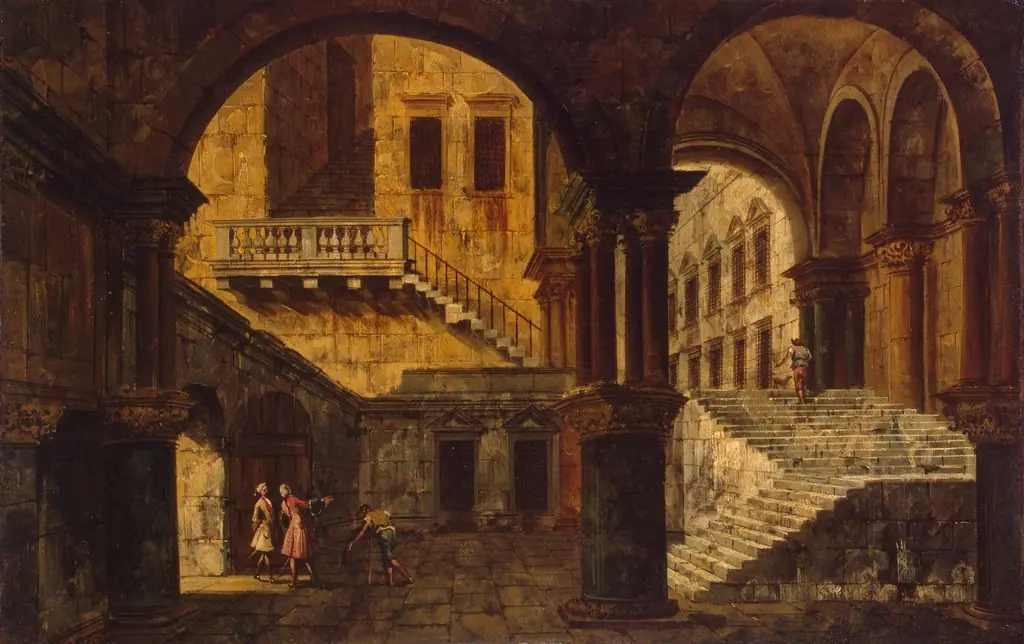 Courtyard with a Staircase
 Der Hof des Dogenpalastes
 Venetian Capriccio: View of a Square and a Palace
 Palastarchitektur mit Badenden
 Portico with a Lantern
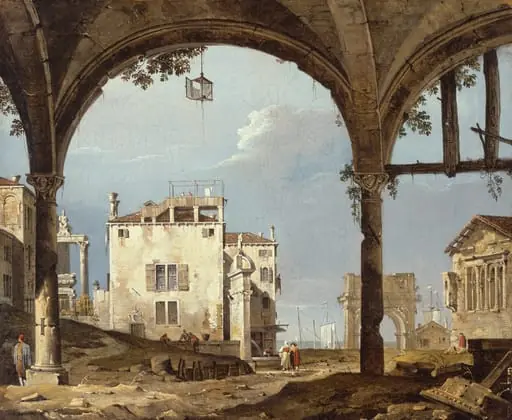 Portico with a Lantern
 Church Interior
 Santi Giovanni e Paolo and the Scuola di San Marco
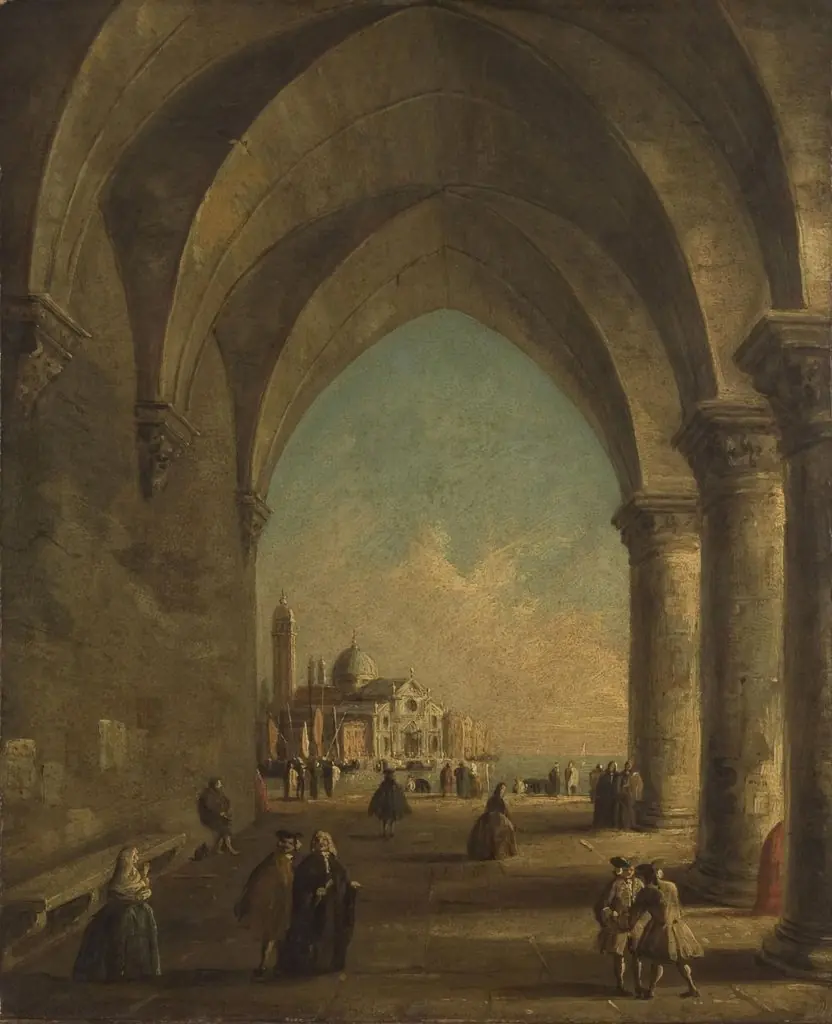 San Giorgio Maggiore Seen through the Arches of the Doge's Palace
 A Cloister