Artwork
A Cloister
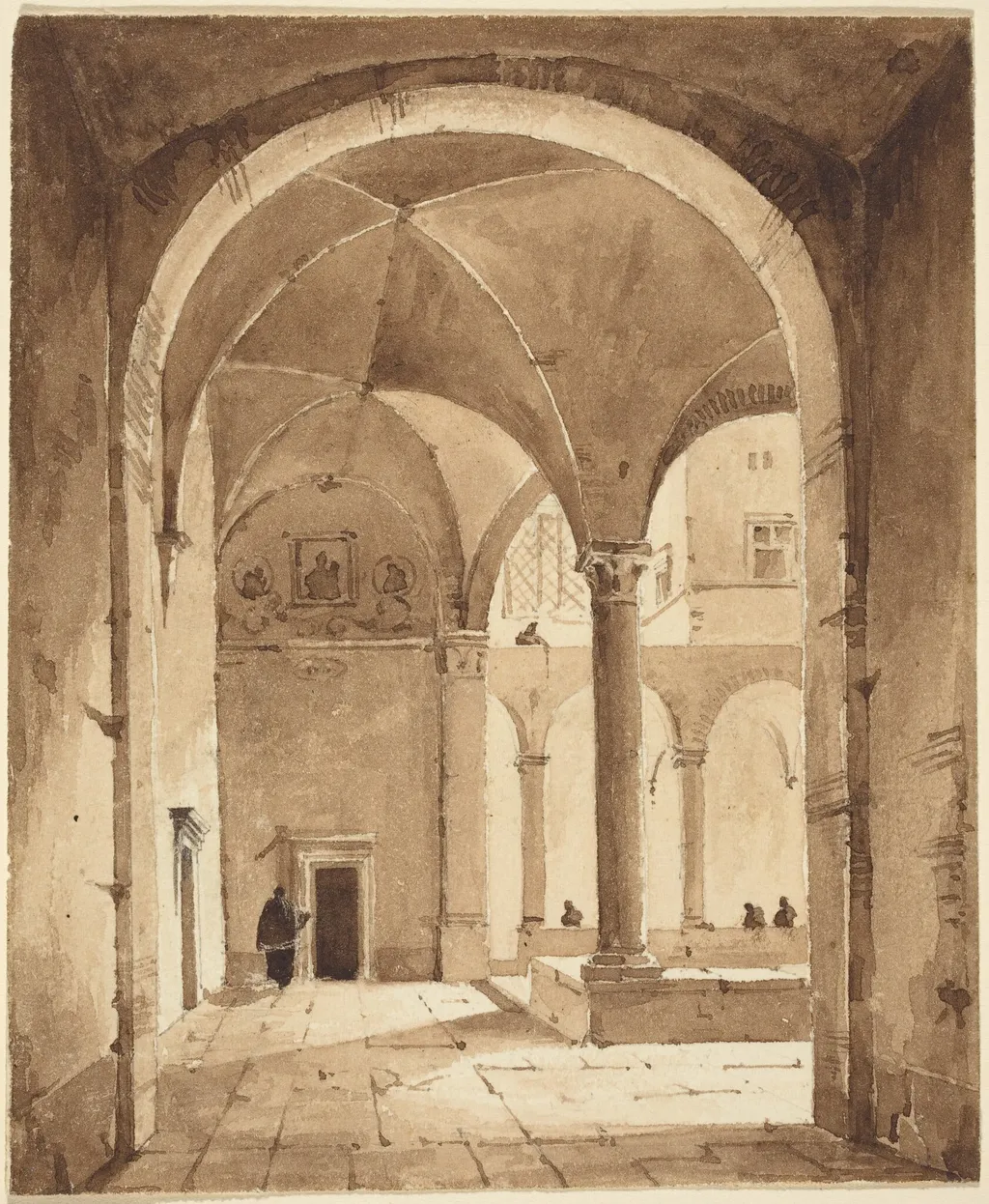
A Cloister is a graphite drawing by the Romanticist artist François Marius Granet. It dates from 1812 and is held in the collection of the National Gallery of Art.
About this work
Overview
Created in 1812, A Cloister is a drawing by François-Marius Granet executed in brown wash over graphite on wove paper.
Created in 1812, A Cloister is a drawing by François-Marius Granet executed in brown wash over graphite on wove paper. Subtle scratching techniques enhance specific details, particularly around the figure near the doorway. The work belongs to a series of architectural interiors Granet produced during his time in Rome, reflecting his interest in monastic spaces and quiet, contemplative environments.
Subject & Meaning
The drawing depicts a quiet cloister arcade, its arches receding into shadow, with a solitary figure standing near a doorway. The absence of narrative or action emphasizes stillness and solitude. Granet’s focus on empty corridors and minimal human presence suggests a meditation on religious seclusion, memory, and the passage of time within sacred architecture.
Technique & Style
Granet employed layered brown wash to model light and depth, building atmosphere through gradations of tone. Graphite underdrawing defines structural elements with precision, while selective scratching reveals highlights, especially on the figure’s garment and stone surfaces. The restrained palette and delicate handling reflect a preference for subtlety over dramatic contrast, aligning with early 19th-century interest in atmospheric realism.
History & Provenance
Granet produced this drawing during his stay in Rome, where he studied Renaissance and early Christian architecture. It was likely made as a study for larger compositions or as an independent work for private collectors. The piece remained in French collections through the 19th century and entered a public institution in the 20th century, where it is now preserved as part of a broader group of Granet’s architectural drawings.
Context
In the early 1800s, French artists increasingly turned to religious and monastic subjects following the upheavals of the Revolution and Napoleonic era. Granet’s cloisters reflect a broader cultural turn toward introspection and reverence for historical sacred spaces. His work stood apart from grand historical painting, offering instead intimate, quiet observations of architecture imbued with spiritual resonance.
Legacy
A Cloister exemplifies Granet’s contribution to the revival of architectural drawing as a serious artistic medium. His method of using wash and minimal intervention to evoke mood influenced later generations of artists interested in atmosphere over detail. Though not widely exhibited during his lifetime, the work now represents a quiet but significant strand in early 19th-century French art.
Artist & collection
Artist
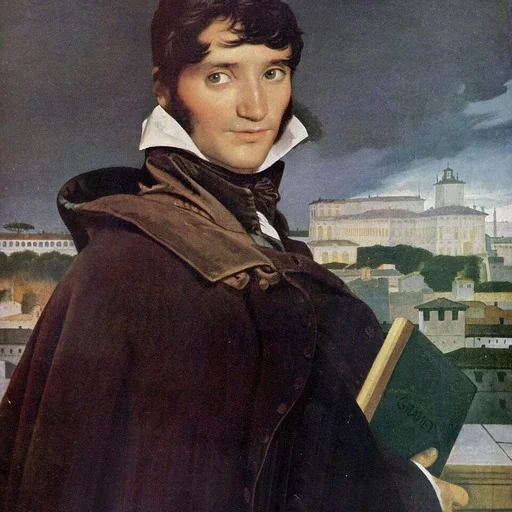
François Marius Granet (1775–1849) was an artist, born in Aix-en-Provence.

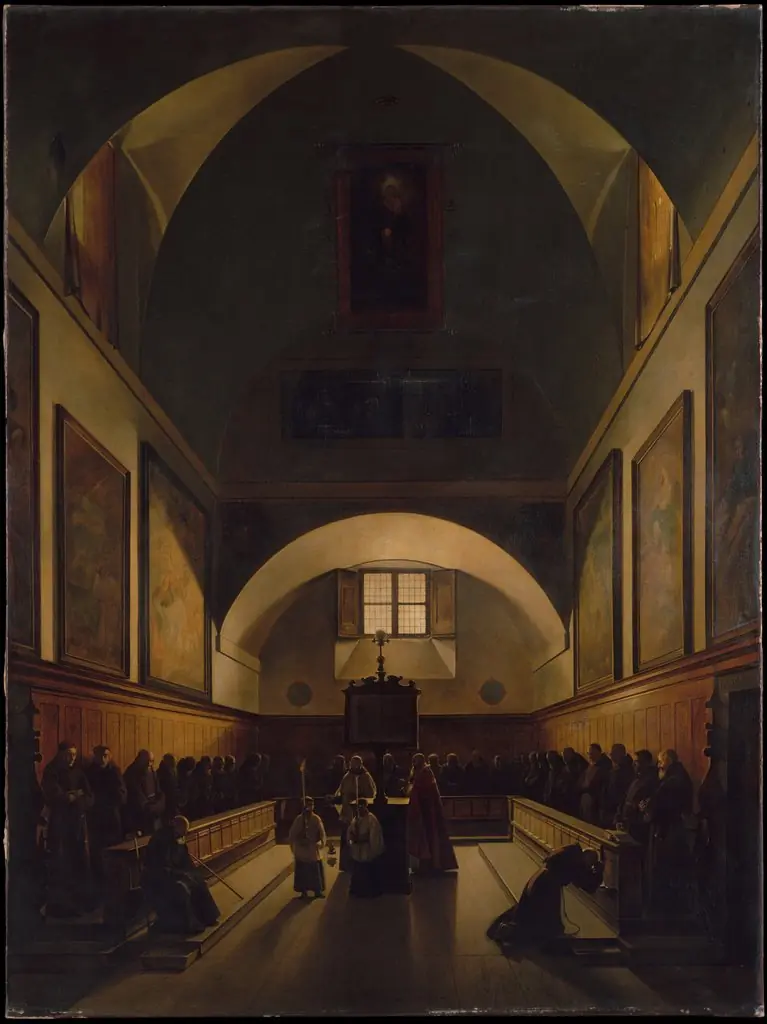
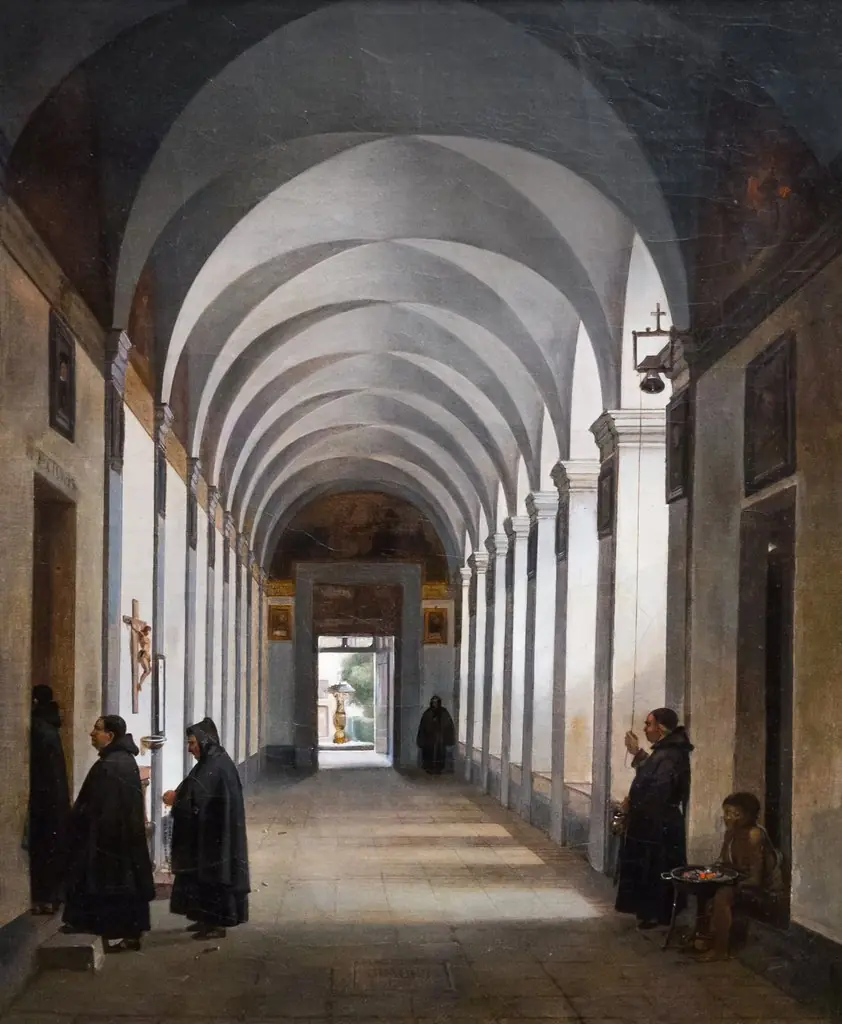
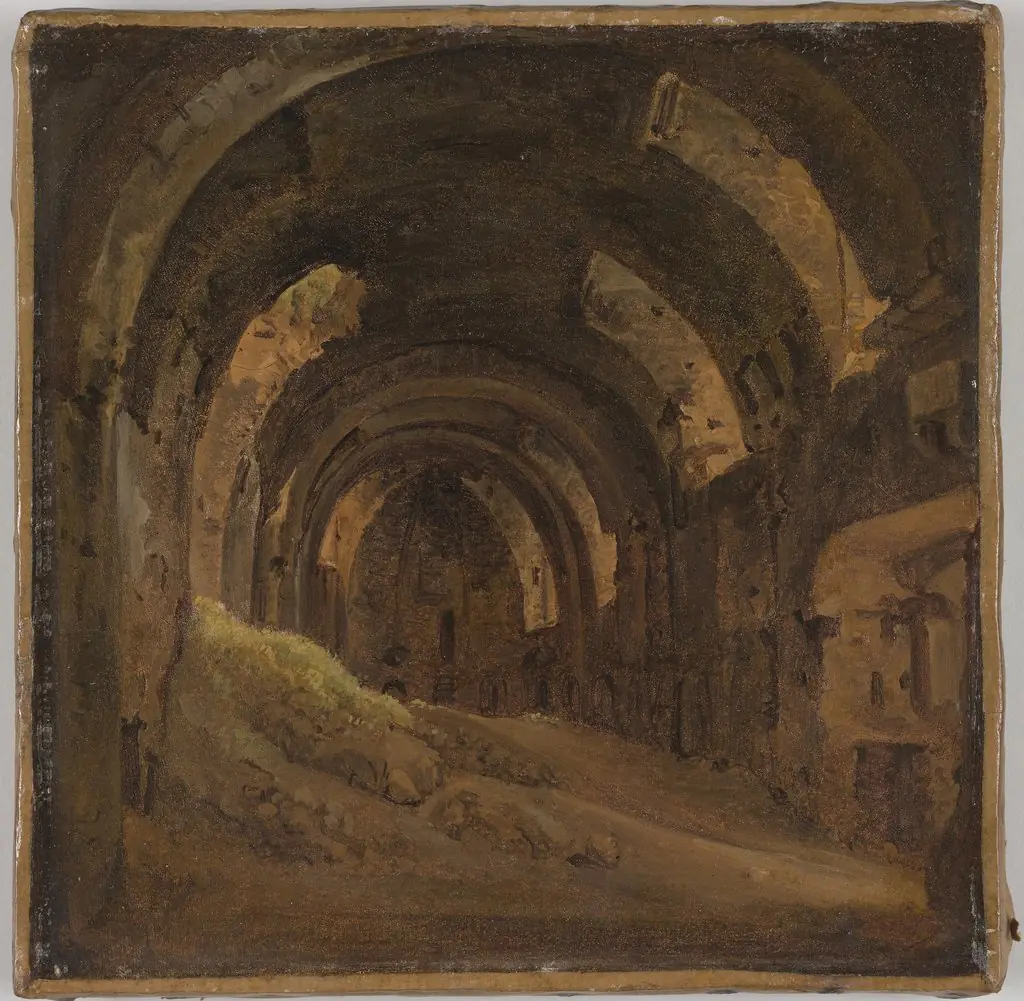
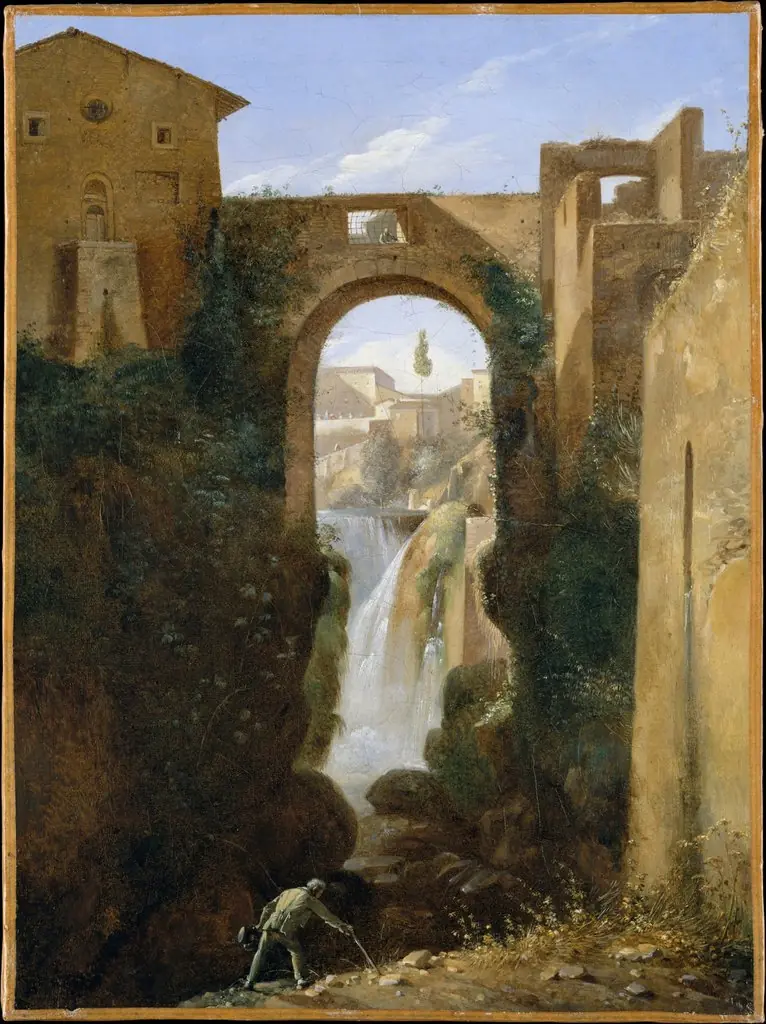
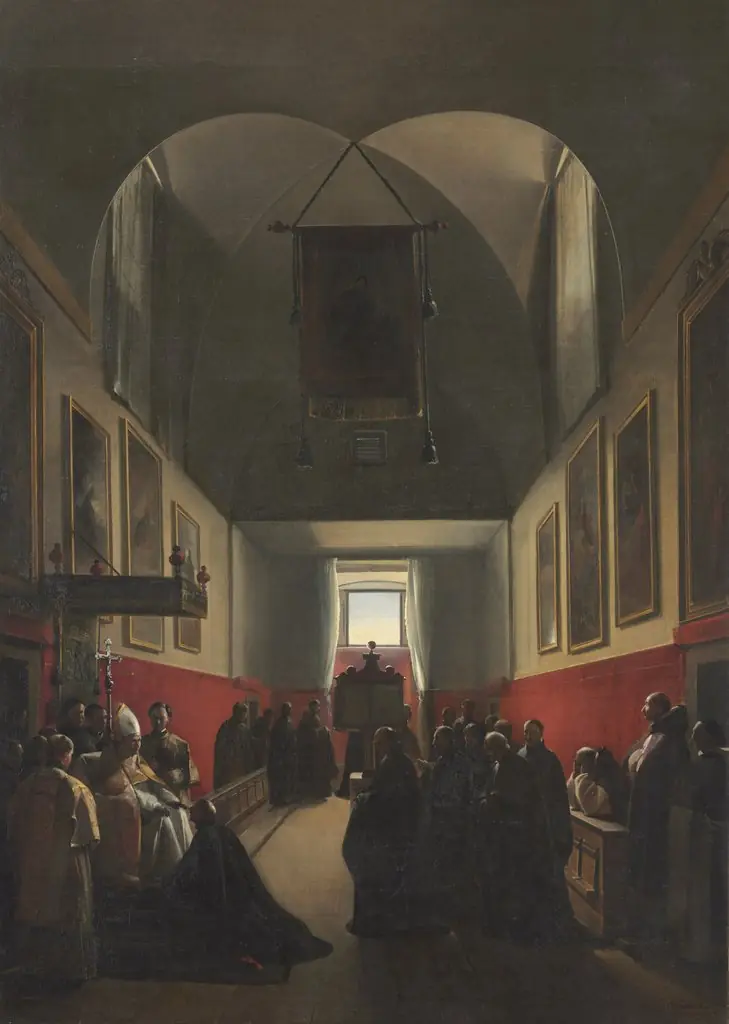
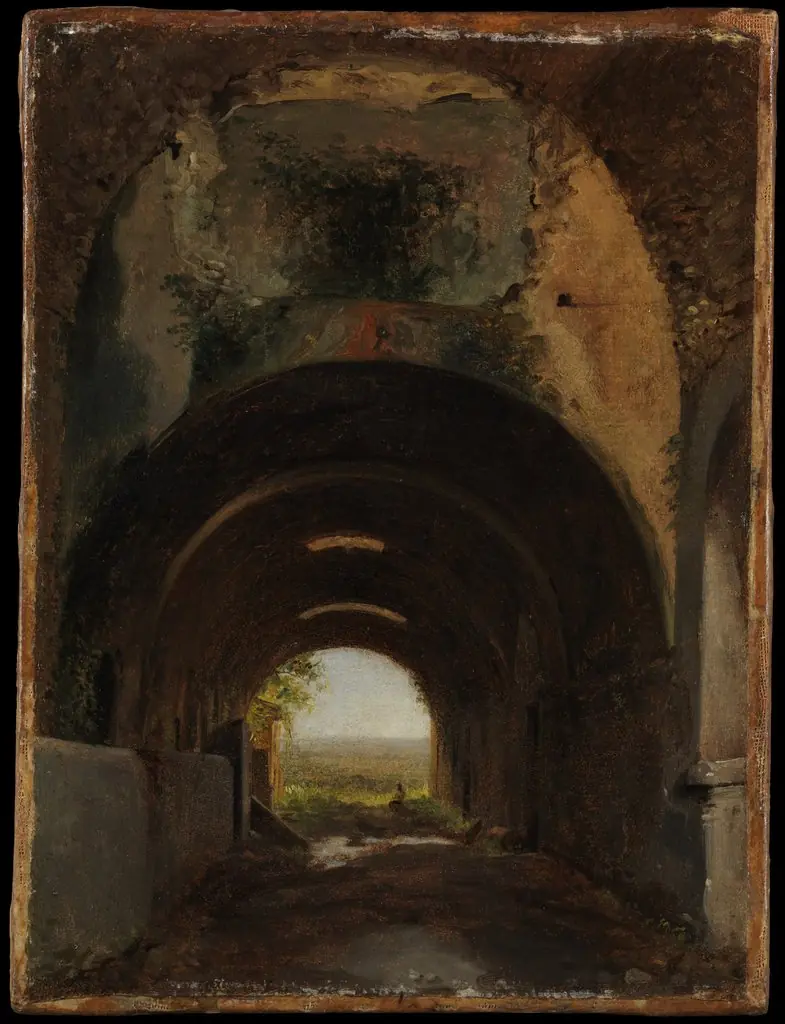
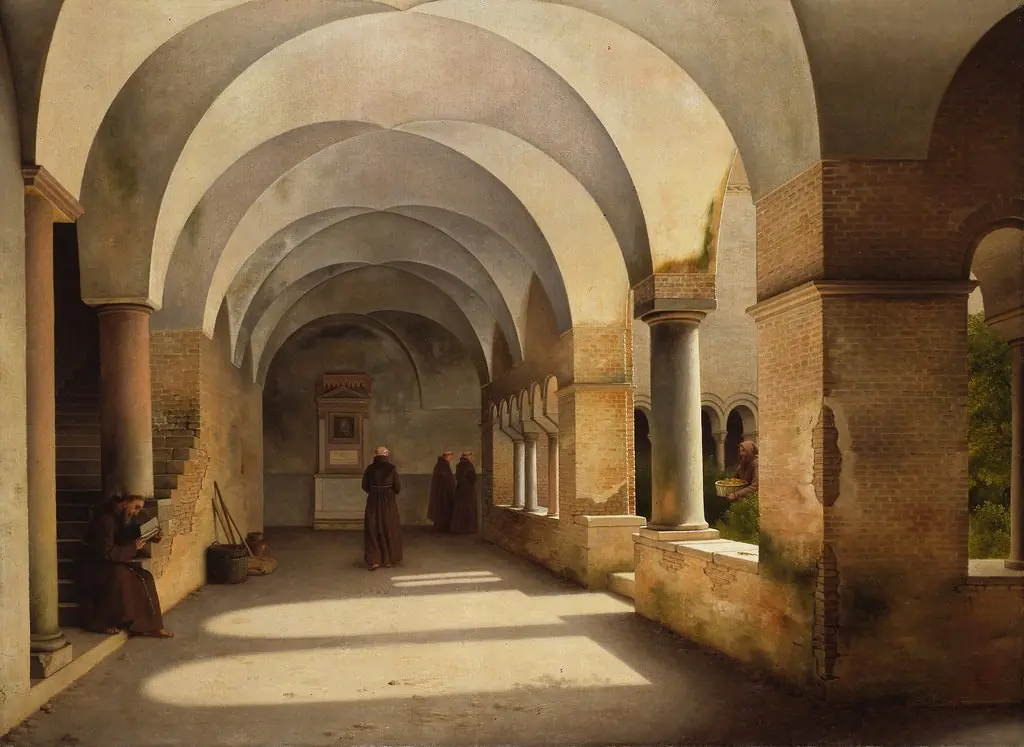 The Cloisters, San Lorenzo fuori le mura
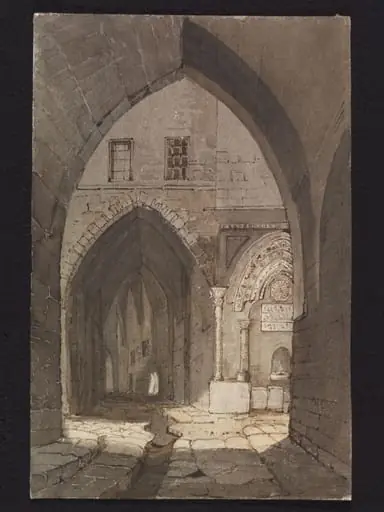 Fountain at Jerusalem near the House of Dives
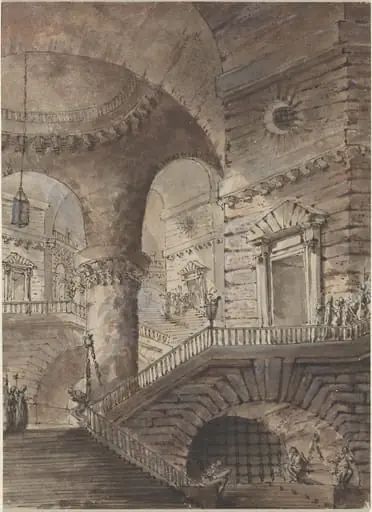 Roman Prison
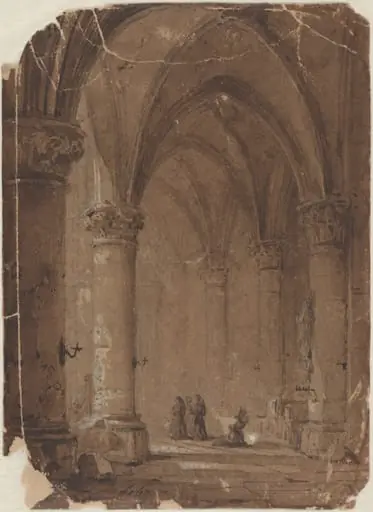 Monks in a Cathedral
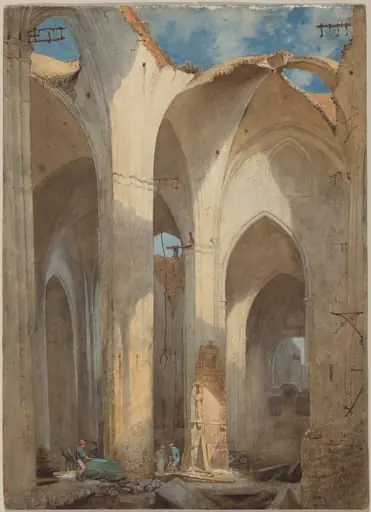 The Ruins of Saint Nicolai Church in Hamburg
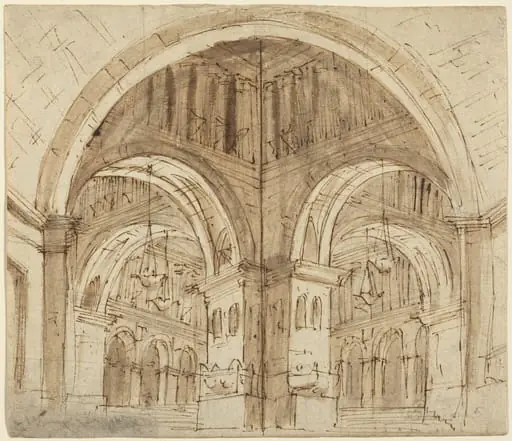 Design for a Vaulted Hall
 The Square at Canterbury
 Stage Design
 Koln, Maria-Capitol
 Tewkesbury Abbey
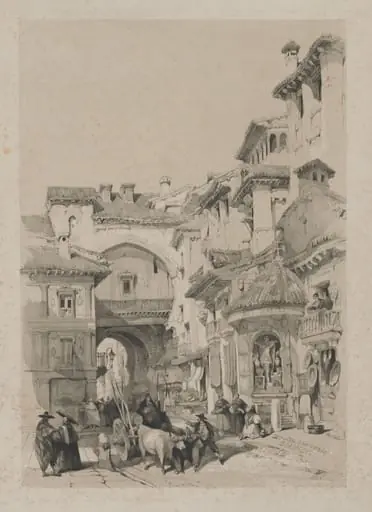 Picturesque Sketches in Spain: Gate of the Vivarrambla, Granada
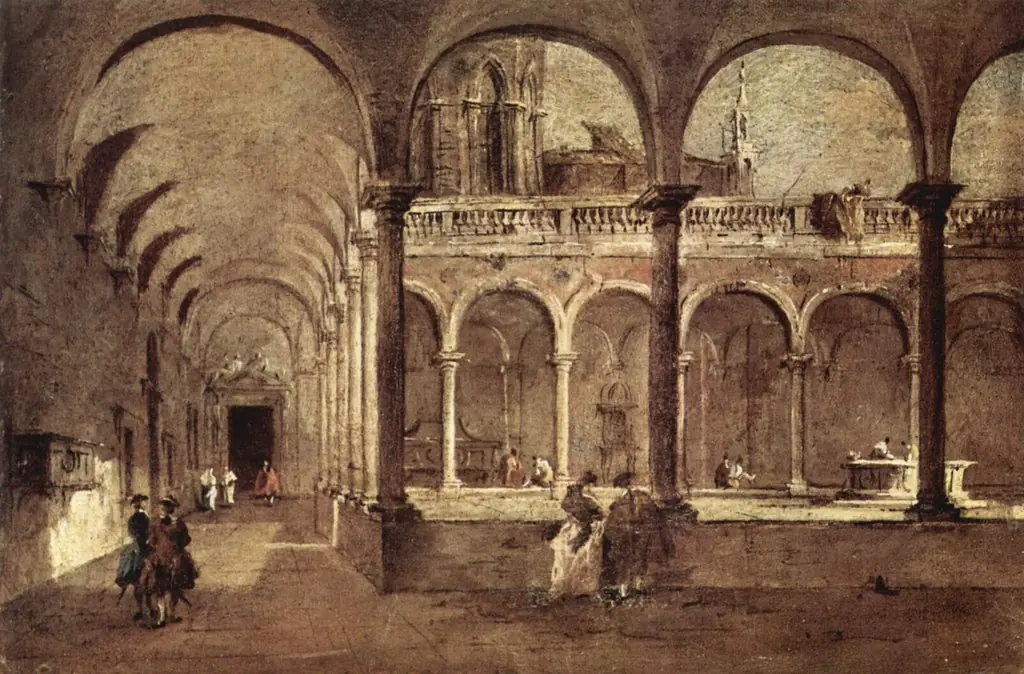 Cloister in Venice