Artwork
Doge Alvise IV Mocenigo Appears to the People in St Mark's Basilica in 1763
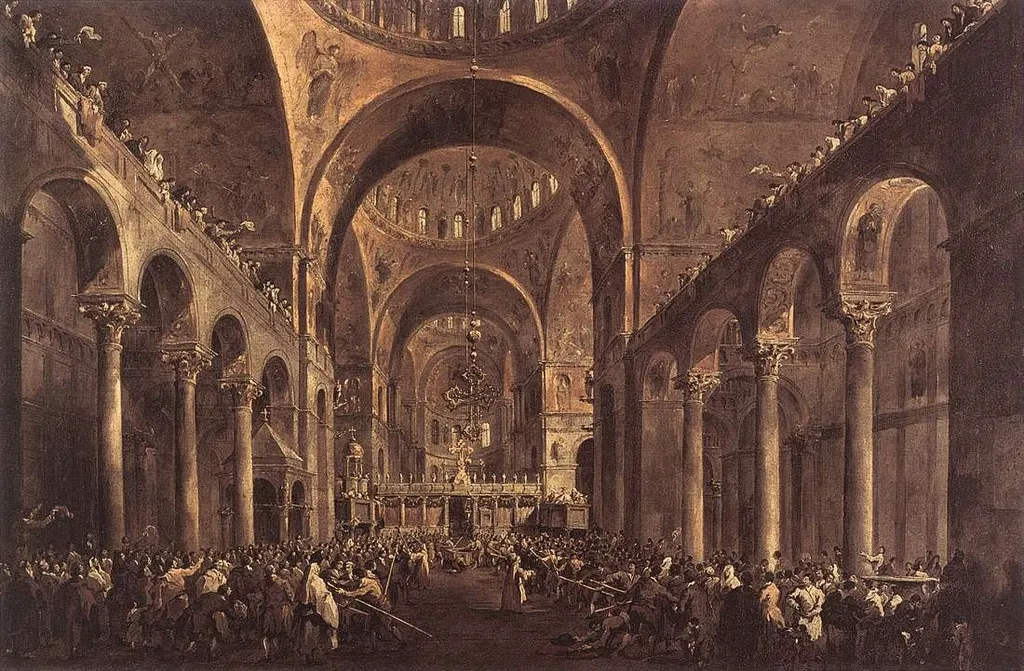
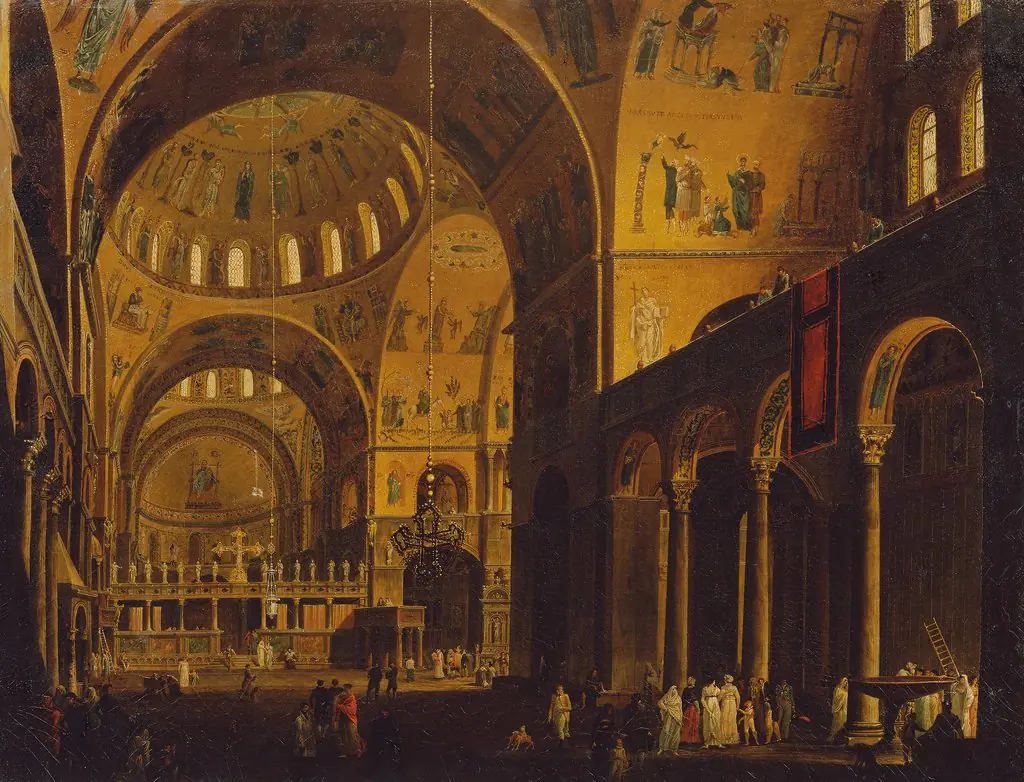
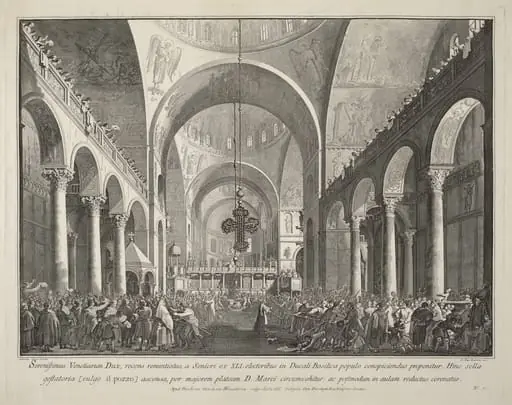
Doge Alvise IV Mocenigo Appears to the People in St Mark's Basilica in 1763 is an oil painting by Francesco Guardi. It dates from 1775 and is held in the collection of the Royal Museums of Fine Arts of Belgium.
About this work
Overview
It portrays Doge Alvise IV Mocenigo’s appearance before the populace in St Mark’s Basilica, four years after the actual event.
Painted in 1775 by Francesco Guardi, this oil on canvas captures a ceremonial moment in Venice’s public life. It portrays Doge Alvise IV Mocenigo’s appearance before the populace in St Mark’s Basilica, four years after the actual event. Guardi, a leading figure of the late Venetian School, turned increasingly to vedute after his brother’s death, refining a style marked by fluid brushwork and atmospheric light.
Subject & Meaning
The scene documents a formal ritual in which the Doge, as head of state, presents himself to the citizens within the sacred space of the basilica. His central, upright posture contrasts with the varied gestures and movements of the surrounding crowd, suggesting both authority and communal presence. The moment is not dramatic but ceremonial, emphasizing the continuity of Venetian civic tradition through ritualized visibility.
Technique & Style
Guardi employs a loose, expressive brushstroke that dissolves architectural details into shimmering light and shadow. Rather than precise linear perspective, he builds depth through layered tones and atmospheric haze. The figures are rendered with quick, energetic strokes, conveying movement and spontaneity. Color is used not for realism but to evoke the luminous, humid air characteristic of Venice’s interior spaces.
History & Provenance
The painting entered the collection of the Royal Museums of Fine Arts of Belgium in the 19th century, likely through acquisition or diplomatic exchange. It was created after the death of Guardi’s brother, Gian Antonio, when Francesco increasingly focused on documenting Venice’s public rituals. The work reflects a shift from topographical precision toward emotional and sensory interpretation of the city’s ceremonial life.
Context
In the 18th century, Venice’s political power was waning, yet its ceremonial traditions remained potent symbols of identity. Guardi’s vedute captured these rituals not as propaganda but as quiet observations of a society in transition. His depictions of St Mark’s Basilica, often filled with motion and diffuse light, reflect a Venice more concerned with ritual memory than imperial grandeur.
Legacy
Guardi’s approach to vedute influenced later generations of artists seeking to convey mood over monumentality. His treatment of light, crowd dynamics, and architectural atmosphere moved away from Canaletto’s clarity toward a more impressionistic sensibility. This painting stands as a testament to the quiet endurance of civic ritual in a republic whose political influence had begun to fade.
Artist & collection
Artist
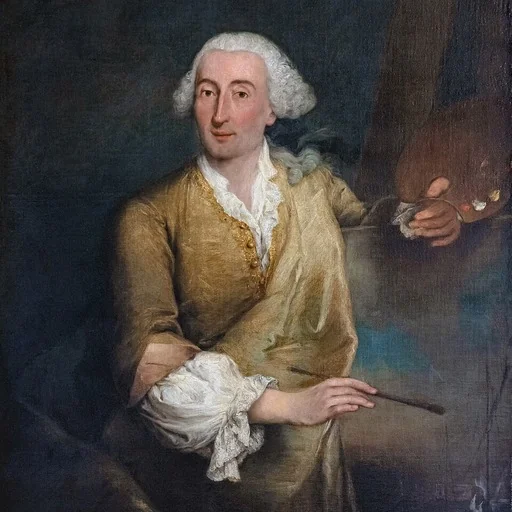
Francesco Lazzaro Guardi (Italian pronunciation: ; 5 October 1712 – 1 January 1793) was an Italian painter, nobleman, and a member of the Venetian School.

Museum
Royal Museums of Fine Arts of Belgium
Continue through works from the same source collection.