Artwork
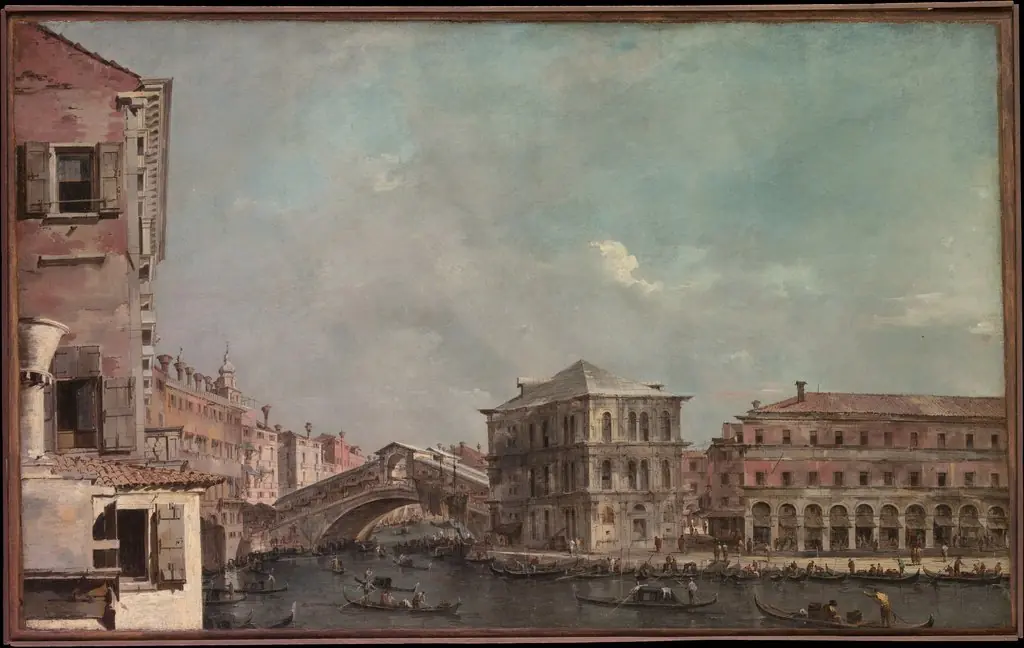
Blick auf den Rialto und den Palazzo dei Camerlenghi
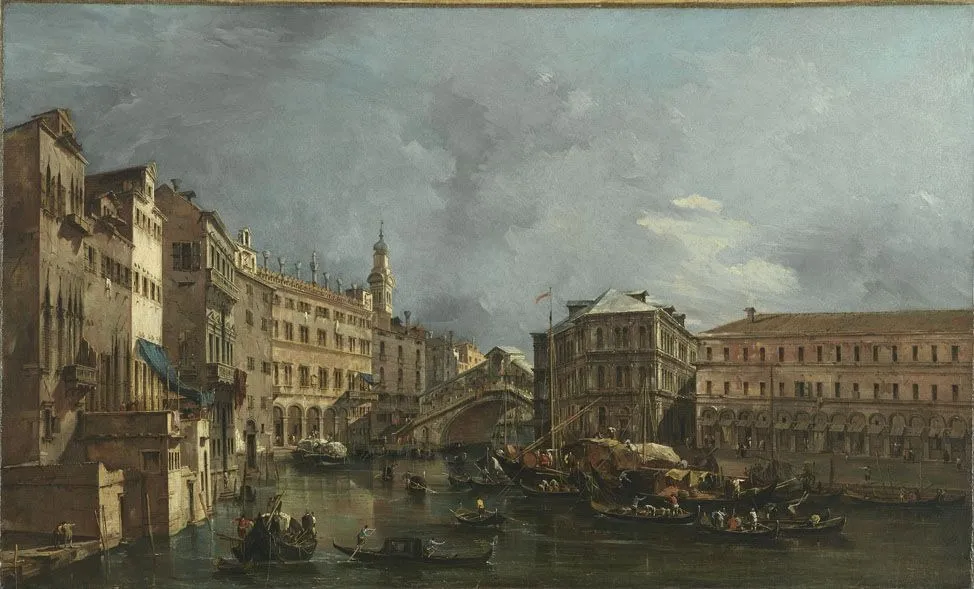
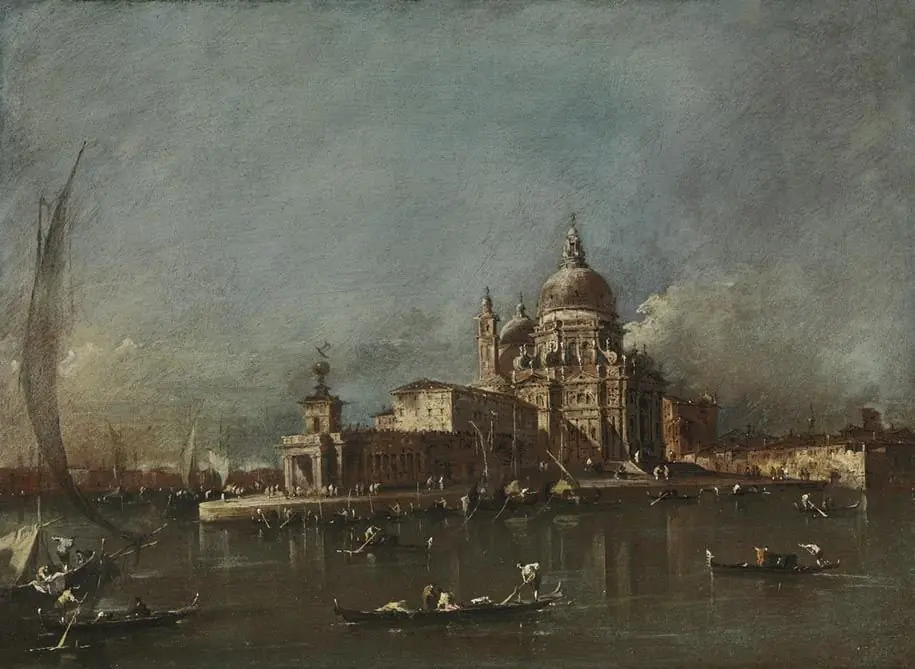
Blick auf den Rialto und den Palazzo dei Camerlenghi is an unspecified painting by the Rococo painting artist Francesco Guardi. It dates from 1760 and is held in the collection of the Bavarian State Painting Collections.
About this work
Overview
Painted in 1760 by Francesco Guardi, this work captures a quiet stretch of Venice’s Grand Canal, focusing on the Rialto Bridge and the Palazzo dei Camerlenghi.
Painted in 1760 by Francesco Guardi, this work captures a quiet stretch of Venice’s Grand Canal, focusing on the Rialto Bridge and the Palazzo dei Camerlenghi. Created shortly after the death of his brother Gian Antonio, the painting reflects Guardi’s transition toward vedute, or urban landscapes, as he moved away from religious and mythological subjects. It is now held in the Alte Pinakothek in Munich.
Subject & Meaning
The scene presents a tranquil, everyday view of Venice’s commercial heart, where architecture and water coexist in quiet harmony. The Rialto, a hub of trade, and the Camerlenghi, a financial administrative building, frame the canal as both a physical and economic artery. Guardi avoids grandeur, instead emphasizing the rhythm of daily life—gondolas drifting, figures moving along the waterfront—suggesting a city at peace with its own pace.
Technique & Style
Guardi employs loose, rapid brushwork to suggest movement in water and air, departing from the precise lines of Canaletto’s vedute. His palette is subdued—soft grays, browns, and beiges—enhancing the atmospheric mood. Light is rendered through delicate tonal shifts rather than sharp contrasts, capturing the diffuse glow of a cloudy day. The effect is impressionistic, with architecture suggested rather than meticulously defined.
History & Provenance
The painting entered the Alte Pinakothek’s collection in the 19th century, likely through acquisition by Bavarian patrons interested in Venetian art. Its survival through centuries of political and cultural change reflects its quiet appeal among collectors drawn to Guardi’s evocative, non-heroic vision of Venice. No major alterations or restorations are documented, preserving its original tonal harmony.
Context
In mid-18th-century Venice, the city’s economic influence was waning, yet its visual identity remained a draw for travelers and artists. Guardi’s vedute catered to this nostalgia, offering intimate, unidealized glimpses of a city in transition. Unlike the grandeur of earlier Baroque traditions, his work embraced impermanence—fleeting light, shifting water, weathered stone—mirroring Venice’s own quiet decline.
Legacy
Guardi’s approach to vedute influenced later generations of landscape painters, particularly those interested in atmosphere over detail. His emphasis on light, motion, and emotional tone prefigured 19th-century Impressionism. Though less celebrated in his time than Canaletto, his work is now recognized for its poetic sensitivity to place and time, offering a more introspective vision of Venice.
Artist & collection
Artist
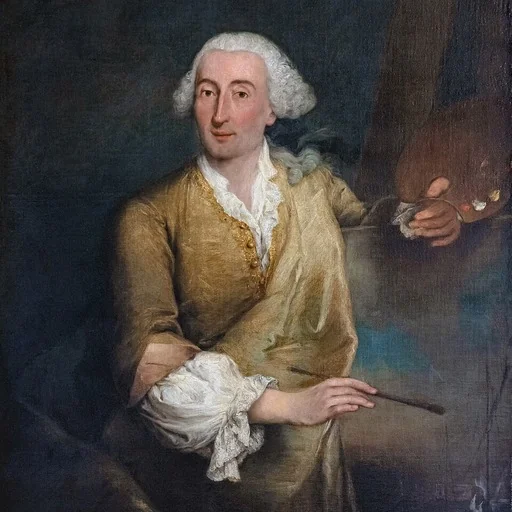
Francesco Lazzaro Guardi (Italian pronunciation: ; 5 October 1712 – 1 January 1793) was an Italian painter, nobleman, and a member of the Venetian School.

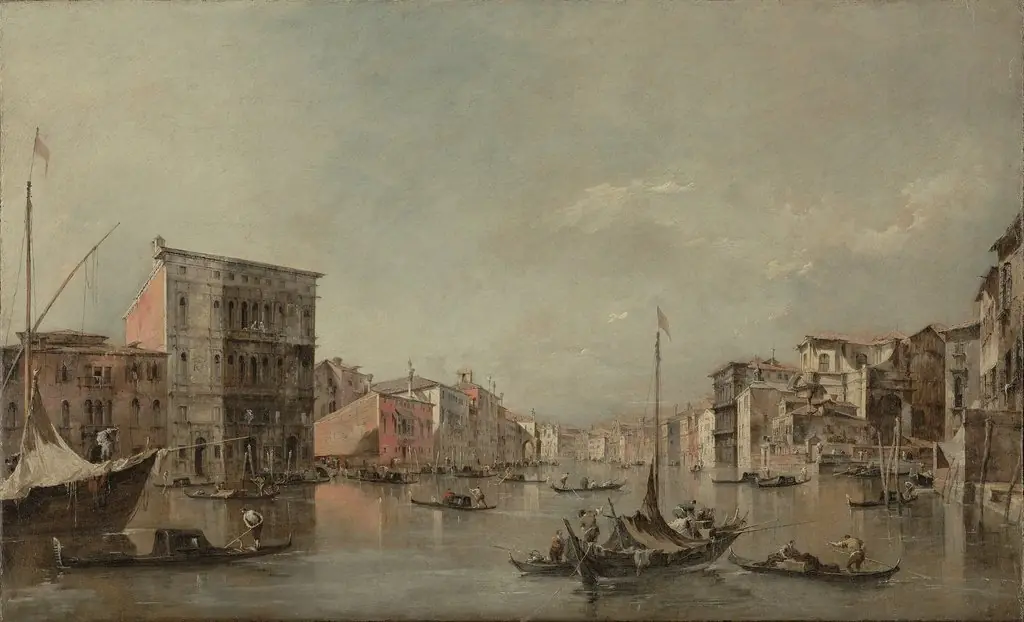 The Grand Canal in Venice with Palazzo Bembo
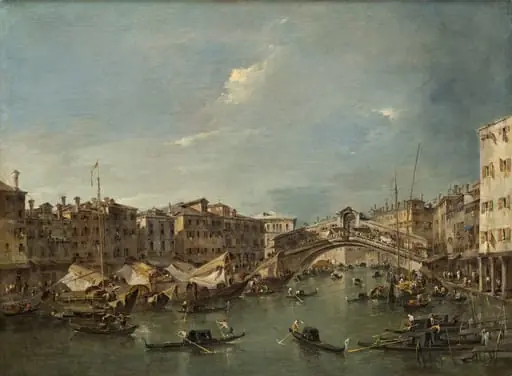 Grand Canal with the Rialto Bridge, Venice
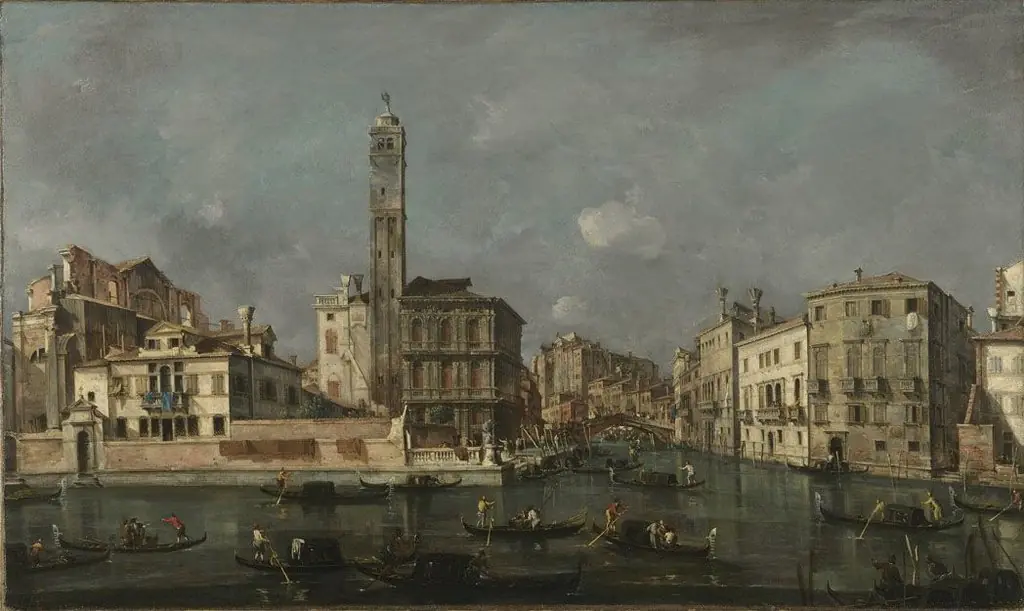 Canal Grande bei San Geremia
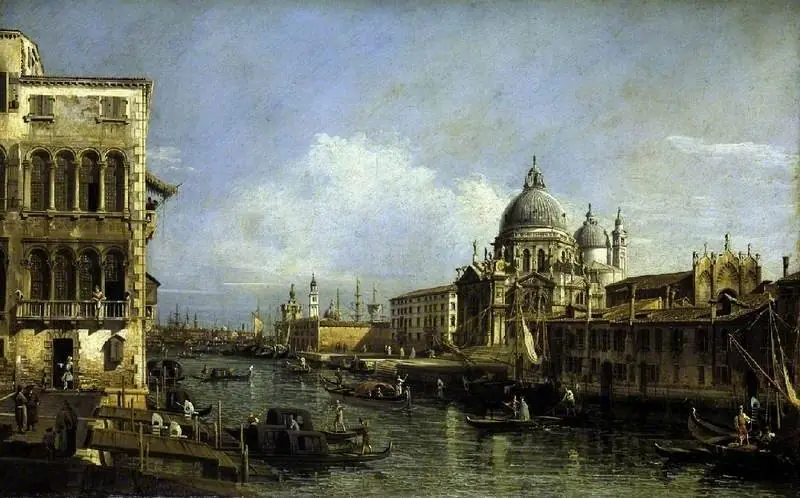 A View at the Entrance of the Grand Canal, Venice
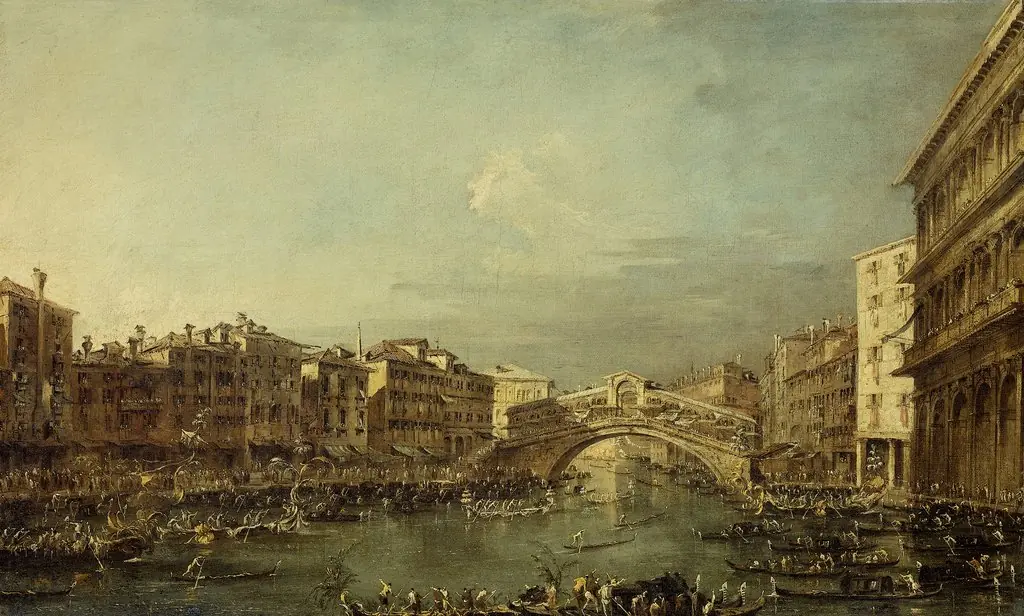 A Regatta on the Grand Canal with the Rialto Bridge in Venice
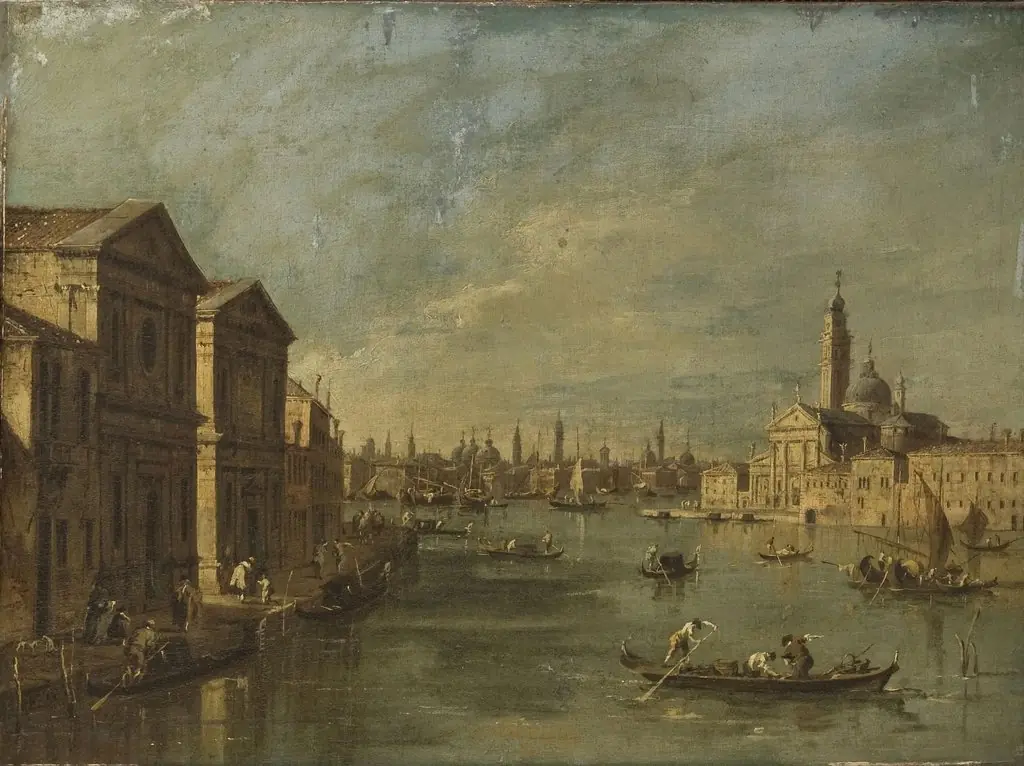 View between the Giudecca and San Giorgio Maggiore
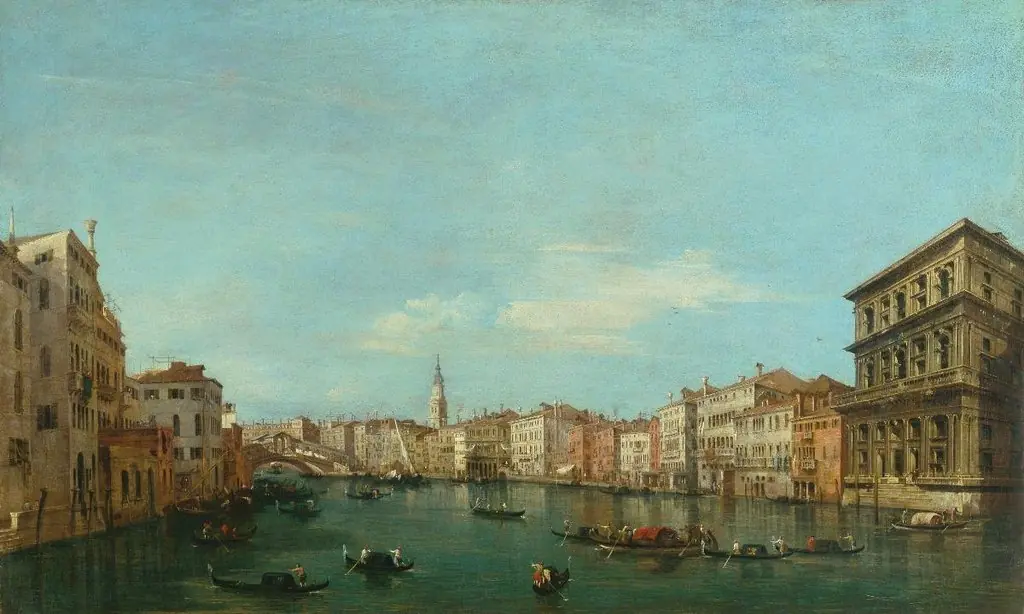 Il Canal Grande a palazzo Grimani, verso il ponte di Rialto
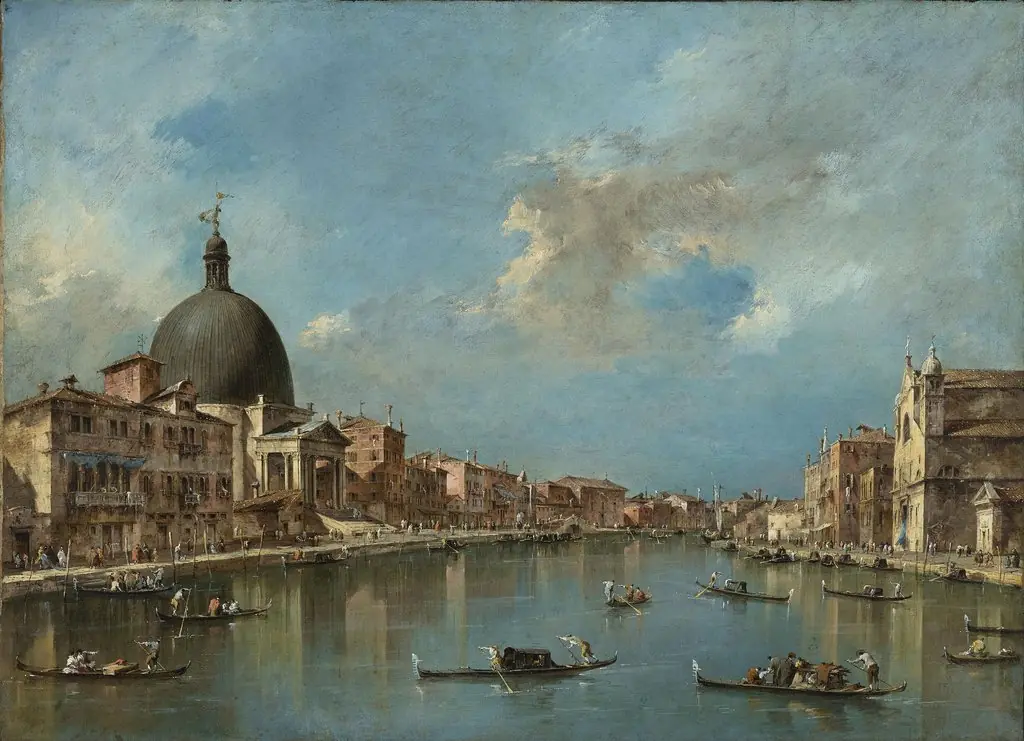 The Grand Canal with San Simeone Piccolo and Santa Lucia
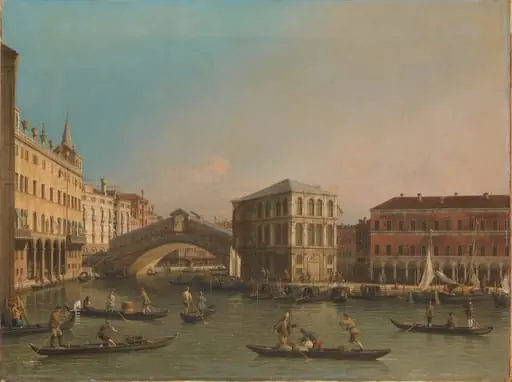 Untitled
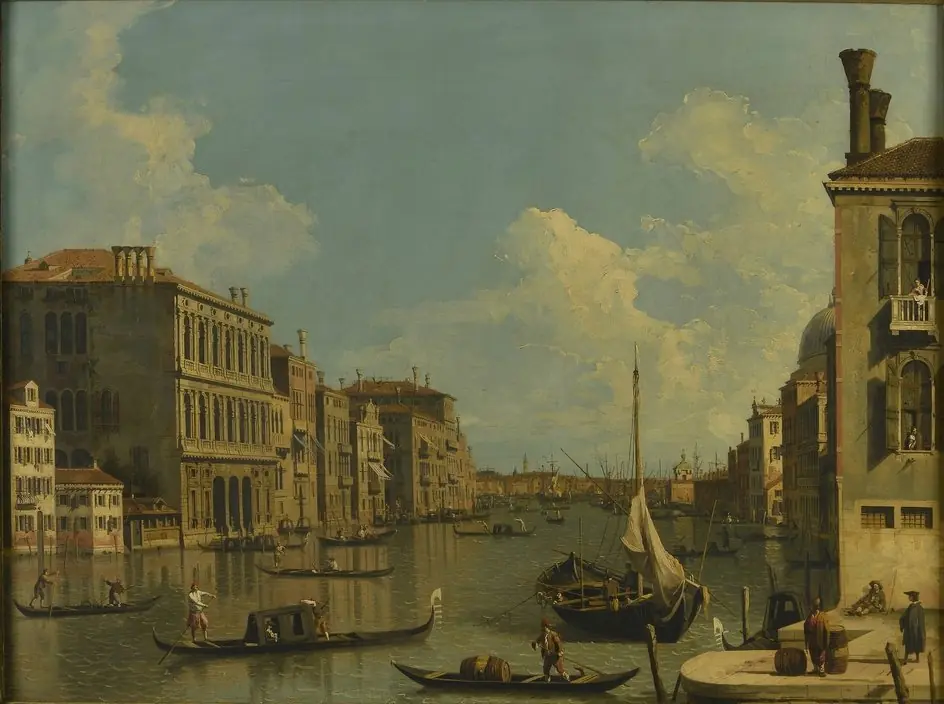 The Grand Canal, looking East from S. Vio
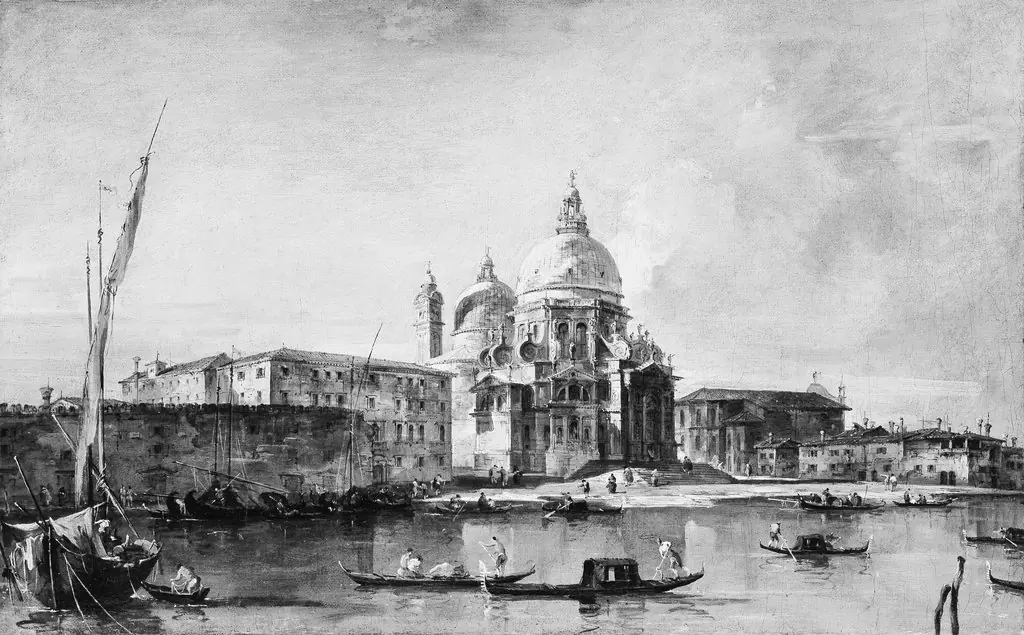
 Blick auf Santa Maria della Salute und die Dogana