Artwork
Pyramus and Thisbe
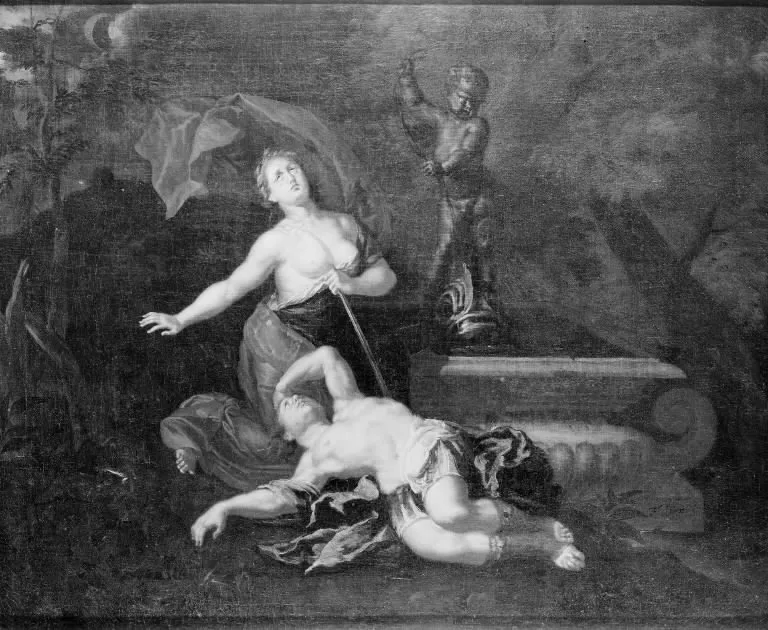
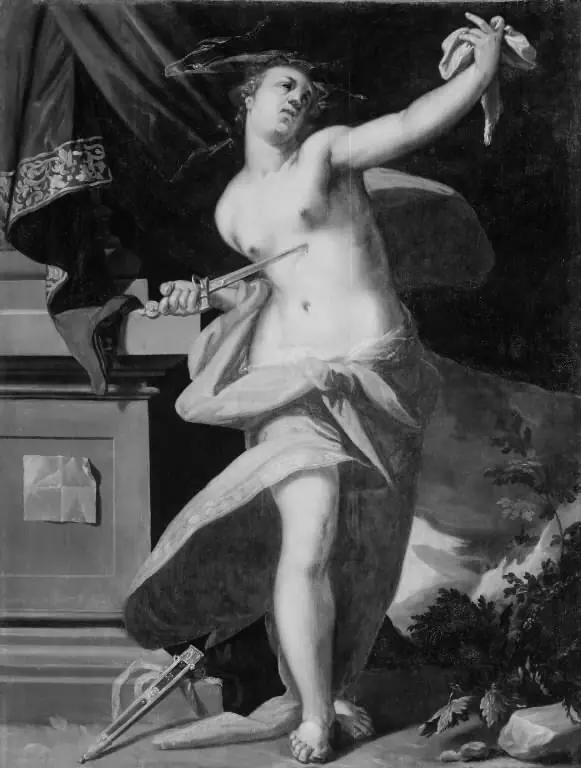
Pyramus and Thisbe is an oil painting by the Early Baroque Italian artist Francesco Liberti. It dates from 1629 and is held in the collection of the Statens Museum for Kunst.
About this work
Overview
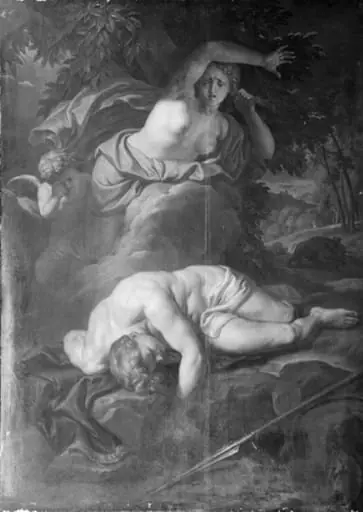
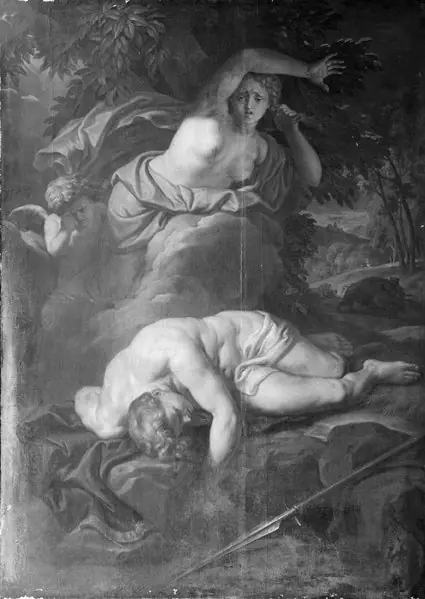
Pyramus and Thisbe is a 1629 oil painting by Francesco Liberti, housed at the Statens Museum for Kunst. The work captures a pivotal, emotionally charged moment from the mythological tale of Pyramus and Thisbe.
Subject & Meaning
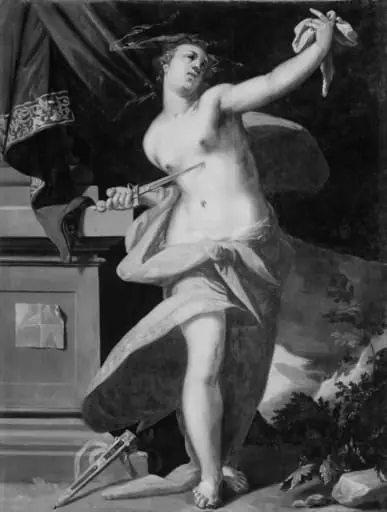
The painting depicts a dramatic outdoor scene where a woman (Thisbe) stands over a fallen man (Pyramus), holding a sword in one hand and extending the other. A statue in the background amplifies the dramatic tension, conveying the tragic intensity of the myth.
Technique & Style
Liberti employs chiaroscuro, leveraging strong light-dark contrasts to create three-dimensional depth and emphasize the emotional intensity of the scene. This technique heightens the sense of volume and drama.
History & Provenance
Created in 1629, the painting is part of the collection at the Statens Museum for Kunst, though specific details of its acquisition or earlier ownership are not provided here.
Context
The work draws on the ancient myth of Pyramus and Thisbe, a story of star-crossed lovers, incorporating elements like the statue (possibly symbolizing fate or observers) to enrich the narrative context.
Legacy
While specific legacy details are not outlined, the painting's use of chiaroscuro and depiction of a classic myth suggest its contribution to the broader tradition of Baroque-era mythological art.
Artist & collection
Artist
Francesco Liberti painted dramatic scenes from ancient myths. In 1629 he showed Pyramus and Thisbe, a tragic love story split by a bloody misunderstanding, and Narcissus, the proud youth who falls for his own…