Artwork
The Holy Family
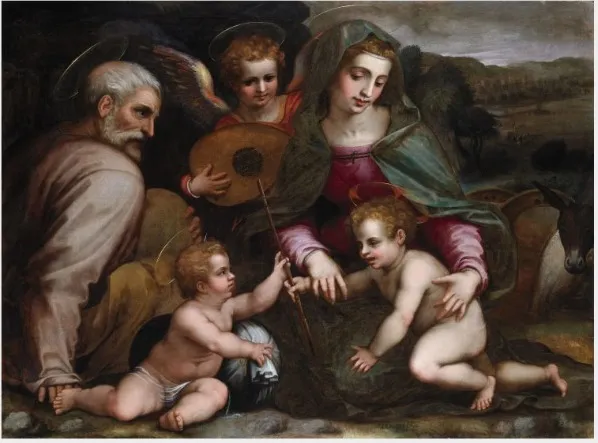
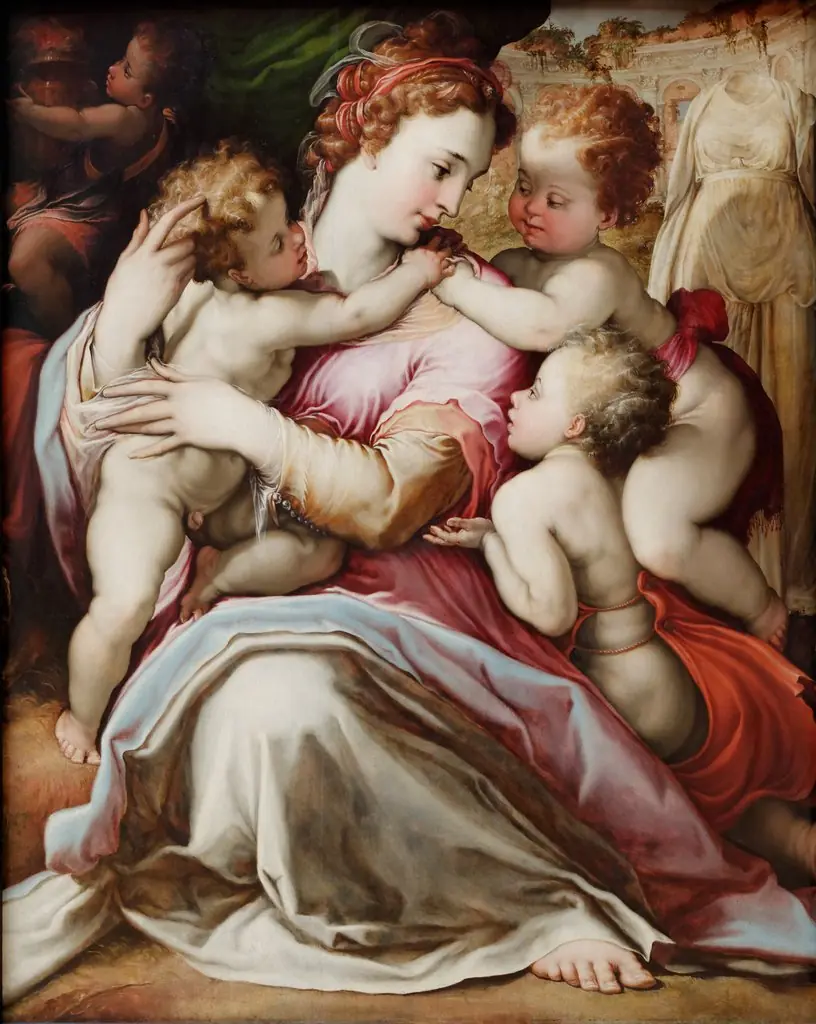
The Holy Family is an unspecified painting by the Mannerist artist Francesco Salviati. It dates from 1500 and is held in the collection of the National Gallery of Ireland.
About this work
Overview
Trained in Florence and later employed in Rome, Venice, and Bologna, Salviati produced works for elite patrons, including members of the Medici family.
Francesco Salviati, a Florentine artist active during the mid-sixteenth century, executed this depiction of the Holy Family. Trained in Florence and later employed in Rome, Venice, and Bologna, Salviati produced works for elite patrons, including members of the Medici family. The painting exemplifies Mannerist tendencies through its deliberate elongation of forms and intricate spatial arrangement.
Subject & Meaning
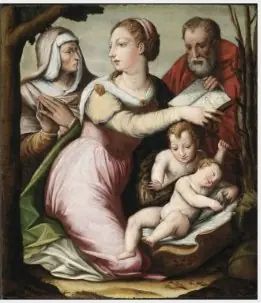
The scene centers on the Virgin Mary, seated with the Christ Child, while Saint Joseph stands nearby. A young John the Baptist kneels in reverence, and a winged cherub strums a lute, introducing a devotional yet intimate atmosphere. The grouping reflects traditional Christian iconography, emphasizing familial bonds and divine grace within a natural, rocky setting.
Technique & Style
Salviati employs chiaroscuro to model figures, contrasting luminous surfaces with deep shadows to enhance three-dimensionality. The figures display Mannerist traits: elongated proportions, graceful gestures, and a refined elegance. Drapery folds are rendered with precision, and the composition balances figural interaction against a sparse landscape, directing focus toward the sacred narrative.
History & Provenance
Dated to approximately 1540–1550, the painting reflects Salviati’s mature period, likely commissioned for a private patron or ecclesiastical setting. Its early history remains partially documented, though it aligns with works produced during his tenure in Rome, where he received numerous religious commissions. The painting has since entered museum collections, preserving its devotional and artistic significance.
Context
During the mid-sixteenth century, religious art in Italy responded to both Counter-Reformation ideals and Mannerist innovation. Salviati’s Holy Family merges piety with artistic sophistication, catering to patrons who valued technical skill alongside spiritual devotion. The inclusion of musical elements and tender gestures reflects broader Renaissance humanist influences, blending sacred themes with human intimacy.
Legacy
The painting exemplifies Mannerism’s departure from High Renaissance naturalism, prioritizing expressive refinement over strict anatomical accuracy. Salviati’s work influenced later artists through its compositional elegance and use of light. As part of his broader oeuvre, this depiction of the Holy Family contributes to understanding sixteenth-century religious art’s evolving stylistic and thematic concerns.
Artist & collection
Artist
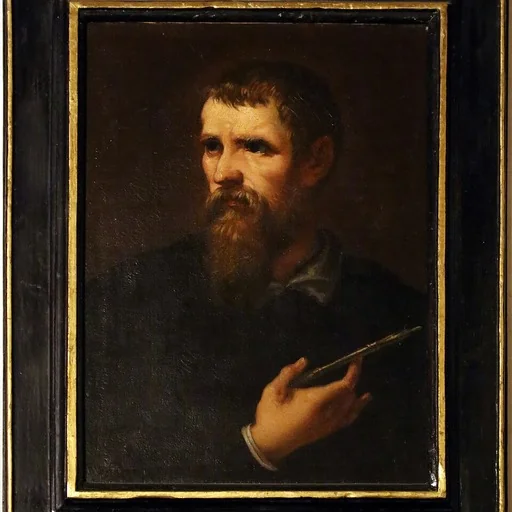
Francesco Salviati or Francesco de' Rossi (1510 – 11 November 1563) was an Italian Mannerist painter who lived and worked in Florence, with periods in Bologna and Venice, ending with a long period in Rome, where he died.

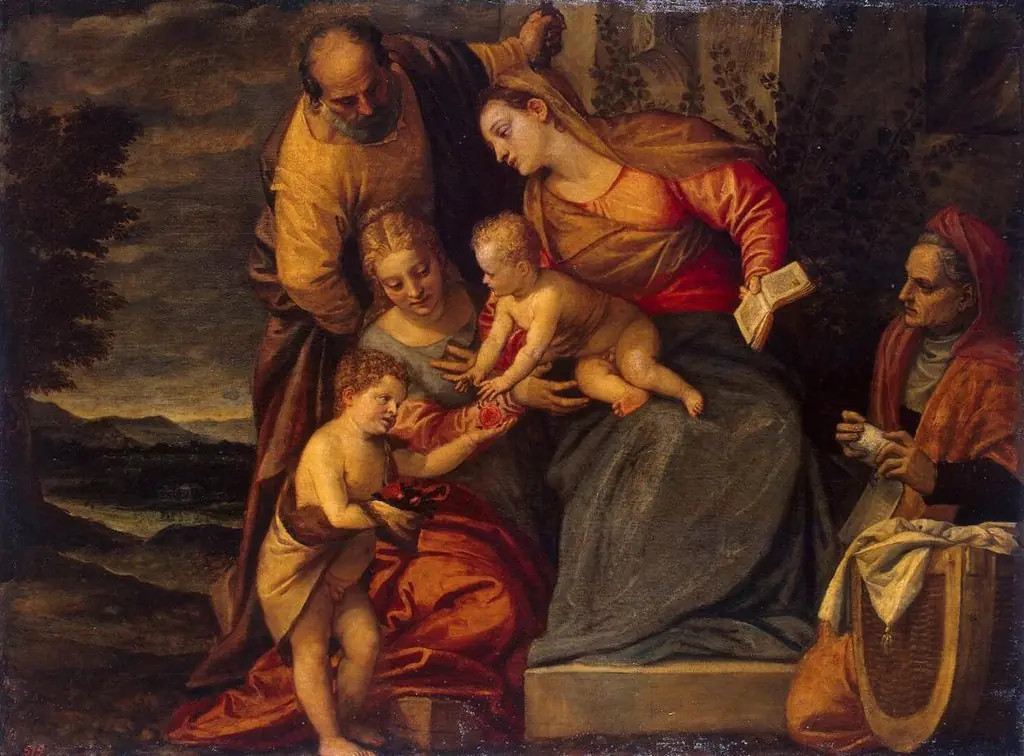 Holy Family with Sts Catherine, Anne and John
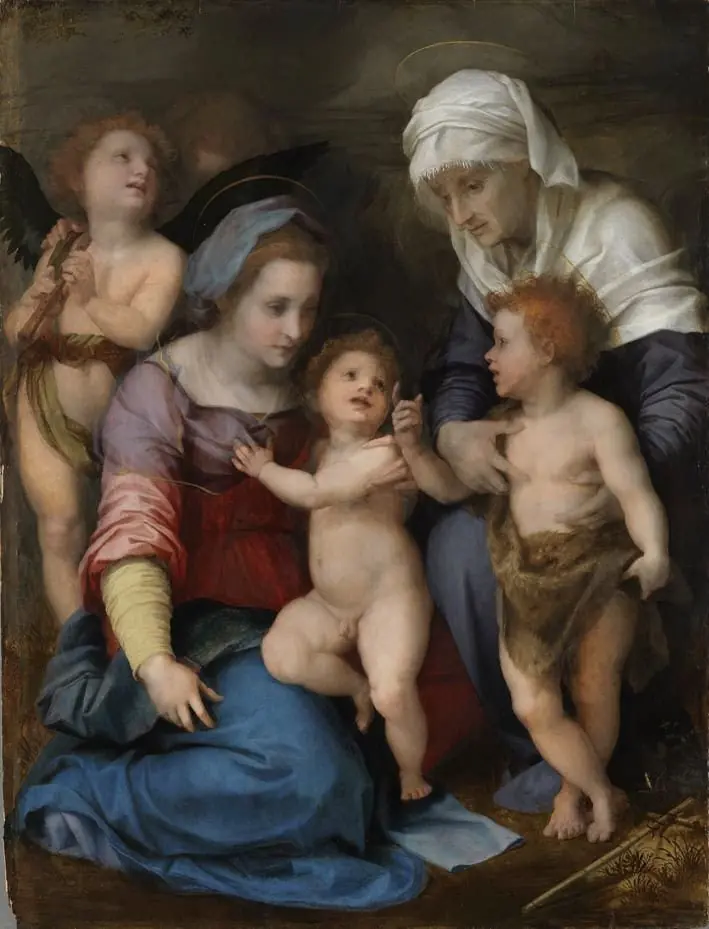 The Holy Family
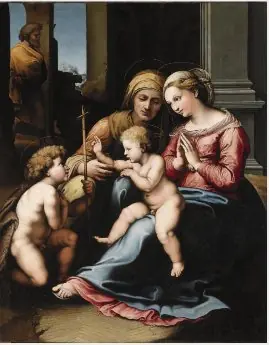 The Holy Family with Saints John the Baptist and Elizabeth
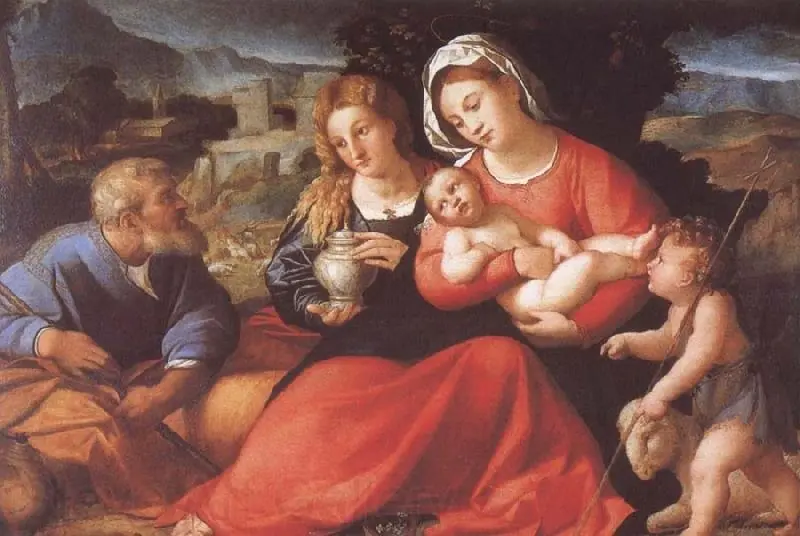 Holy Family with St. John and Mary Magdalene
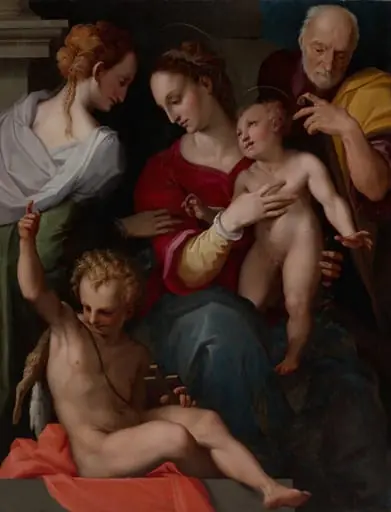 Holy Family with the Mystic Marriage of Saint Catherine
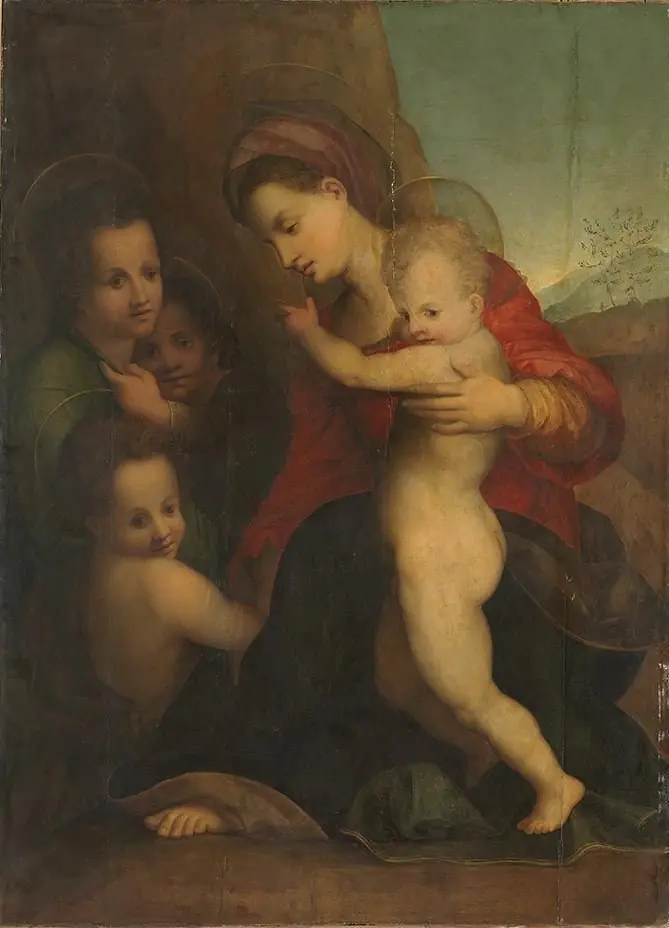 Mary with Child, John the Baptist, and Angels
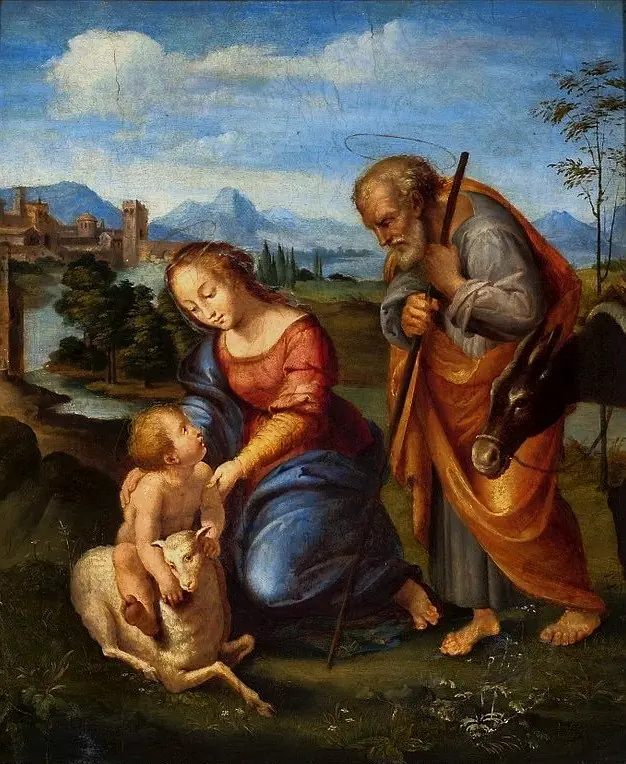 Holy Family with a lamb
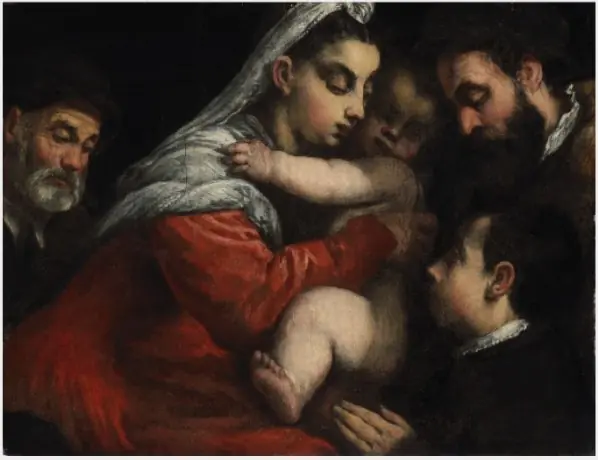 The Holy Family with Donors
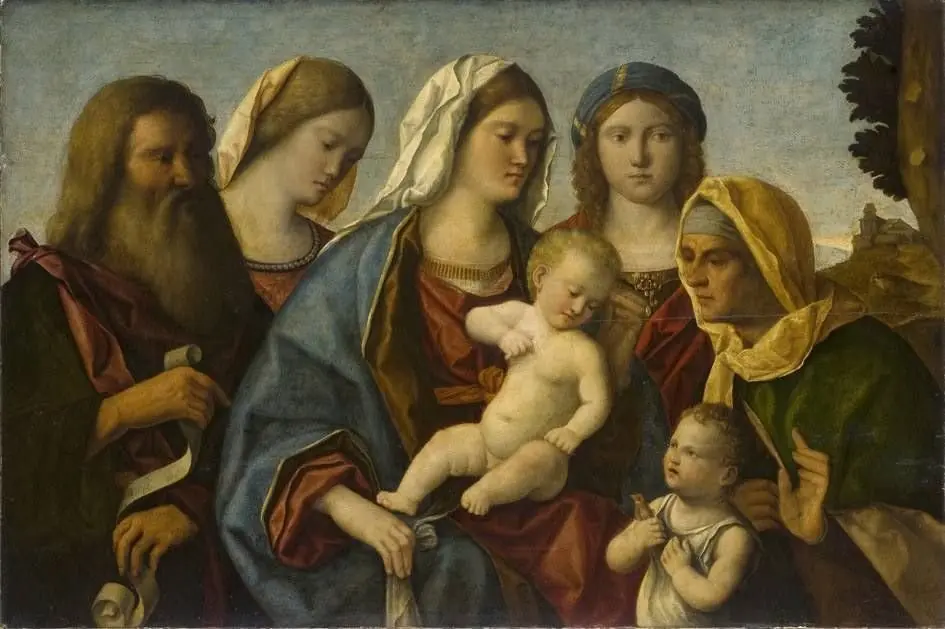 Hl. Sippe
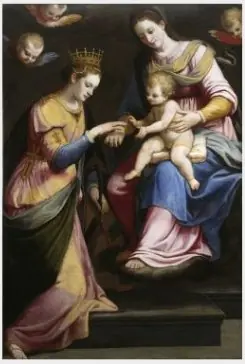 The Mystic Marriage of Saint Catherine
 The Virgin and Child with Saints Elizabeth and John the Baptist
 Holy family