Artwork
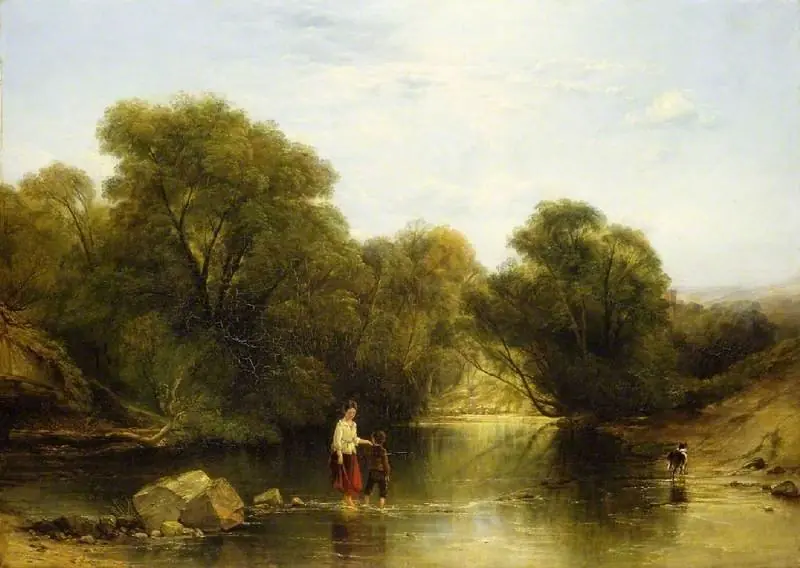
Still Waters: A Lady Fishing and Her Companion Reclining beside Her
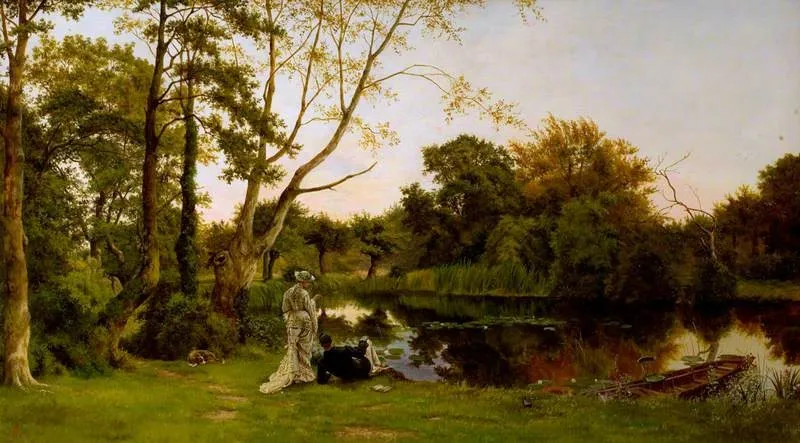
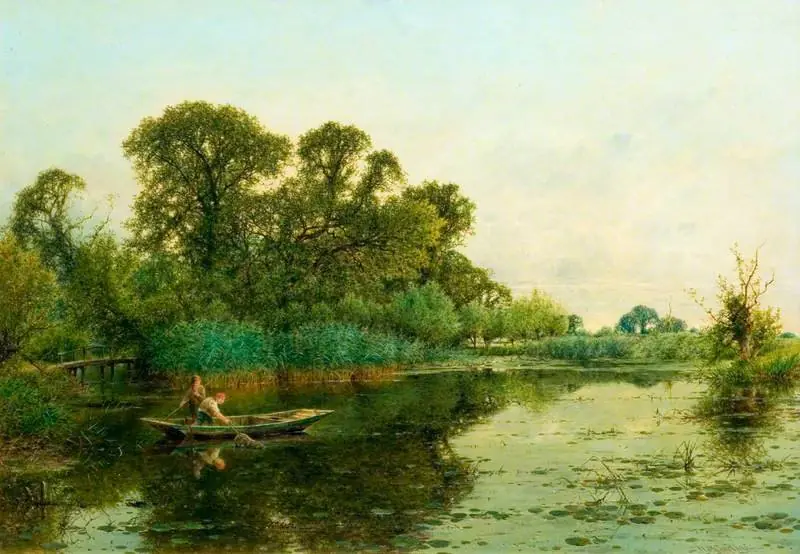
Still Waters: A Lady Fishing and Her Companion Reclining beside Her is an oil painting by the Impressionist artist Francis Michael Trappes. It is held in the collection of the Victoria and Albert Museum.
About this work
The painting is called Still Waters: A Lady Fishing and Her Companion Reclining beside Her.
It's a genre scene, which means it shows everyday life. This type of scene was popular in the 19th century. The fact that it depicts a lady fishing and her companion reclining suggests a peaceful atmosphere.
You can learn more about the artist's style by looking up Francis Michael Trappes.
Overview
Created in 1890, this oil on canvas by Francis Michael Trappes portrays a tranquil riverside moment. Titled Still Waters: A Lady Fishing and Her Companion Reclining beside Her, the work is part of the Victoria and Albert Museum’s collection. The composition captures a quiet slice of everyday life, rendered with a calm, measured palette that emphasizes the stillness of the scene.
Subject & Meaning
The painting shows a young woman bent over a fishing line while a male companion lies nearby, both absorbed in the leisurely activity. Their relaxed postures and the gentle ripple of water suggest a harmonious relationship between humans and nature, inviting viewers to contemplate the simple pleasure of outdoor recreation in a genteel setting.
Technique & Style
Trappes employs a smooth, realistic handling of oil paint, focusing on fine detail in the figures’ clothing and the surrounding foliage. Light is diffused across the water’s surface, creating subtle reflections that enhance the sense of depth. The overall style aligns with late‑Victorian genre painting, where narrative clarity and modest sentiment are emphasized over dramatic effect.
History & Provenance
After its completion in the early 1890s, the canvas entered the collection of the Victoria and Albert Museum, where it remains on display. Documentation traces its acquisition to the museum’s late‑19th‑century efforts to broaden holdings of British genre works, reflecting the period’s interest in domestic and pastoral subjects.
Context
Genre scenes depicting leisurely pursuits were especially popular in the nineteenth century, catering to a middle‑class audience that valued moralizing yet approachable imagery. Trappes’ choice of a fishing outing reflects contemporary ideals of genteel recreation, aligning the work with broader trends in British art that celebrated the beauty of ordinary moments.
Artist & collection