Artwork
Battersea Reach
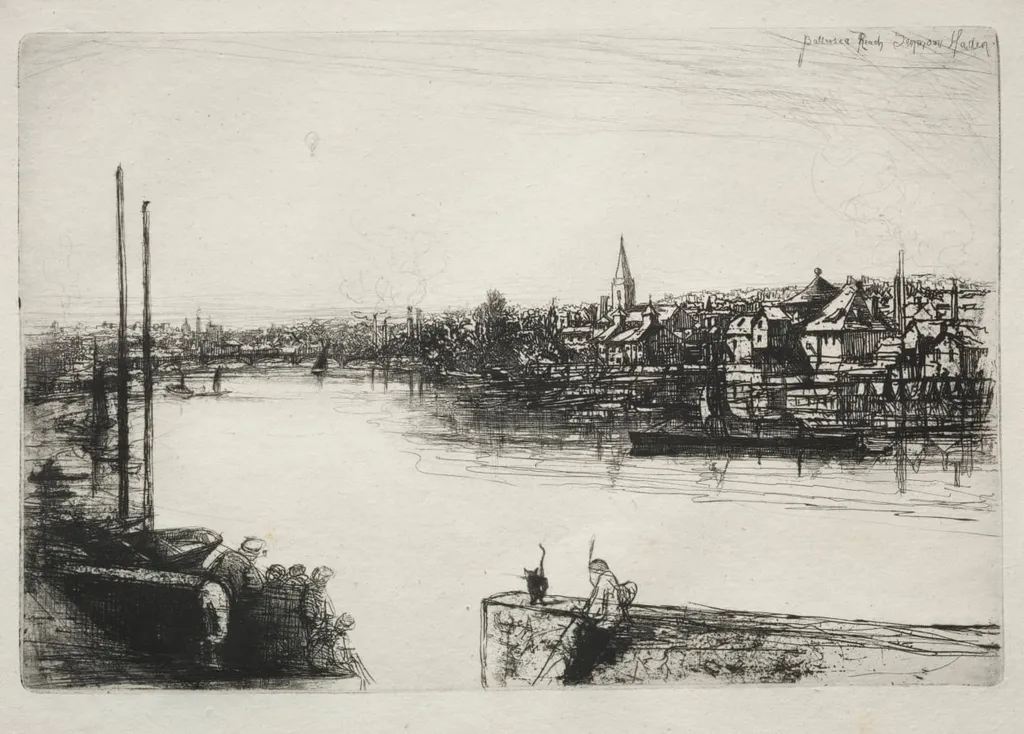
Battersea Reach is a print by the Impressionist artist Francis Seymour Haden. It dates from 1863 and is held in the collection of the Cleveland Museum of Art.
About this work
Overview
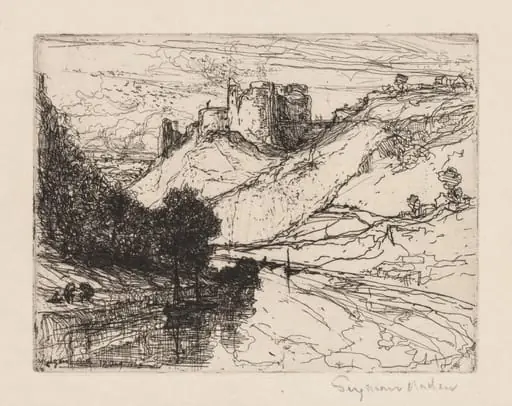
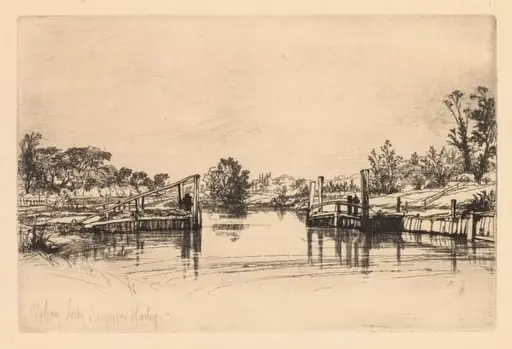
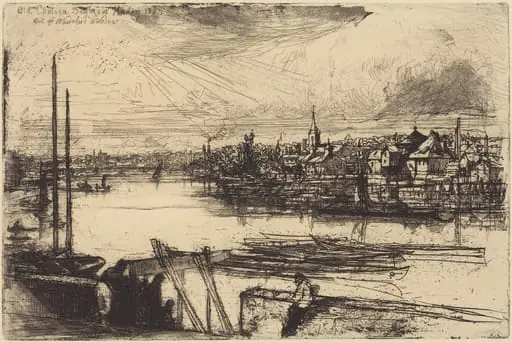
Battersea Reach is a drypoint print by Francis Seymour Haden, dated 1863. Executed with minimal lines and subtle tonal variations, it captures a tranquil stretch of the River Thames near Battersea. The work is part of the collection at The Cleveland Museum of Art, where it is valued for its quiet observation of everyday landscape rather than dramatic narrative.
Subject & Meaning
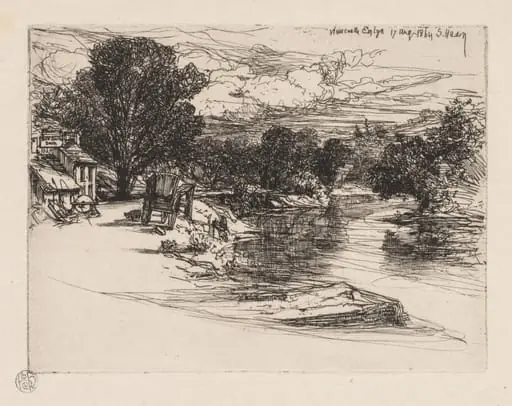
The scene depicts a quiet riverside at twilight, with modest buildings lining the far bank and two boats resting on the water—one drifting, the other moored. There is no human activity beyond the solitary figure in the smaller vessel. The composition conveys stillness and solitude, reflecting Haden’s interest in the unremarkable rhythms of urban river life, free from idealization or sentiment.
Technique & Style
Light and shadow are implied through sparse, uneven strokes, with minimal detail in the water’s surface—only faint, horizontal marks hint at reflections.
Haden employed drypoint engraving to create soft, broken lines that suggest form through suggestion rather than definition. Light and shadow are implied through sparse, uneven strokes, with minimal detail in the water’s surface—only faint, horizontal marks hint at reflections. The sketchlike quality anticipates later Impressionist approaches, though rooted in the tradition of topographical drawing.
History & Provenance
Created in 1863, the print was made during a period when Haden was deeply engaged with etching as an independent art form, distinct from reproductive engraving. It entered The Cleveland Museum of Art’s collection through established acquisition channels in the 20th century, where it remains as an example of British printmaking’s shift toward personal expression.
Context
In mid-19th century London, the Thames was both a working waterway and a subject for artists seeking authenticity beyond studio conventions. Haden, a surgeon by training, turned to printmaking as a private pursuit, capturing scenes along the river with a directness that contrasted with the polished aesthetics of academic art of the time.
Legacy
Battersea Reach exemplifies Haden’s role in elevating etching as a medium for personal vision. His emphasis on atmosphere and informal composition influenced later generations of printmakers, particularly those drawn to the immediacy of sketch-based work. Though not widely known outside specialist circles, his approach helped bridge 19th-century realism and modernist experimentation.
Artist & collection