Artwork
Dundrum River and the Two Asses
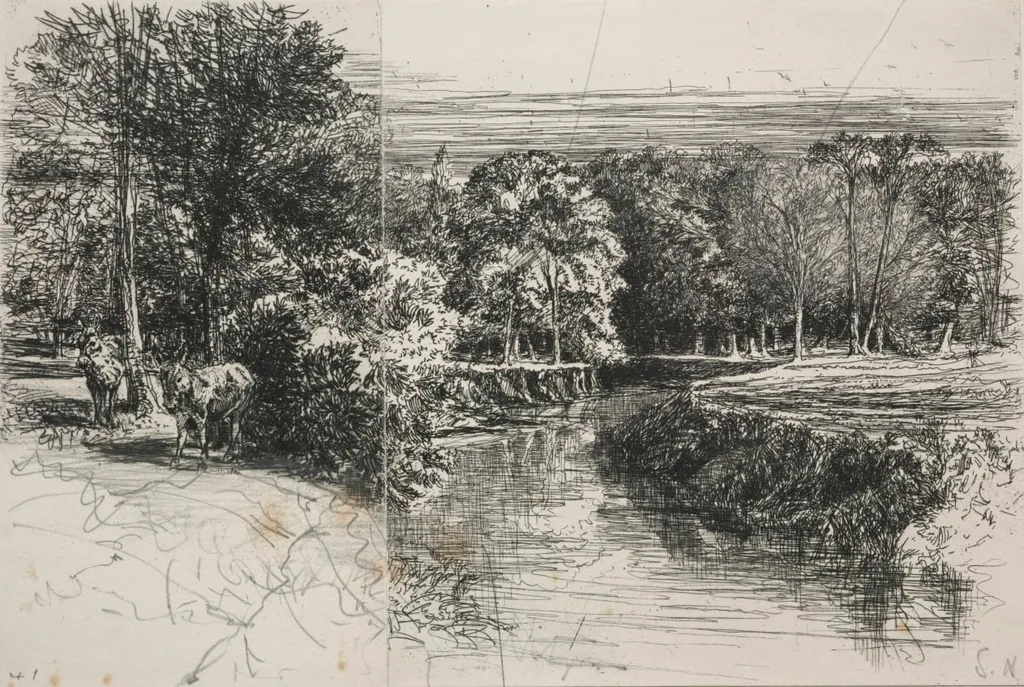
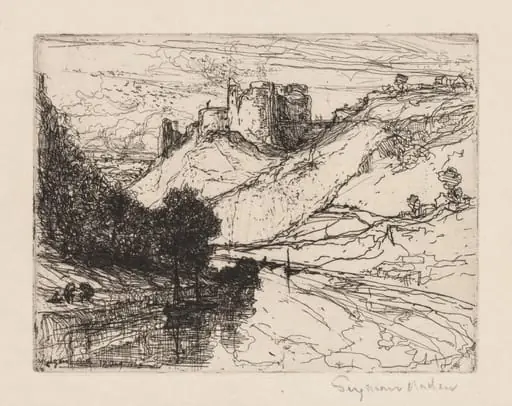
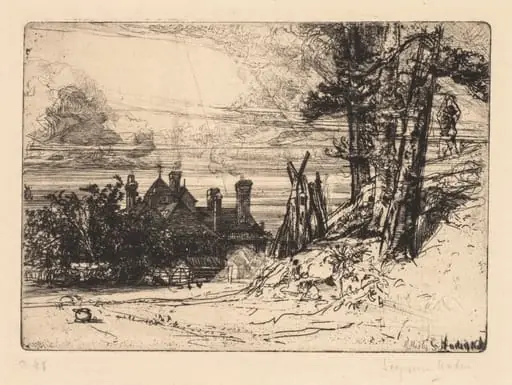
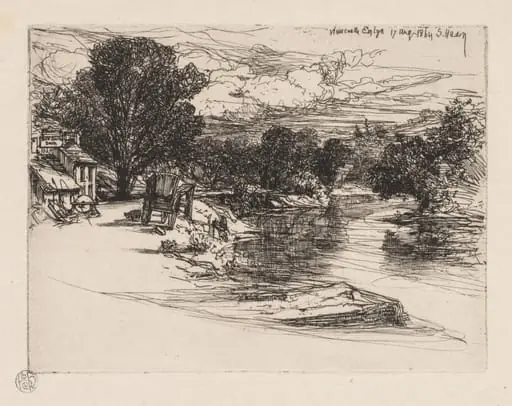
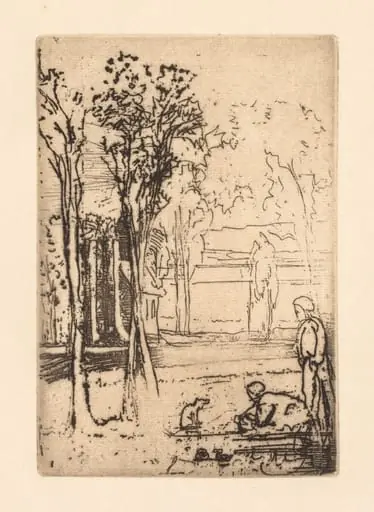
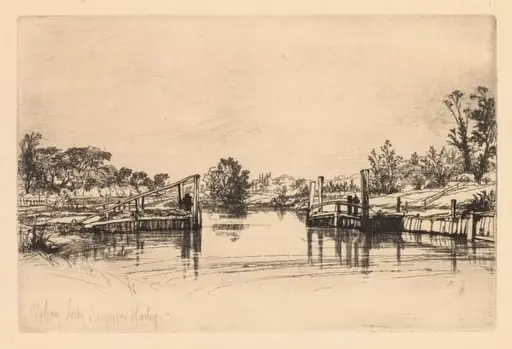
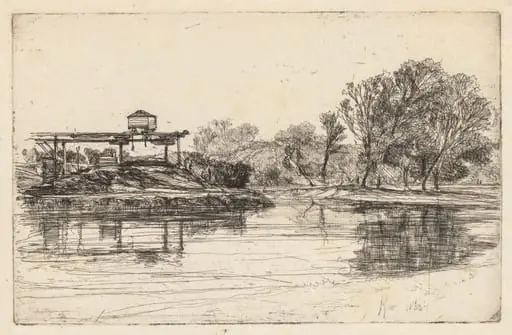
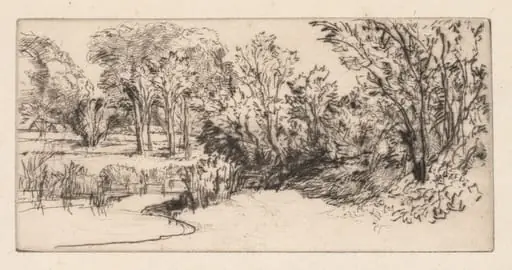
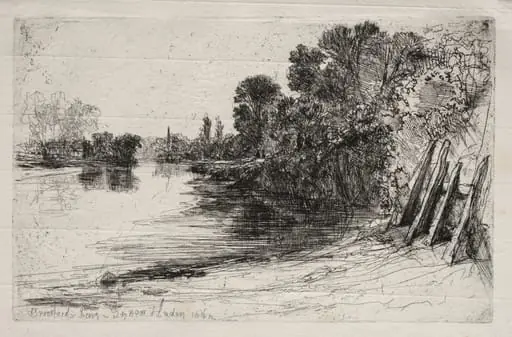
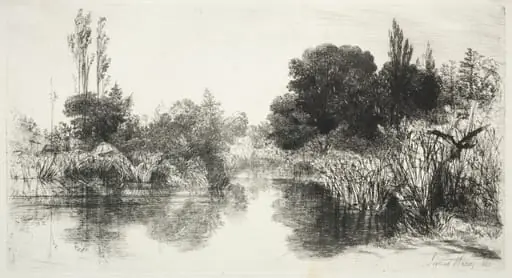
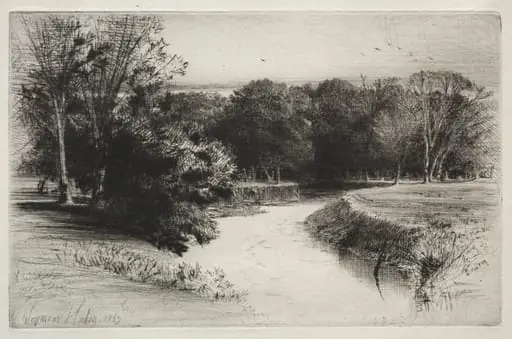
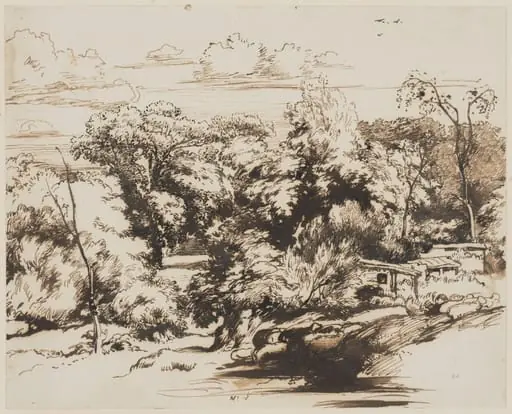
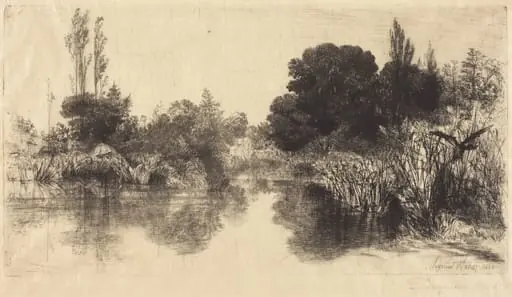
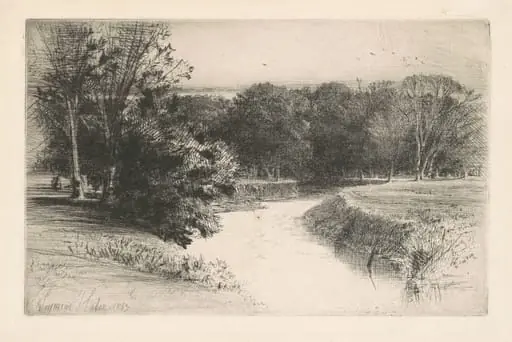
Dundrum River and the Two Asses is a print by the Impressionist artist Francis Seymour Haden. It dates from 1863 and is held in the collection of the Cleveland Museum of Art.
About this work
Overview
Francis Seymour Haden, a London-based surgeon, pursued etching as a passionate sideline during the medium’s 19th-century revival.
Francis Seymour Haden, a London-based surgeon, pursued etching as a passionate sideline during the medium’s 19th-century revival. Though trained in medicine, his artistic output soon drew greater recognition. This print, depicting a rural Irish riverscape, exemplifies his experimental approach: he reconfigured a single copper plate by cutting and reassembling its halves, then enhanced the composition with graphite additions.
Subject & Meaning
The scene captures a tranquil stretch of the Dundrum River, with two donkeys standing near the water’s edge beneath a canopy of trees. There is no narrative drama—only the quiet presence of animals and landscape. The composition suggests a moment of stillness, observed rather than staged, reflecting Haden’s interest in unembellished naturalism and the subtle rhythms of rural life.
Technique & Style
Haden employed traditional etching on copper but disrupted its conventions by slicing the plate into two sections and rejoining them in a new arrangement. He then introduced graphite drawing directly onto the printed surface, softening edges and adjusting tonal balance. This hybrid method blurred the line between print and drawing, allowing for spontaneous revisions and a more intimate, tactile quality.
History & Provenance
Created during Haden’s active years in London’s etching revival, the work likely dates to the 1860s or 1870s. It reflects his personal engagement with Irish landscapes, possibly inspired by visits to County Down. The print’s unusual structure suggests it was a private experiment rather than a commercial production, preserved for its technical innovation rather than mass distribution.
Context
Haden operated within a circle of artists and collectors revitalizing etching as a fine art form, distinct from reproductive printing. His work stood apart by prioritizing personal expression over technical perfection. This piece aligns with broader 19th-century interests in landscape as a subject worthy of direct, unidealized observation, influenced by both Romantic tradition and emerging realism.
Legacy
Though less known than contemporaries like Whistler, Haden’s experimental methods influenced later printmakers who valued process over polish. His recombination of plates and integration of drawing into prints anticipated modernist explorations of medium boundaries. This work remains a quiet testament to his belief that artistic inquiry could thrive outside institutional frameworks.
Artist & collection