Artwork
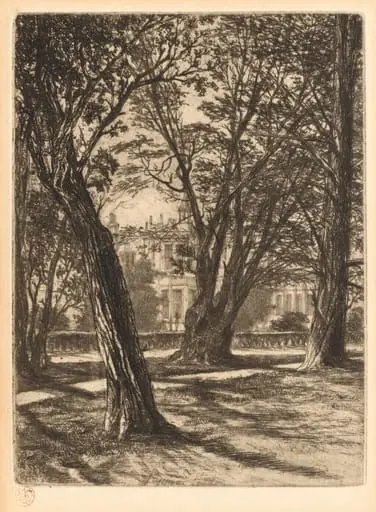
Kensington Gardens, No. 2 (The Larger Plate)
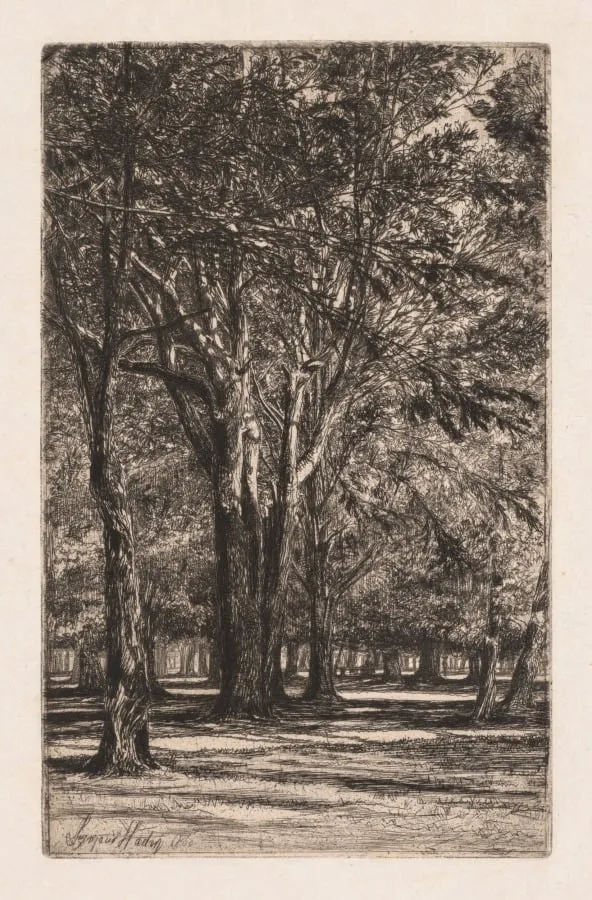
Kensington Gardens, No. 2 (The Larger Plate) is a print by the Impressionist artist Francis Seymour Haden. It dates from 1860 and is held in the collection of the Cleveland Museum of Art.
About this work
Overview
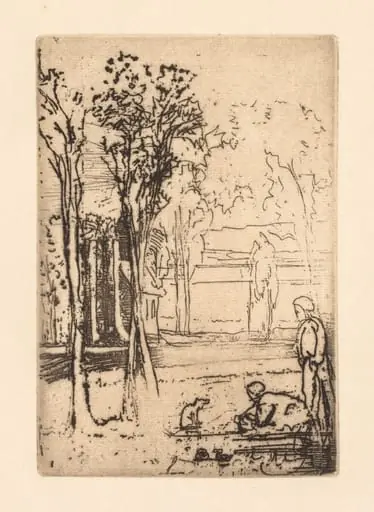
Francis Seymour Haden created Kensington Gardens, No. 2 (The Larger Plate) in 1860 as a drypoint etching. The work is part of a small series depicting London’s Kensington Gardens and is held in the collection of The Cleveland Museum of Art. Rendered in monochrome, it captures a quiet, shaded pathway lined with dense trees, emphasizing atmosphere over narrative detail.
Subject & Meaning
There is no human presence, and the scene conveys stillness and solitude.
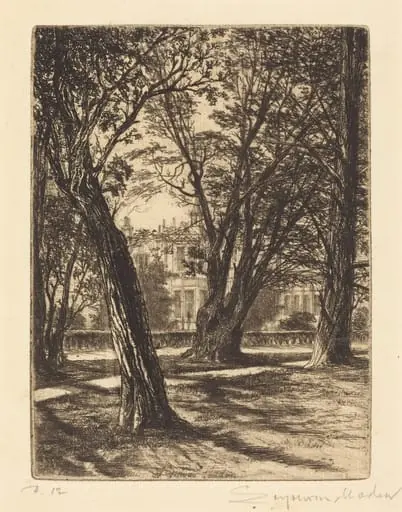
The print portrays a secluded walkway within Kensington Gardens, where towering trees arch overhead, their interwoven branches casting deep shadows across uneven ground. There is no human presence, and the scene conveys stillness and solitude. The composition invites contemplation of nature’s quiet dominance within an urban park, reflecting a shift toward observing ordinary landscapes without idealization.
Technique & Style
Haden employed drypoint etching, using a sharp needle to incise lines directly into a metal plate, creating rich, velvety blacks and textured shadows. The heavy, overlapping strokes suggest the roughness of bark and the density of foliage. The lack of fine detail enhances the mood, prioritizing tonal contrast and tactile surface over precision—a hallmark of his approach to landscape printmaking.
History & Provenance
Created in 1860, this print emerged during Haden’s active period as a printmaker, before he became known primarily as a physician. It was likely produced for private circulation among artists and collectors. The Cleveland Museum of Art acquired the work as part of its broader collection of 19th-century British prints, preserving its place in the history of print revival.
Context
In mid-19th-century Britain, artists increasingly turned to everyday environments as worthy subjects. Haden’s work aligns with the Realist impulse to depict nature without romantic embellishment. His focus on a modest park path reflects a broader cultural interest in the domestic and the unadorned, paralleling developments in literature and painting of the era.
Legacy
Haden’s prints, including this one, influenced later generations of British etchers by demonstrating how technical restraint could evoke emotional depth. Though not widely exhibited in his lifetime, his commitment to direct observation and handcrafted printmaking helped revive interest in etching as a serious artistic medium beyond reproductive purposes.
Artist & collection

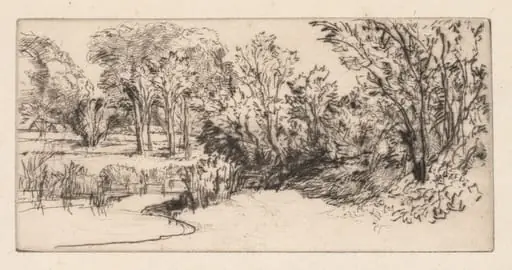
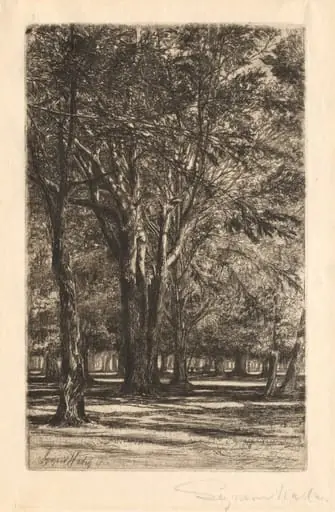 Kensington Gardens, No. 2 (Large Plate)
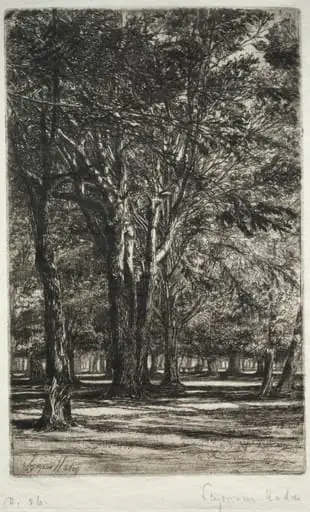 Kensington Gardens (The Larger Plate)
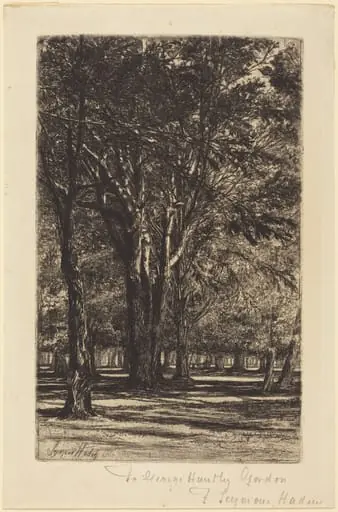 Kensington Gardens (The Larger Plate)
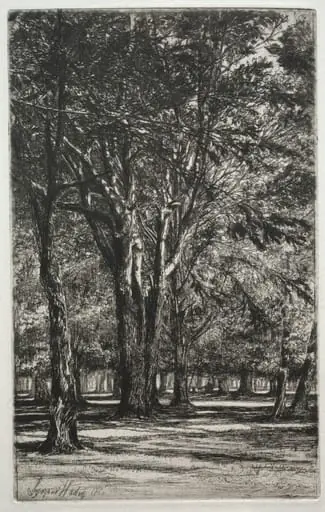 Kensington Gardens (The Large Plate)
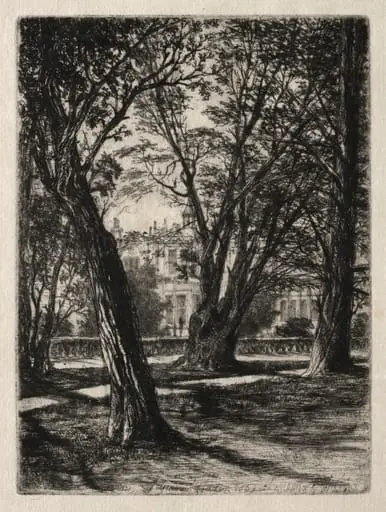 Kensington Gardens
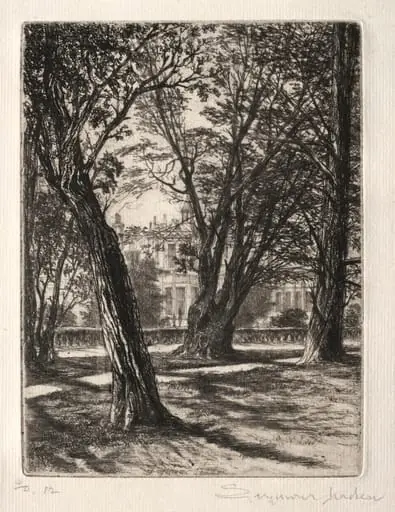 Kensington Gardens (The Small Plate)
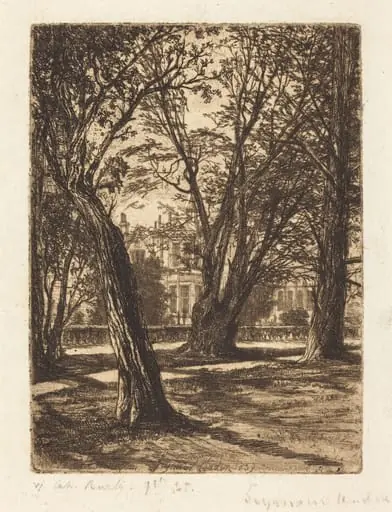 Kensington Gardens (The Small Plate)
 Kensington Gardens, No. 1 (Small Plate)
 Kensington Gardens (The Small Plate)