Artwork
Cardigan Bridge
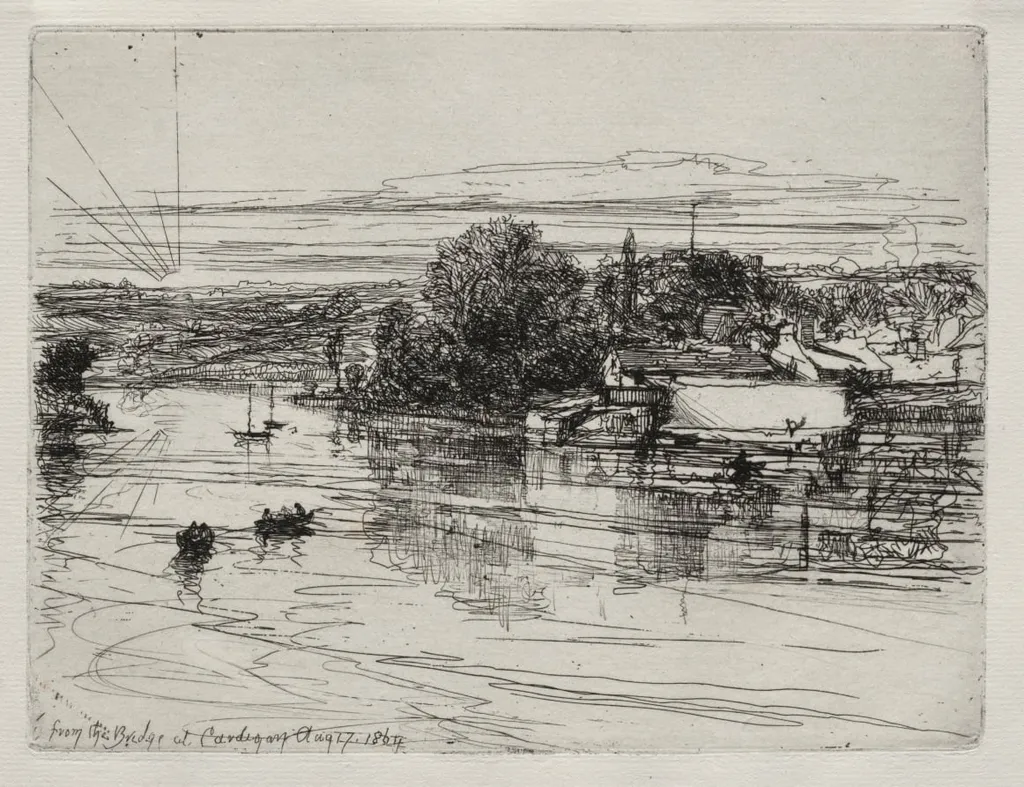
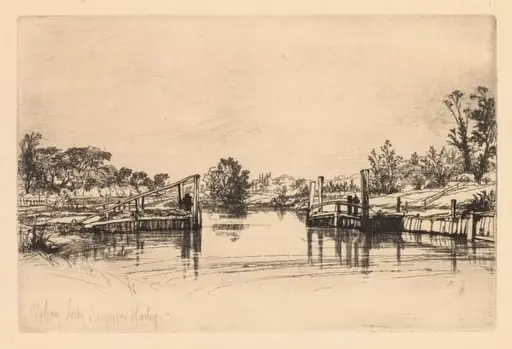
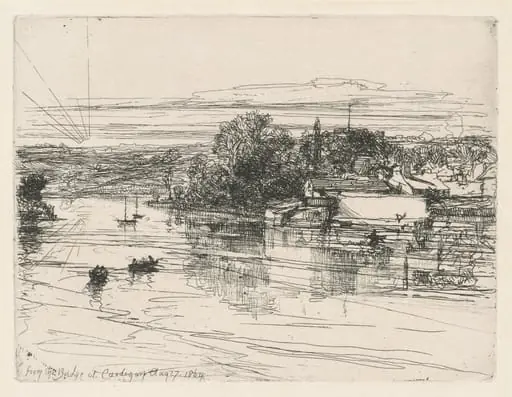
Cardigan Bridge is a print by the Impressionist artist Francis Seymour Haden. It dates from 1864 and is held in the collection of the Cleveland Museum of Art.
About this work
Overview
The Cleveland Museum of Art holds this example of Haden’s topographical etchings, valued for their subtle tonal gradations and restrained detail.
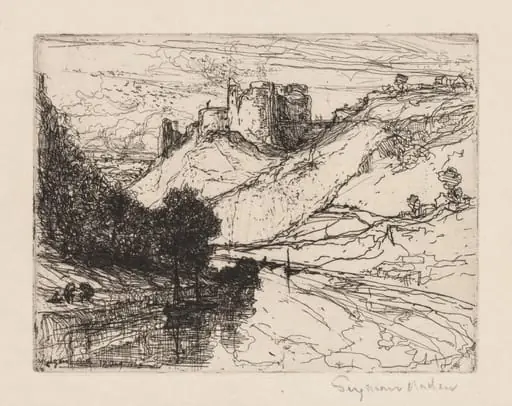
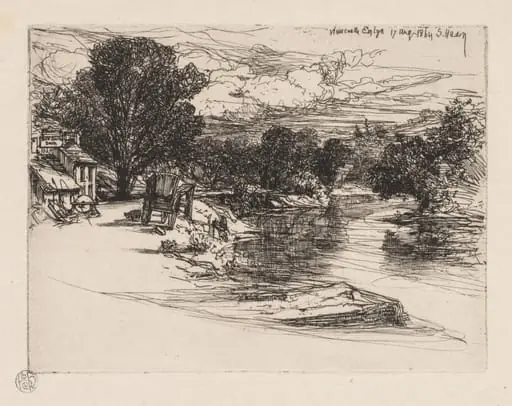
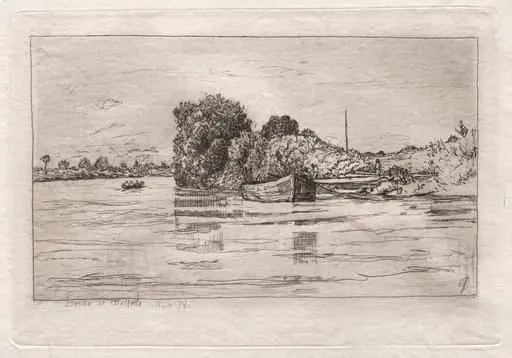
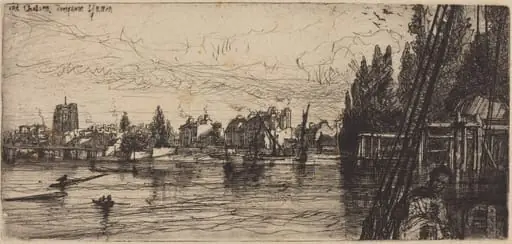
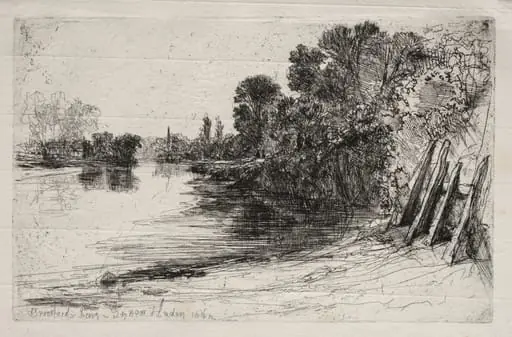
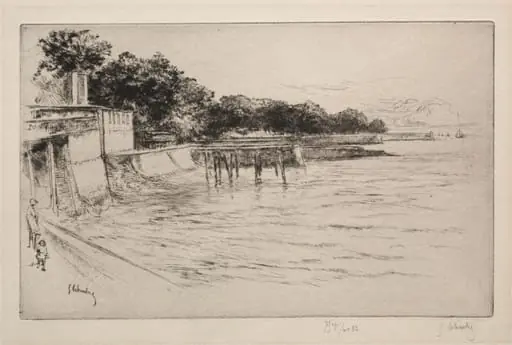
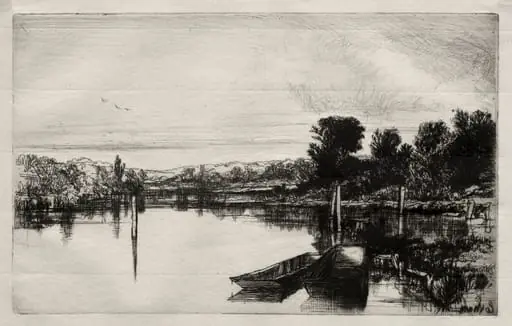
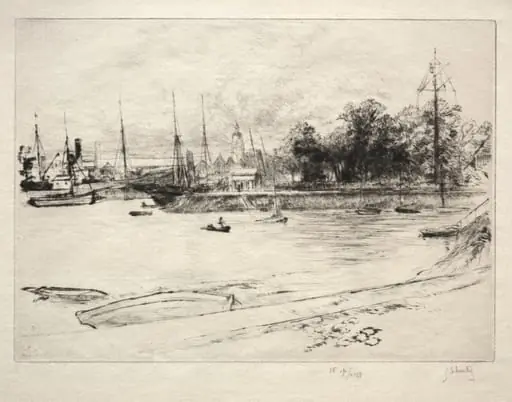
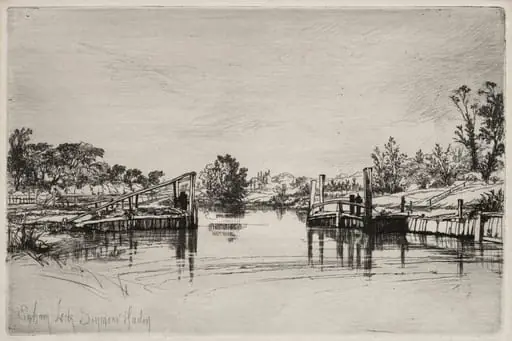
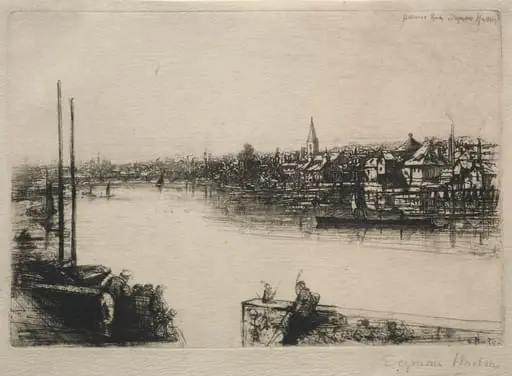
Cardigan Bridge is an 1864 print by Francis Seymour Haden, depicting a quiet riverside scene in Wales. Executed in etching and drypoint, the work captures the calm waters of the River Teifi beneath a stone bridge, with distant buildings and trees framing the composition. The Cleveland Museum of Art holds this example of Haden’s topographical etchings, valued for their subtle tonal gradations and restrained detail.
Subject & Meaning
The scene portrays a modest rural crossing in Cardigan, Wales, emphasizing tranquility over drama. The bridge, river, and scattered boats suggest daily life without narrative intervention. Trees and buildings on the far bank anchor the view in place, while the still water mirrors the sky, reinforcing a sense of stillness. Haden’s focus lies in the quiet harmony of landscape and human infrastructure, not in symbolism or grandeur.
Technique & Style
Haden employed etching and drypoint to achieve nuanced atmospheric effects. Fine lines and varied ink densities model light and shadow, creating depth without heavy contrast. The water’s reflection is rendered through delicate, horizontal strokes, while foliage and architecture are suggested rather than meticulously detailed. His approach favors tonal subtlety over bold definition, aligning with the British etching revival’s emphasis on mood over precision.
History & Provenance
Created in 1864, Cardigan Bridge was among Haden’s many topographical prints documenting Welsh landscapes. He produced it during a period of intense focus on regional scenery, often working en plein air. The print entered The Cleveland Museum of Art’s collection in the 20th century, likely through acquisitions of British graphic art. Its preservation reflects early American interest in European printmaking traditions.
Context
Haden worked during a time when etching was being revived as a fine art medium in Britain, distinct from commercial reproduction. His focus on unidealized landscapes aligned with contemporary shifts toward realism and direct observation. Cardigan Bridge reflects this movement, contrasting with romanticized depictions of nature common in earlier decades, and situates Haden among artists seeking authenticity in everyday scenes.
Legacy
Though not widely known outside print circles, Haden’s work influenced later generations of British etchers through his emphasis on tonal control and observational fidelity. Cardigan Bridge exemplifies his contribution to elevating etching as a medium for quiet, intimate landscape expression. His prints remain studied for their technical restraint and sensitivity to natural light, preserving a momentary stillness in a rapidly industrializing era.
Artist & collection