Artwork
The Pillar of Salt
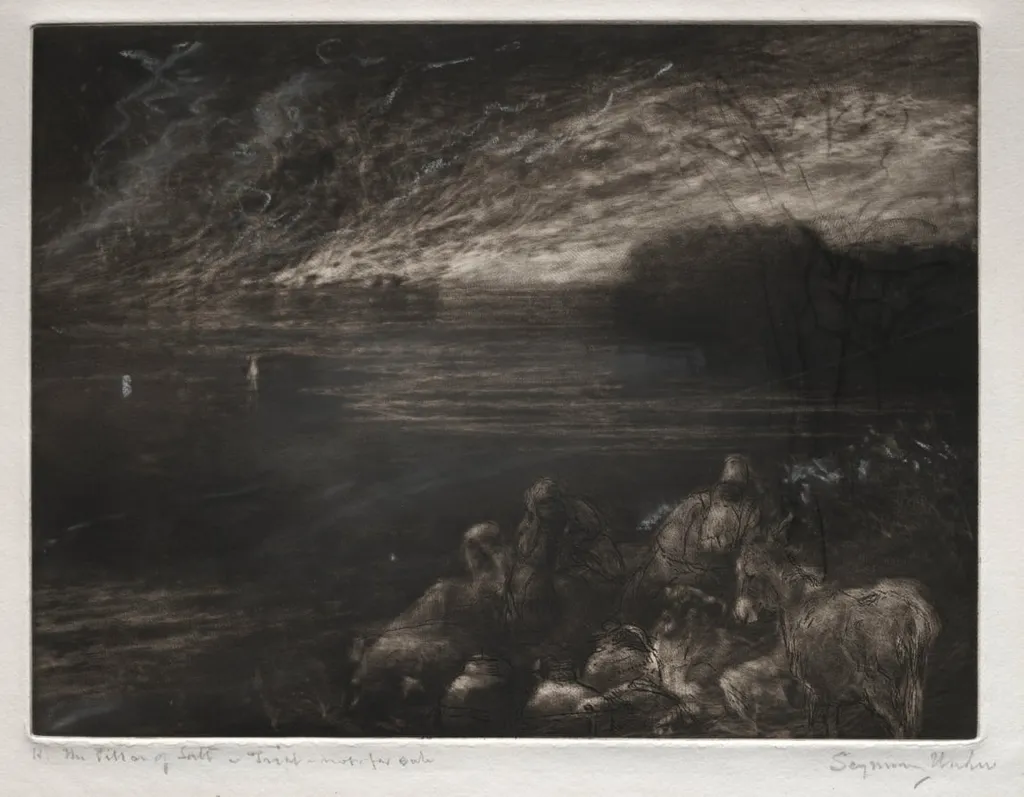
The Pillar of Salt is a print by Francis Seymour Haden. It dates from 1868 and is held in the collection of the Cleveland Museum of Art.
About this work
Overview
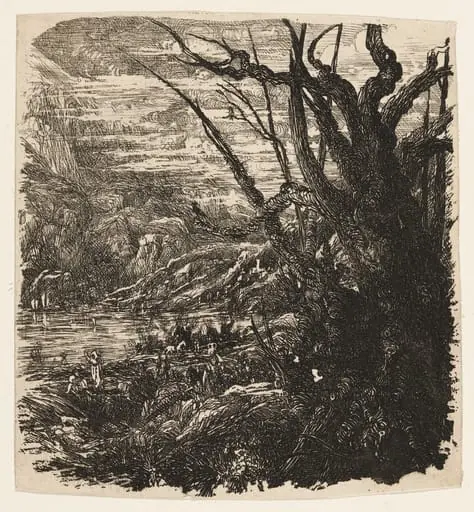
Created around 1868 by Francis Seymour Haden, this print is part of the collection at The Cleveland Museum of Art. Executed in etching, it presents a quiet, somber landscape dominated by natural forces rather than human activity. The composition centers on a group of sheep against a rugged terrain, framed by an oppressive sky and still water, evoking a sense of stillness and isolation.
Subject & Meaning
The title alludes to the biblical story of Lot’s wife, transformed into a pillar of salt for looking back — a metaphor for paralysis or consequence.
The scene depicts a flock of sheep gathered on rocky ground beneath a brooding sky, suggesting vulnerability in the face of nature’s power. The title alludes to the biblical story of Lot’s wife, transformed into a pillar of salt for looking back — a metaphor for paralysis or consequence. Here, the sheep’s huddled stillness mirrors that same frozen moment, inviting contemplation of fate and endurance.
Technique & Style
Haden employed etching to achieve a range of tonal contrasts, using dense, angular lines to render the sheep and terrain with a sketchlike immediacy. The sky and water are treated with broad, atmospheric washes, enhancing the sense of depth and mood. The interplay of light and shadow — chiaroscuro — is restrained yet potent, emphasizing texture and emotional weight over detail.
History & Provenance
The print was produced during Haden’s active period as a printmaker, following his career as a surgeon and his growing engagement with the Etching Revival. It entered The Cleveland Museum of Art’s collection through established acquisitions of 19th-century British prints, reflecting the museum’s interest in the medium’s artistic resurgence during the Victorian era.
Context
Haden worked alongside contemporaries like James McNeill Whistler, promoting etching as a fine art form distinct from reproductive printing. This piece aligns with a broader Victorian fascination with nature’s sublime and melancholic qualities. The absence of human figures heightens the sense of solitude, resonating with contemporary literary and philosophical currents that emphasized introspection and the sublime in landscape.
Legacy
Though not widely exhibited, the print exemplifies Haden’s contribution to elevating etching as a vehicle for personal expression. Its quiet intensity influenced later artists interested in mood-driven landscapes and the expressive potential of line and tone. It remains a quiet testament to the emotional resonance achievable through restrained, technical mastery in printmaking.
Artist & collection

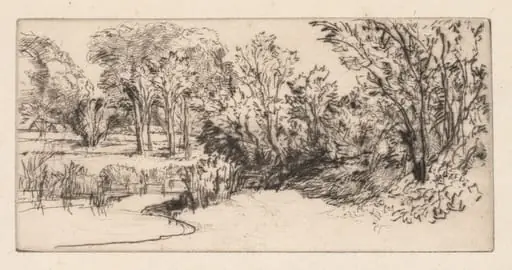
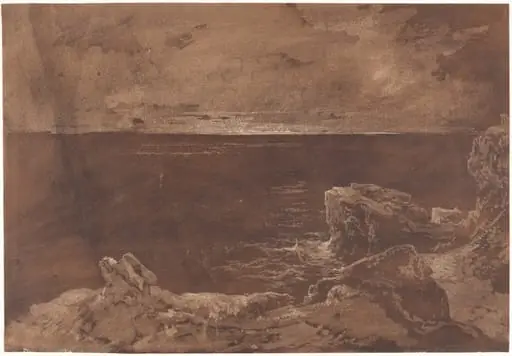 A Rocky Coast by Moonlight
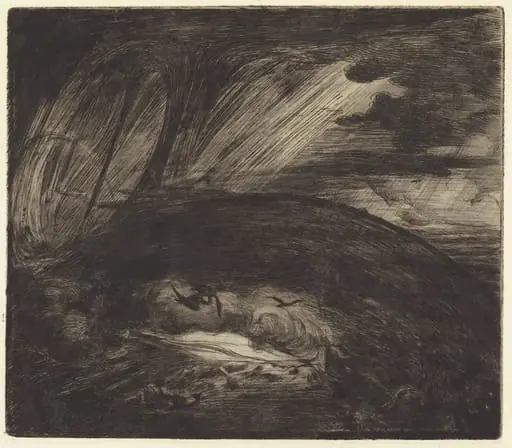 Le Chaos (Chaos)
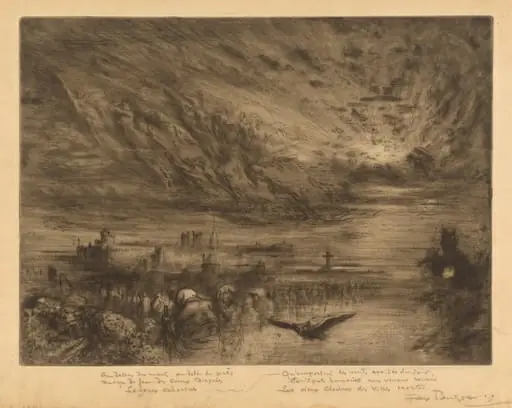 Les Esprits des Villes Mortes (Spirits from the Cities of the Dead)
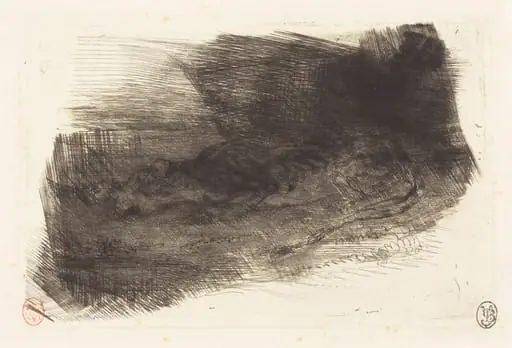 Tiger Sleeping at the Entrance to its Lair (Tigre couché à l'entrée de son antre)
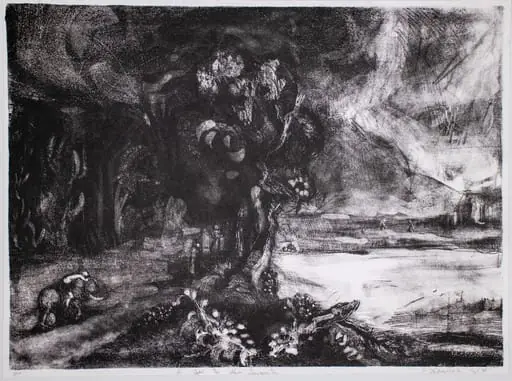 The Flight of the Good Samaritan
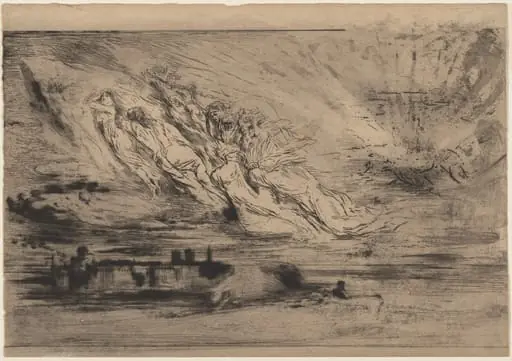 Les Esprits des Villes-Mortes (Spirits from the Cities of the Dead)
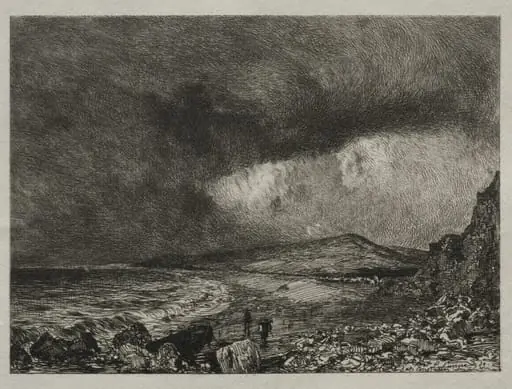 The Bay of Weymouth
 Untitled
![Landscape [Paesaggio], by Carlo Paolo Agazzi](https://artifactworldgallery.com/img/carlo-paolo-agazzi--landscape-paesaggio--e606f4ada87d2052-w320.webp) Landscape [Paesaggio]
Landscape [Paesaggio] A Moorland Stream