Artwork
The Bay of Weymouth
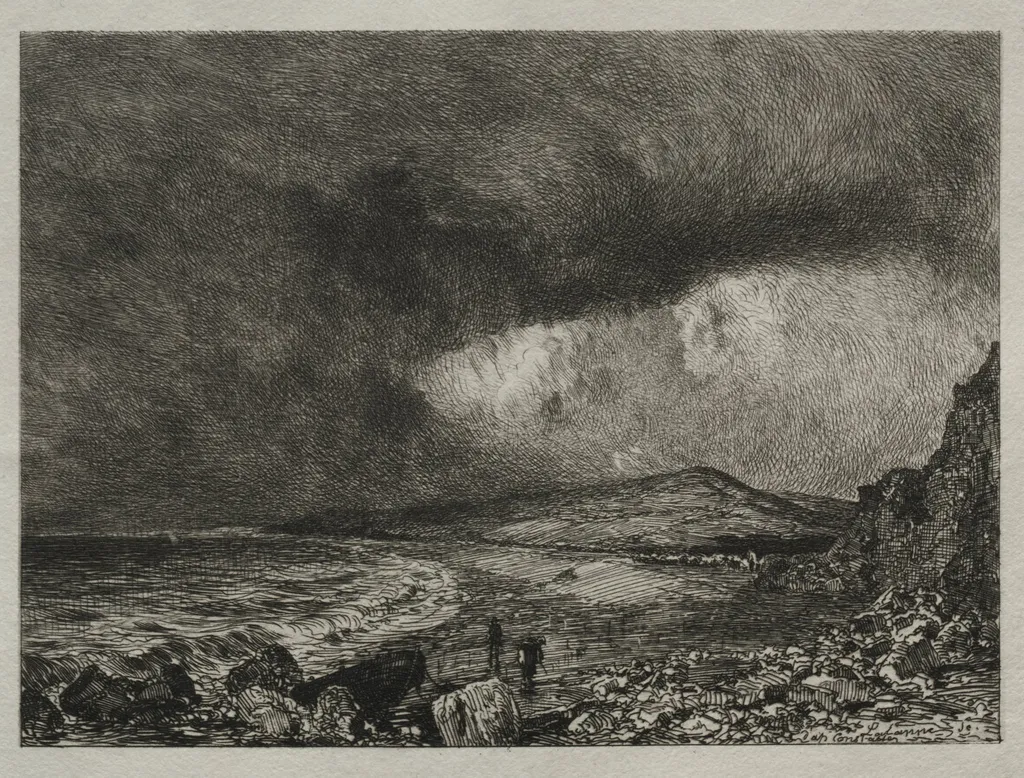
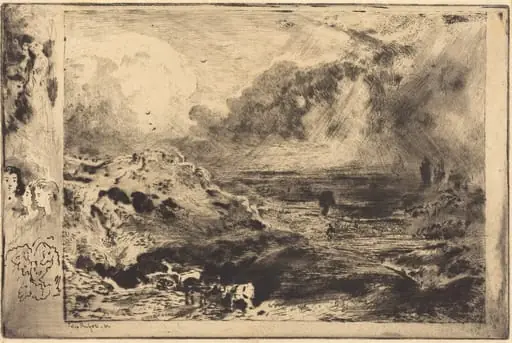
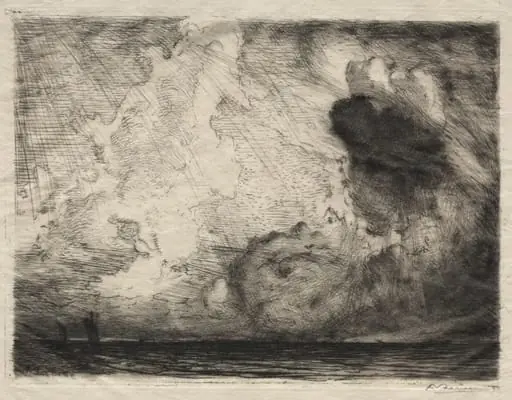
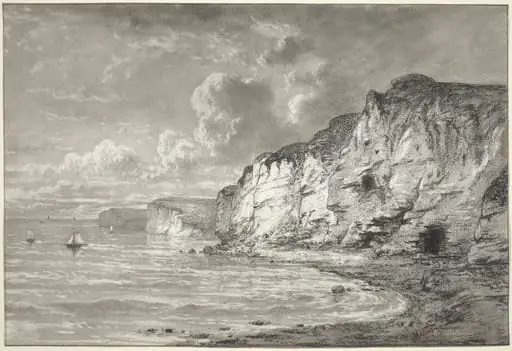
The Bay of Weymouth is a print by the Impressionist artist Maxime Lalanne. It dates from 1873 and is held in the collection of the Cleveland Museum of Art.
About this work
Overview
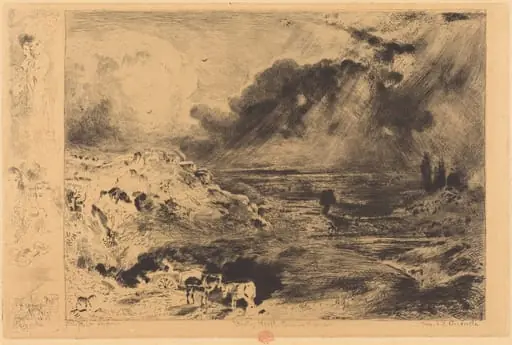
Created in 1873 by French artist Maxime Lalanne, *The Bay of Weymouth* is an etching depicting a turbulent coastal scene. The work resides in The Cleveland Museum of Art’s collection and exemplifies Lalanne’s mastery of printmaking. His focus on natural forces and atmospheric conditions reflects a broader 19th-century interest in capturing transient moments through precise, expressive line work.
Subject & Meaning
The figures serve not as characters but as indicators of scale and presence amid an overwhelming landscape.
The scene portrays Weymouth Bay under a brooding sky, with waves crashing against jagged rocks. A handful of indistinct figures near the shore emphasize human vulnerability against nature’s force. The composition avoids narrative detail, instead evoking a mood of solitude and elemental power. The figures serve not as characters but as indicators of scale and presence amid an overwhelming landscape.
Technique & Style
Lalanne employed etching to build texture through rapid, incised lines that suggest wind, spray, and cloud mass. He contrasted deep, inked shadows with areas of bare paper to simulate light breaking through storm clouds—a technique aligned with chiaroscuro. The absence of fine detail heightens the sense of immediacy, reinforcing the impression of a fleeting, observed moment rather than a staged composition.
History & Provenance
The print was made during Lalanne’s active period as a printmaker, following his training in France and his engagement with the etching revival of the mid-19th century. It entered The Cleveland Museum of Art’s collection through documented acquisition, though its path from France to Ohio remains unrecorded in public sources. The work’s survival reflects its recognition among collectors of graphic art during the late 1800s.
Context
Lalanne’s work emerged alongside a European trend favoring landscape etchings that emphasized mood over topographical accuracy. Artists increasingly turned to nature as a subject worthy of emotional resonance, influenced by Romanticism and early realism. His depiction of Weymouth Bay aligns with this shift, prioritizing atmospheric effect and the sublime over picturesque detail.
Legacy
Though not widely known outside printmaking circles, Lalanne’s etchings contributed to the reestablishment of etching as a serious artistic medium in the 19th century. *The Bay of Weymouth* exemplifies his ability to convey natural drama through minimal means, influencing later generations of printmakers who valued expressive line and tonal contrast over technical polish.
Own this work as a print
Artist & collection
Artist
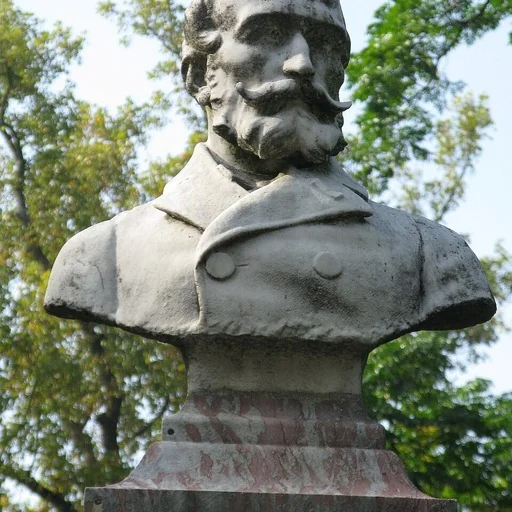
François Antoine Maxime Lalanne (November 27, 1827 – July 29, 1886) was a French artist known for his etchings and charcoal drawings (fusain).

![Landscape [Paesaggio], by Carlo Paolo Agazzi](https://artifactworldgallery.com/img/carlo-paolo-agazzi--landscape-paesaggio--e606f4ada87d2052-w320.webp)