Artwork
Aesop
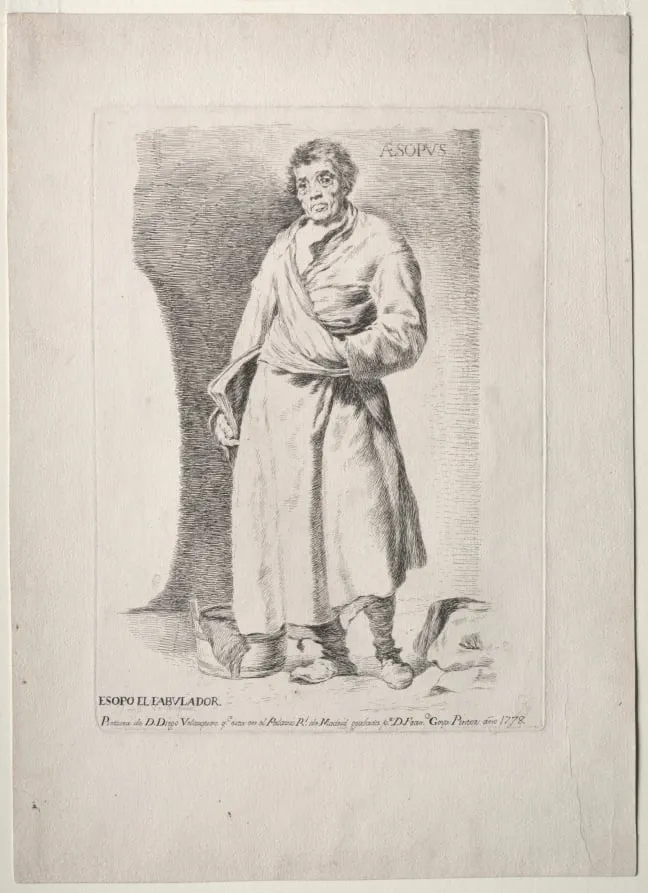
Aesop is a print by the Romanticist artist Francisco Goya. It dates from 1778 and is held in the collection of the Cleveland Museum of Art. Created in 1778 by Francisco de Goya, this print portrays a solitary male figure against a subdued background.
About this work
Overview
The work is part of Goya’s early series of character studies, executed before his later, more politically charged imagery.
Created in 1778 by Francisco de Goya, this print portrays a solitary male figure against a subdued background. The work is part of Goya’s early series of character studies, executed before his later, more politically charged imagery. It resides in The Cleveland Museum of Art, where it is cataloged as a representation of the ancient storyteller Aesop, though the identification remains interpretive rather than documented.
Subject & Meaning
The figure is traditionally identified as Aesop, the legendary Greek fabulist, based on his contemplative gaze and rustic attire. His direct eye contact with the viewer suggests an invitation to listen, evoking the oral tradition of fable-telling. The absence of narrative props—like scrolls or animals—shifts focus to the individual’s presence, emphasizing wisdom conveyed through demeanor rather than symbolism.
Technique & Style
Goya employs chiaroscuro to model the figure with subtle gradations of light and shadow, lending volume and gravity to the form. The brushwork is restrained, favoring tonal harmony over detail, aligning with 18th-century academic conventions. The muted palette and simplified background isolate the subject, reinforcing a sense of introspection and quiet authority.
History & Provenance
This work originated in Goya’s early career, likely as a preparatory study for a larger commission or as part of a set of moralizing figures. It entered The Cleveland Museum of Art’s collection in the 20th century, with no documented ownership prior to its acquisition by the museum. Its attribution to Goya is supported by stylistic analysis and archival records of his early graphic works.
Context
Painted during Goya’s formative years in Madrid, this piece reflects the influence of Enlightenment thought and classical antiquity, which were gaining traction among Spanish intellectuals. While not overtly political, the image aligns with contemporary efforts to elevate moral and literary figures as cultural ideals, a trend visible in the visual arts of the period.
Legacy
Though less known than Goya’s later satirical or dark works, this print illustrates his early mastery of psychological portraiture. It anticipates his lifelong interest in human character and the quiet power of the individual. As a bridge between academic tradition and emerging Romantic sensibilities, it offers insight into the evolution of his artistic voice.
Artist & collection
Artist
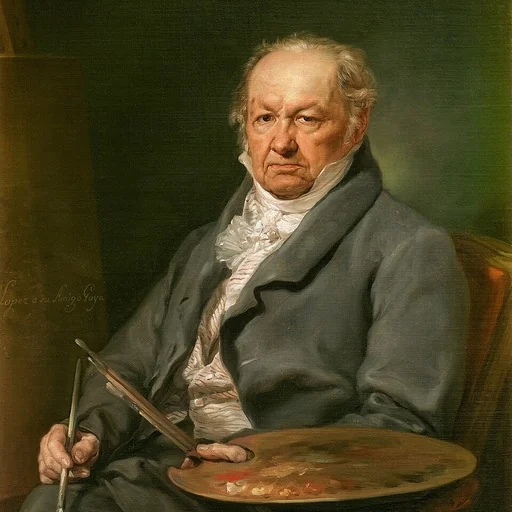
Francisco José de Goya y Lucientes (; Spanish: ; 30 March 1746 – 16 April 1828) was a Spanish romantic painter and printmaker.

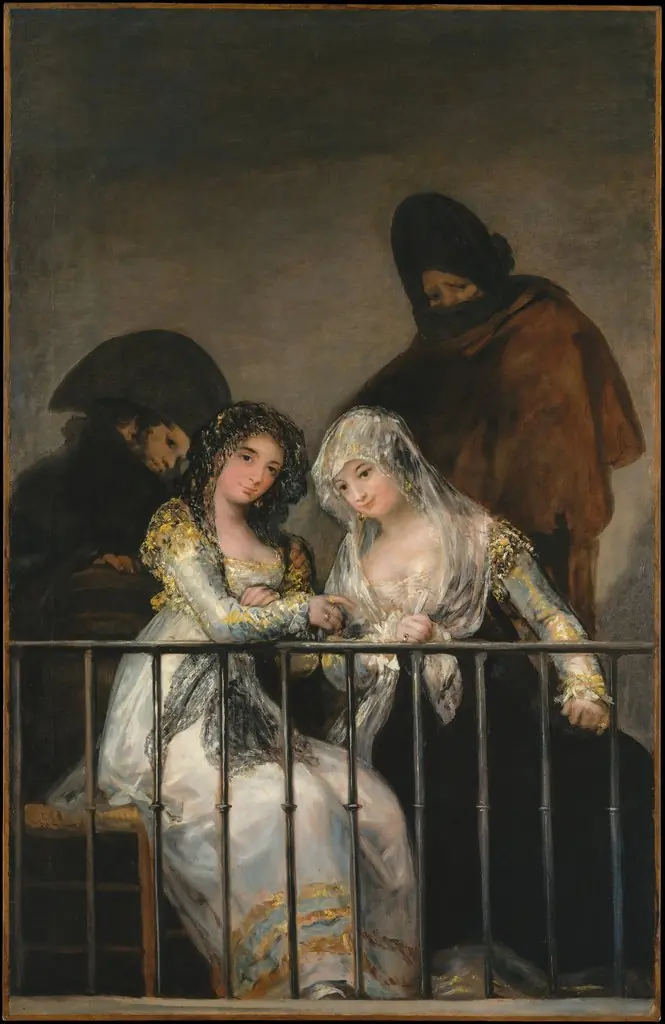
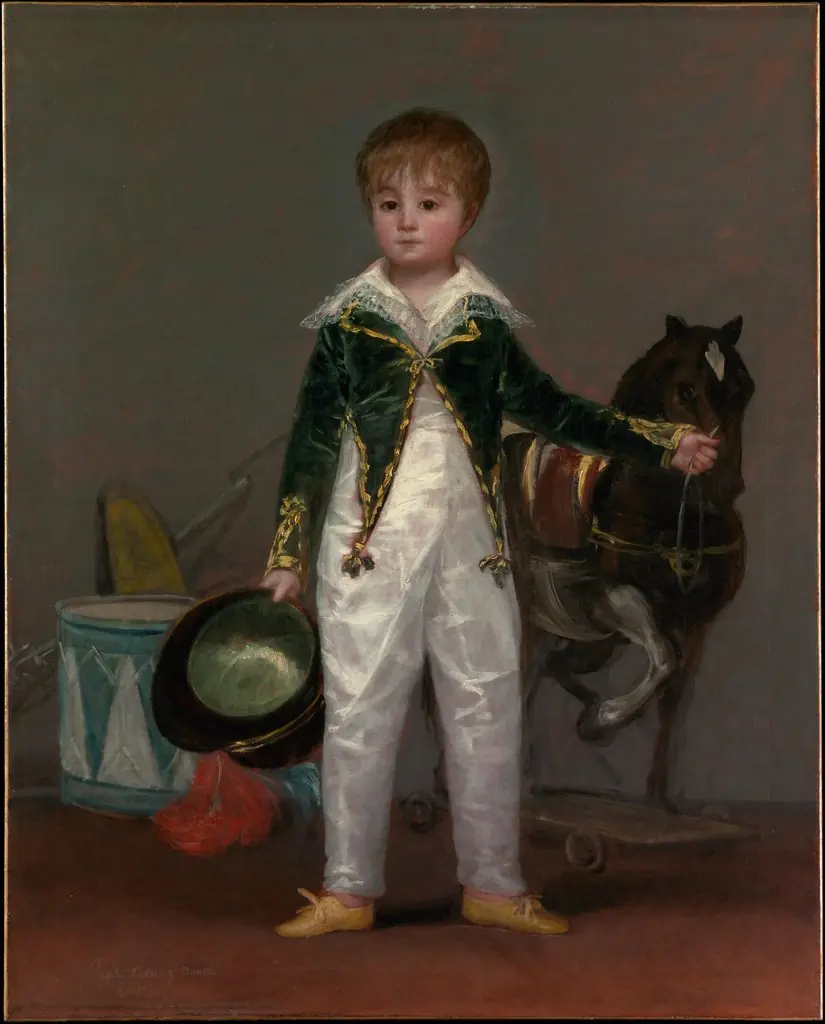
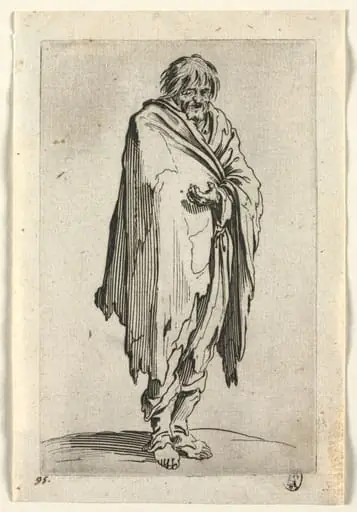 The Beggars: Beggar without Hat or Shoes
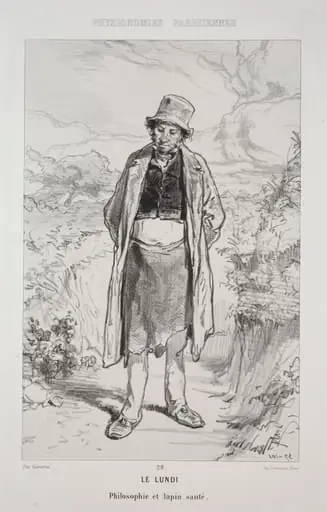 Le Lundi
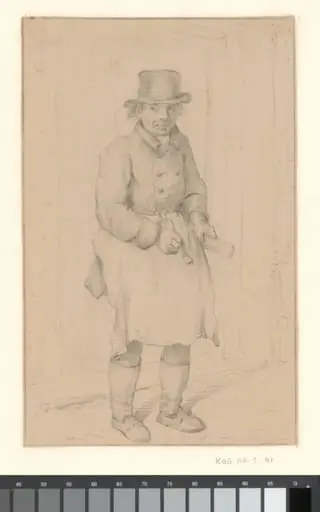 Untitled
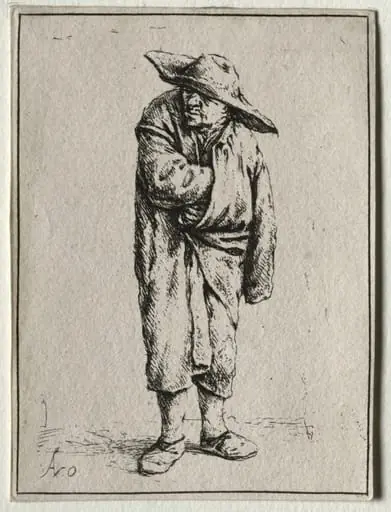 Peasant with his hand in his cloak
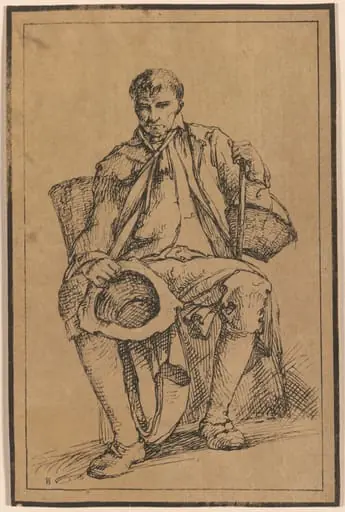 Forty Lithographic Impressions from Drawings of Landscape Scenery by Thomas Barker, Selected from His Studies of Rustic Figures after Nature: Seated Man with Baskets Holding Hat and Walking Stick
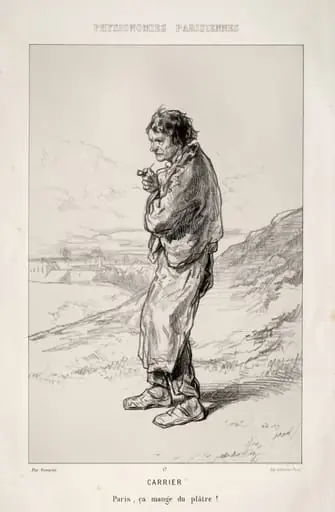 Carrier
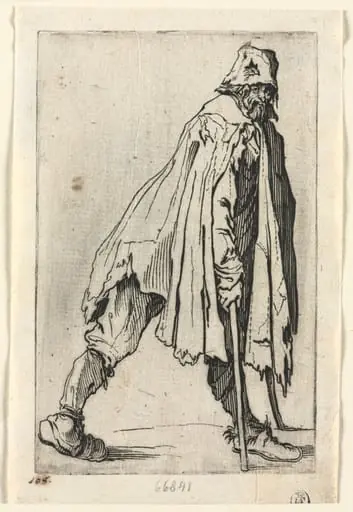 The Beggars: The Beggar on Crutches, Wearing a Cap
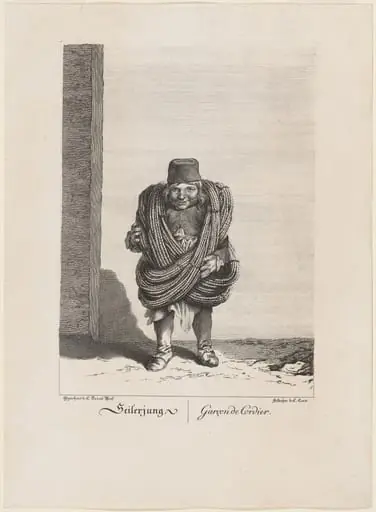 Seilerjung (Young Rope Seller)
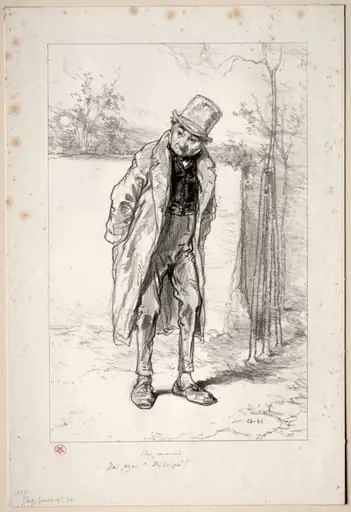 Physionomies Parisiennes: Au Marais. Ici, Azor! ici!