Artwork
Le Lundi
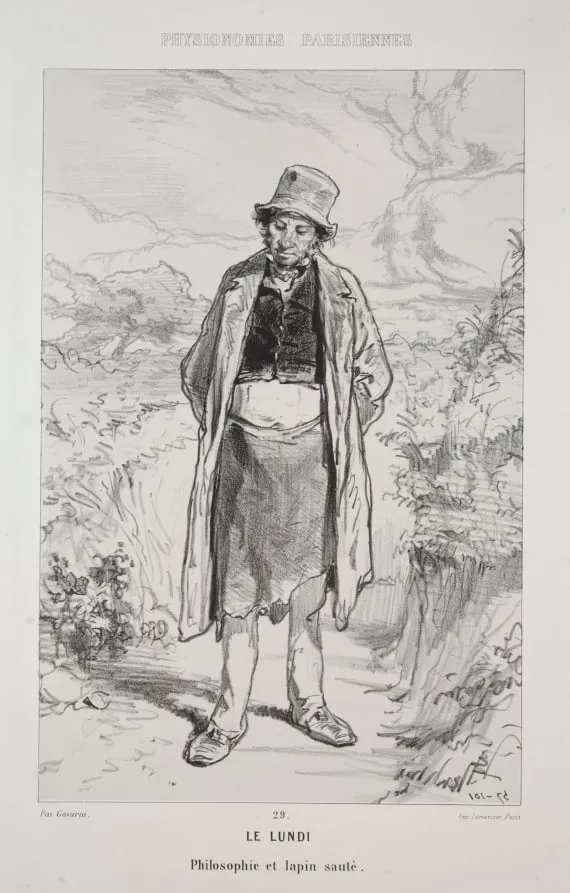
Le Lundi is a print by the Impressionist artist Paul Gavarni. It dates from 1857 and is held in the collection of the Cleveland Museum of Art.
About this work
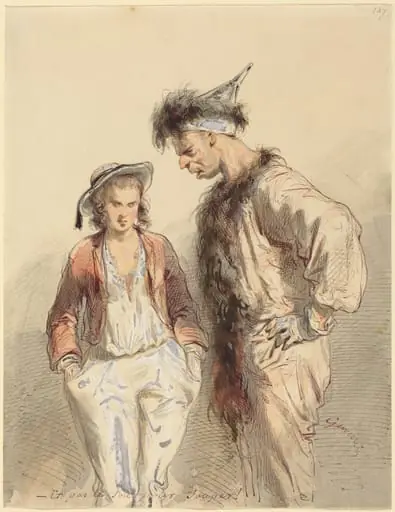
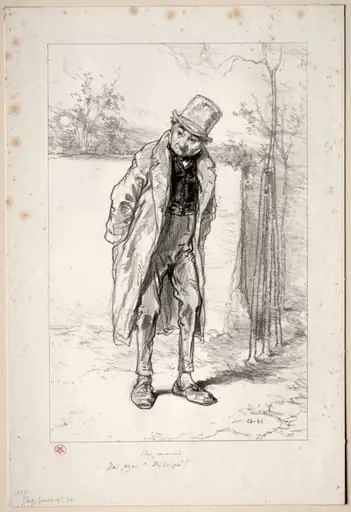
The title below, *"Philosophie et lapin sauté"* (Philosophy and fried rabbit), hints at a joke about his empty stomach.
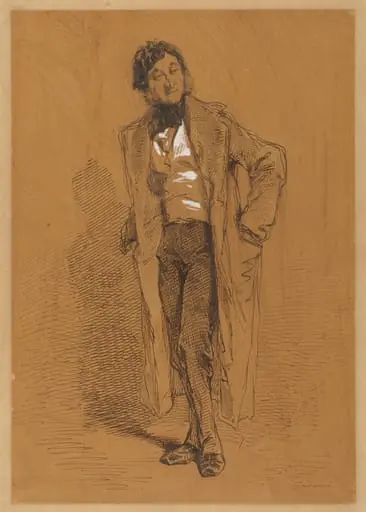
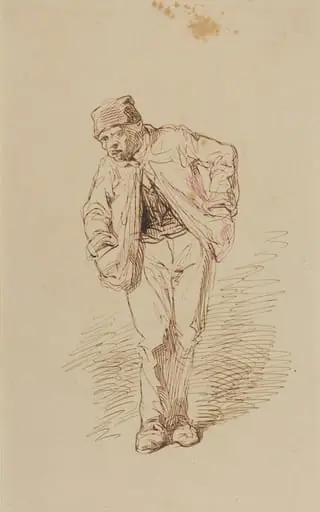
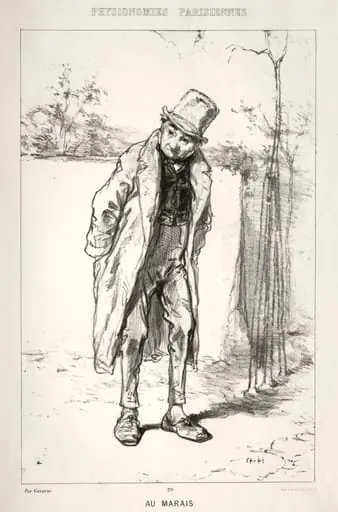
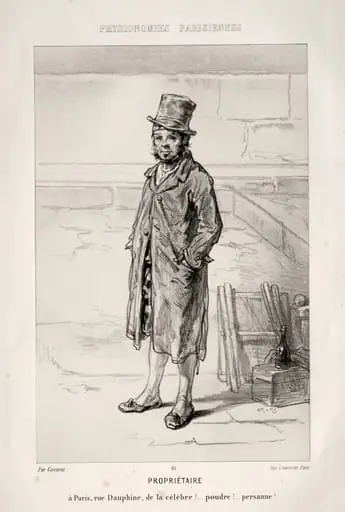
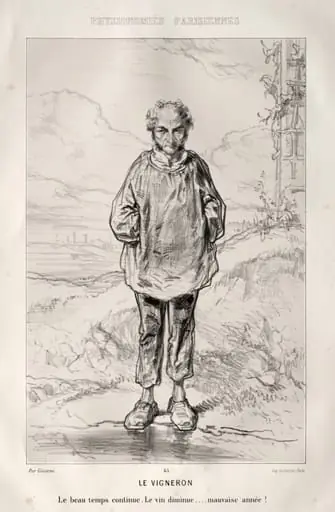
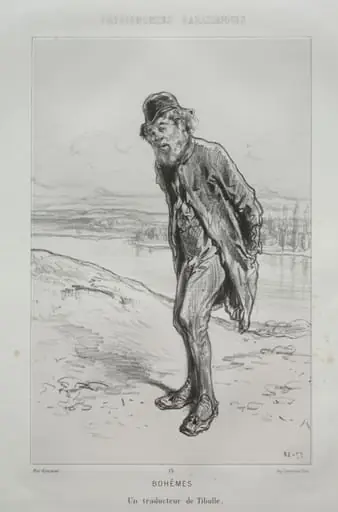
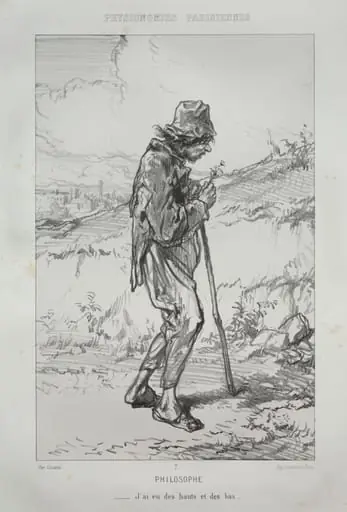
This sketch shows a man standing outdoors, dressed in shabby clothes. His long coat is worn, his hat sits low, and his shoes are scuffed. Behind him, a river and bushes fill the background, drawn in loose lines.
The title below, *"Philosophie et lapin sauté"* (Philosophy and fried rabbit), hints at a joke about his empty stomach. The drawing’s rough, sketchy style makes it feel quick and real.
Want to see more of this artist’s sharp, funny sketches? Check out Paul Gavarni (French, 1804–1866).
Overview
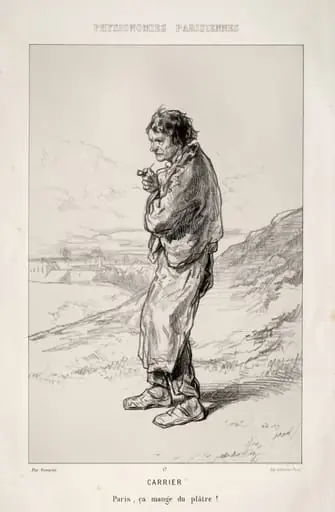
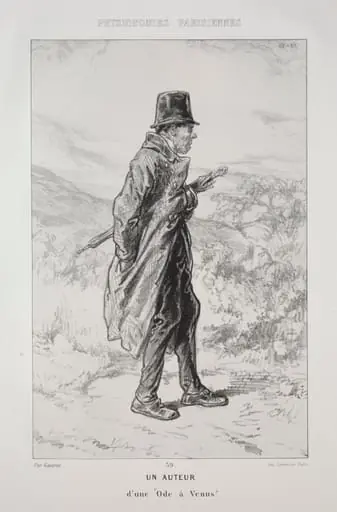
Le Lundi is a pencil sketch by French artist Paul Gavarni, dated around 1857. It depicts a disheveled man standing alone in an outdoor setting, rendered with loose, rapid strokes that convey immediacy. The work is part of the collection at The Cleveland Museum of Art and exemplifies Gavarni’s interest in everyday urban life, particularly the quiet struggles of the working poor.
Subject & Meaning
The figure, dressed in tattered clothing, stands with an air of weary resignation. Beneath the image, the title 'Philosophie et lapin sauté'—Philosophy and fried rabbit—juxtaposes intellectual pretension with physical hunger. The irony suggests the man’s thoughts are as empty as his stomach, turning poverty into a wry commentary on survival and self-delusion.
Technique & Style
Gavarni employs a loose, sketch-like technique with minimal shading and fluid lines, capturing the figure and landscape with economy. The background—river and brush—is suggested rather than detailed, drawing focus to the solitary man. The roughness of the draftsmanship enhances the sense of spontaneity, as if the scene was recorded on the spot.
History & Provenance
Created during Gavarni’s active years as a satirical illustrator, the work likely originated as a study for a published lithograph or magazine plate. It entered The Cleveland Museum of Art’s collection through established acquisitions of 19th-century French graphic art, reflecting the museum’s interest in social realism and caricature from the period.
Context
In mid-19th-century Paris, Gavarni was known for documenting the lives of ordinary people with humor and empathy. His drawings appeared in journals like Le Charivari, where wit and social observation were valued. Le Lundi reflects a broader cultural interest in the urban underclass, emerging alongside early realist literature and art.
Legacy
Gavarni’s sketches influenced later artists who turned to everyday subjects with psychological nuance, including Daumier and Toulouse-Lautrec. Though not widely exhibited today, works like Le Lundi remain important for their unembellished portrayal of poverty and the quiet dignity of marginalized individuals in a rapidly changing society.
Artist & collection

Artist
Paul Gavarni was the pen name of Sulpice Guillaume Chevalier (13 January 1804 – 24 November 1866), a French illustrator, born in Paris.