Artwork
Bullfights: Another Way of Hunting on Foot
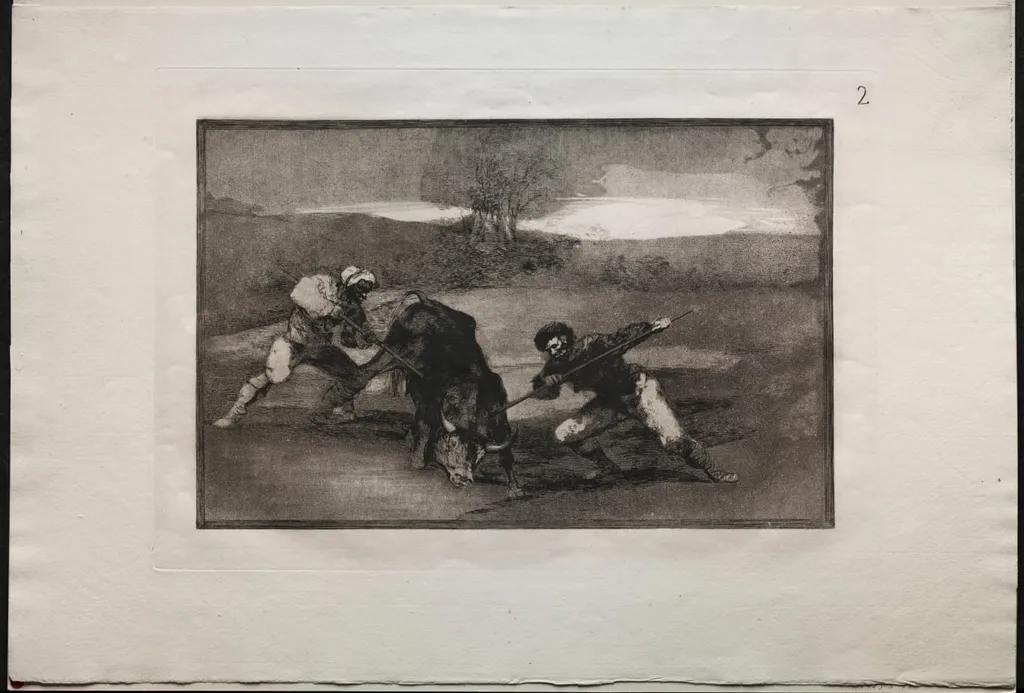
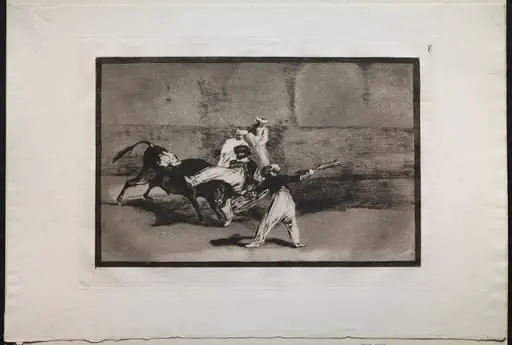
Bullfights: Another Way of Hunting on Foot is a print by the Romanticist artist Francisco Goya. It dates from 1816 and is held in the collection of the Cleveland Museum of Art. Created in 1816 by Francisco de Goya, this print is part of a series exploring Spanish rural life and violence.
About this work
Overview
Created in 1816 by Francisco de Goya, this print is part of a series exploring Spanish rural life and violence.
Created in 1816 by Francisco de Goya, this print is part of a series exploring Spanish rural life and violence. It depicts a bullfight staged as a form of hunting, emphasizing physical confrontation rather than spectacle. The work is held in the collection of The Cleveland Museum of Art and reflects Goya’s interest in the raw dynamics of human-animal interaction during a period of social change in Spain.
Subject & Meaning
Two men, dressed in traditional garb, attempt to subdue a charging bull using long spears. The scene presents bullfighting not as ritualized performance but as a primal, dangerous hunt. The bull’s contorted posture conveys both power and suffering, while the men’s strained postures suggest vulnerability. The tranquil background contrasts with the violence, underscoring the tension between nature and human intervention.
Technique & Style
Goya employs etching and aquatint to achieve rich tonal contrasts, with deep shadows defining the figures and a lighter, atmospheric background. The bull and hunters are rendered with angular, forceful lines, heightening the sense of motion and struggle. The muted palette and textured surfaces reflect the influence of Romanticism, prioritizing emotional intensity over idealized form.
History & Provenance
The print was produced during Goya’s later years, following his retreat from public life and amid growing disillusionment with Spanish society. It was likely part of a private series, not intended for public sale. The work entered The Cleveland Museum of Art’s collection in the 20th century, having passed through several private European holdings after its creation.
Context
In early 19th-century Spain, bullfighting was transitioning from aristocratic pastime to popular spectacle. Goya’s depiction avoids glorification, instead focusing on the brutality and precariousness of the act. This aligns with his broader critique of violence and tradition, evident in other works from the same period, such as the Black Paintings.
Legacy
This print contributes to Goya’s reputation as a chronicler of human and animal suffering. Unlike later romanticized portrayals of bullfighting, his version resists heroism, offering a sober, unembellished view. It remains a key example of how printmaking could convey complex social commentary, influencing later realist and modernist artists interested in raw human experience.
Artist & collection
Artist
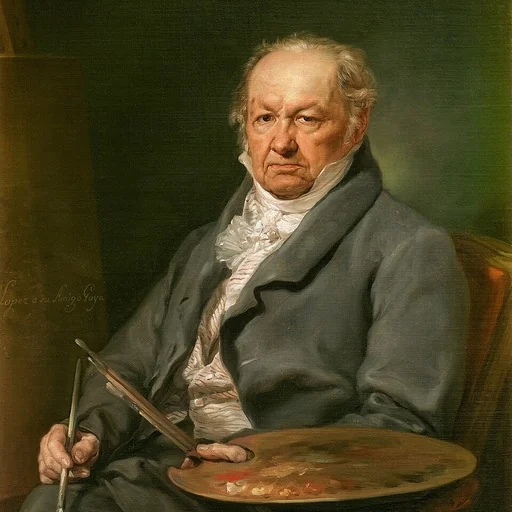
Francisco José de Goya y Lucientes (; Spanish: ; 30 March 1746 – 16 April 1828) was a Spanish romantic painter and printmaker.

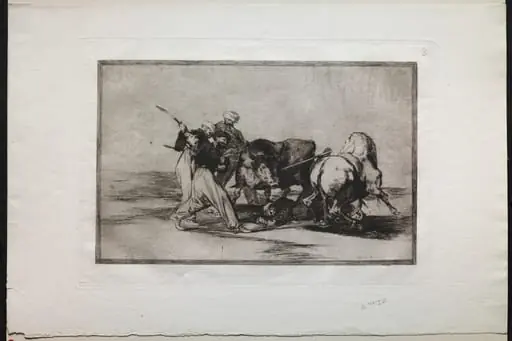 Bullfights: The Moors Settled in Spain, Giving Up the Superstitions of the Qur’an, Adopted this Art of Hunting, and Spear a Bull in the Open
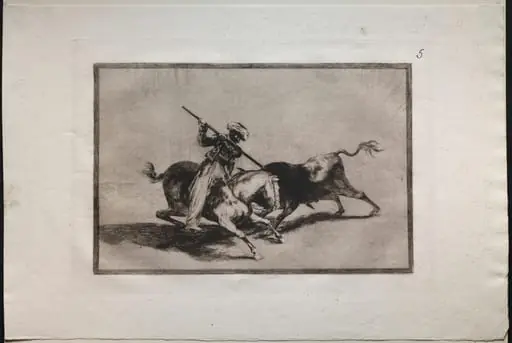 Bullfights: The Spirited Moor Gazul is the First to Fight According to the Rules
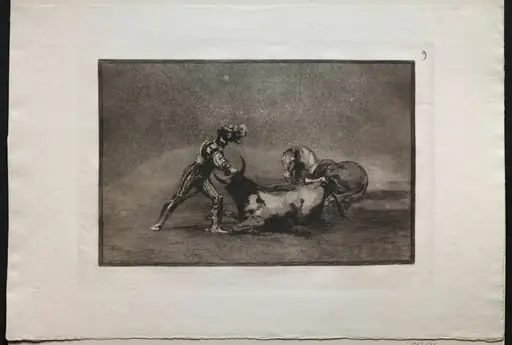 Bullfights: A Spanish Knight Kills the Bull After Having Lost His Horse
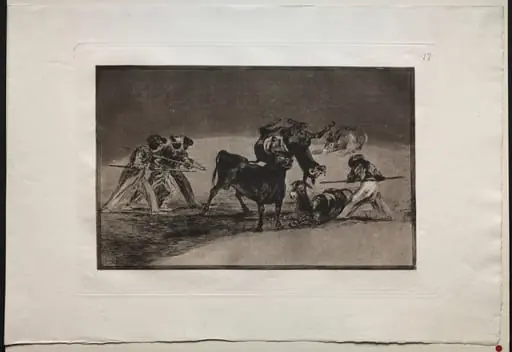 Bullfights: The Moors Use Donkeys as a Barrier to Defend Themselves Against the Bull Whose Horns Have Been Tipped with Balls
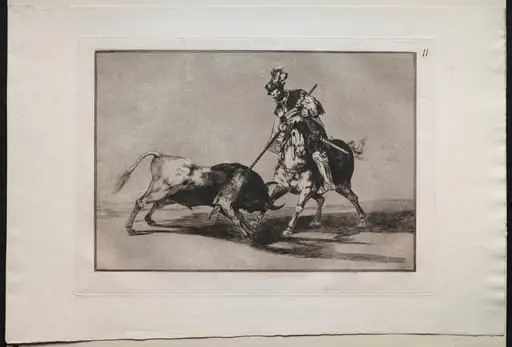 Bullfights: El Cid Campeador Spearing Another Bull
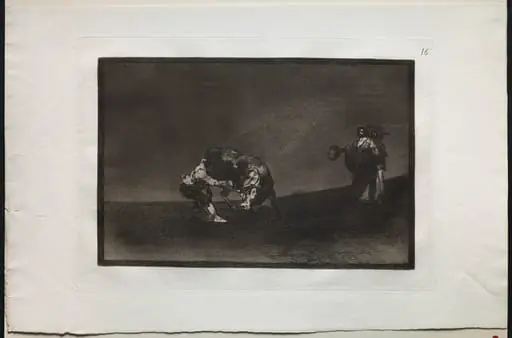 Bullfights: The Same Man Throws a Bull in the Ring at Madrid
 Bullfights: A Moor Caught by a Bull in the Ring