Artwork
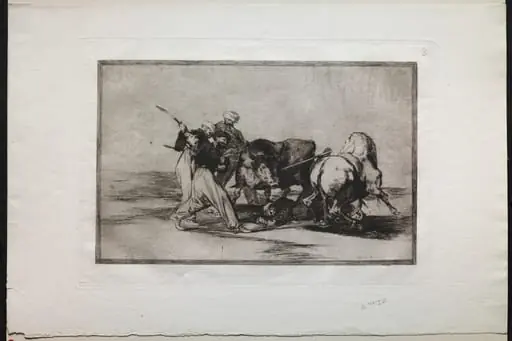
Bullfights: The Moors Use Donkeys as a Barrier to Defend Themselves Against the Bull Whose Horns Have Been Tipped with Balls
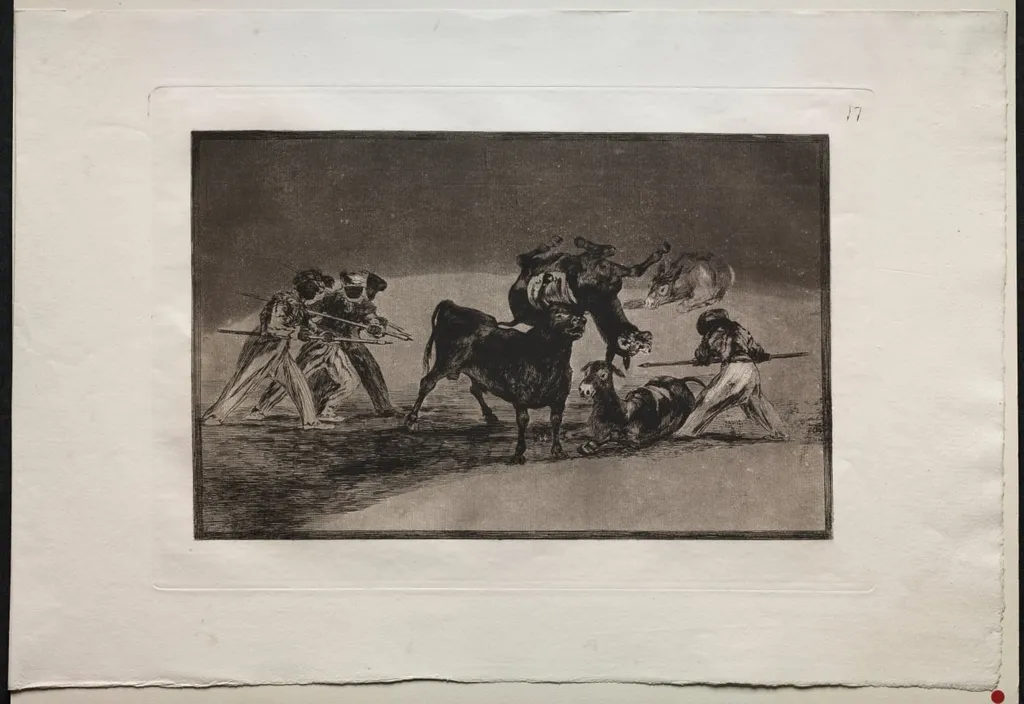
Bullfights: The Moors Use Donkeys as a Barrier to Defend Themselves Against the Bull Whose Horns Have Been Tipped with Balls is a print by the Romanticist artist Francisco Goya. It dates from 1816 and is held in the collection of the Cleveland Museum of Art.
About this work
Overview
Francisco de Goya’s 1816 print, Bullfights: The Moors Use Donkeys as a Barrier to Defend Themselves Against the Bull Whose Horns Have Been Tipped with Balls, is part of the collection of the Cleveland Museum of Art. The work captures a tumultuous moment in a bullfight, rendered in the artist’s characteristic graphic style.
Subject & Meaning
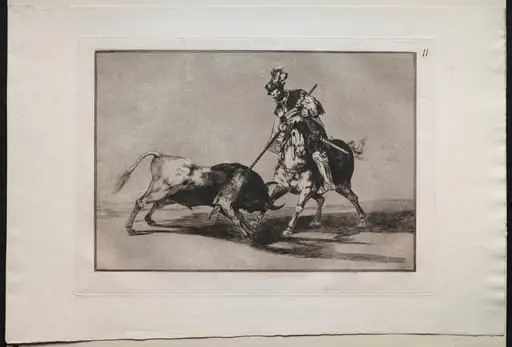
The image portrays a bull charging forward, its horns fitted with spherical caps, while a group of riders on donkeys form a human‑animal barricade. Figures on the ground clutch spears and brandish sticks, suggesting a desperate attempt to control the animal’s fury. The scene conveys the peril and chaos inherent in such spectacles.
Technique & Style
Executed as a print, Goya employs stark chiaroscuro, juxtaposing deep shadows with illuminated forms to heighten the sense of movement. The composition is dense, with cramped figures and a muddied background that amplifies the tension and immediacy of the encounter.
History & Provenance
Created in the early nineteenth century, the print entered the Cleveland Museum of Art’s holdings through acquisition (specific details of the purchase are not recorded in the provided data). It remains a representative example of Goya’s interest in popular entertainments and social commentary.
Artist & collection
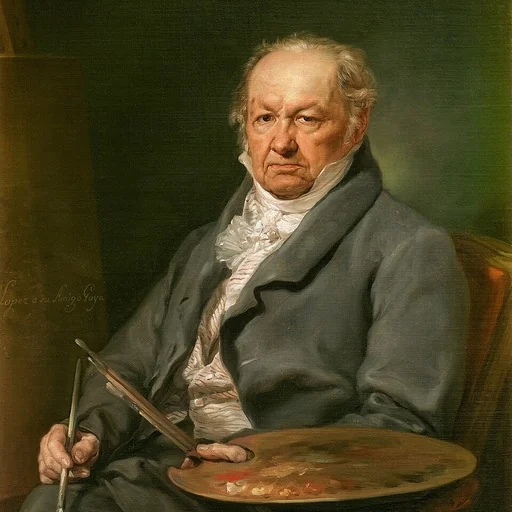
Artist
Francisco José de Goya y Lucientes (; Spanish: ; 30 March 1746 – 16 April 1828) was a Spanish romantic painter and printmaker.

 Bullfights: The Moors Settled in Spain, Giving Up the Superstitions of the Qur’an, Adopted this Art of Hunting, and Spear a Bull in the Open
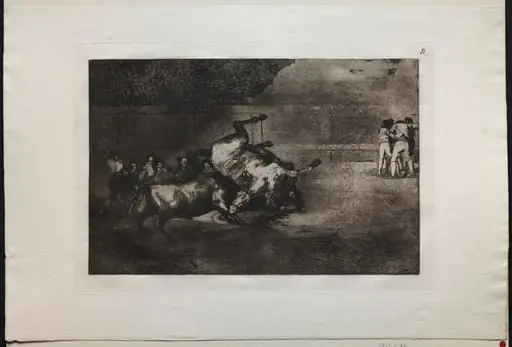 Bullfights: A Horse Thrown by the Bull
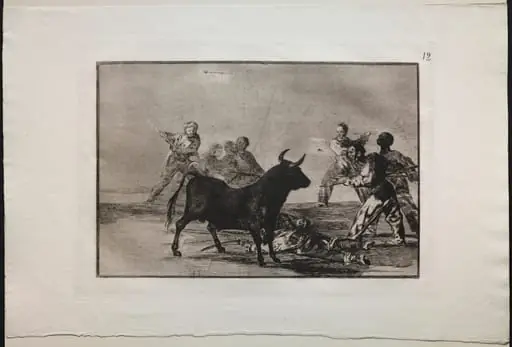 Bullfights: The Rabble Hamstringing the Bull with Lances, Sickles, Banderillas and Other Arms
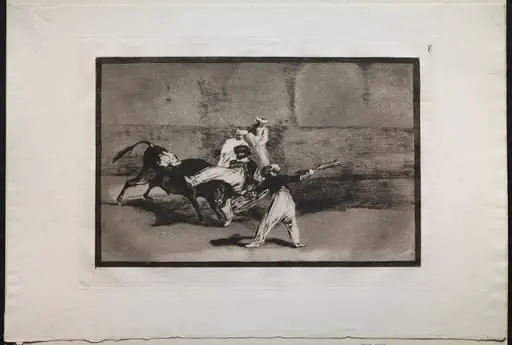 Bullfights: A Moor Caught by a Bull in the Ring
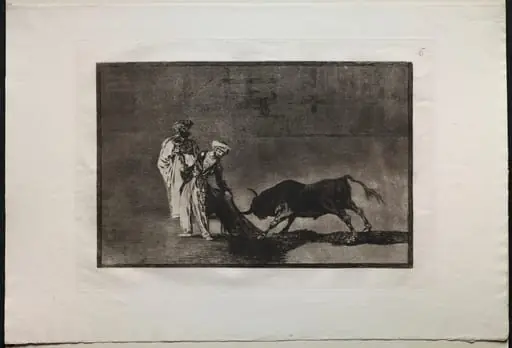 Bullfights: The Moors Make a Different Play in the Ring Calling the Bull with the Burnous
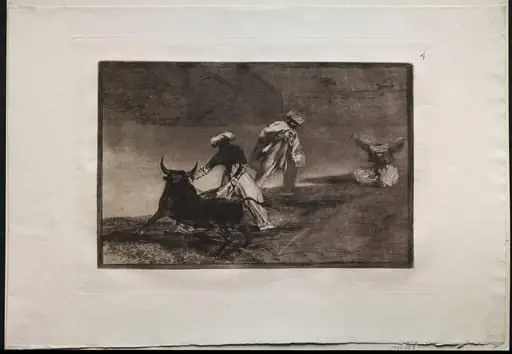 Bullfights: They Play Another with the Cape in an Enclosure
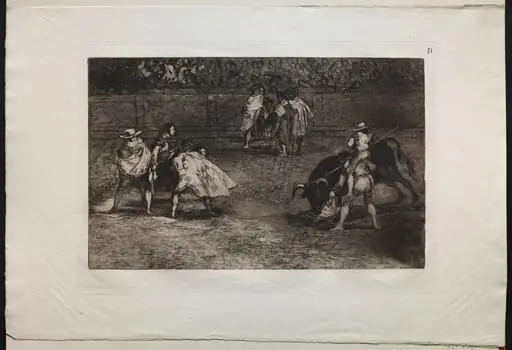 Bullfights: A Bullfighter Mounted on the Shoulders of an Assistant, Spearing a Bull
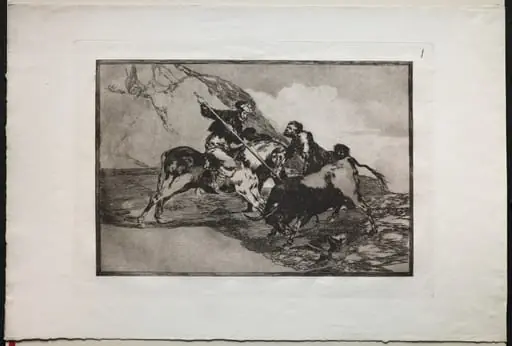 Bullfights: The Way in Which the Ancient Spaniards Hunted Bulls on Horseback in the Open Country
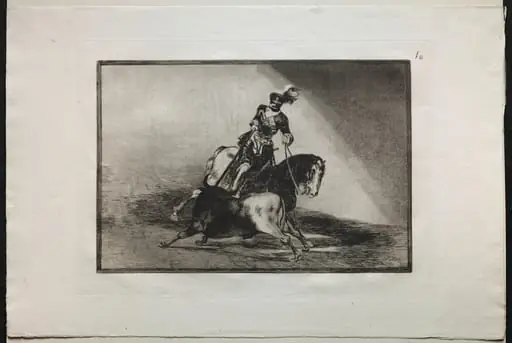 Bullfights: Charles V spearing a bull
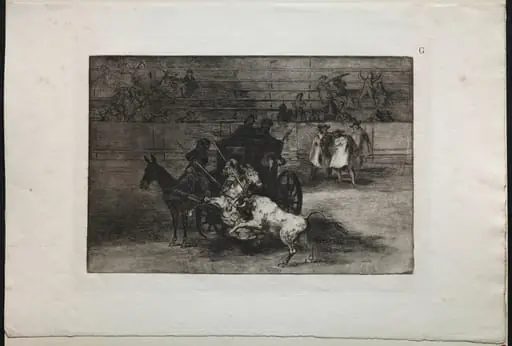 Bullfights: Fight in a Carriage Harnessed to Two Mules
 Bullfights: El Cid Campeador Spearing Another Bull