Artwork
Devout Profession, Plate 70
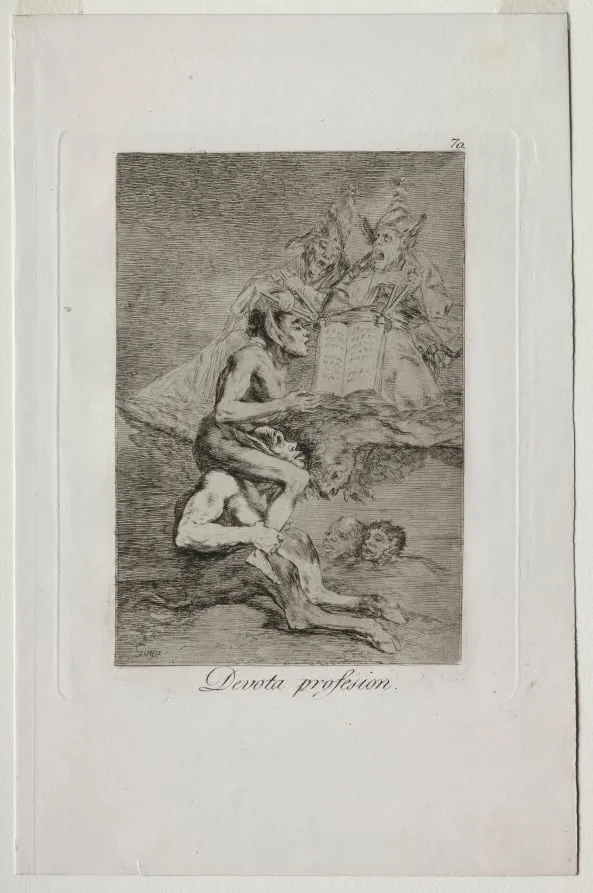
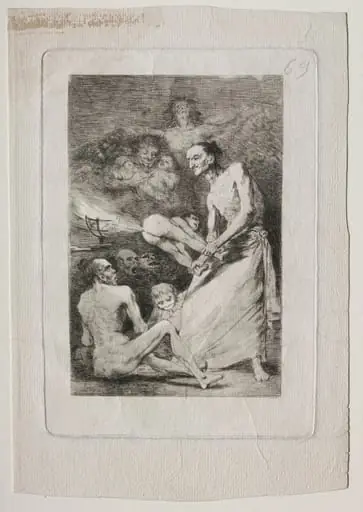
Devout Profession, Plate 70 is a print by the Romanticist artist Francisco Goya. It dates from 1799 and is held in the collection of the Cleveland Museum of Art.
About this work
Overview
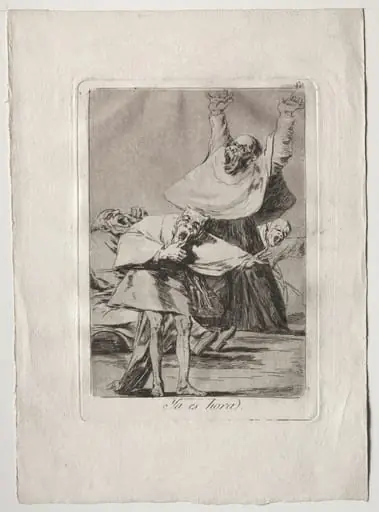
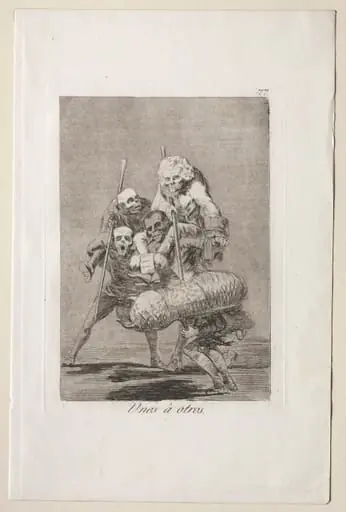
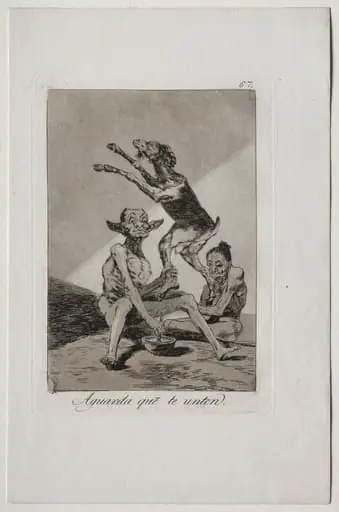
Created around 1799, Devout Profession, Plate 70 is one of Francisco de Goya’s etchings from the series Los Caprichos. Executed in black ink on paper, it presents a stark, emotionally charged scene. The work is part of a larger collection critiquing social and religious customs of late 18th-century Spain. It is currently held in the collection of The Cleveland Museum of Art.
Subject & Meaning
The image depicts a half-naked man kneeling in submission, his head bowed over barren earth. Behind him, a woman in elaborate attire holds a book, possibly a religious text, while a child lies motionless nearby. The composition suggests a ritualized act of devotion, yet the tension in posture and setting implies coercion or moral conflict, questioning the nature of enforced piety.
Technique & Style
Goya employed etching and aquatint to achieve deep contrasts of light and shadow, emphasizing emotional weight. The rough textures of the ground and jagged rocks are rendered with incised lines, while the sky is darkened with tonal washes. The figures are simplified yet expressive, their forms defined by stark chiaroscuro rather than detail, heightening the scene’s psychological intensity.
History & Provenance
The print was produced during Goya’s period of intense social commentary, shortly before he began his darker Black Paintings. It was originally part of a set of 80 prints published in 1799. The Cleveland Museum of Art acquired the work in the 20th century, where it remains as a key example of Goya’s critical engagement with Spanish society.
Context
Devout Profession reflects Goya’s skepticism toward institutional religion and the social pressures surrounding ritual observance. In late 18th-century Spain, the Church wielded significant influence over daily life, often enforcing conformity. This image subtly challenges the notion of voluntary faith, suggesting instead the presence of compulsion and moral ambiguity.
Legacy
As part of Los Caprichos, this print contributed to Goya’s reputation as a pioneer of modern critical art. Its unflinching portrayal of power, submission, and ritual influenced later artists exploring themes of authority and alienation. The work remains a reference point in discussions of visual satire and the psychological dimensions of religious practice.
Artist & collection
Artist
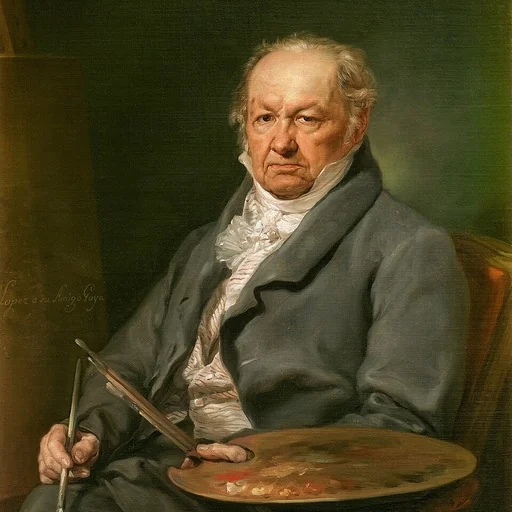
Francisco José de Goya y Lucientes (; Spanish: ; 30 March 1746 – 16 April 1828) was a Spanish romantic painter and printmaker.