Artwork
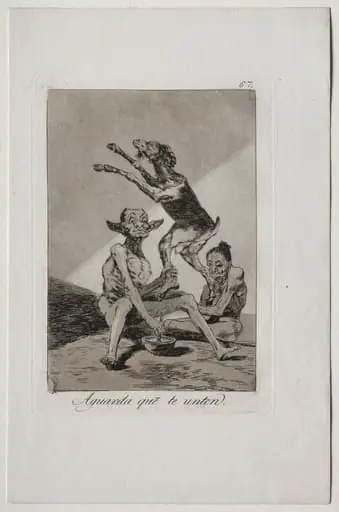
What One Does to Another, Plate 77
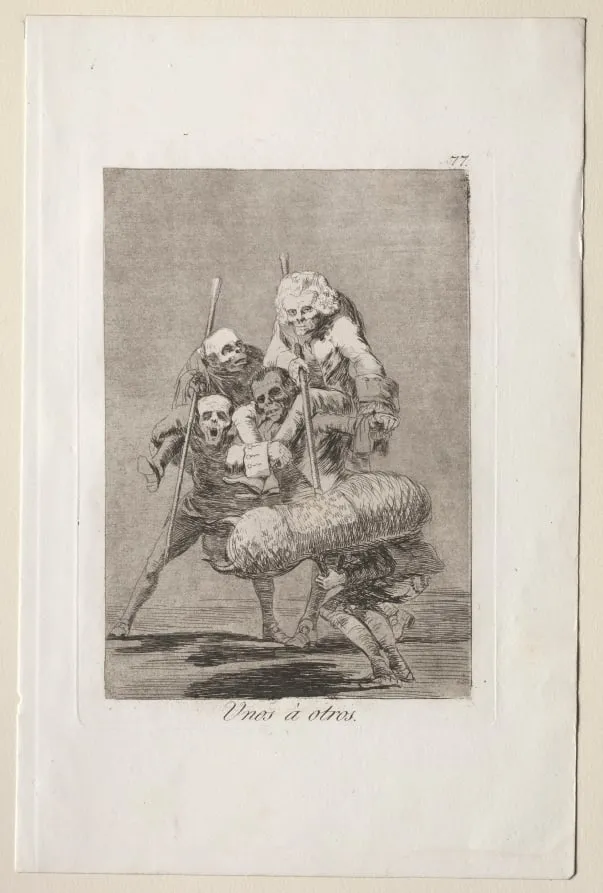
What One Does to Another, Plate 77 is a print by the Romanticist artist Francisco Goya. It dates from 1799 and is held in the collection of the Cleveland Museum of Art.
About this work
Overview
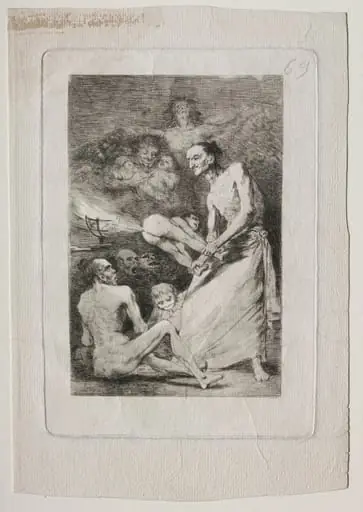
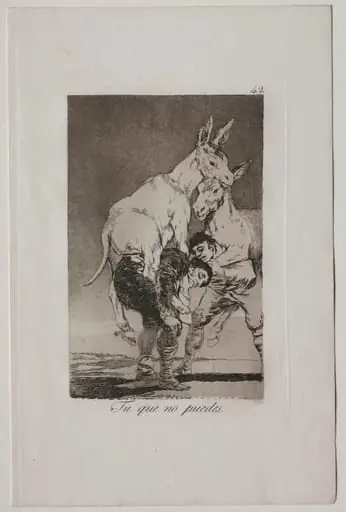
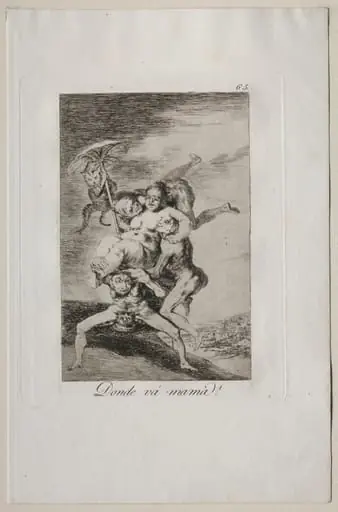
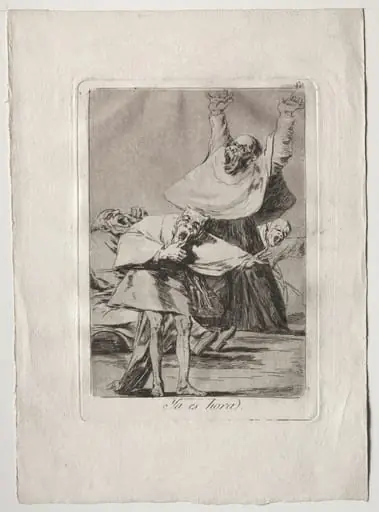
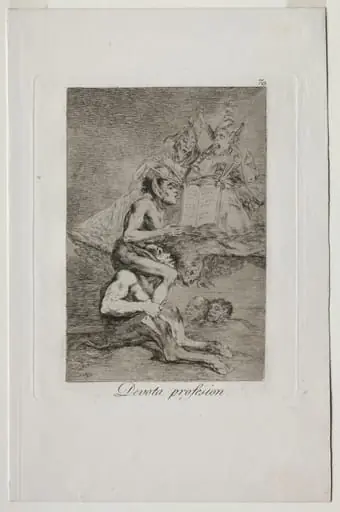
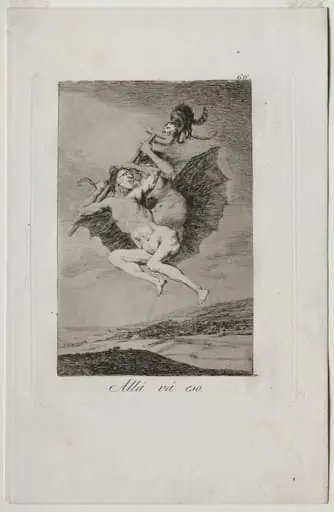
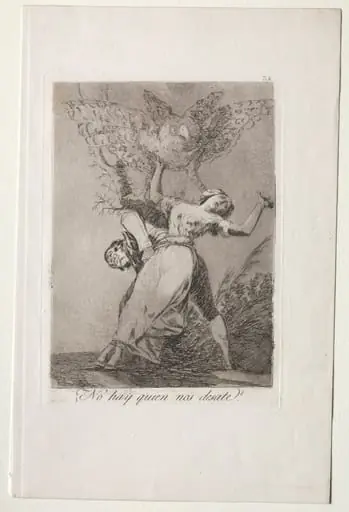
Created around 1799, 'What One Does to Another, Plate 77' is one of Francisco de Goya's etchings from the series 'Los Caprichos.' It is currently held at The Cleveland Museum of Art. The image depicts four figures riding a ram in a disordered, almost surreal composition. The work is rendered in a stark, expressive etching technique, emphasizing emotional tension over realism.
Subject & Meaning
The figures, gaunt and weary, appear burdened by an unseen force, their postures suggesting exhaustion and entrapment. The ram, an animal often associated with stubbornness or sacrifice, becomes a vehicle of shared suffering. The title implies a cycle of mutual harm or exploitation, reflecting Goya’s critique of human folly and social injustice in late 18th-century Spain.
Technique & Style
Goya employed drypoint and etching to create jagged, uneven lines that convey urgency and instability. The background fades into a murky void, heightening the sense of isolation. The tangled limbs and blurred forms disrupt spatial clarity, reinforcing the chaotic mood. This raw, almost sketchlike quality contrasts with the polished aesthetics of earlier academic traditions.
History & Provenance
The print originated in Goya’s 'Los Caprichos' series, published in 1799 as a set of 80 satirical prints critiquing Spanish society. 'What One Does to Another' was among the plates distributed to subscribers. The Cleveland Museum of Art acquired it in the 20th century as part of its growing collection of European prints, preserving its original state and inscriptions.
Context
Goya produced this work during a period of political unrest and intellectual ferment in Spain, following the Enlightenment and preceding the Napoleonic invasions. His prints often targeted superstition, corruption, and the abuse of power. This image aligns with his broader turn toward darker, more psychological themes, moving beyond satire into existential commentary.
Legacy
The print contributed to Goya’s reputation as a precursor to modern art’s emotional intensity. Its unflinching portrayal of human suffering influenced later movements, including Expressionism and Surrealism. While not widely exhibited as a standalone piece, its inclusion in 'Los Caprichos' ensured its enduring presence in discussions of art as social critique.
Artist & collection
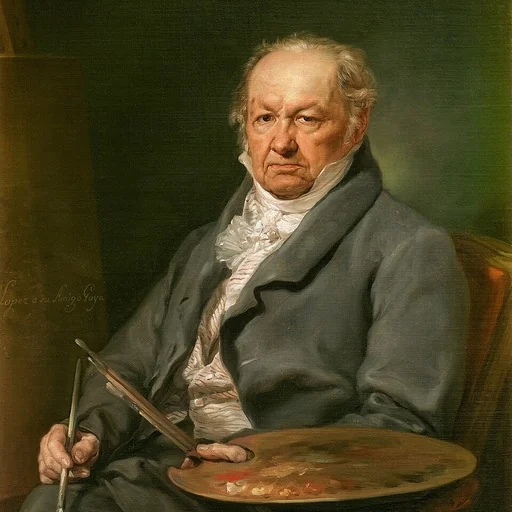
Artist
Francisco José de Goya y Lucientes (; Spanish: ; 30 March 1746 – 16 April 1828) was a Spanish romantic painter and printmaker.