Artwork
Nanny's Boy, Plate 4
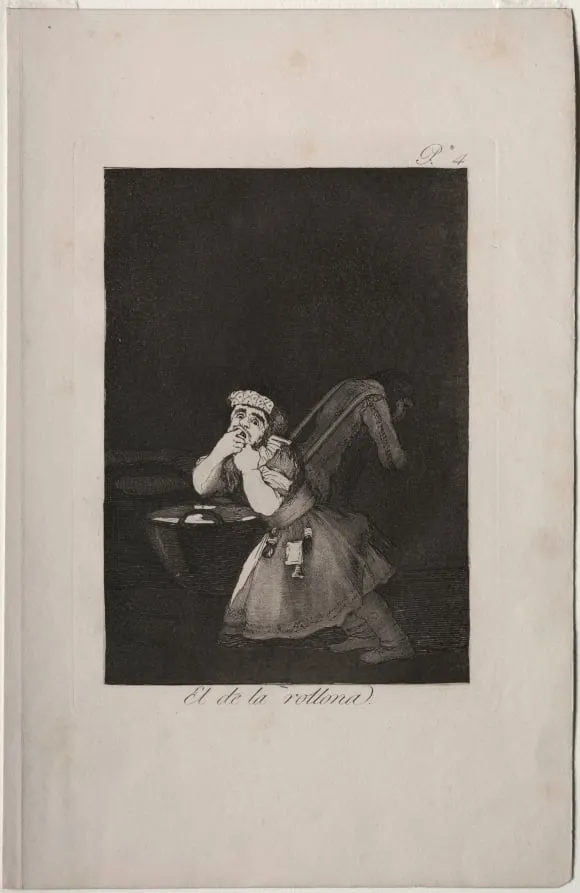
Nanny's Boy, Plate 4 is a print by the Romanticist artist Francisco Goya. It dates from 1799 and is held in the collection of the Cleveland Museum of Art.
About this work
Overview
The work exemplifies Goya’s shift toward darker, more introspective themes during this period, using printmaking to explore psychological and social tensions.
Nanny's Boy, Plate 4, created around 1799 by Francisco de Goya, is one of the aquatints from his series Los Caprichos. The print is part of a larger collection critiquing Spanish society through symbolic imagery. It is currently held in the collection of The Cleveland Museum of Art. The work exemplifies Goya’s shift toward darker, more introspective themes during this period, using printmaking to explore psychological and social tensions.
Subject & Meaning
The image depicts a young boy in elaborate, outdated clothing, intently holding a large key to his ear as if listening for something unseen. The title suggests a child left unattended, perhaps symbolizing neglect or the loss of innocence. The empty room and ambiguous background imply isolation, while the boy’s focused gesture evokes curiosity, superstition, or a search for hidden truths—possibly alluding to adult secrets beyond his understanding.
Technique & Style
Goya employed aquatint and etching to achieve deep tonal contrasts, emphasizing chiaroscuro effects. The boy is rendered with sharp detail against a near-black background, creating a dramatic spotlight effect. Loose, suggestive strokes define the room’s vague forms, enhancing mystery. The technique allows for rich gradations of shadow, reinforcing the psychological weight of the scene while maintaining the atmospheric ambiguity characteristic of Goya’s late 18th-century prints.
History & Provenance
The print was produced as part of Goya’s Los Caprichos series, first published in 1799. It was likely distributed in limited numbers to private collectors, reflecting the artist’s critical stance toward social norms. The Cleveland Museum of Art acquired the print in the 20th century, where it remains part of its permanent collection of European prints. Its preservation reflects its significance within Goya’s oeuvre and the broader history of printmaking.
Context
Created during Spain’s Enlightenment era, Los Caprichos responded to widespread social hypocrisy, superstition, and class disparity. Goya, influenced by intellectual circles and disillusioned by political stagnation, used satire to expose hidden vices. Nanny's Boy fits this context by subtly critiquing the neglect of children in aristocratic households, where servants managed upbringing while adults remained detached or indulgent.
Legacy
Nanny's Boy contributed to the evolution of printmaking as a vehicle for social commentary. Goya’s use of psychological depth and shadow in this work influenced later artists exploring inner turmoil and societal critique. The image’s ambiguity and emotional resonance have ensured its continued study in art history, particularly as a precursor to modernist explorations of alienation and the unconscious.
Artist & collection
Artist
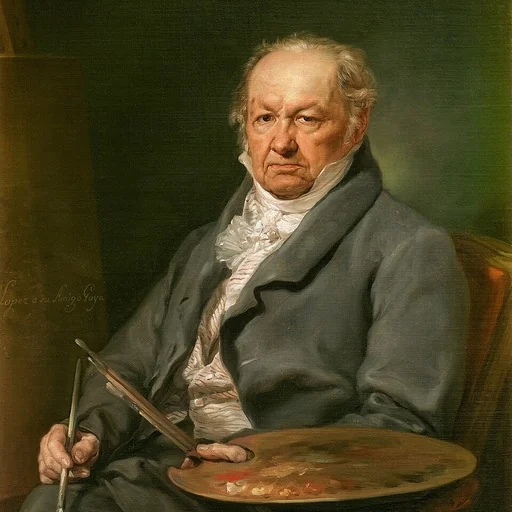
Francisco José de Goya y Lucientes (; Spanish: ; 30 March 1746 – 16 April 1828) was a Spanish romantic painter and printmaker.

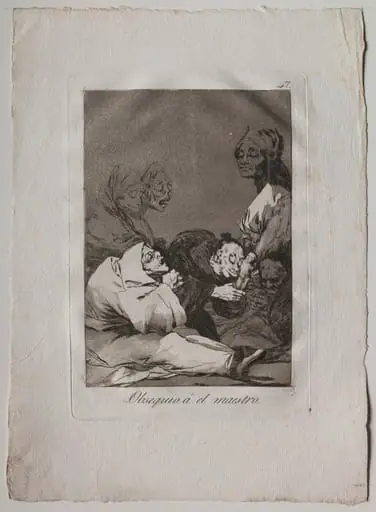 A Gift for the Master, Plate 47
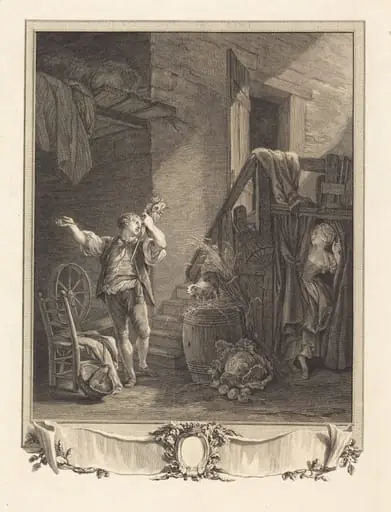 Rose et Colas
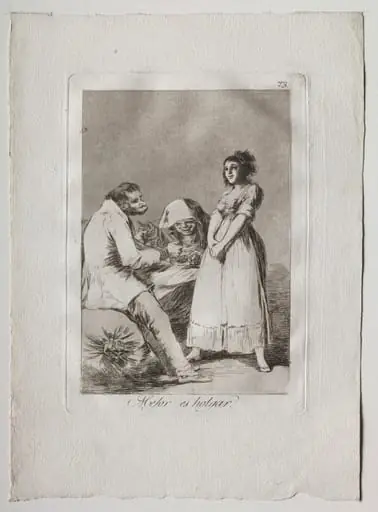 It is Better to be Lazy, Plate 73
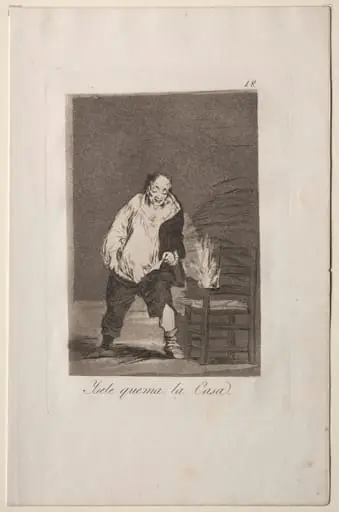 And His House is on Fire, Plate 18
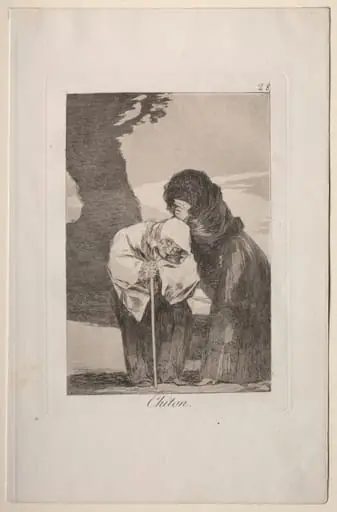 Hush!, Plate 28
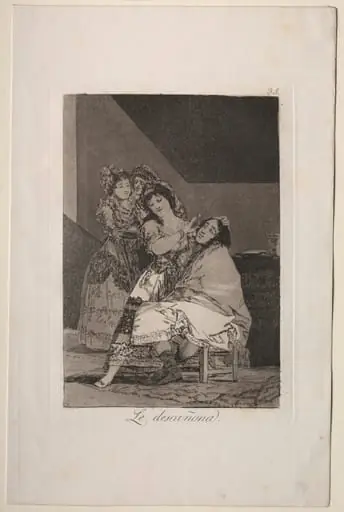 She Fleeces Him, Plate 35
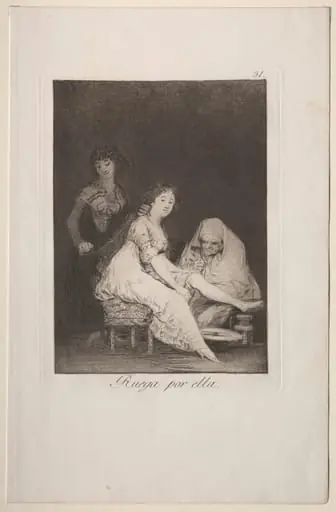 She Prays for Her, Plate 31
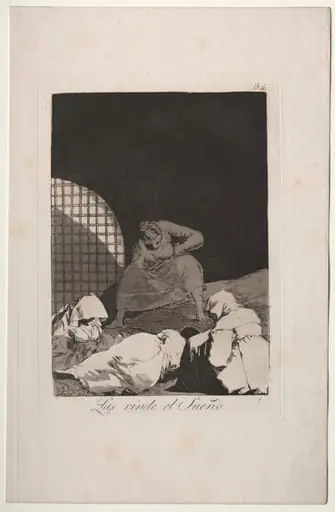 Sleep Overcomes Them, Plate 34
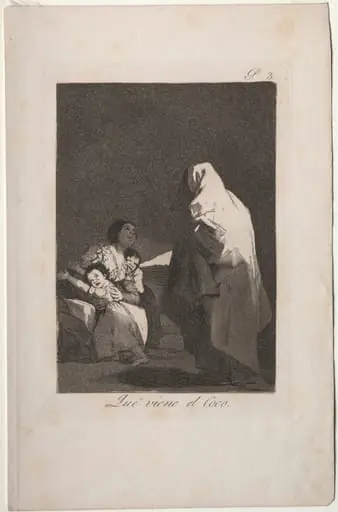 Here Comes the Bogeyman, Plate 3
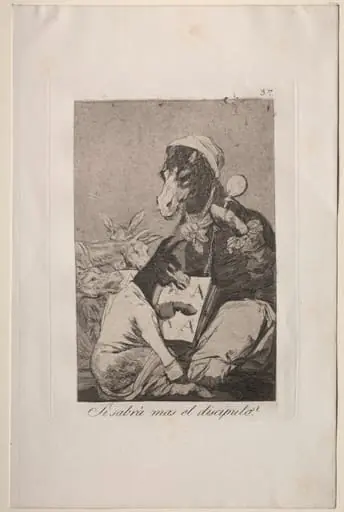 Might Not the Pupil Know More?, Plate 37
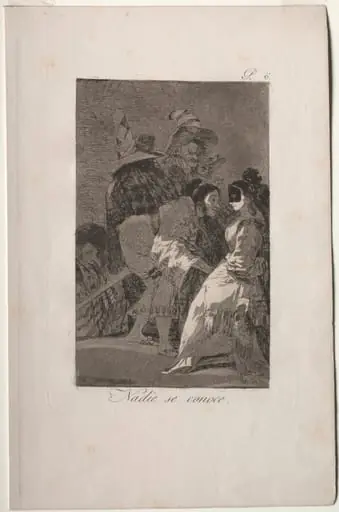 No One Knows Himself, Plate 6
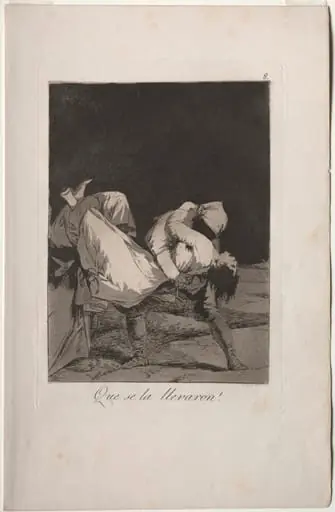 They Carried Her Off!, Plate 8