Artwork
The Horrors of War: And They are Like Wild Beasts
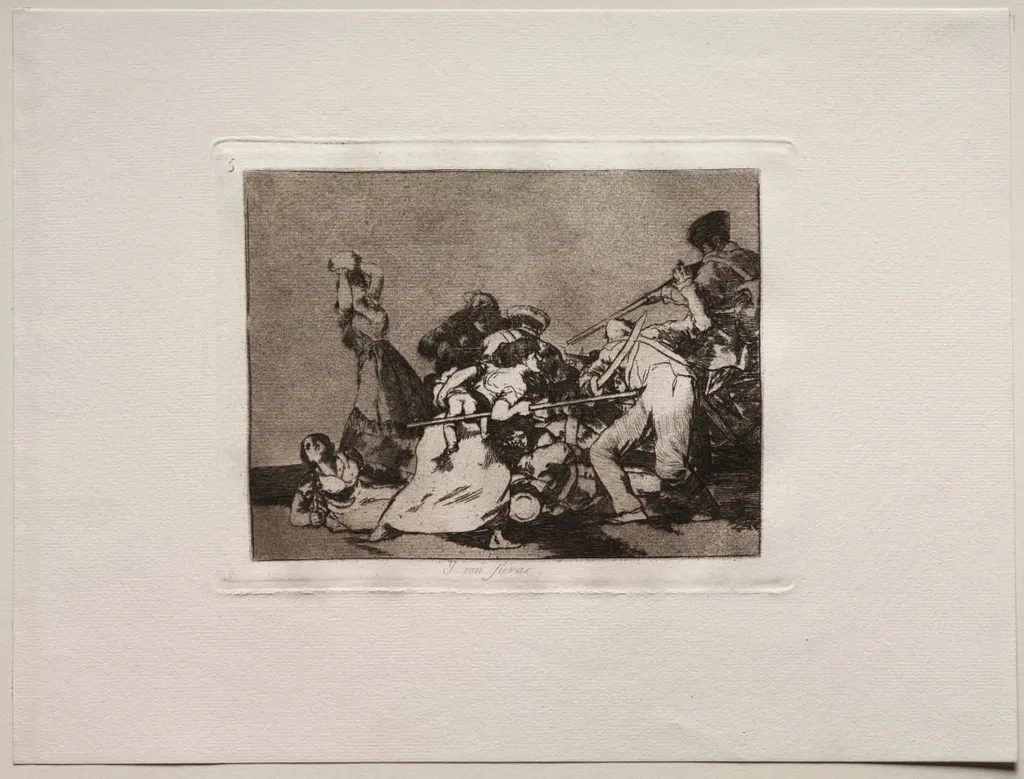
The Horrors of War: And They are Like Wild Beasts is a print by the Romanticist artist Francisco Goya. It dates from 1815 and is held in the collection of the Cleveland Museum of Art. Created around 1815, this print by Francisco de Goya is part of a series reflecting on the violence of the Peninsular War.
About this work
Overview
Created around 1815, this print by Francisco de Goya is part of a series reflecting on the violence of the Peninsular War. It is one of eighty-three etchings in the 'Disasters of War' portfolio, produced in the aftermath of conflict. The work is held in the collection of The Cleveland Museum of Art and exemplifies Goya’s shift from courtly portraiture to unflinching social commentary.
Subject & Meaning
The scene depicts civilians overwhelmed by soldiers in a confined, shadowed space. A woman in elaborate attire lies wounded among armed men, while a child cowers nearby. The title, invoking animalistic brutality, frames the violence not as heroic combat but as senseless cruelty. Goya rejects glorification, instead presenting war as a collapse of civilization into primal aggression.
Technique & Style
Goya employed etching and aquatint to achieve stark tonal contrasts and textured darkness. Bold, incised lines define figures with raw immediacy, while deep shadows swallow backgrounds, heightening the sense of entrapment. The absence of clear perspective and the compressed space amplify psychological tension, aligning the work with Romanticism’s emphasis on emotion over order.
History & Provenance
Goya produced this print privately between 1810 and 1820, withholding publication due to political sensitivity. The series remained unpublished until 1863, decades after his death. The Cleveland Museum of Art acquired the print as part of a broader collection of Goya’s prints, preserving its original state and historical context.
Context
Created after the Napoleonic occupation of Spain and the brutal guerrilla warfare that followed, the print reflects Goya’s disillusionment with both foreign invasion and domestic repression. Unlike official war imagery, it focuses on civilian suffering, challenging the notion of war as noble. The work emerged during a period of intense political instability in Spain.
Legacy
Goya’s 'Disasters of War' series influenced later artists confronting violence, from Otto Dix to Géricault. Its unvarnished portrayal of suffering prefigured modern photojournalism and anti-war art. The print’s enduring power lies in its refusal to sanitize conflict, establishing a precedent for visual testimony in times of crisis.
Artist & collection
Artist
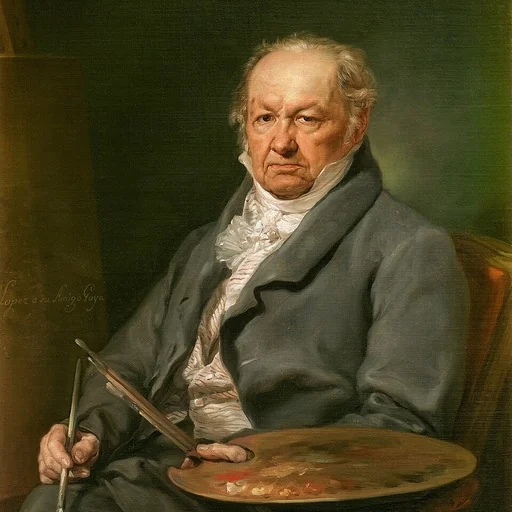
Francisco José de Goya y Lucientes (; Spanish: ; 30 March 1746 – 16 April 1828) was a Spanish romantic painter and printmaker.

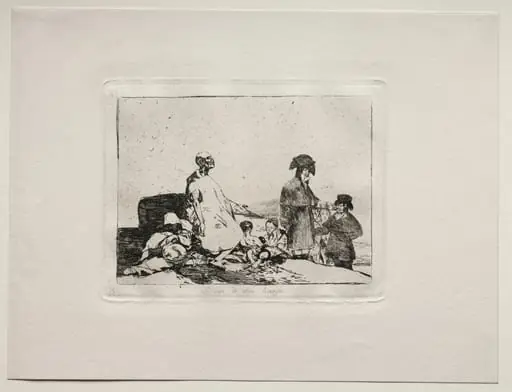 The Horrors of War: Perhaps They are of Another Breed
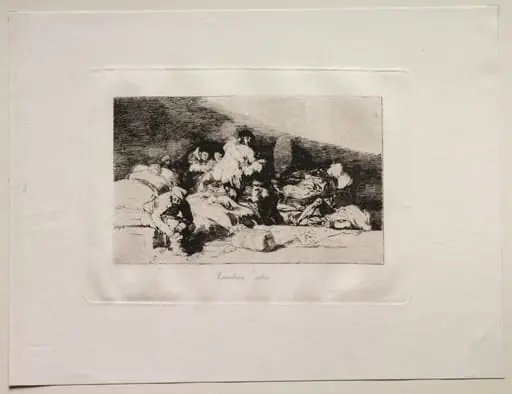 The Horrors of War: These Too
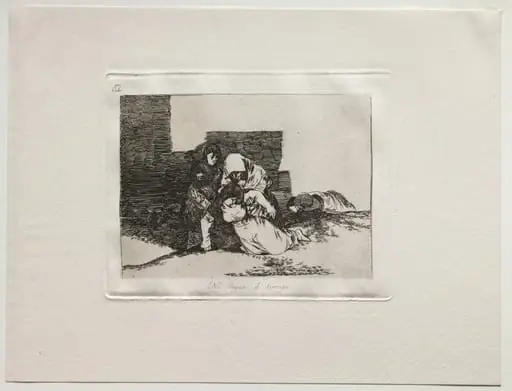 The Horrors of War: They Do Not Arrive In Time
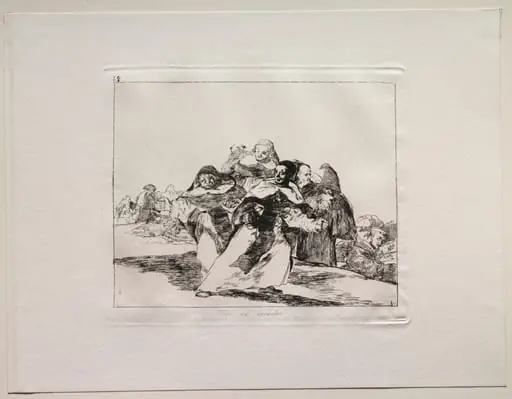 The Horrors of War: Everything is Topsy-Turvy
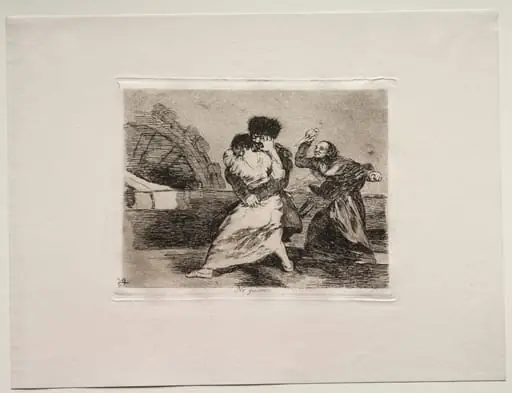 The Horrors of War: They Don't Like It
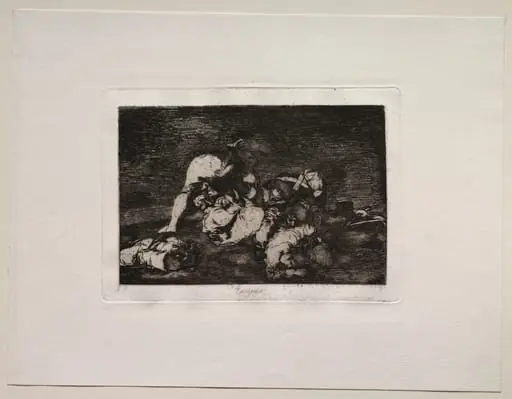 The Horrors of War: Nor (Do These) Either
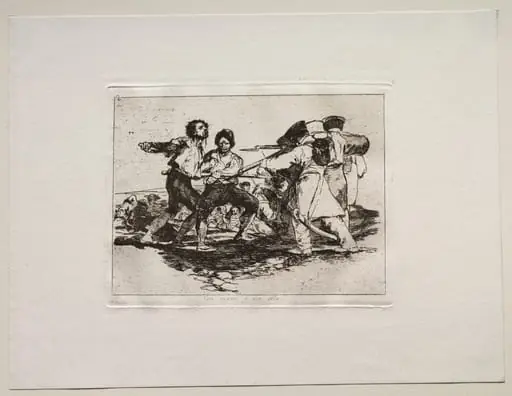 The Horrors of War: Rightly or Wrongly
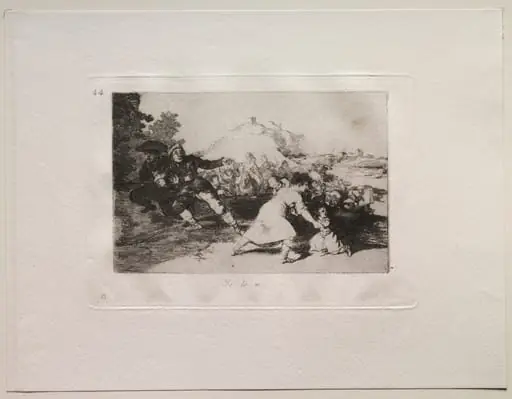 The Horrors of War: I Saw It
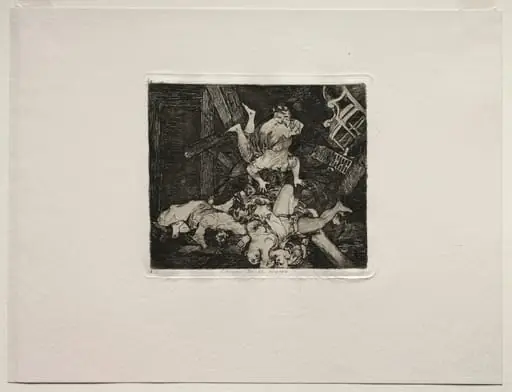 The Horrors of War: Ravages of War
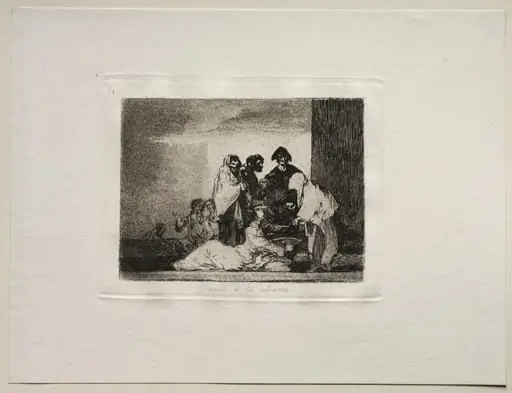 The Horrors of War: Thanks To The Millet