Artwork
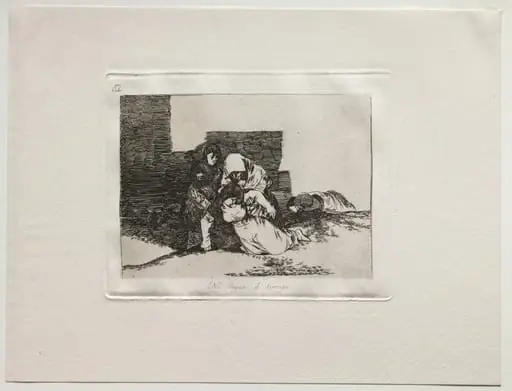
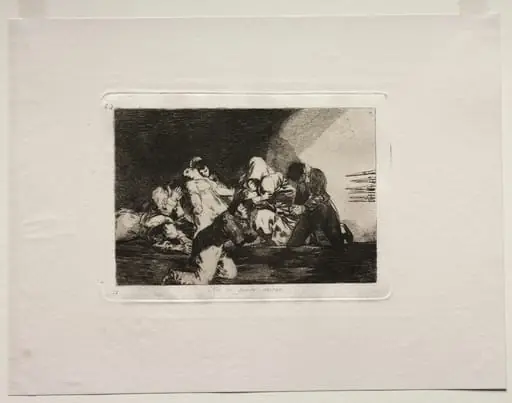
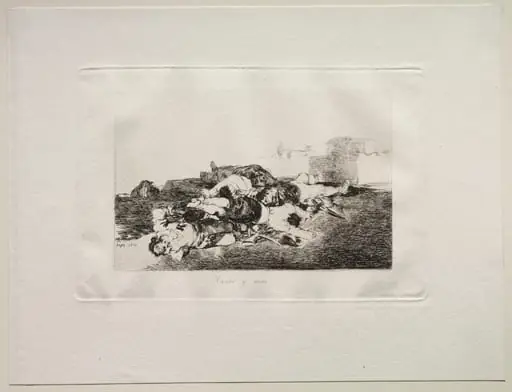
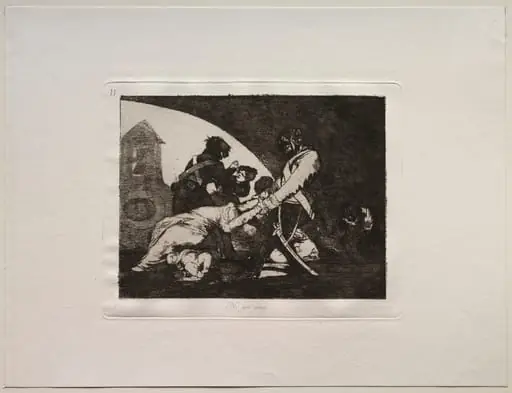
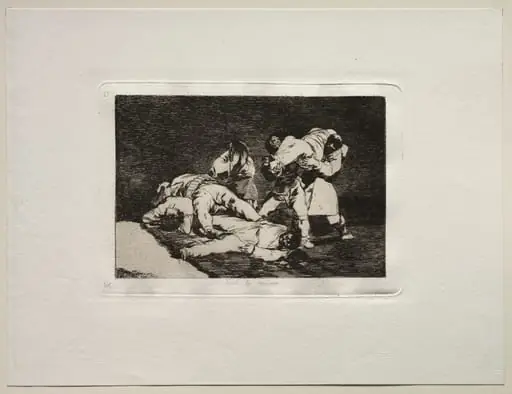
The Horrors of War: Nor (Do These) Either
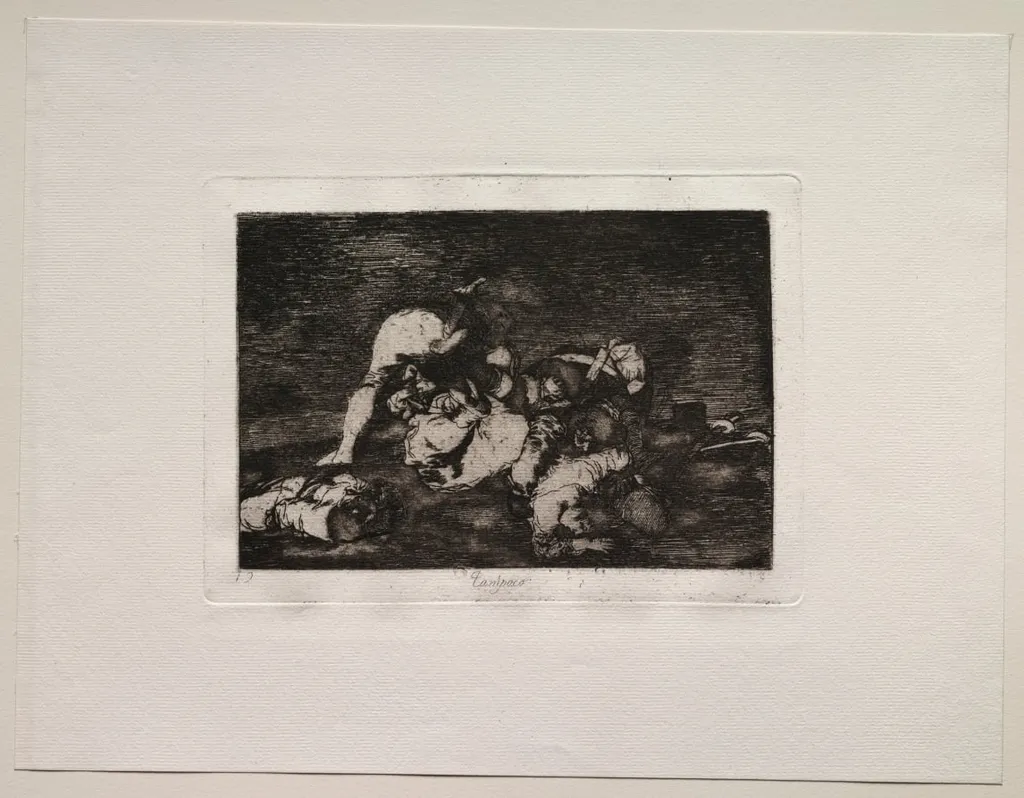
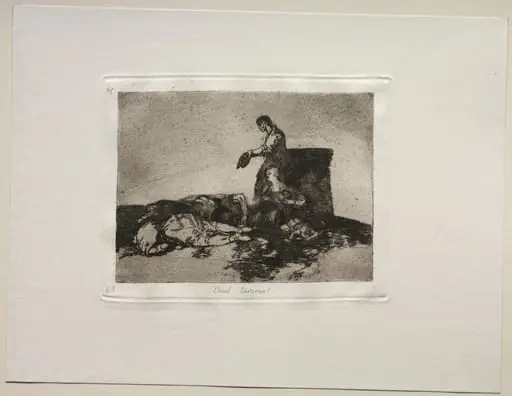
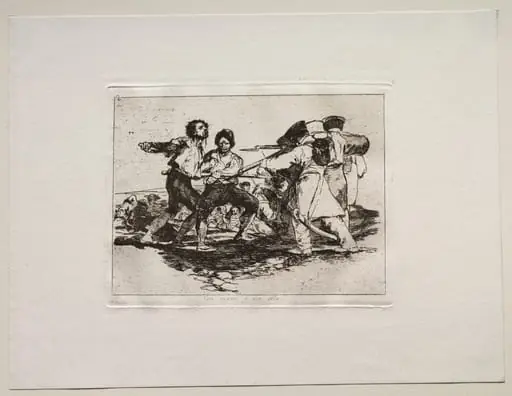
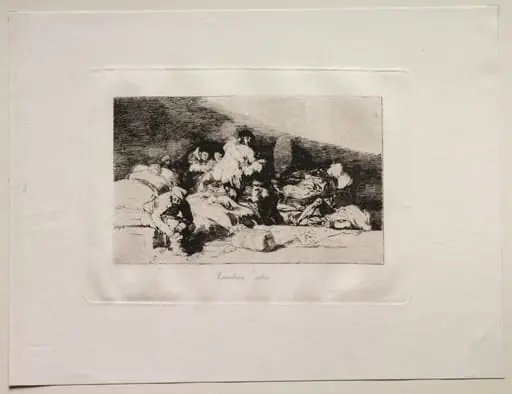
The Horrors of War: Nor (Do These) Either is a print by the Romanticist artist Francisco Goya. It dates from 1815 and is held in the collection of the Cleveland Museum of Art. Created around 1815, this print by Francisco de Goya is part of a series responding to the violence of the Peninsular War.
About this work
Overview
The work belongs to Goya’s later period, marked by dark themes and experimental technique, reflecting his disillusionment with human conflict.
Created around 1815, this print by Francisco de Goya is part of a series responding to the violence of the Peninsular War. It is held in the collection of The Cleveland Museum of Art. Unlike traditional history paintings, it avoids heroic narrative, instead presenting raw, unmediated suffering. The work belongs to Goya’s later period, marked by dark themes and experimental technique, reflecting his disillusionment with human conflict.
Subject & Meaning
The scene depicts two figures in a moment of brutal confrontation: one man lies contorted on the ground, another looms above with arms raised, suggesting imminent violence. The absence of clear identity or context universalizes the act, turning it into a symbol of senseless cruelty. The title, 'Nor (Do These) Either,' implies moral equivalence—no side is absolved. The work rejects glorification, insisting on war’s dehumanizing core.
Technique & Style
Goya employs stark contrasts of light and shadow to isolate figures against a murky, indistinct background. Bold, urgent brushwork conveys motion and chaos, while muted tones—ochres, blacks, and grays—enhance the atmosphere of despair. The composition lacks spatial clarity, forcing the viewer to confront the violence directly. This approach prioritizes emotional impact over realism, aligning with his late expressive style.
History & Provenance
The print was produced as part of Goya’s 'Disasters of War' series, begun during the conflict and finalized after its end. Though completed around 1815, it was not published until decades later due to political sensitivity. It entered The Cleveland Museum of Art’s collection in the 20th century, following a trajectory common to many of Goya’s private, uncommissioned works that only gained recognition posthumously.
Context
Goya witnessed firsthand the brutality of Napoleon’s invasion and the Spanish resistance, which left communities shattered and moral boundaries blurred. This print emerged from a climate of political repression and cultural trauma. Unlike official histories that celebrated heroism, Goya’s series documented the suffering of ordinary people, challenging viewers to confront the cost of war beyond battlefield glory.
Legacy
The work influenced later artists grappling with war’s psychological toll, from Otto Dix to Francis Bacon. Its unflinching imagery helped redefine the role of art in bearing witness to atrocity. Rather than serving as propaganda or memorial, it functions as a moral indictment—its power lies in its refusal to offer resolution, leaving the viewer with enduring unease.
Artist & collection
Artist
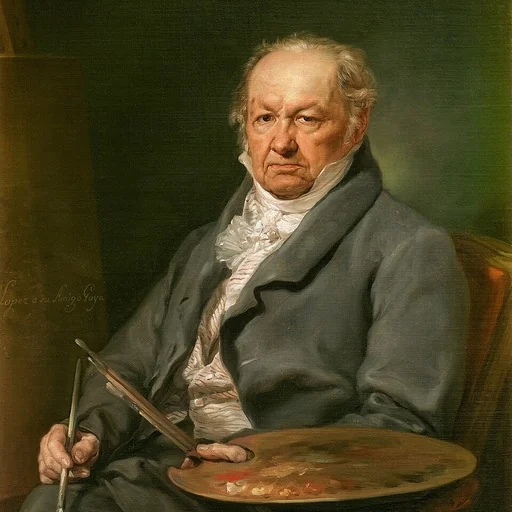
Francisco José de Goya y Lucientes (; Spanish: ; 30 March 1746 – 16 April 1828) was a Spanish romantic painter and printmaker.