Artwork
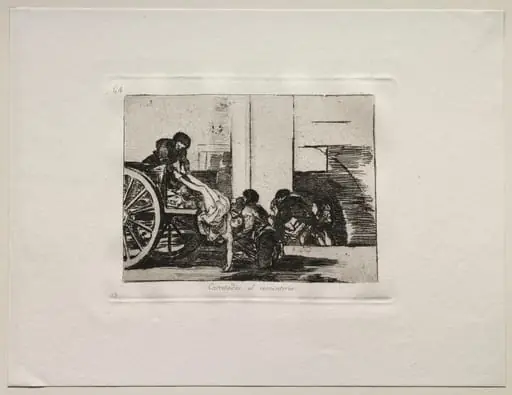
The Horrors of War: To The Cemetery
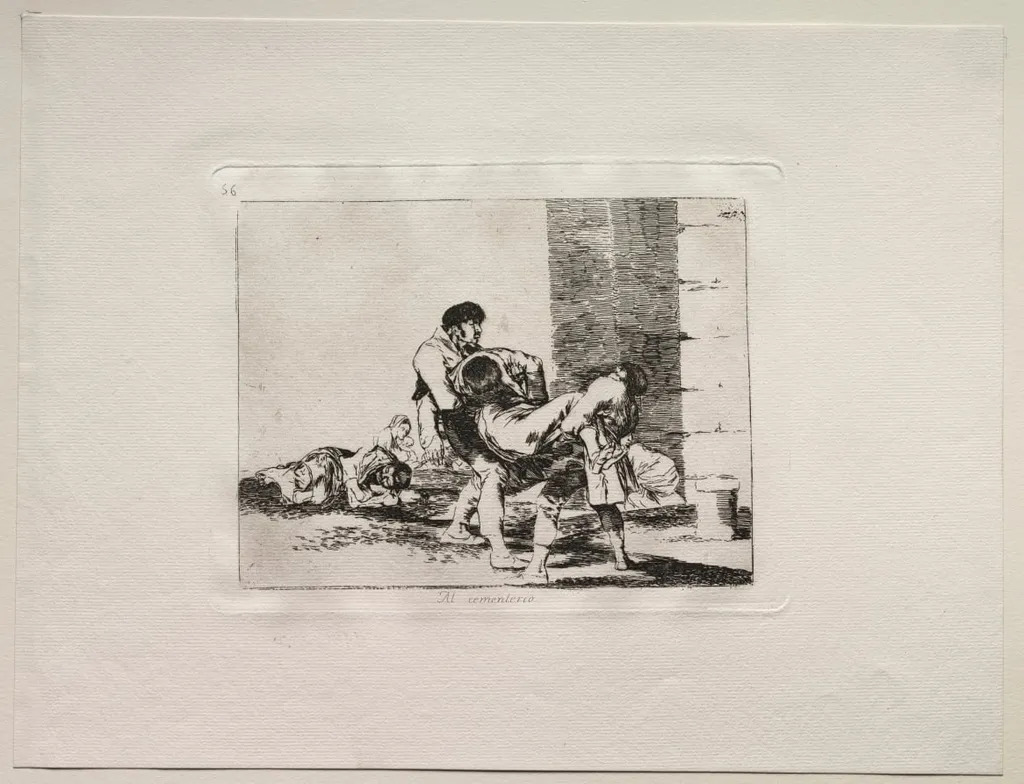
The Horrors of War: To The Cemetery is a print by the Romanticist artist Francisco Goya. It dates from 1815 and is held in the collection of the Cleveland Museum of Art. Created around 1815, this print by Francisco de Goya is part of a series reflecting on the human cost of conflict.
About this work
Overview
Created around 1815, this print by Francisco de Goya is part of a series reflecting on the human cost of conflict. It depicts a funeral procession moving through a somber landscape, rendered in ink and wash. The work is held in the collection of the Cleveland Museum of Art, where it is studied as a quiet yet forceful meditation on loss and mourning in wartime.
Subject & Meaning
The scene shows a group of mourners transporting a single body to a burial ground, their movements subdued and solemn. No grand gestures or overt violence are shown; instead, the weight of grief is conveyed through posture and silence. The absence of identifiable figures universalizes the moment, suggesting the anonymity of death in prolonged conflict and the routine nature of suffering.
Technique & Style
Goya employs ink and wash to create stark contrasts between light and shadow, emphasizing the weight of the carried body and the heaviness of the atmosphere. Bold, expressive lines define the figures, while muted tones dominate the background. The composition directs attention to the central procession, with minimal detail in the surroundings to focus the viewer on the act of burial.
History & Provenance
This print was produced during Goya’s later years, following his experiences with the Peninsular War and the political instability in Spain. It belongs to a series of aquatints known as 'The Disasters of War,' which were not published until decades after his death. The Cleveland Museum of Art acquired the work in the 20th century, preserving it as part of a critical record of 19th-century trauma.
Context
Made in the aftermath of Napoleon’s invasion and the Spanish War of Independence, the print reflects a society grappling with widespread death and moral exhaustion. Unlike official histories that glorified battle, Goya’s images confronted the quiet, uncelebrated toll on civilians and soldiers alike, offering a counter-narrative grounded in observation rather than heroism.
Legacy
Goya’s unflinching portrayal of death influenced later artists who sought to depict war without romanticization. This print, along with others in the series, helped redefine the role of art as a witness to suffering rather than a tool of propaganda. Its restrained power continues to resonate in visual culture concerned with memory and loss.
Artist & collection
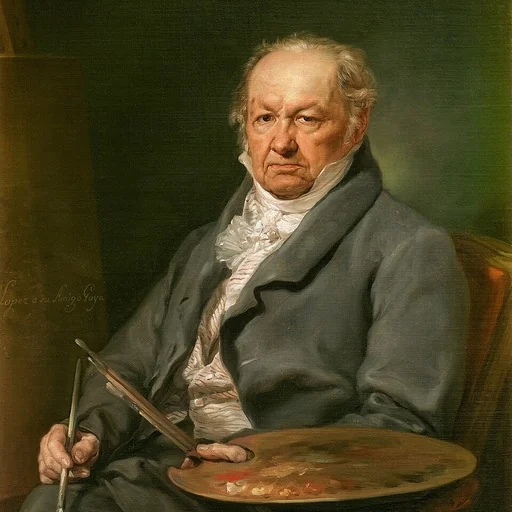
Artist
Francisco José de Goya y Lucientes (; Spanish: ; 30 March 1746 – 16 April 1828) was a Spanish romantic painter and printmaker.