Artwork
The Horrors of War: What More Can Be Done?
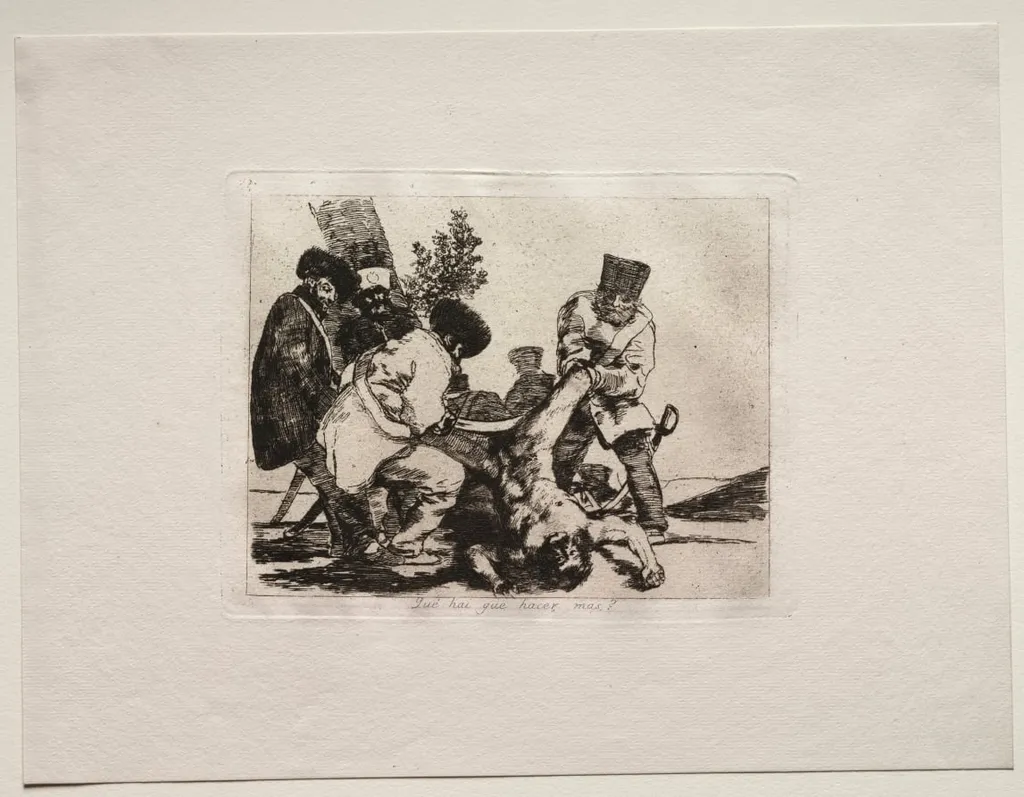
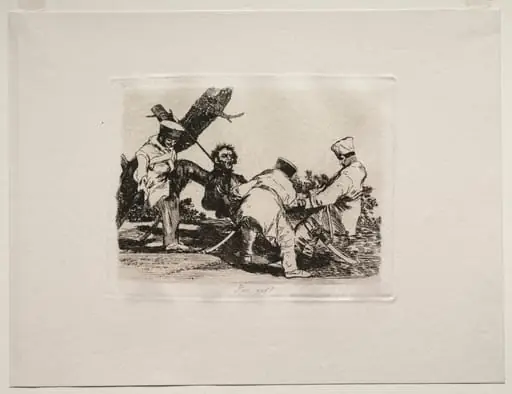
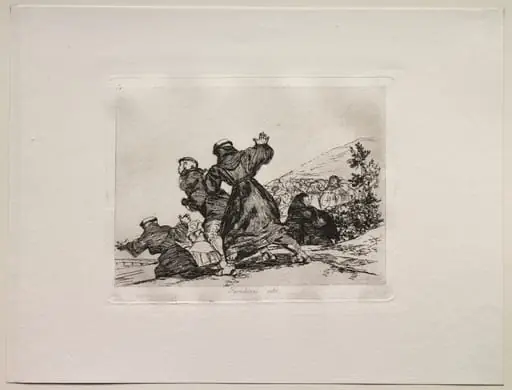
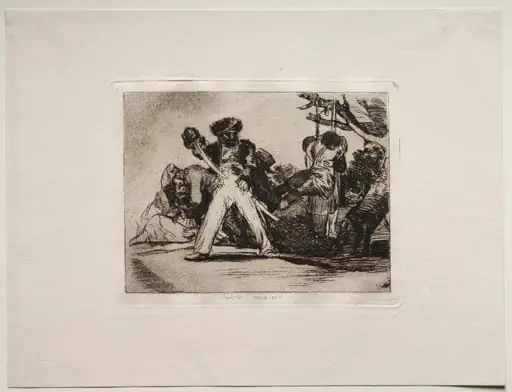
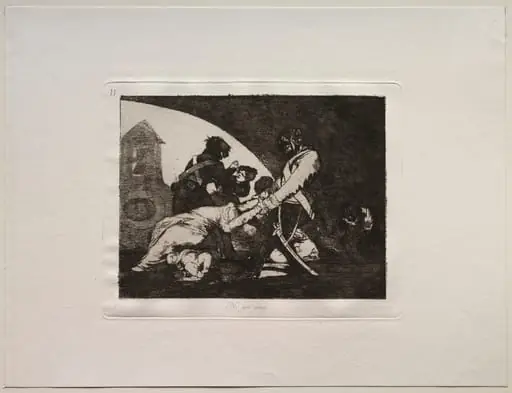
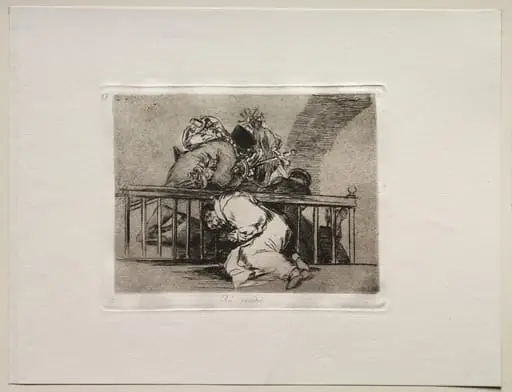
The Horrors of War: What More Can Be Done? is a print by the Romanticist artist Francisco Goya. It dates from 1815 and is held in the collection of the Cleveland Museum of Art. This black-and-white etching, dated around 1815, is one of Francisco de Goya’s series exploring the aftermath of conflict.
About this work
Overview
This black-and-white etching, dated around 1815, is one of Francisco de Goya’s series exploring the aftermath of conflict.
This black-and-white etching, dated around 1815, is one of Francisco de Goya’s series exploring the aftermath of conflict. It belongs to a group of works produced after the Peninsular War, reflecting his disillusionment with violence. The image is spare in detail but intense in emotional weight, rendered with stark contrasts and minimal background elements to focus attention on the figures and their grim task.
Subject & Meaning
Three men confront the physical remnants of battle: one kneels, clutching a severed limb; another observes silently; the third assists or hesitates beside the body. The scene lacks heroism or resolution, instead presenting raw, unvarnished aftermath. The title’s rhetorical question—'What more can be done?'—challenges the viewer to consider the futility and cyclical nature of war’s devastation, offering no answer, only unease.
Technique & Style
Goya employed etching with aquatint to achieve deep blacks and subtle gradations of gray, enhancing the somber mood. Bold, incised lines define the figures’ forms, while the background remains muted—a single tree and distant hill suggest desolation without distraction. The lack of color and simplified setting intensifies the psychological gravity, aligning with his late style’s emphasis on emotional truth over decorative detail.
History & Provenance
Created shortly after the Napoleonic Wars, the print was part of Goya’s private series later published as 'The Disasters of War.' It remained largely unseen during his lifetime, circulating only among close circles. The Cleveland Museum of Art acquired it in the 20th century as part of a broader collection of Goya’s graphic works, preserving its original state and historical context.
Context
Goya produced this work amid Spain’s political instability and collective trauma following years of invasion and civil strife. Unlike official war imagery, which glorified victory, his prints confronted the suffering of ordinary people. This piece reflects a shift in European art toward unflinching realism, rejecting idealized narratives in favor of personal, visceral testimony.
Legacy
The print contributed to a new visual language for depicting war’s human cost, influencing later artists and photojournalists who sought to document conflict without embellishment. Its unadorned composition and haunting question continue to resonate in modern discussions of violence, memory, and moral responsibility in art.
Artist & collection
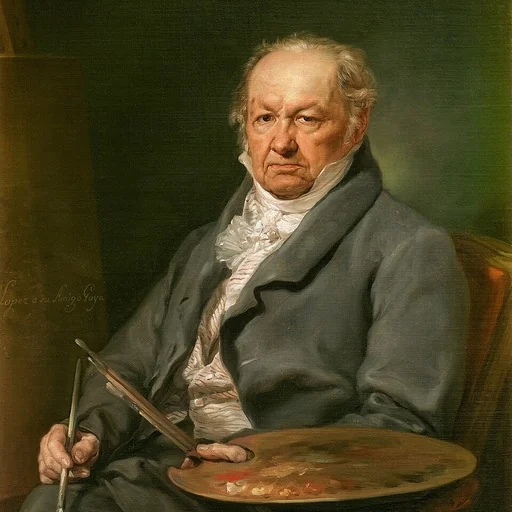
Artist
Francisco José de Goya y Lucientes (; Spanish: ; 30 March 1746 – 16 April 1828) was a Spanish romantic painter and printmaker.