Artwork
Descent of Christ into Limbo
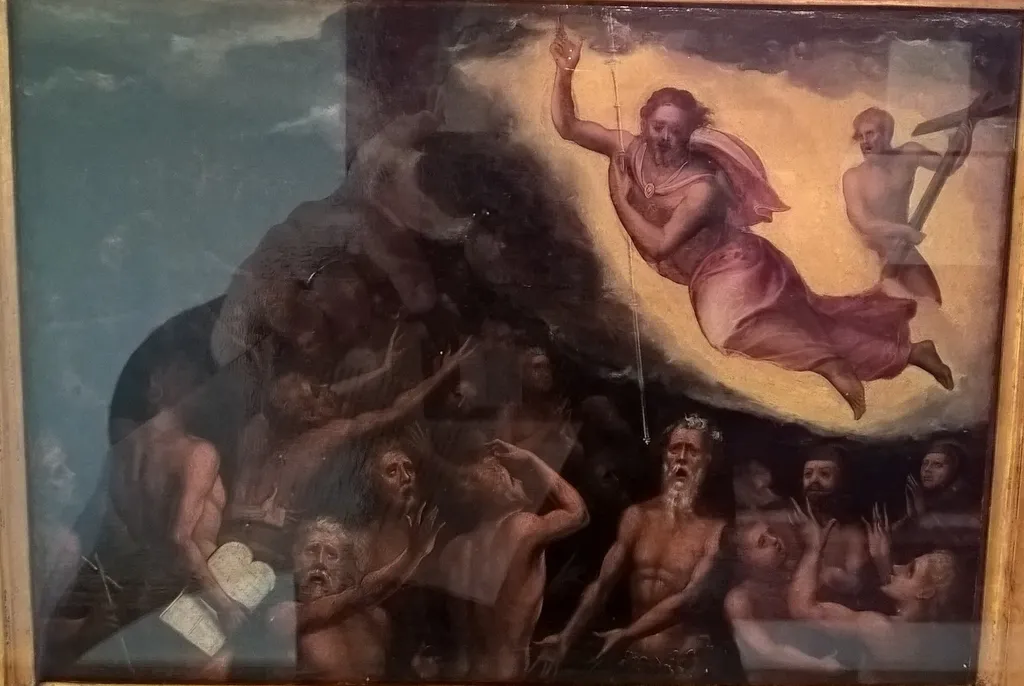
Descent of Christ into Limbo is an unspecified painting by the Mannerist artist Francisco de Holanda. It dates from 1550 and is held in the collection of the National Museum of Ancient Art.
About this work
Overview
The painting resides in the National Museum of Ancient Art in Lisbon, reflecting its importance in early Portuguese Renaissance art.
Painted around 1550 by Francisco de Holanda, this work is one of the few surviving religious paintings by the Portuguese artist, who was also an influential architectural theorist. A court painter to Kings João III and Sebastião, Holanda brought Italian Mannerist principles to Portugal after studying in Rome. The painting resides in the National Museum of Ancient Art in Lisbon, reflecting its importance in early Portuguese Renaissance art.
Subject & Meaning
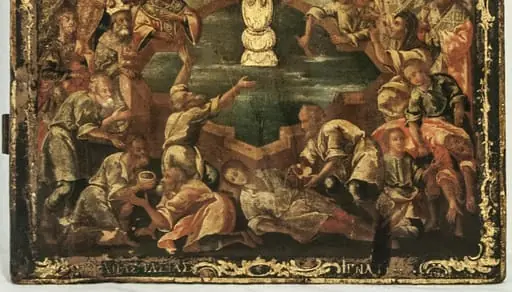
The scene illustrates Christ’s descent into Limbo, a theological concept in which he liberates the righteous souls of the Old Testament who died before his crucifixion. Christ, depicted as a radiant figure, descends through darkness toward figures reaching upward, symbolizing redemption and divine intervention. The composition emphasizes spiritual awakening, with Christ’s gesture conveying authority and grace over the realm of the dead.
Technique & Style
Holanda employs Mannerist conventions through elongated forms, heightened emotional tension, and dramatic chiaroscuro. The stark contrast between Christ’s luminous pink robe and the deep, shadowy void surrounding him creates spatial depth and focuses attention on the central figure. The figures below are rendered with simplified anatomy, their gestures conveying yearning, while the lack of detailed background reinforces the mystical, otherworldly atmosphere.
History & Provenance
The painting has remained in Portugal since its creation, likely commissioned for private devotion or royal chapel use. It entered the collection of the National Museum of Ancient Art in the 19th century, where it has been preserved as a rare example of 16th-century Portuguese religious painting. Its survival is notable given the scarcity of panel paintings from Holanda’s hand.
Context
Holanda’s exposure to Italian art during his time in Rome shaped his approach, blending Mannerist elegance with Portuguese devotional traditions. His 1548 treatise, *Da pintura antiga*, advocated for classical ideals in painting and helped establish theoretical foundations for art in Iberia. This work reflects his dual role as practitioner and theorist, bridging humanist thought and religious imagery in a period of cultural transition.
Legacy
Though Holanda’s painted output was limited, his influence extended through his writings and court position. *Descent of Christ into Limbo* stands as a testament to the early adoption of Italianate styles in Portugal and illustrates how religious themes were reinterpreted through new visual languages. It remains a key reference for understanding the development of Portuguese Renaissance art beyond its architectural achievements.
Artist & collection
Artist
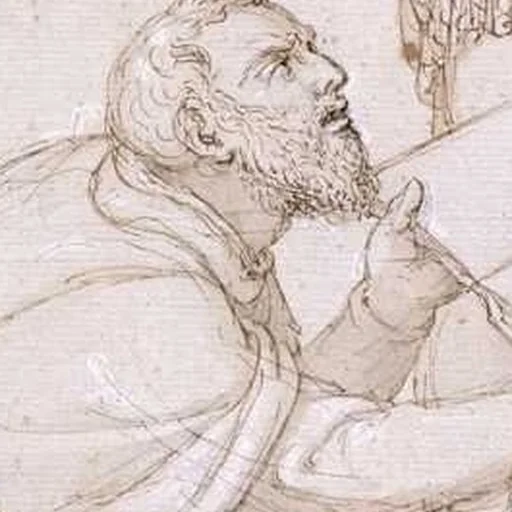
Francisco de Holanda (c. 1517 – 19 June 1585) was a Portuguese artist, architect, and art essayist. He served as a court painter for the kings João III of Portugal and Sebastião of Portugal. He was an influential figure…