Artwork
Battle of Las Navas de Tolosa
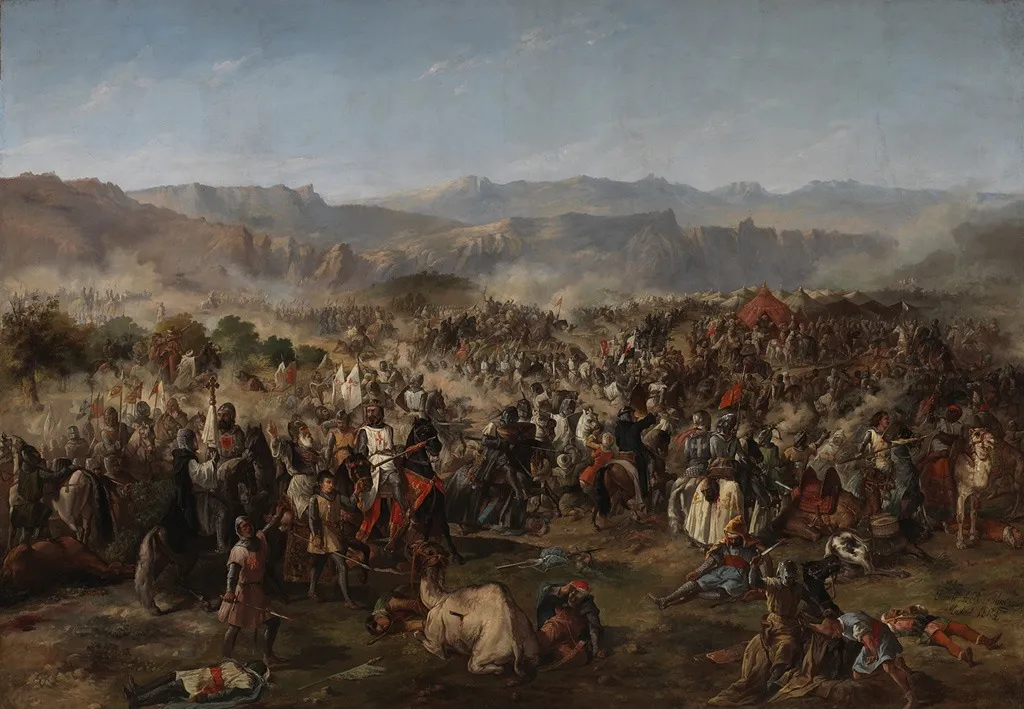
Battle of Las Navas de Tolosa is an oil painting by Francisco de Paula Van Halen. It dates from 1864 and is held in the collection of the Museo del Prado.
About this work
Overview
Painted in 1864 by Spanish artist Francisco de Paula Van Halen, this oil on canvas depicts the 1212 Battle of Las Navas de Tolosa. A large-scale historical work, it belongs to the tradition of 19th-century Spanish narrative painting. The piece is part of the permanent collection at the Museo del Prado in Madrid, where it reflects the era’s interest in national history and military heroism.
Subject & Meaning
The fallen soldiers and horses underscore the human cost of the conflict, reinforcing the event’s significance in Spanish collective memory.
The painting illustrates the decisive Christian victory over Almohad forces in southern Spain, a turning point in the Reconquista. Van Halen emphasizes the chaos and brutality of medieval combat, focusing on the clash of armored cavalry amid a barren landscape. The fallen soldiers and horses underscore the human cost of the conflict, reinforcing the event’s significance in Spanish collective memory.
Technique & Style
Van Halen employs a muted palette dominated by earth tones—browns, grays, and ochres—with selective use of red and white to highlight banners and armor. The composition is densely packed, with overlapping figures and dynamic diagonals conveying movement. Brushwork is detailed but not overly refined, prioritizing dramatic impact over idealized form, typical of mid-19th-century historical painting conventions.
History & Provenance
Commissioned during a period of renewed interest in Spain’s medieval past, the painting entered the Museo del Prado’s collection shortly after its completion. Van Halen, known for his military subjects, drew from contemporary historical scholarship and existing illustrations to reconstruct the battle. Its acquisition by the state museum signals its recognition as a culturally significant representation of national heritage.
Context
Created during the reign of Isabella II, the painting aligns with state-sponsored efforts to cultivate a unified national identity through historical imagery. The Reconquista was frequently invoked in 19th-century Spain to legitimize political authority and reinforce Catholic-monarchical values. Van Halen’s depiction reflects this ideological current, framing medieval conflict as a foundational moment in Spanish nationhood.
Legacy
Though not widely exhibited today, the work remains a documented example of academic historical painting in 19th-century Spain. It contributes to the understanding of how artists engaged with national myths during a time of political instability. Van Halen’s approach influenced later painters who sought to visualize Spain’s military past, even as historiography evolved beyond romanticized narratives.
Artist & collection
Artist
Francisco de Paula Van Halen y Gil (3 March 1814, Vic – 11 February 1887, Madrid) was a Spanish painter, known primarily for battle scenes and other historical works.

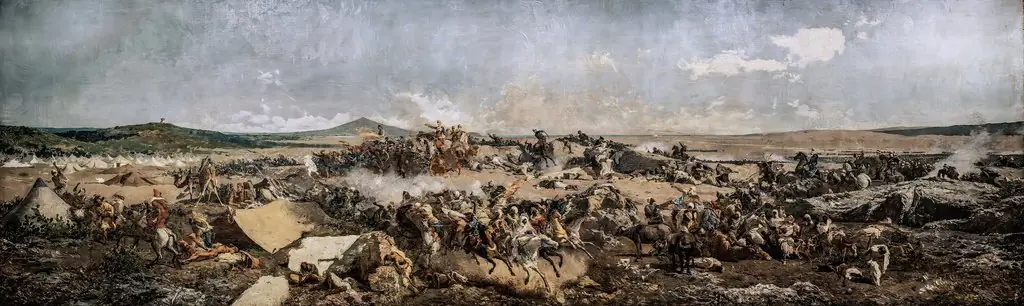 La Batalla de Tetuan
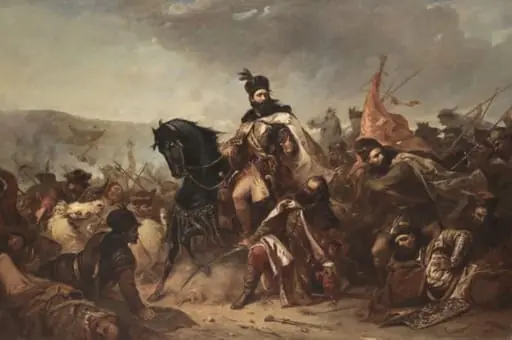 Ștefan cel Mare și Aprodul Purice
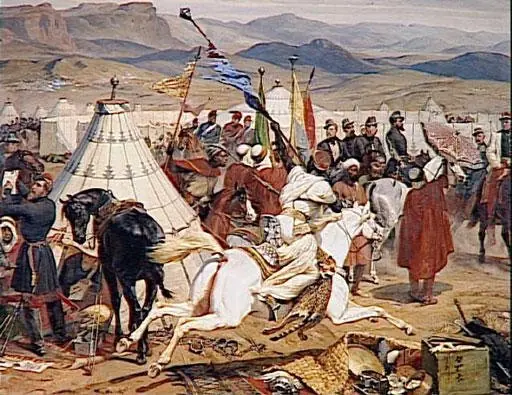 Battle of Isly, August 14, 1844
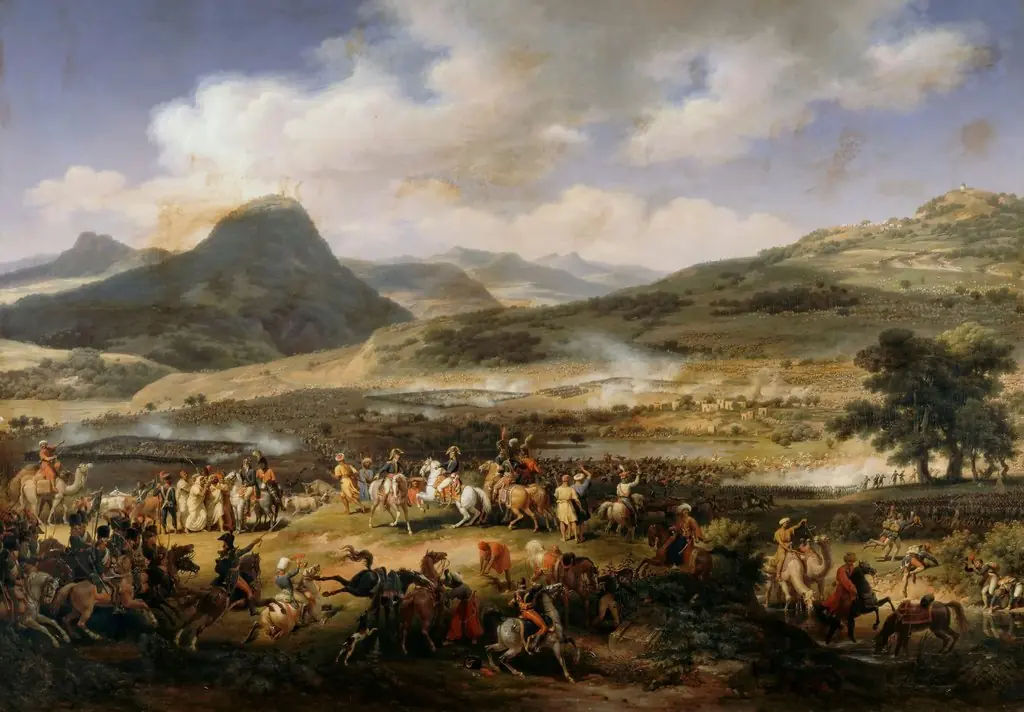 The Battle of Mount Tabor
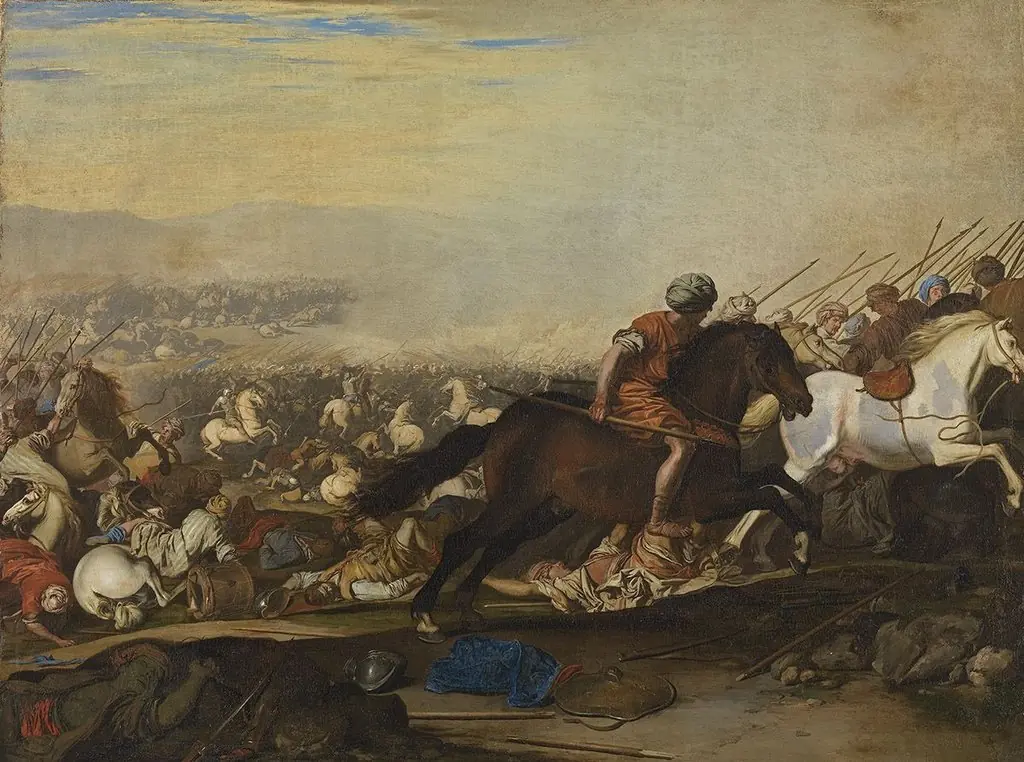 Schlachtenbild
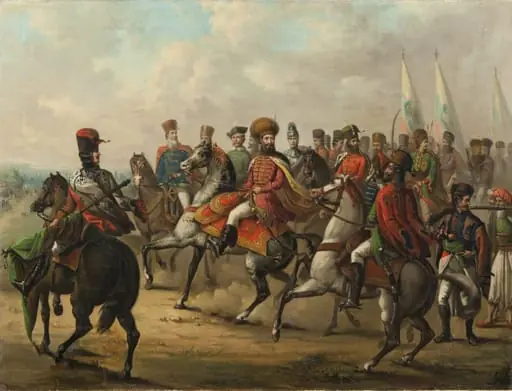 Mihai Viteazul la Călugăreni
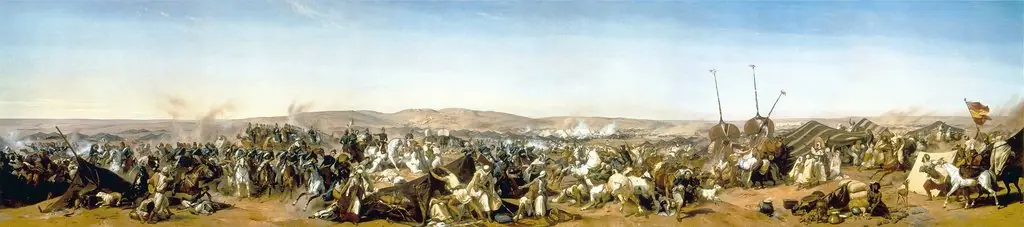 The seizure of Abd-el-Kader's camp in 1843
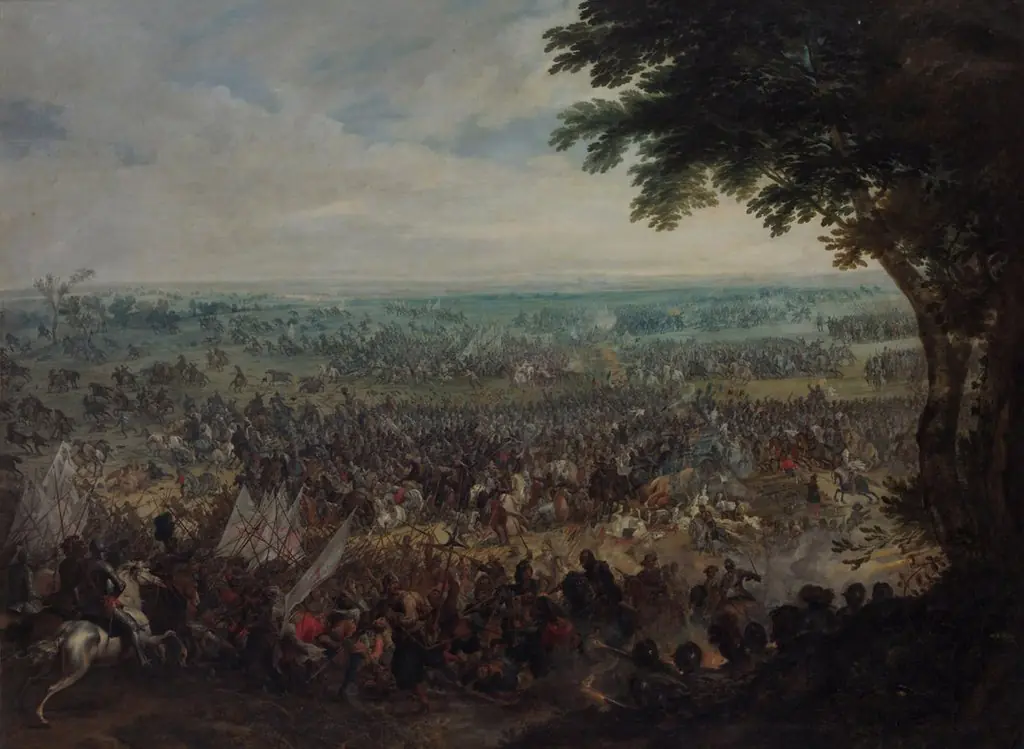 Large cavalry battle
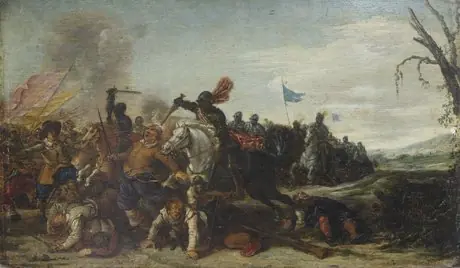 Battle
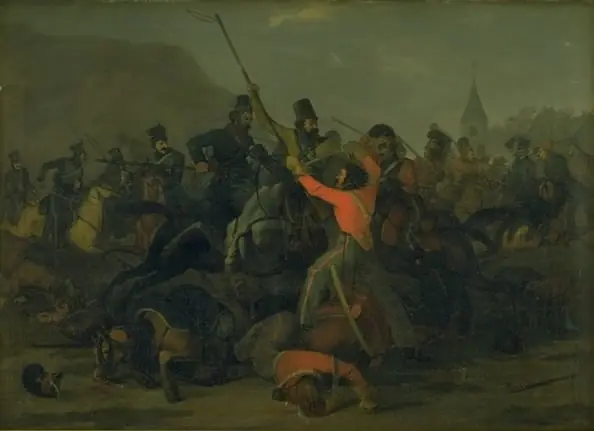 Oberst Boncke Bönnichsens fald den 6. december 1813 under en fægtning mellem jyske dragoner og kosakker