Artwork
Still Life with Pots
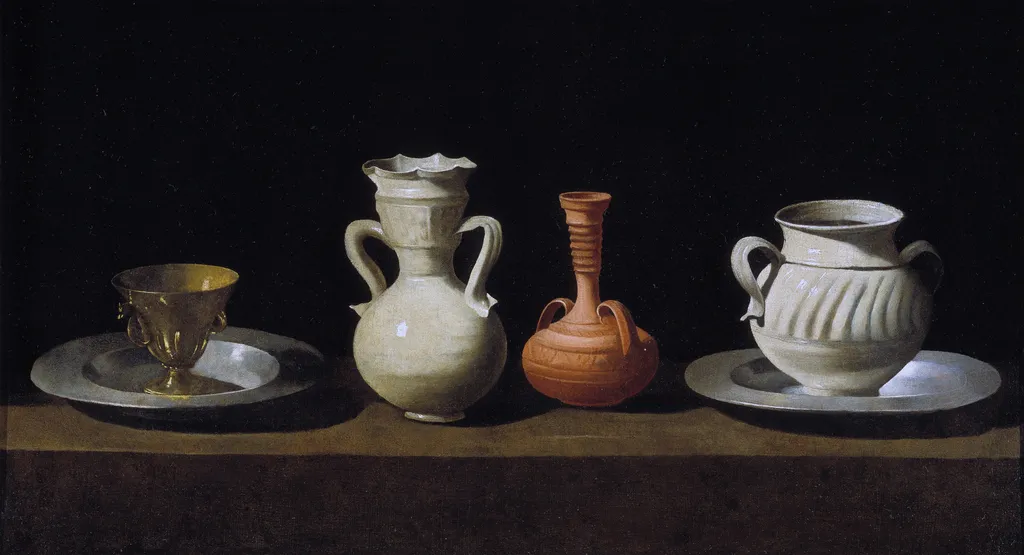
Still Life with Pots is an oil painting by the Early Baroque Italian artist Francisco de Zurbarán. It dates from 1650 and is held in the collection of the Museo del Prado.
About this work
Overview
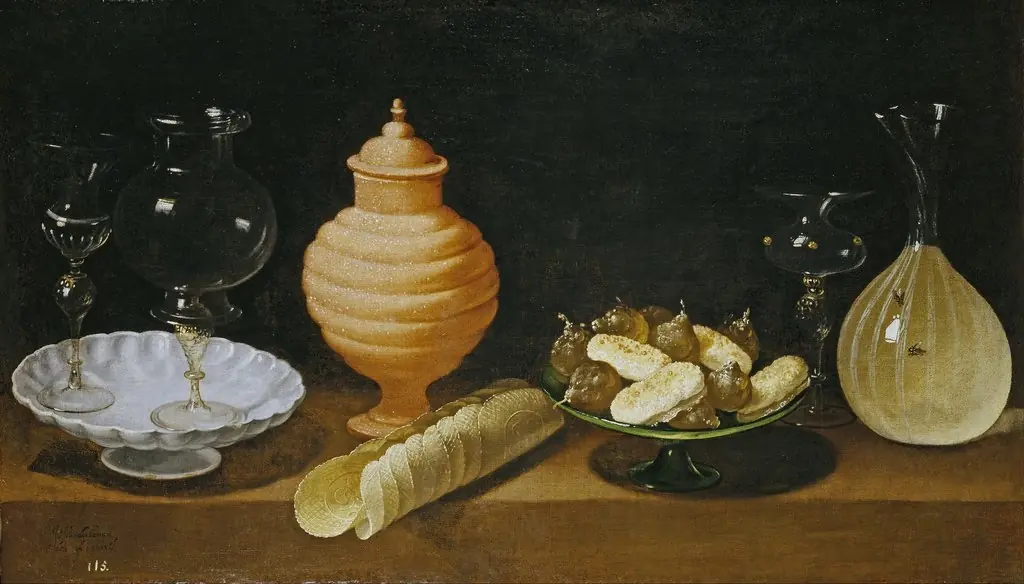
The composition features a small golden cup resting on a plate, a light green two-handled pitcher, a reddish-brown vase, and a white jug with a striped pattern.
Still Life with Pots, painted by Francisco de Zurbarán in 1650, depicts four humble ceramic and metal vessels arranged on a narrow ledge against a stark, dark background. The composition features a small golden cup resting on a plate, a light green two-handled pitcher, a reddish-brown vase, and a white jug with a striped pattern. Zurbarán employs his characteristic tenebrist style, using dramatic chiaroscuro to isolate each object and emphasize their distinct textures and forms. The arrangement is precise and geometric, with each item placed deliberately to create a sense of quiet order and spiritual stillness. This work exemplifies the artist's mastery of the bodegón genre, elevating everyday domestic items to subjects of profound contemplation. Two versions of this composition exist from 1650; the autograph version is held in the Museo del Prado in Madrid, having been donated in 1940 by the collector Francesc Cambó, while a second copy resides in the National Art Museum of Catalonia in Barcelona. The painting reflects Zurbarán's mature period, where his focus shifted toward the serene dignity of simple objects, a hallmark of Spanish Baroque still life.
Subject & Meaning
The painting features four distinct vessels arranged on a narrow ledge. These include a small golden cup resting on a plate, a two-handled green pitcher, a reddish-brown vase, and a striped white jug. Each item is presented individually, often on its own base, emphasizing their distinct forms. This careful isolation of humble objects elevates their presence, inviting contemplation of their simple beauty and material qualities.
Technique & Style
Zurbarán employs a dark, unadorned background, which allows the forms of the objects to emerge with striking presence. The artist's use of light is precise, illuminating the vessels from the side and creating subtle highlights that define their contours and textures. This technique, reminiscent of chiaroscuro, renders the golden cup with a metallic sheen and gives the ceramic and earthenware pieces a tangible, earthy quality, enhancing their sculptural volume.
History & Provenance
Created in the mid-17th century, Still Life with Pots is a notable example of Zurbarán's output beyond his religious commissions. While specific early provenance details are not provided, the painting's enduring significance is marked by its inclusion in a major national collection. It is now part of the holdings at the Museo del Prado in Madrid, where it represents a facet of Spanish Golden Age painting.
Own this work as a print
Artist & collection
Artist
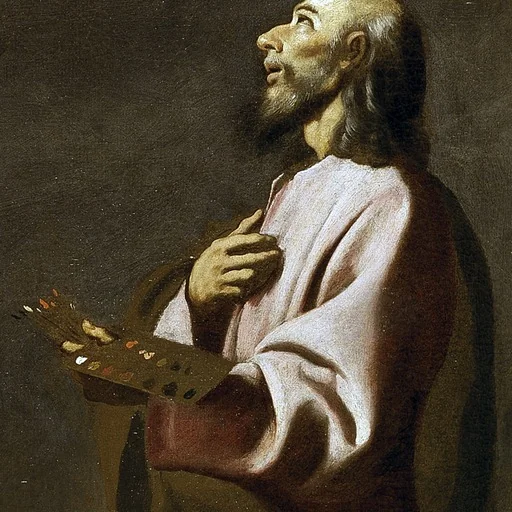
Francisco de Zurbarán was a Spanish Baroque painter. He is known primarily for his religious paintings depicting monks, nuns, and martyrs, and for his still-lifes. Zurbarán gained the nickname "Spanish Caravaggio",…