Artwork
The Martyrdom of Saint James
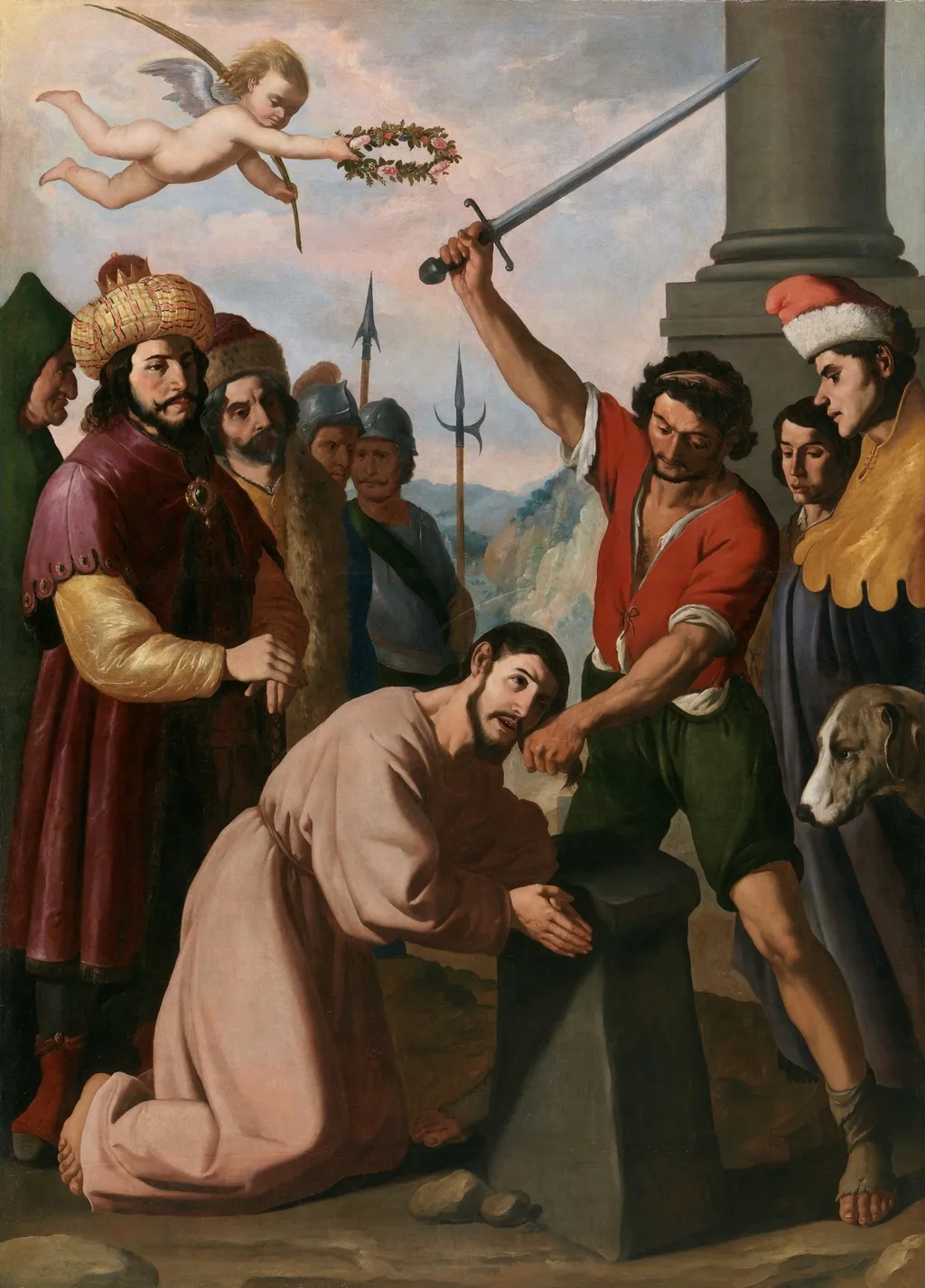
The Martyrdom of Saint James is an oil painting by the Baroque artist Francisco de Zurbarán. It dates from 1640 and is held in the collection of the Museo del Prado.
About this work
Overview
It stands as a significant example of the artist's mature style, where sculptural solidity and dramatic lighting converge to create a powerful narrative moment.
Painted in 1640, Francisco de Zurbarán's The Martyrdom of Saint James depicts the execution of the apostle James the Greater. The composition centers on the kneeling saint, dressed in a luminous white robe, who gazes upward in prayer as an executioner raises a sword to strike. The scene is populated by a group of figures in rich, colorful garments, including a prominent figure in a red hat standing beside a dog, which adds a specific narrative detail to the earthly setting. Zurbarán employs his characteristic tenebrist style, using stark contrasts between the deep shadows and the illuminated figures to heighten the dramatic tension and spiritual focus. In the upper background, an angel descends holding a wreath of flowers, symbolizing the saint's imminent martyrdom and heavenly reward. This work exemplifies Zurbarán's mastery of religious realism and his ability to convey intense piety through physical presence and light. Created during the height of the Spanish Golden Age, the painting reflects the Counter-Reformation emphasis on vivid, emotionally resonant religious imagery intended to inspire devotion. It stands as a significant example of the artist's mature style, where sculptural solidity and dramatic lighting converge to create a powerful narrative moment.
Subject & Meaning
The central focus is Saint James the Elder, depicted kneeling in a light robe, his gaze directed heavenward in an act of prayer or acceptance. Surrounding him are figures in vibrant attire, including a man poised with a raised sword, ready to deliver the fatal blow. Herod Antipas, identifiable by his red hat, observes the scene with a dog at his feet, while an angel descends from above, bearing a floral wreath as a symbol of divine recognition.
Technique & Style
Zurbarán employs a dramatic visual language to heighten the scene's intensity. The composition features bright colors and sharp contrasts, contributing to a palpable tension. The artist's use of chiaroscuro, the strong interplay of light and shadow, further amplifies the emotional weight and three-dimensionality of the figures, drawing the viewer into the solemnity of the moment.
Own this work as a print
Artist & collection
Artist
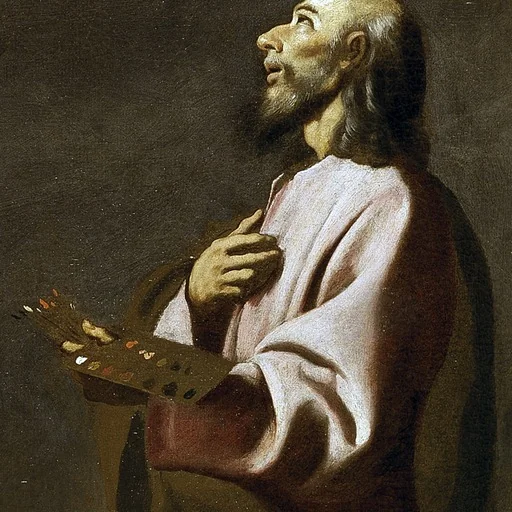
Francisco de Zurbarán was a Spanish Baroque painter. He is known primarily for his religious paintings depicting monks, nuns, and martyrs, and for his still-lifes. Zurbarán gained the nickname "Spanish Caravaggio",…