Artwork
The Immaculate Conception with Saint Joachim and Saint Anne
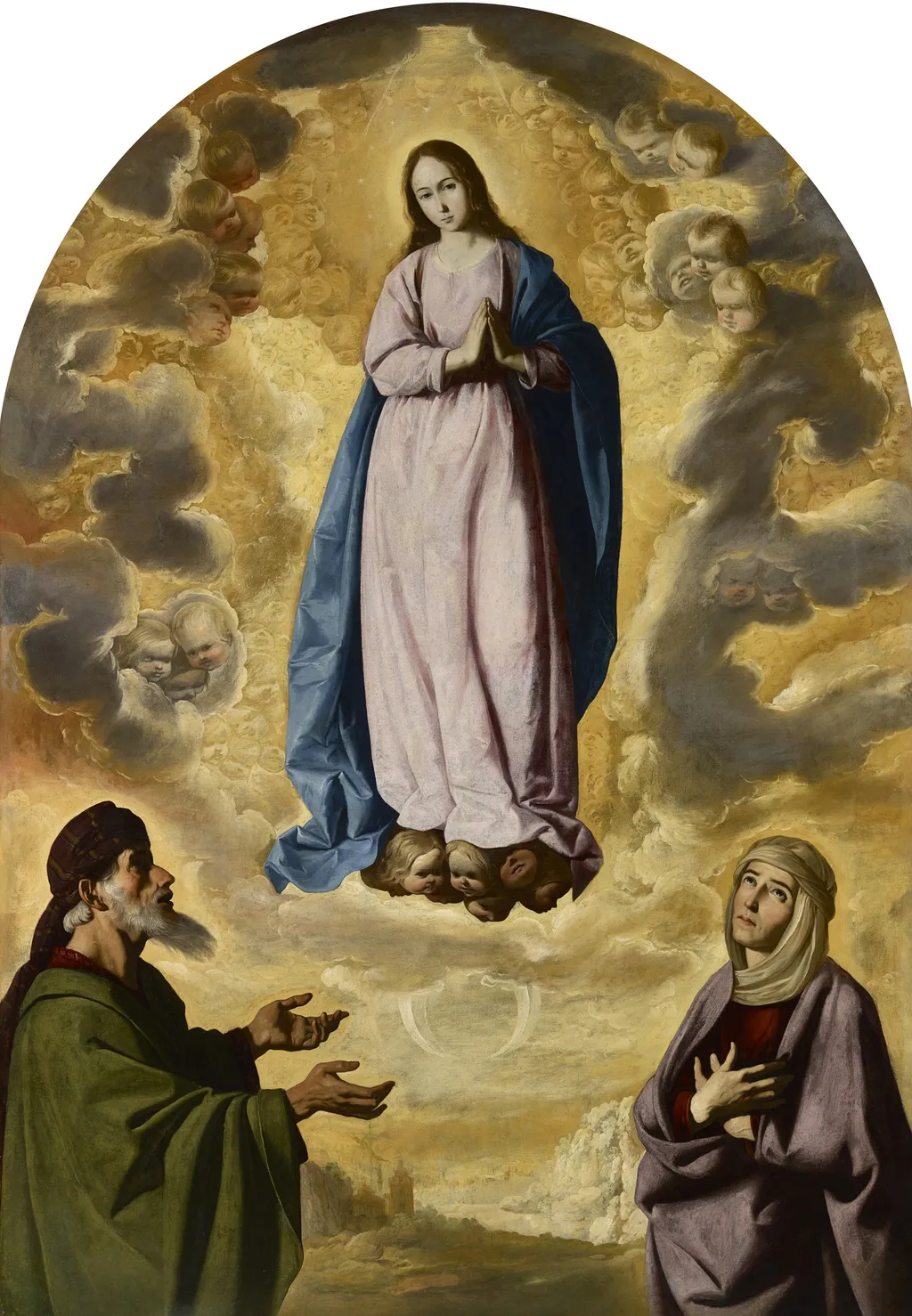
The Immaculate Conception with Saint Joachim and Saint Anne is an oil painting by the Baroque artist Francisco de Zurbarán. It dates from 1639 and is held in the collection of the Scottish National Gallery.
About this work
Overview
Francisco de Zurbarán’s oil on canvas, dated 1639, presents a devotional scene titled The Immaculate Conception with Saint Joachim and Saint Anne. The work is part of the collection of the Scottish National Gallery, where it is displayed among the museum’s Baroque holdings.
Subject & Meaning
The central figure is the Virgin Mary, shown in a flowing pink mantle, hands clasped in prayer, hovering above a celestial landscape. Flanking her are the infant saints, small winged children, while the aged Joachim and Anne—her parents—stand below, gazing upward, underscoring the theological emphasis on Mary’s purity and divine election.
Technique & Style
Zurbarán employs a restrained chiaroscuro, contrasting the luminous flesh of the figures with a softened, dreamlike sky. The delicate handling of light creates a sense of depth, while the smooth modeling of drapery and the subtle gradations of tone enhance the painting’s contemplative atmosphere.
History & Provenance
Executed in the later period of Zurbarán’s career, the painting entered the Scottish National Gallery’s collection in the early twentieth century, acquired through a private donation that expanded the museum’s representation of Spanish Baroque art.
Context
The composition reflects Counter‑Reformation iconography, where the Immaculate Conception was promoted as a model of untouched virtue. By including Saint Joachim and Saint Anne, Zurbarán links Mary’s sinless status to her lineage, a theme common in Spanish devotional art of the 1630s.
Artist & collection
Artist
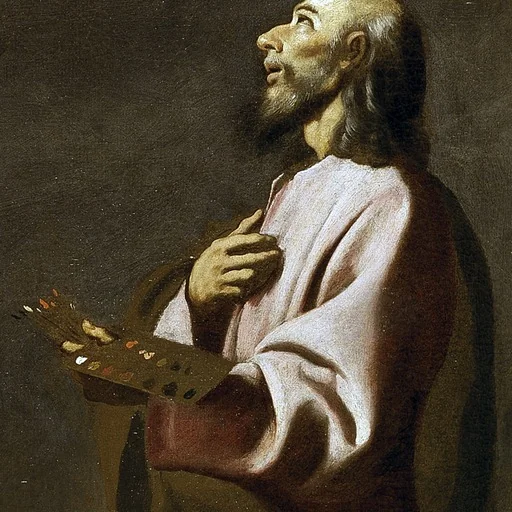
Francisco de Zurbarán was a Spanish Baroque painter. He is known primarily for his religious paintings depicting monks, nuns, and martyrs, and for his still-lifes. Zurbarán gained the nickname "Spanish Caravaggio",…