Artwork
Hunter at a fountain
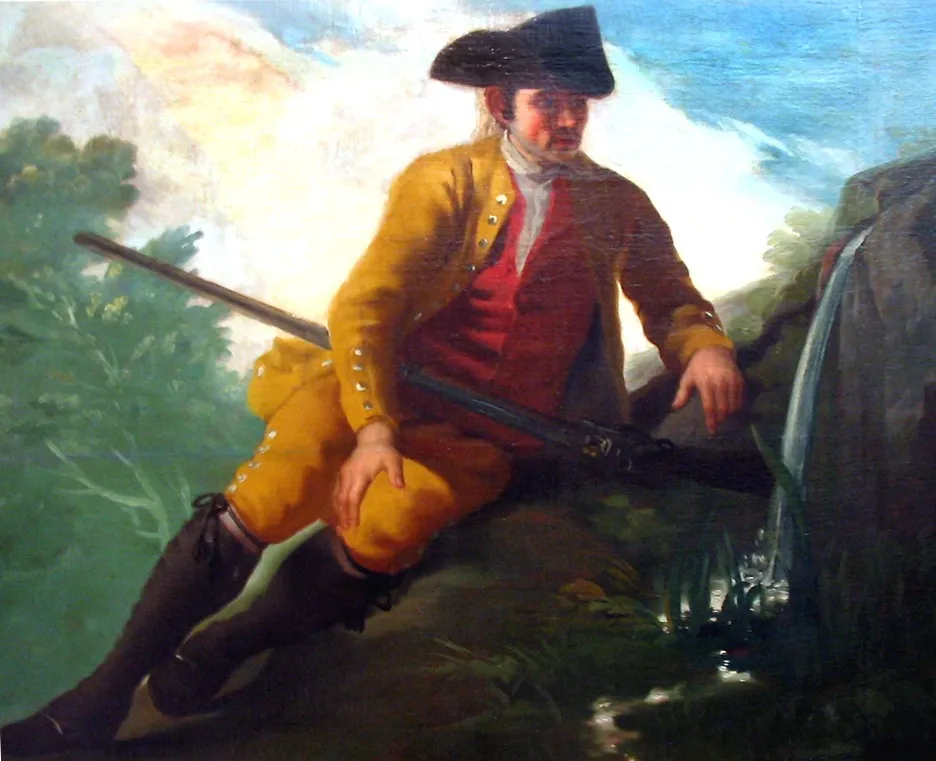
Hunter at a fountain is an oil painting by the Rococo painting artist Francisco Goya. It dates from 1794 and is held in the collection of the Museo del Prado.
About this work
Overview
Though often linked to late Rococo sensibilities, the painting’s subdued mood and focus on quiet solitude suggest a shift toward more introspective themes.
Painted in 1794 by Francisco Goya, *Hunter at a Fountain* is an oil-on-canvas work that captures a solitary figure in a natural setting. Though often linked to late Rococo sensibilities, the painting’s subdued mood and focus on quiet solitude suggest a shift toward more introspective themes. It resides in the Museo del Prado, Madrid, as part of the artist’s lesser-known landscape and genre scenes from his later years.
Subject & Meaning
The painting portrays a hunter seated on a rocky outcrop, shotgun resting across his lap, gazing downward at a fountain. His relaxed posture and lack of urgency contrast with the weapon’s presence, suggesting contemplation rather than action. The scene evokes solitude and stillness, possibly reflecting Goya’s growing interest in human introspection amid nature, rather than narrative drama or social commentary.
Technique & Style
Goya employs chiaroscuro to model the hunter’s form, with light falling sharply on his face and upper body while the waterfall and foliage recede into shadow. The bright yellow trousers and red vest stand out against the muted greens and grays of the landscape, drawing attention to the figure without overwhelming the composition. Brushwork is loose yet deliberate, balancing detail with atmospheric suggestion.
History & Provenance
Created during Goya’s tenure as court painter, this work was likely painted for private contemplation rather than public display. It entered the Museo del Prado’s collection in the 19th century, possibly through royal acquisitions or donations. Unlike his more famous political or satirical works, this piece remained relatively obscure until 20th-century scholars began reevaluating his landscape and genre studies.
Context
In the 1790s, Goya was increasingly drawn to intimate, non-narrative scenes as his personal outlook darkened and his artistic focus shifted from courtly commissions. *Hunter at a Fountain* reflects this transition, aligning with European trends toward Romantic sensibility—emphasizing mood, solitude, and nature’s quiet power—while retaining the formal grace of earlier styles.
Legacy
Though not widely exhibited, the painting is recognized as an early example of Goya’s move toward psychological depth in landscape settings. It influenced later Spanish painters who sought to convey emotion through atmosphere rather than action. Its understated composition continues to be studied for its quiet tension between human presence and natural stillness.
Artist & collection
Artist
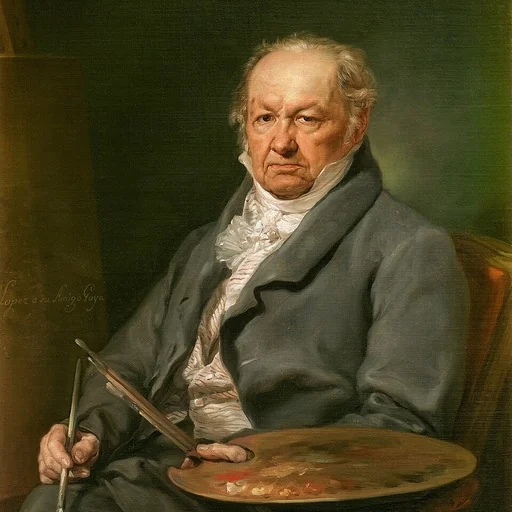
Francisco José de Goya y Lucientes (; Spanish: ; 30 March 1746 – 16 April 1828) was a Spanish romantic painter and printmaker.

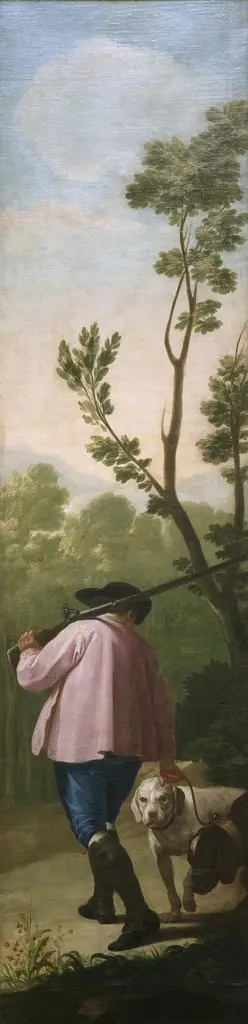 Hunter with his Dogs
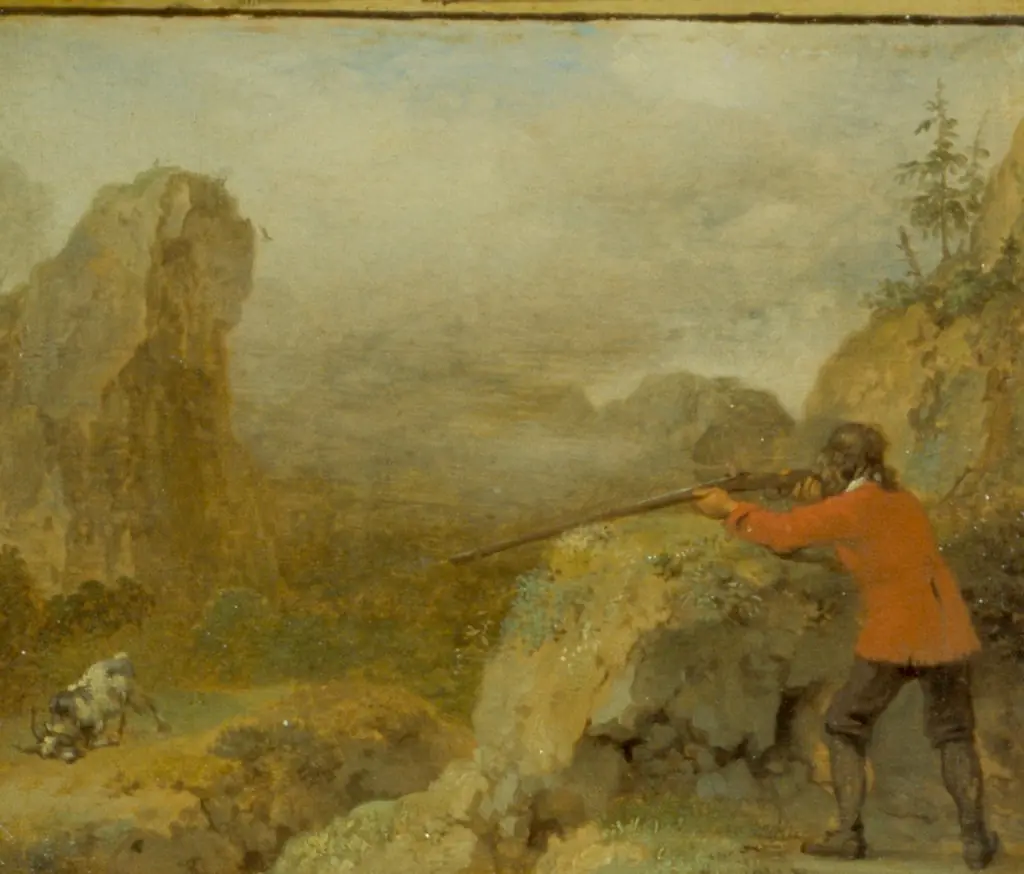 Hunting a Goat
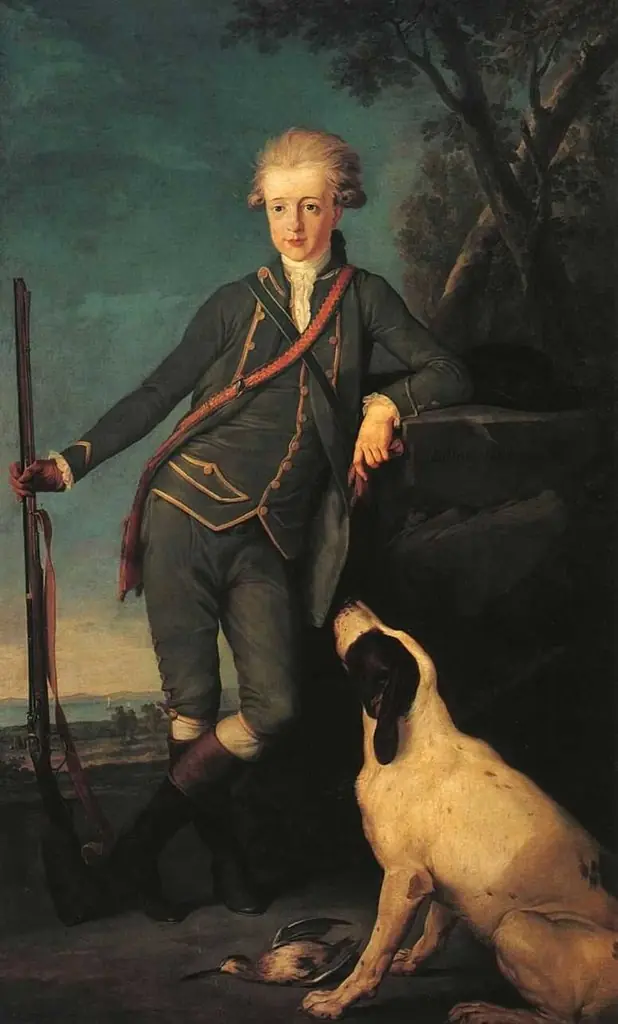 Portrait of Nikita Petrovich Panin (1770-1837)
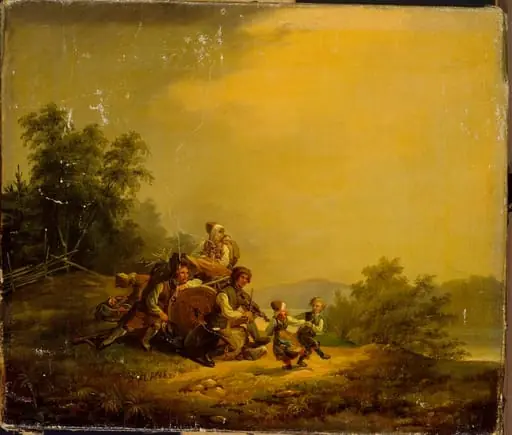 Lepääviä maalaisia ja tanssivia lapsia
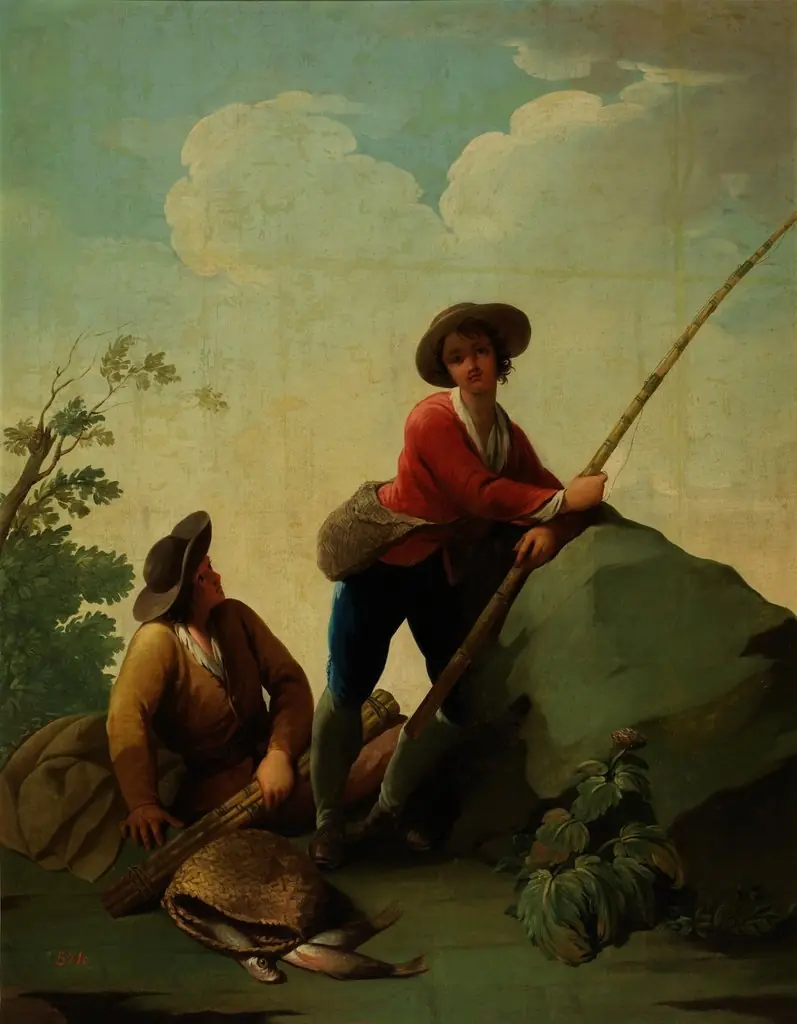 Dos pescadores uno con caña y otro sentado
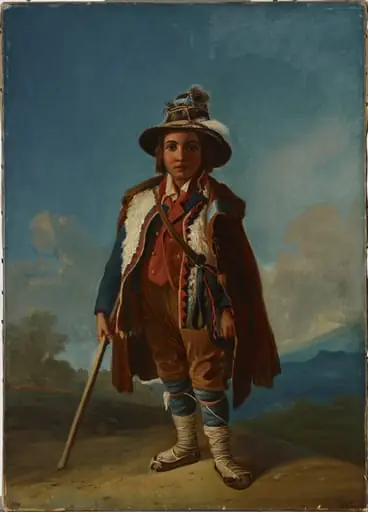 Italialainen poika, kopio R.W. Ekmanin mukaan
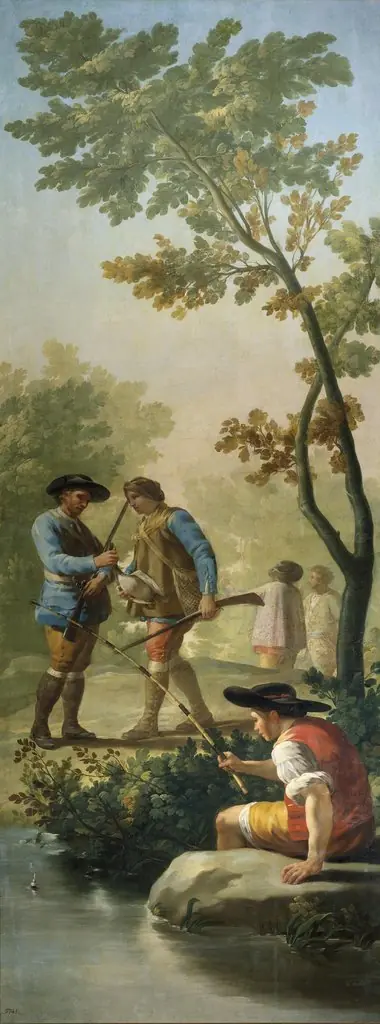 fisherman with his rod
 Paulus Usteri als Jäger im Walde
 The young sportsman
 Peisaj cu arbore frânt
 Cal bălan cu un harap
 The Fountain