Artwork
Portrait of the Actress Antonia Zarate
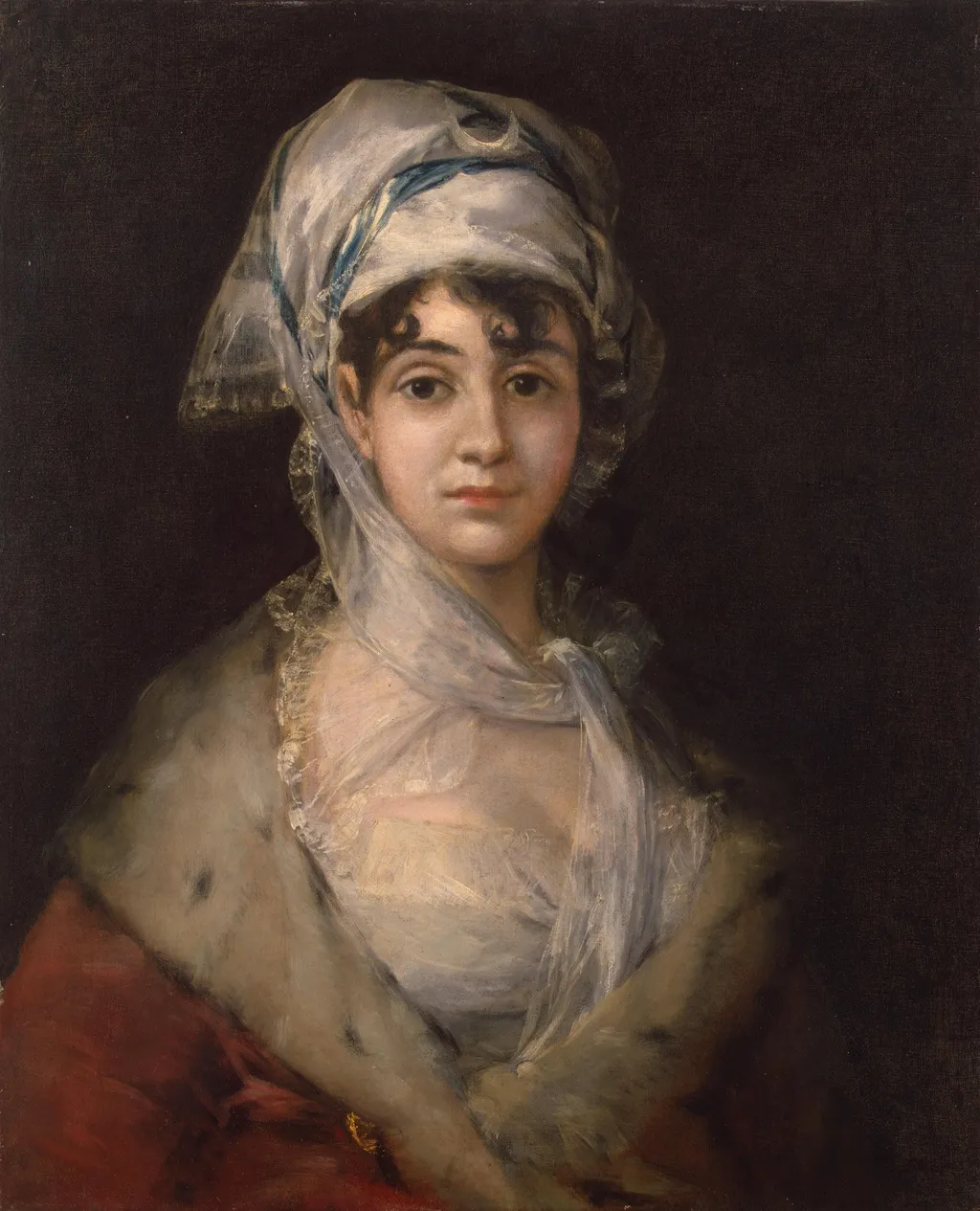
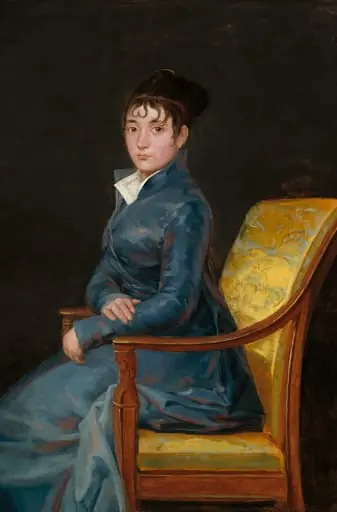
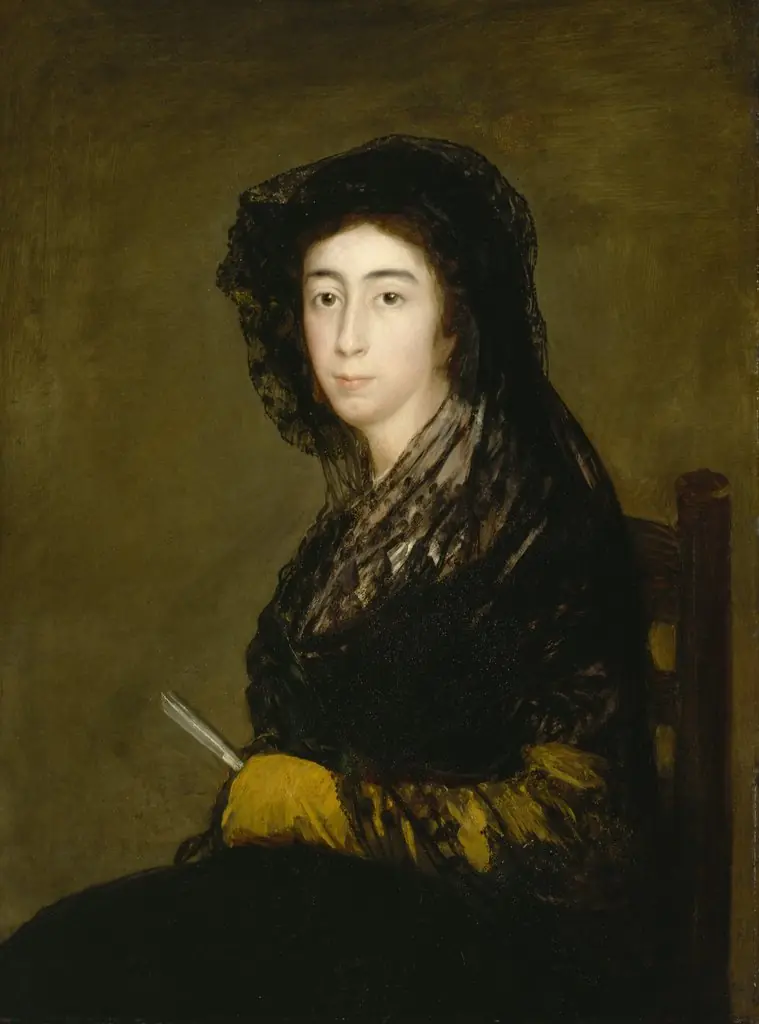
Portrait of the Actress Antonia Zarate is an oil painting by Francisco Goya. It dates from 1810 and is held in the collection of the Hermitage Museum. Painted between 1810 and 1811, this oil portrait depicts the Spanish actress Antonia Zárate.
About this work
This painting is called Portrait of the Actress Antonia Zarate.
It was made by Francisco Goya or his studio in 1810-1811.
The painting is now in the State Hermitage Museum, which is notable because it's the only painting by Goya in a Russian collection, if it's indeed his own work.
You can learn more about this by looking up the artist: Francisco Goya.
Overview
Painted between 1810 and 1811, this oil portrait depicts the Spanish actress Antonia Zárate. Attributed to Francisco Goya or his studio, it is the sole work by Goya held in a Russian public collection, assuming its autograph status. The painting entered the Hermitage Museum’s holdings in 1972 after a complex chain of ownership spanning Europe and the United States.
Subject & Meaning
The portrait captures her in quiet dignity, likely intended as a posthumous tribute commissioned by her son, Antonio Gil y Zárate, following her death in 1811.
Antonia Zárate was a celebrated stage performer in early 19th-century Spain. The portrait captures her in quiet dignity, likely intended as a posthumous tribute commissioned by her son, Antonio Gil y Zárate, following her death in 1811. It reflects the cultural reverence for theatrical figures and serves as a personal memorial, distinct from the more elaborate 1805 portrait of her by the same hand.
Technique & Style
The painting employs Goya’s characteristic direct brushwork and restrained palette, emphasizing the sitter’s presence over ornamental detail. Facial expression and posture convey introspection, aligning with his mature portraiture style. The composition is intimate, with minimal background, focusing attention on the subject’s attire and gaze, suggesting psychological depth rather than theatrical grandeur.
History & Provenance
The portrait remained in Spain until 1900, when it was sold in New York. It passed through several private collectors and dealers before being acquired by the Knoedler Gallery in 1969 from the estate of Marshall Field. Armand Hammer, then owner of Knoedler, transferred it to his foundation via a Liechtenstein entity and later donated it to the Hermitage in 1972, citing a valuation of one million dollars.
Context
Goya painted several portraits of Spanish cultural figures during his later years, often under commission from families seeking to preserve legacy. Antonia Zárate’s prominence in Madrid’s theatrical circles made her a fitting subject. The portrait’s timing coincides with Goya’s increasing preoccupation with psychological realism, reflecting broader shifts in Spanish society during the Napoleonic era.
Legacy
Its presence in the Hermitage underscores the global reach of Spanish art and the role of private collectors in shaping public collections. While questions about authorship persist, the painting remains a significant example of Goya’s late portraiture. It continues to be studied for its technical subtlety and as a document of theatrical life in early 19th-century Spain.
Own this work as a print
Artist & collection
Artist
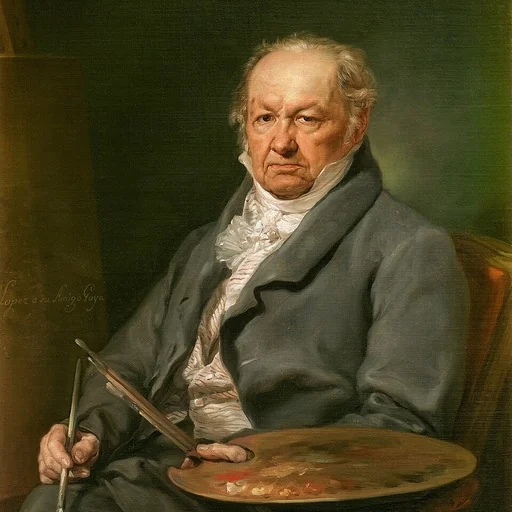
Francisco José de Goya y Lucientes (; Spanish: ; 30 March 1746 – 16 April 1828) was a Spanish romantic painter and printmaker.