Artwork
Portrait of the Infante Carlos María Isidro of Spain
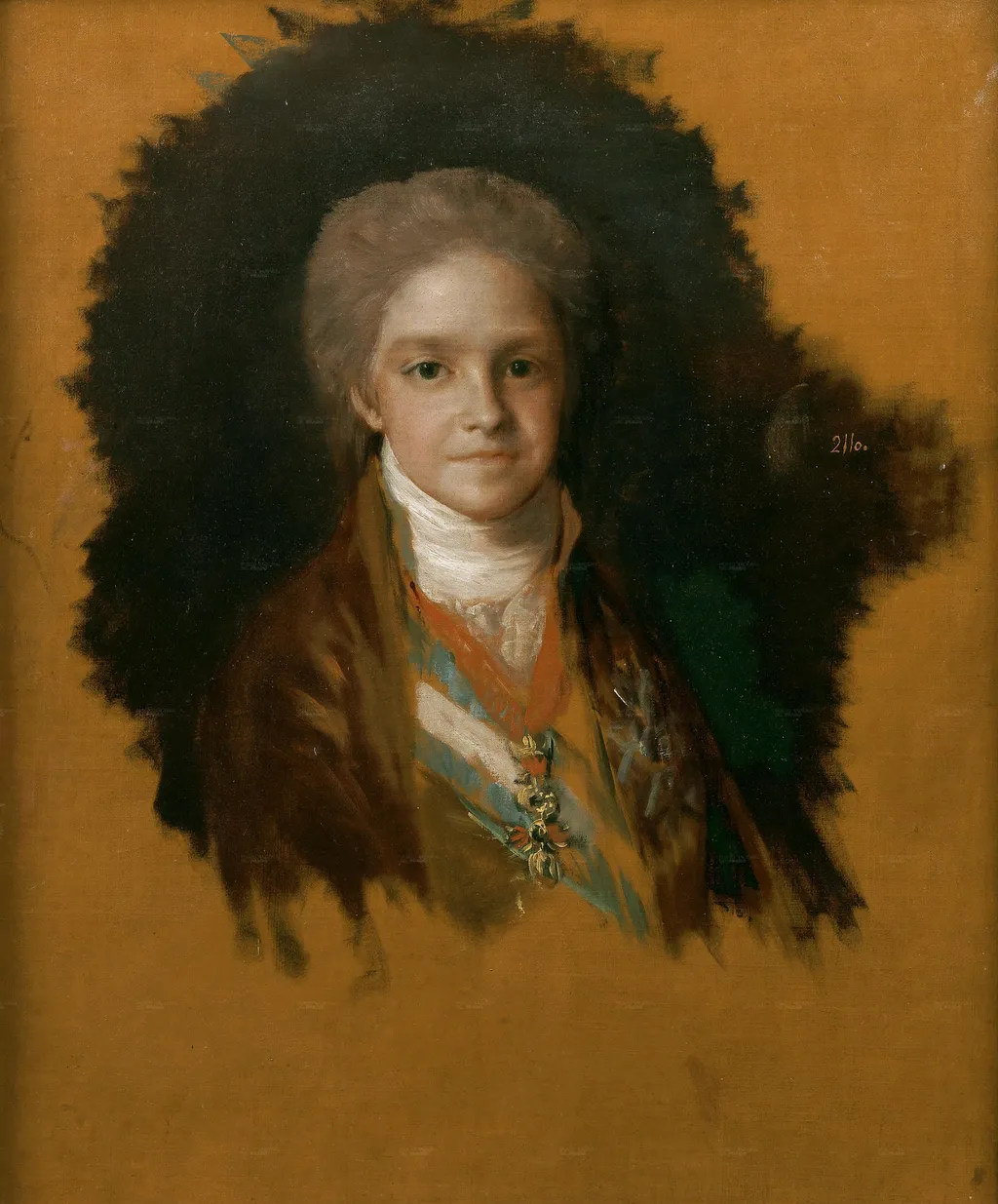
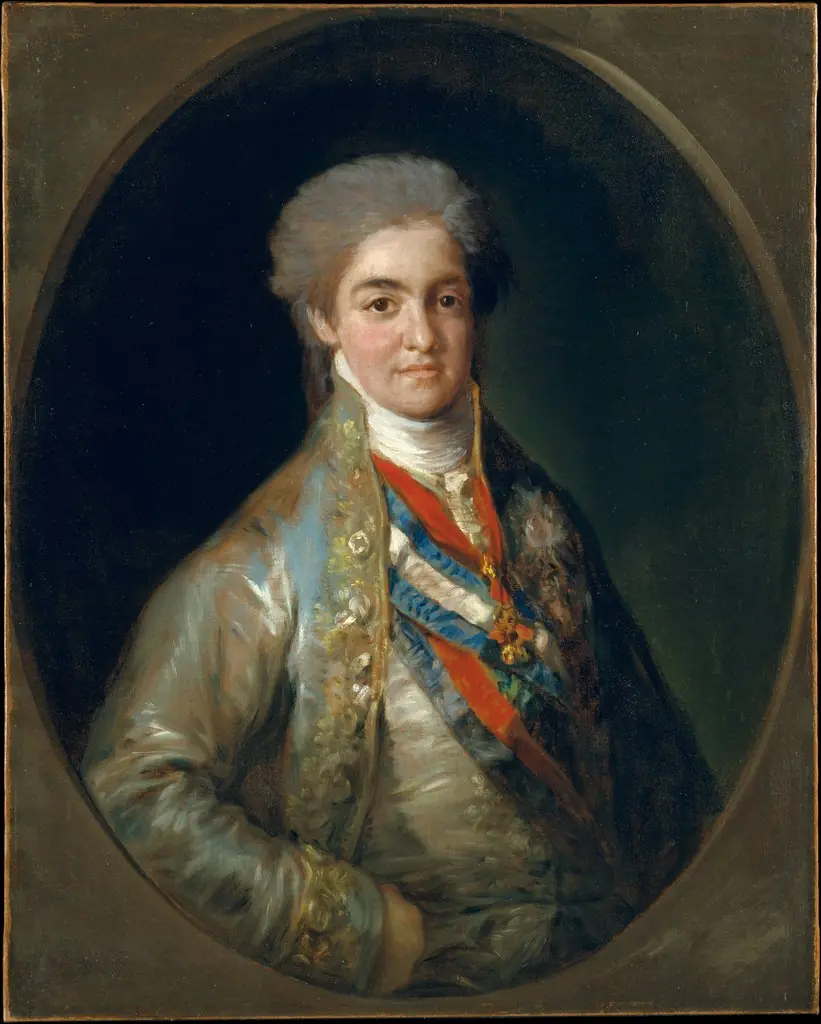
Portrait of the Infante Carlos María Isidro of Spain is an oil painting by Francisco Goya. It dates from 1800 and is held in the collection of the Museo del Prado.
About this work
They’re wearing a white cravat with green and orange stripes, a dark jacket, and a gold pin on their chest.
This painting shows a person in a dark brown fur collar, standing against a plain orange background. They’re wearing a white cravat with green and orange stripes, a dark jacket, and a gold pin on their chest. Their hair is pulled back, and they have a calm, direct expression.
The gold pin is likely a medal or order of some kind. Goya painted this portrait around 1800.
Next, look up the Order of Charles III, 1795–1820 in Western fashion to see what that pin might represent.
Overview
Francisco Goya executed this oil portrait in 1800, presenting the Spanish Infante Carlos María Isidro. The work measures a modest size and is part of the Museo del Prado’s permanent collection. It captures the young prince in a formal pose, his gaze directed outward, set against a flat orange field that isolates the figure from any surrounding narrative.
Subject & Meaning
The sitter, Infante Carlos María Isidro, appears in the attire of a high‑ranking noble of the early nineteenth century. He wears a dark jacket trimmed with a brown fur collar, a white cravat patterned in green and orange, and a conspicuous gold medallion on his chest, indicating his membership in several chivalric orders. The calm, direct expression suggests a dignified, self‑assured presence appropriate to his royal status.
Technique & Style
Goya employs a restrained palette, allowing the orange background to heighten the contrast with the dark clothing and the gleam of the gold insignia. The brushwork is smooth in the rendering of fabrics, while the fur collar and the delicate folds of the cravat receive finer, more textured strokes. The overall composition reflects the neoclassical influence then prevalent in court portraiture, yet retains Goya’s subtle attention to psychological nuance.
History & Provenance
Created at the turn of the century, the portrait entered the Spanish royal collection and was later transferred to the Museo del Prado, where it remains on display. Documentation links the painting directly to Goya’s official commissions for the Bourbon court, confirming its authenticity and continuous ownership within state institutions since its completion.
Context
The portrait was painted during a period of political tension in Spain, shortly before the Peninsular War and the eventual Carlist conflicts in which the Infante would later play a central role. The inclusion of the Golden Fleece, the Order of Charles III, and the Order of Saint Januarius reflects the prince’s connections to both Spanish and broader European aristocratic networks, underscoring his dynastic importance at a time of shifting alliances.
Artist & collection
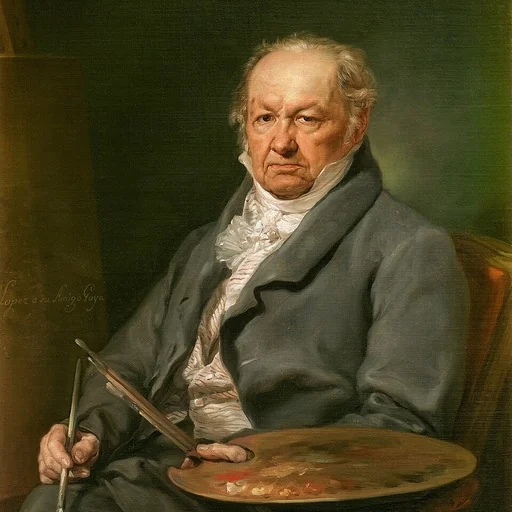
Artist
Francisco José de Goya y Lucientes (; Spanish: ; 30 March 1746 – 16 April 1828) was a Spanish romantic painter and printmaker.