Artwork
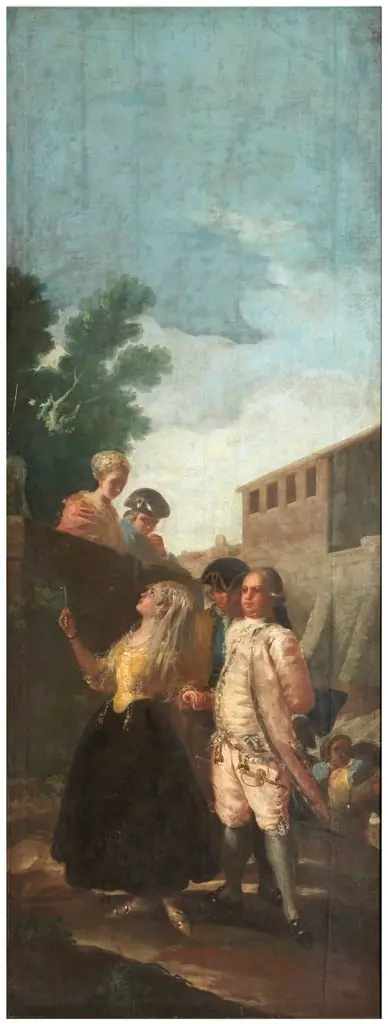
The seller of acerola
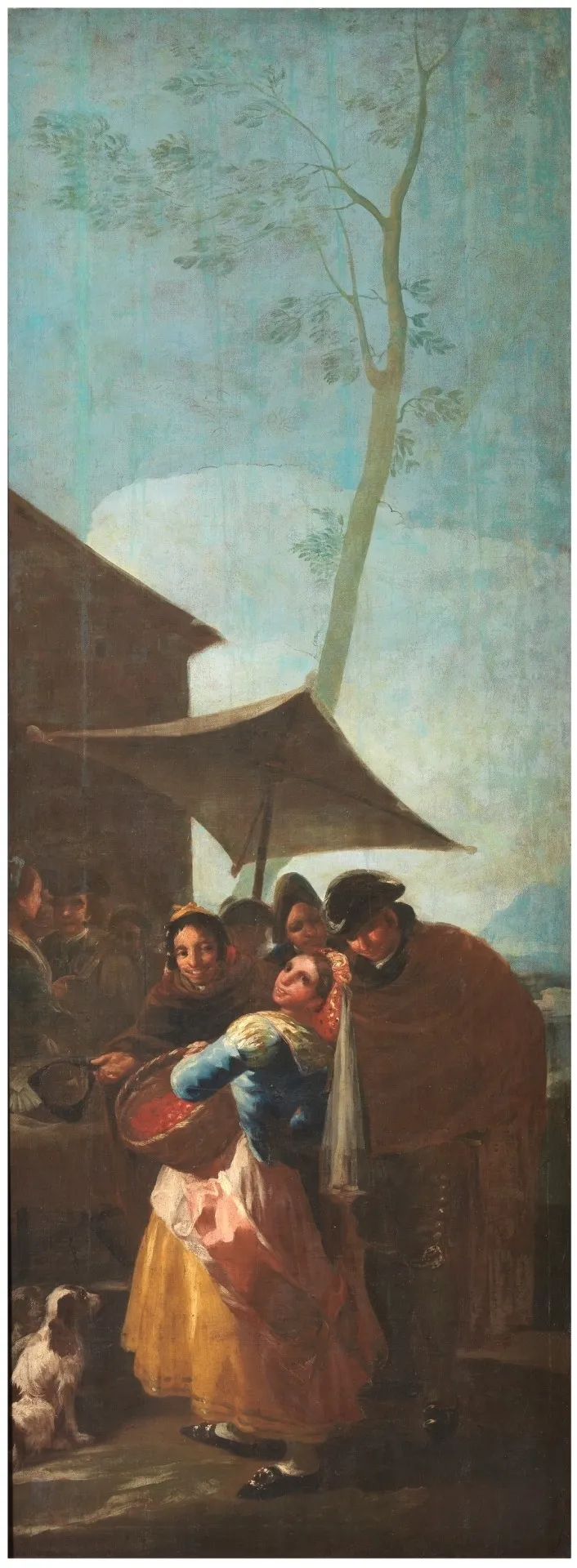
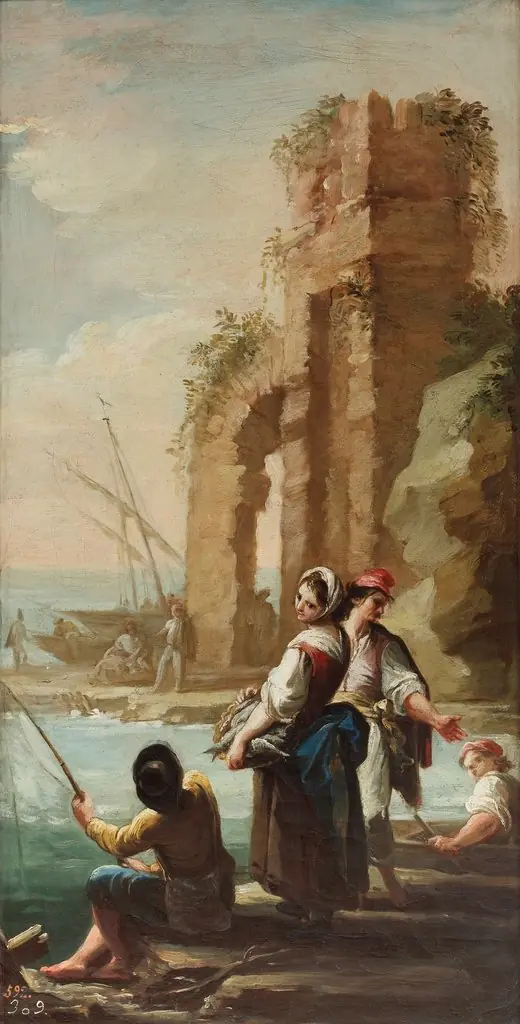
The seller of acerola is an oil painting by the Rococo painting artist Francisco Goya. It dates from 1790 and is held in the collection of the Museo del Prado.
About this work
Overview
It is part of the Museo del Prado’s collection and reflects Goya’s interest in scenes of daily life during a period of social and artistic transition in Spain.
Painted in 1790 by Francisco Goya, this oil-on-canvas work captures a moment of ordinary commerce in a Spanish street. It is part of the Museo del Prado’s collection and reflects Goya’s interest in scenes of daily life during a period of social and artistic transition in Spain. Though often associated with Rococo sensibilities, the painting also anticipates the realism that would define later 19th-century art.
Subject & Meaning
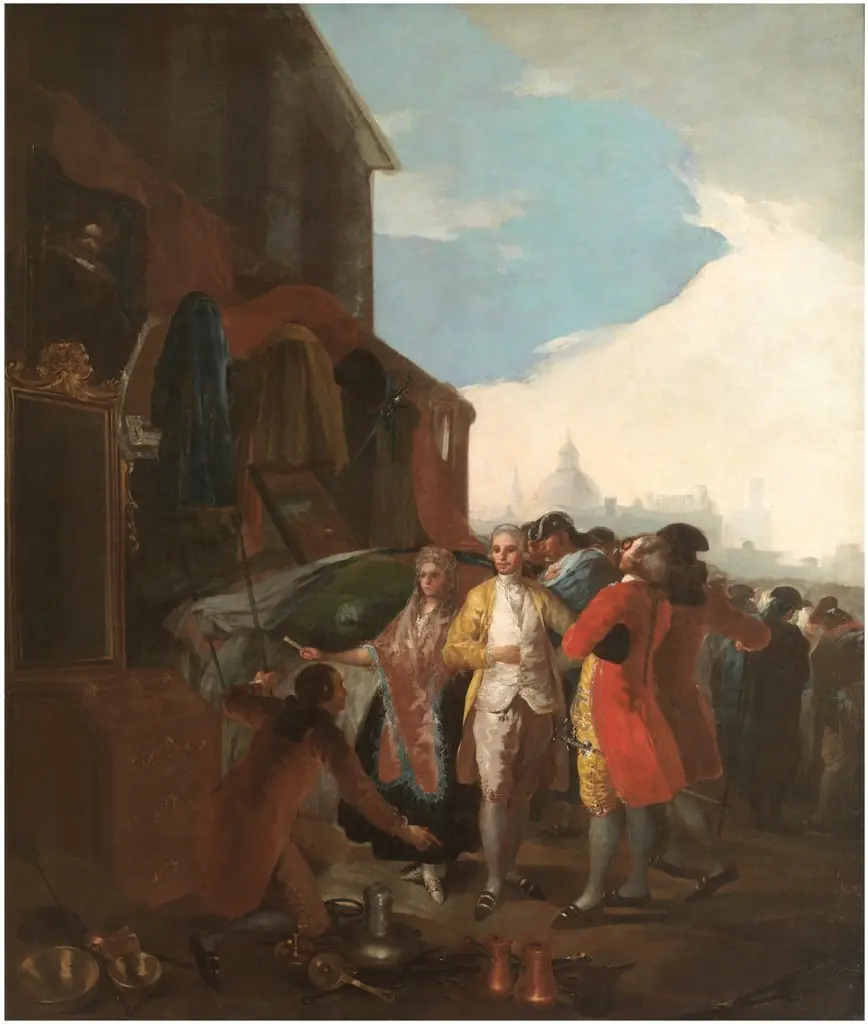
The painting portrays a street vendor, identifiable by her yellow skirt and pink shawl, offering acerola fruit to a small group of onlookers. A man in a red coat and a woman in blue are among the figures engaged in the exchange. The scene conveys no grand narrative but instead emphasizes the quiet dignity of common labor and the informal social bonds of urban life in late 18th-century Spain.
Technique & Style
Goya employed soft brushwork and layered glazes to achieve a luminous quality in the figures’ clothing and the ambient light. Warm tones dominate the composition, drawing attention to the vendor and the fruit, while the background remains subtly muted with pale sky and distant architecture. The handling of light suggests an awareness of naturalism, moving beyond the ornamental tendencies of pure Rococo toward a more grounded visual language.
History & Provenance
Created during Goya’s tenure as court painter, the work was likely made for private or middle-class patrons rather than royal commission. It entered the Museo del Prado’s collection in the 19th century, among other genre scenes that documented Spanish life. Its survival and preservation reflect a growing institutional interest in non-elite subjects during the early modern period.
Context
In the 1790s, Spain was undergoing political and economic shifts that affected urban populations. Street vendors like the one depicted were common in cities, supplying fresh produce to residents without access to markets. Goya’s focus on such figures aligns with broader European trends toward depicting everyday life, though his approach remains distinctly Spanish in its unembellished observation.
Legacy
This painting contributes to Goya’s reputation as a bridge between traditional European painting and emerging modern sensibilities. By elevating ordinary moments without idealization, it influenced later realist and impressionist artists who sought truth in the mundane. Its quiet humanity continues to resonate as an early example of social observation in Spanish art.
Artist & collection
Artist
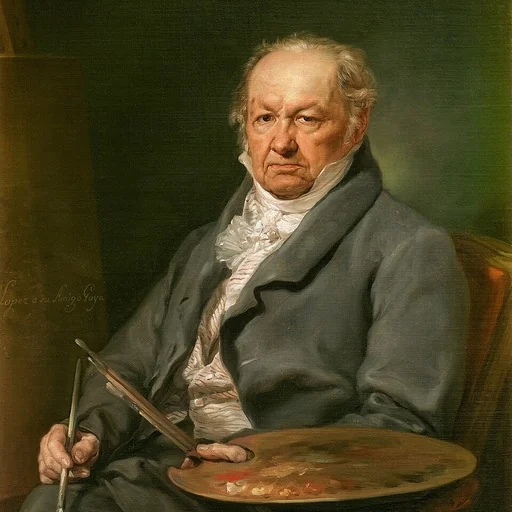
Francisco José de Goya y Lucientes (; Spanish: ; 30 March 1746 – 16 April 1828) was a Spanish romantic painter and printmaker.