Artwork
Italienische Volksszene
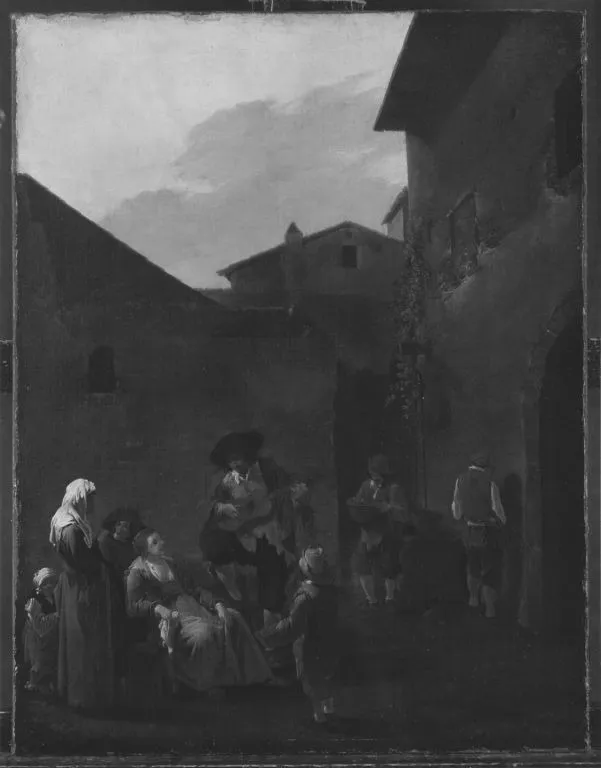
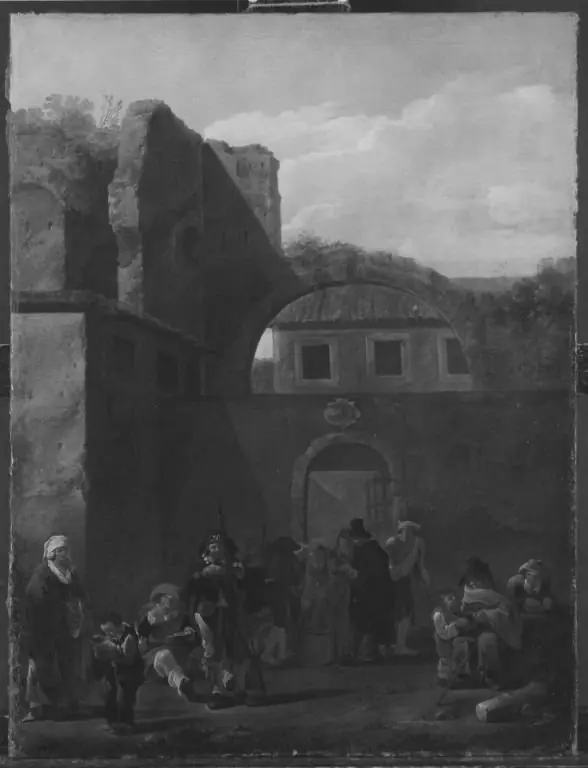
Italienische Volksszene is an unspecified painting by the Dutch Golden Age artist Andries Both. It dates from 1626 and is held in the collection of the Bavarian State Painting Collections.
About this work
Overview
Painted in 1626 by Dutch artist Andries Both, *Italienische Volksszene* captures a moment of ordinary life in Rome during the early 17th century.
Painted in 1626 by Dutch artist Andries Both, *Italienische Volksszene* captures a moment of ordinary life in Rome during the early 17th century. Though Both was from the Netherlands, he spent time in Italy, where he joined a circle of Northern European painters known as the bamboccianti. This group specialized in small-scale scenes of common people, moving away from grand historical or religious themes toward intimate, unidealized observations of daily existence.
Subject & Meaning
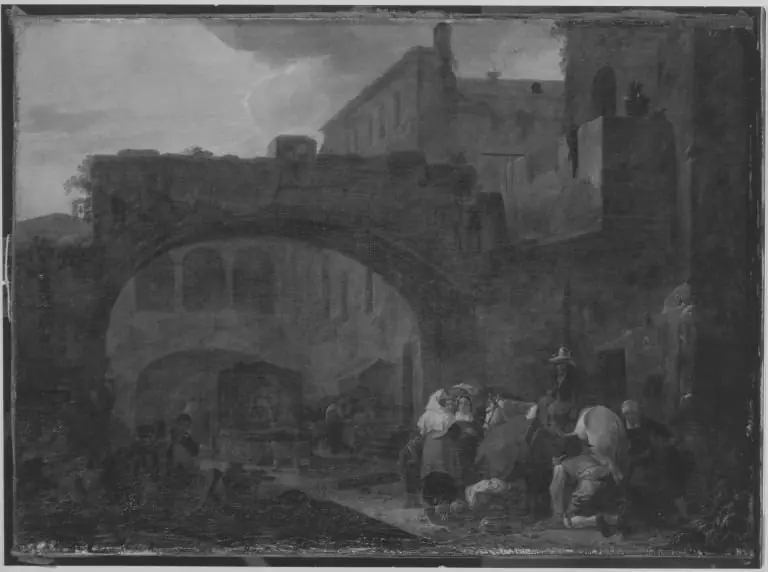
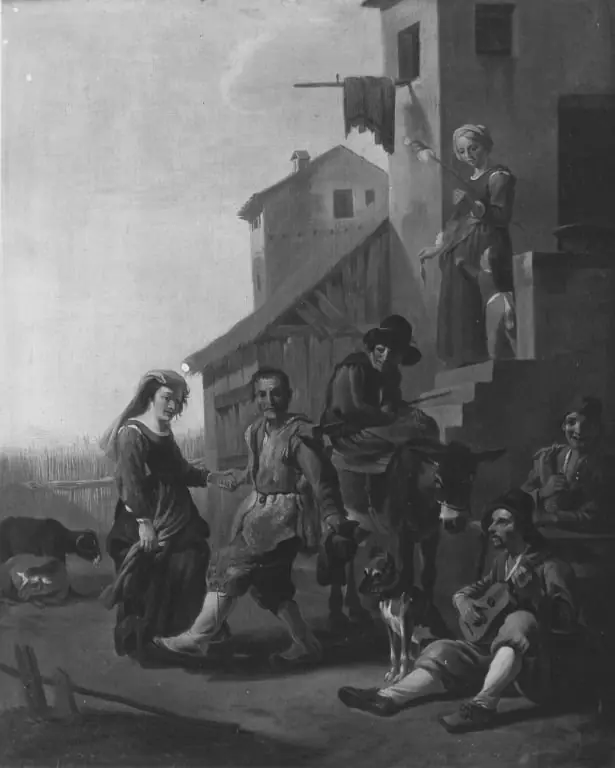
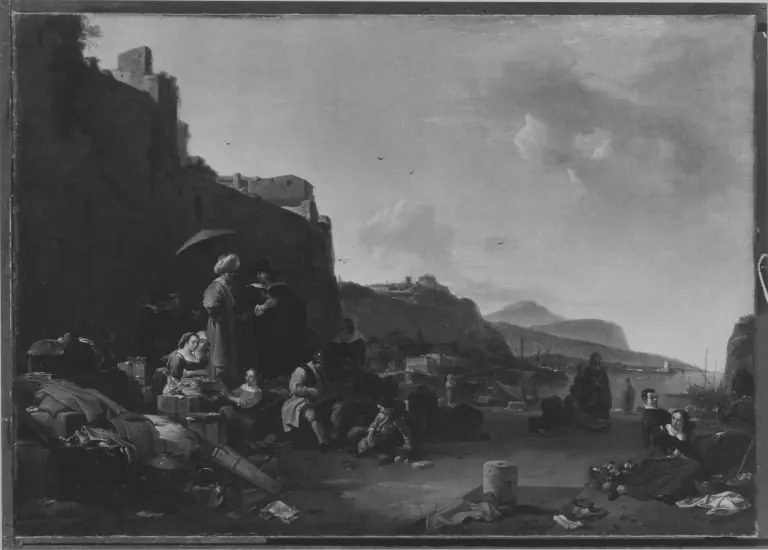
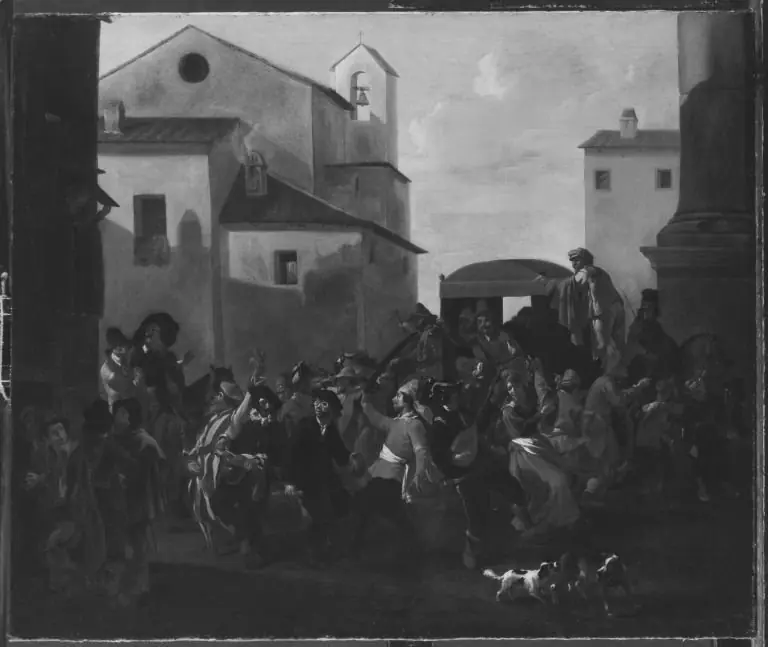
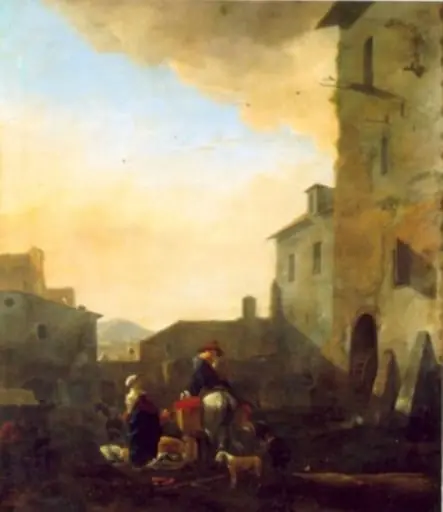
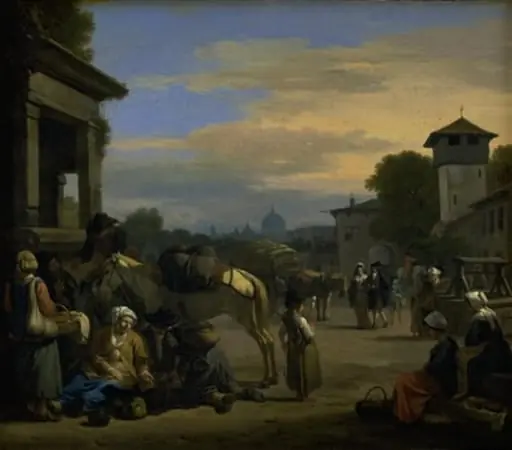
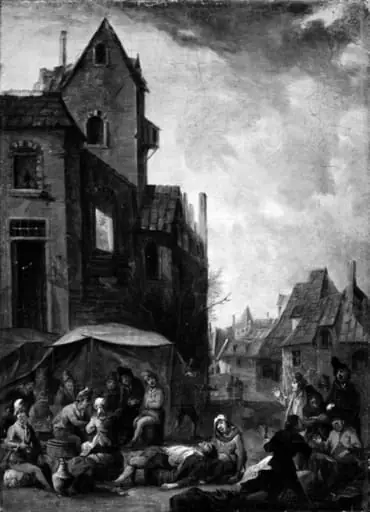
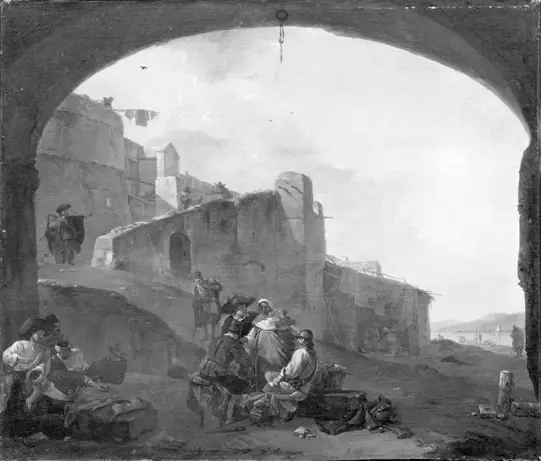
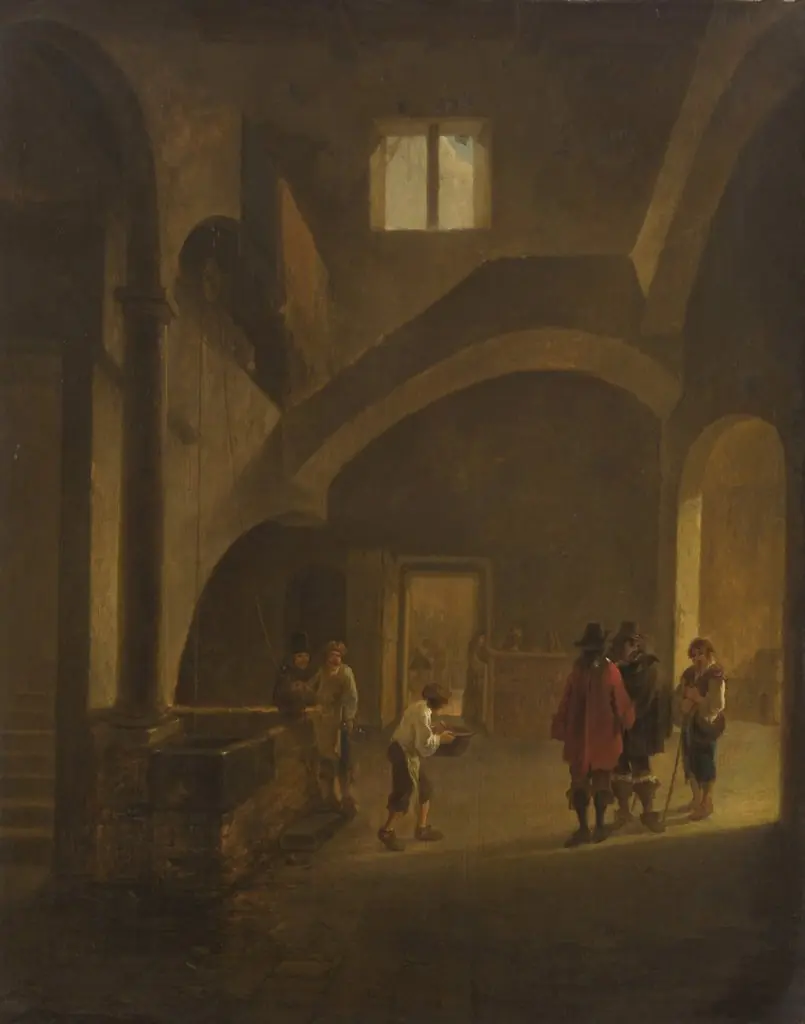
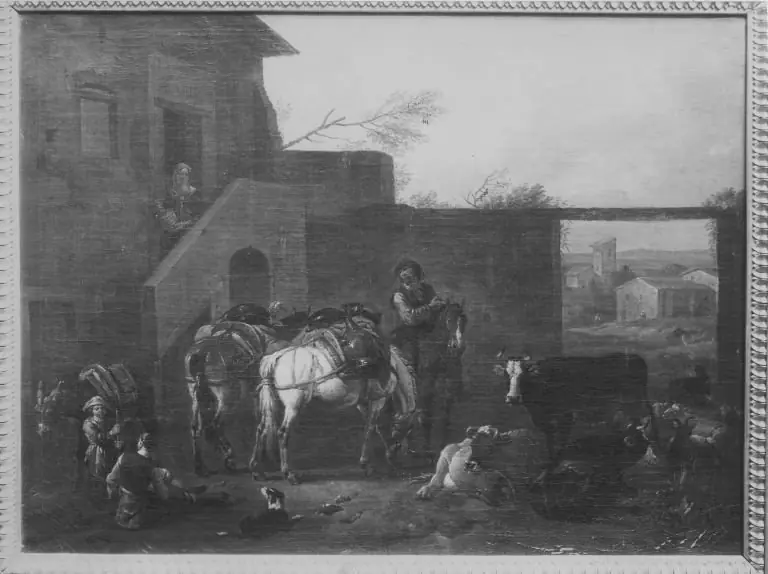
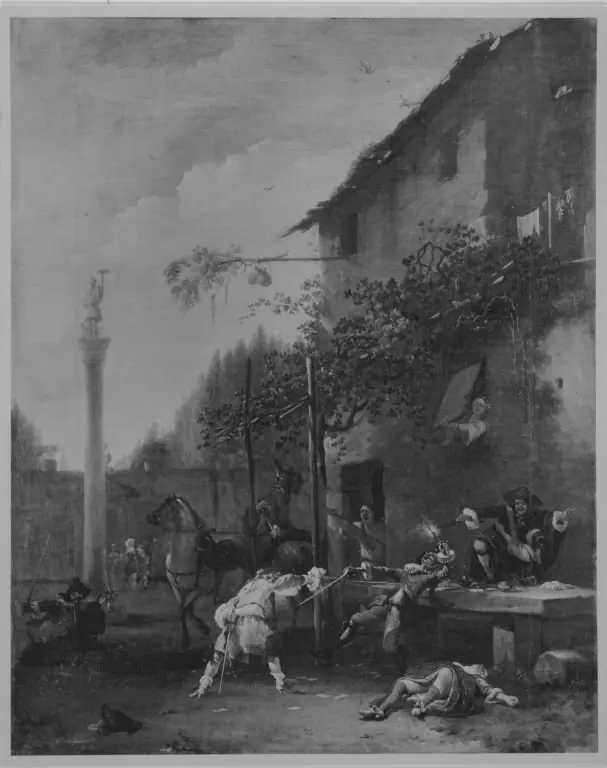
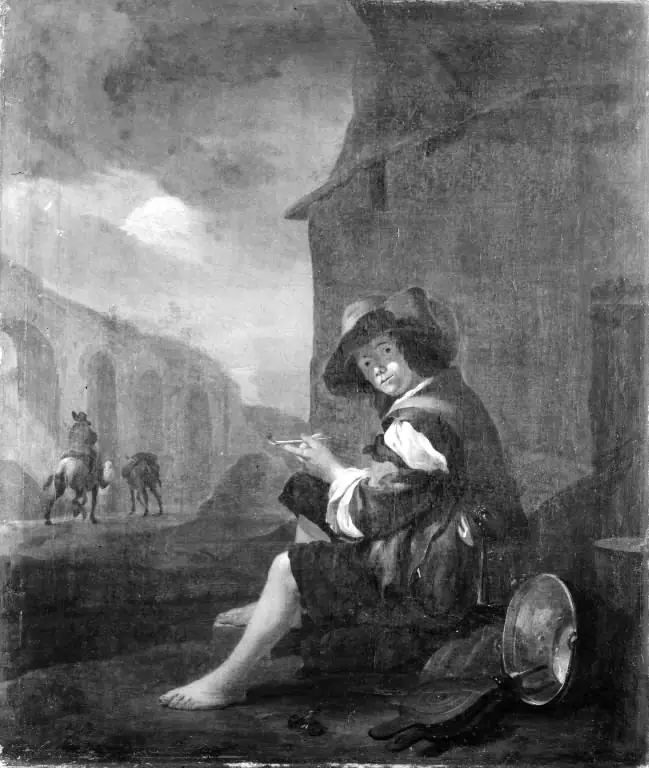
The painting depicts a group of individuals in a Roman courtyard, engaged in quiet, unremarkable activities—some seated, others standing, all dressed in clothing suggesting an older, perhaps archaic, fashion. Their expressions and postures convey a sense of stillness rather than narrative drama. The scene avoids moralizing or humor, instead presenting a neutral, observational record of lower-class life, reflecting the bamboccianti’s interest in authenticity over idealization.
Technique & Style
Both employs a muted palette dominated by earth tones—browns, grays, and soft ochres—to ground the scene in realism. Subtle contrasts of light and shadow, characteristic of chiaroscuro, define forms without dramatic intensity. Brushwork is precise yet unobtrusive, allowing figures and architecture to emerge naturally from the composition. The cloudy sky above adds atmospheric depth, reinforcing the painting’s quiet, observational tone.
History & Provenance
Created during Both’s time in Rome, the painting emerged from a broader trend among Northern artists who settled in Italy and turned their attention to its street life. While the exact early ownership of this work is undocumented, it aligns with other bamboccianti pieces collected by patrons interested in exoticized yet realistic depictions of Italian lower-class culture. Its survival reflects the growing market for genre scenes in the Dutch Republic during the 1620s.
Context
In early 17th-century Rome, Dutch and Flemish artists formed a distinct community, drawn by the city’s ruins, light, and vibrant street culture. While Italian painters focused on classical ideals, the bamboccianti sought novelty in the mundane. Both’s work, including this piece, contributed to a Northern European fascination with Italian vernacular life—neither romanticized nor satirized, but presented as a quiet, observable reality.
Legacy
Andries Both’s *Italienische Volksszene* stands as a representative example of the bamboccianti movement, influencing later genre painters who prioritized everyday subjects. Though less celebrated than contemporaries like Caravaggio or Rembrandt, his work helped establish a visual language for depicting ordinary life with dignity and restraint. The painting remains a quiet testament to the cross-cultural exchanges between Northern Europe and Italy during the Golden Age.
Artist & collection
Artist
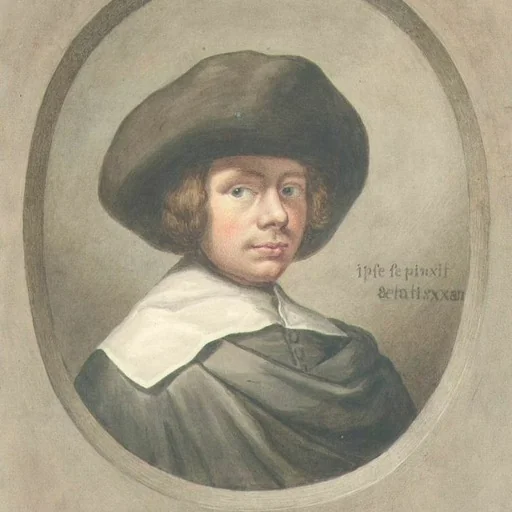
Andries Both (1612/1613 – 23 March 1642), was a Dutch genre painter. He was part of the group of Dutch and Flemish genre painters active in Rome in the 17th century known as the bamboccianti, who painted scenes from the…

![An Artist Seated at His Easel [recto], by Andries Both](https://artifactworldgallery.com/img/andries-both--an-artist-seated-at-his-easel-recto--df4909554b40b442-w320.webp)