Artwork
the tobacco guards
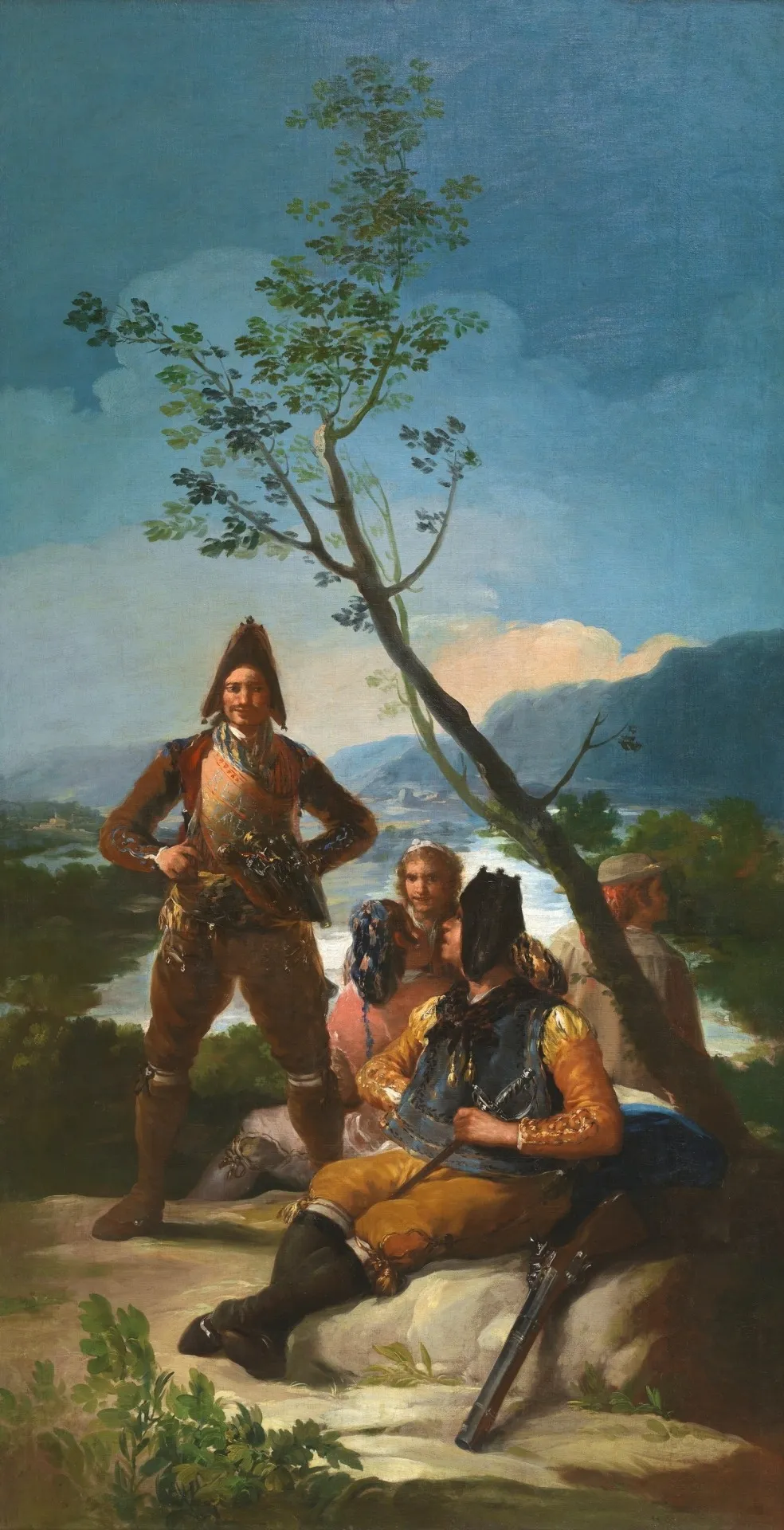
the tobacco guards is an oil painting by the Rococo painting artist Francisco Goya. It dates from 1790 and is held in the collection of the Museo del Prado.
About this work
Overview
The composition centers on a standing figure in a red jacket and two seated companions in yellow and blue, set before a sparse tree and a distant waterway.
Francisco Goya’s *The Tobacco Guards*, executed in oil in 1790, presents a small group of men in contemporary dress engaged in a leisurely moment. The composition centers on a standing figure in a red jacket and two seated companions in yellow and blue, set before a sparse tree and a distant waterway. The work belongs to the genre‑scene tradition and reflects the Rococo taste for light, informal subjects.
Subject & Meaning
The painting captures an everyday scene in which a man holds a rifle across his lap, suggesting a casual yet alert atmosphere among the group. The inclusion of the firearm, together with the relaxed posture of the figures, hints at the social rituals of tobacco smoking and guard duty in late‑18th‑century Spain, offering a glimpse into the quotidian life of the period.
Technique & Style
Goya employs a muted palette of reds, yellows, and blues, balanced by the subdued greens of the background foliage. The handling of light creates modest contrasts that model the figures without dramatic chiaroscuro, while the loose brushwork and fluid composition convey a sense of immediacy characteristic of Rococo genre paintings.
Context
Created at the close of the Spanish Enlightenment, the work reflects Goya’s early interest in portraying contemporary social scenes. Though still rooted in Rococo conventions, the painting anticipates the artist’s later engagement with historical events and social commentary, influencing subsequent generations of 19th‑ and 20th‑century painters.
Artist & collection
Artist
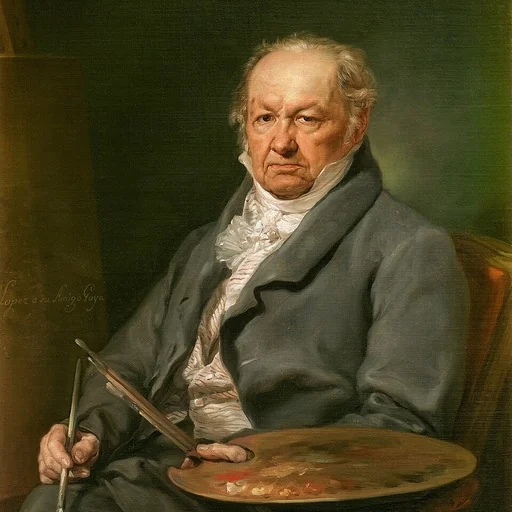
Francisco José de Goya y Lucientes (; Spanish: ; 30 March 1746 – 16 April 1828) was a Spanish romantic painter and printmaker.

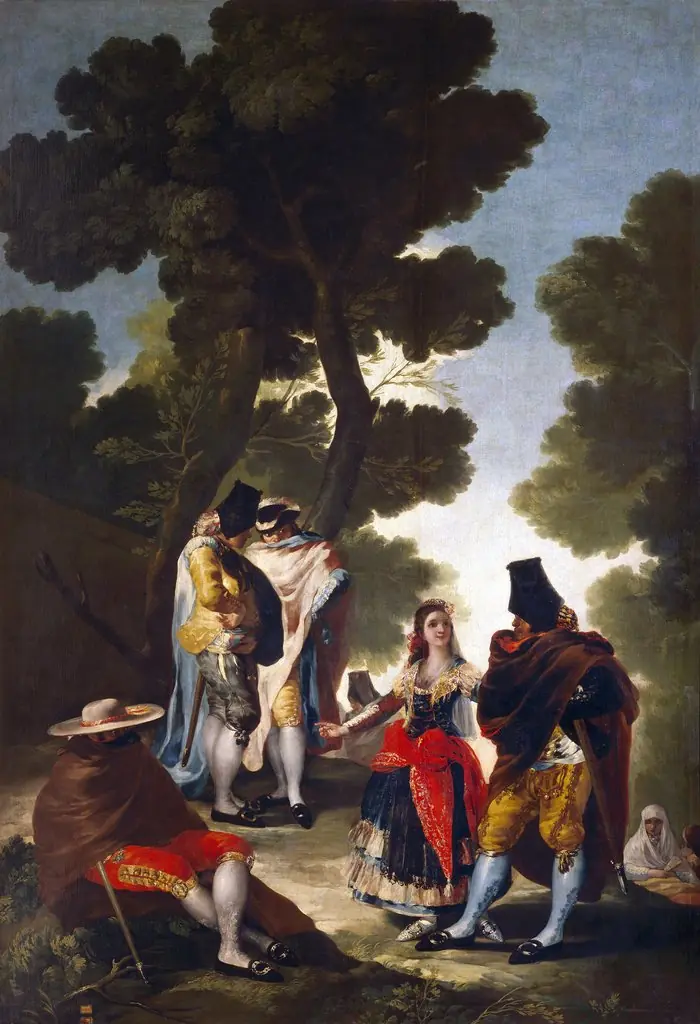 The Pretty Woman and the Masked Men (The Road of Andalusia)
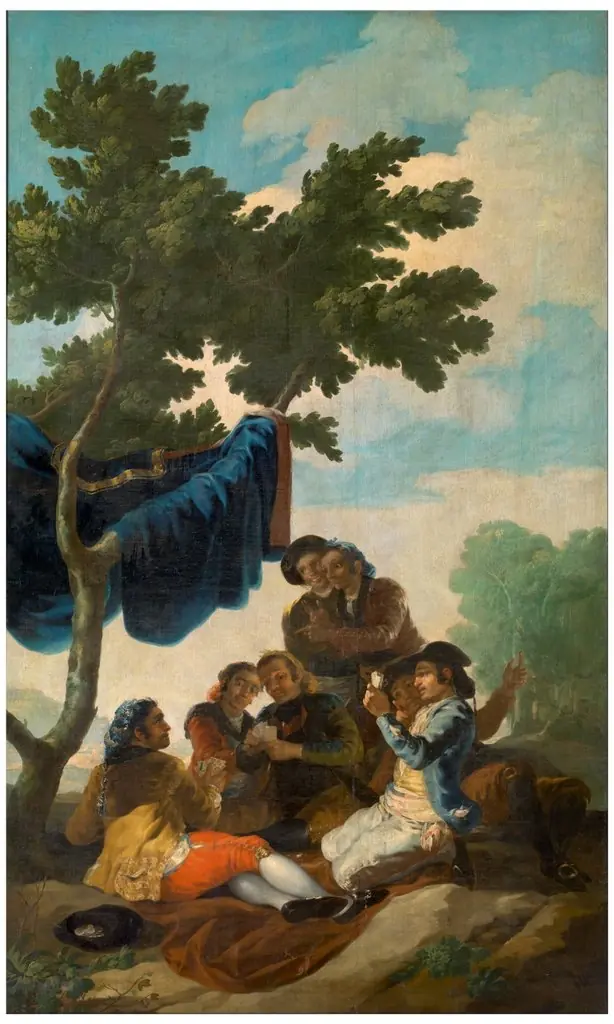 Card Players
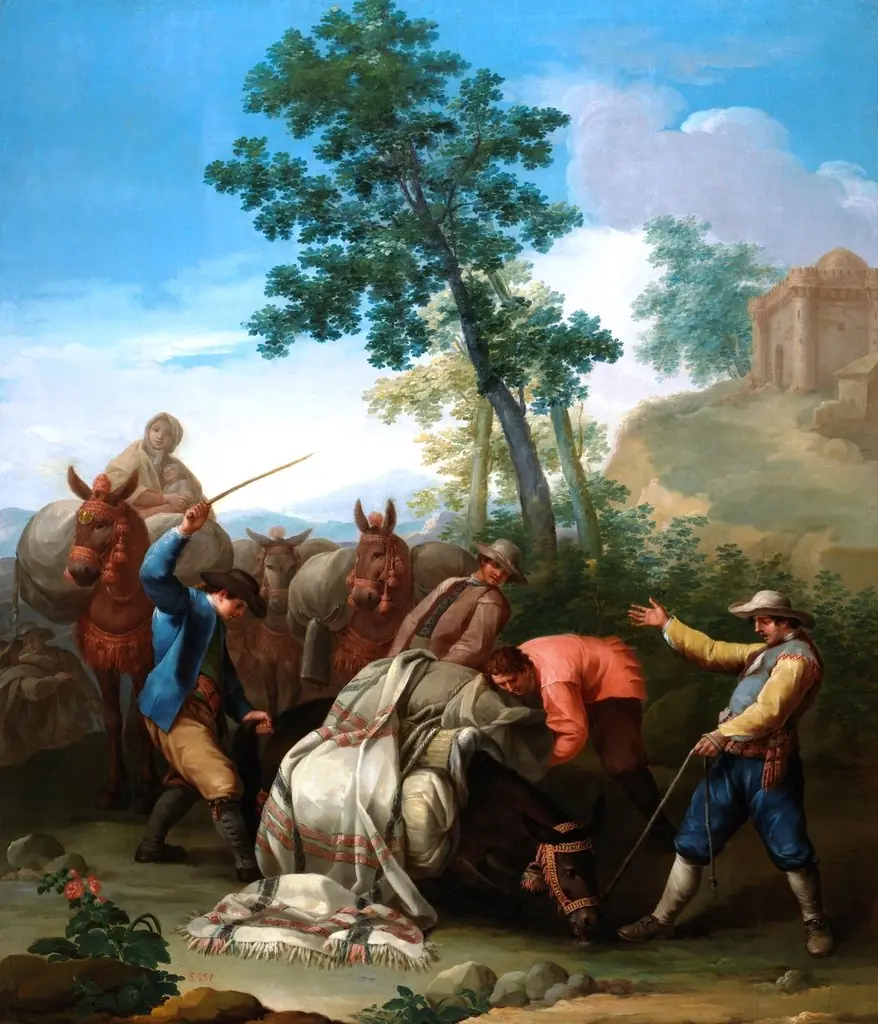 Un mulo caído con su carga y unos arrieros levantándolo
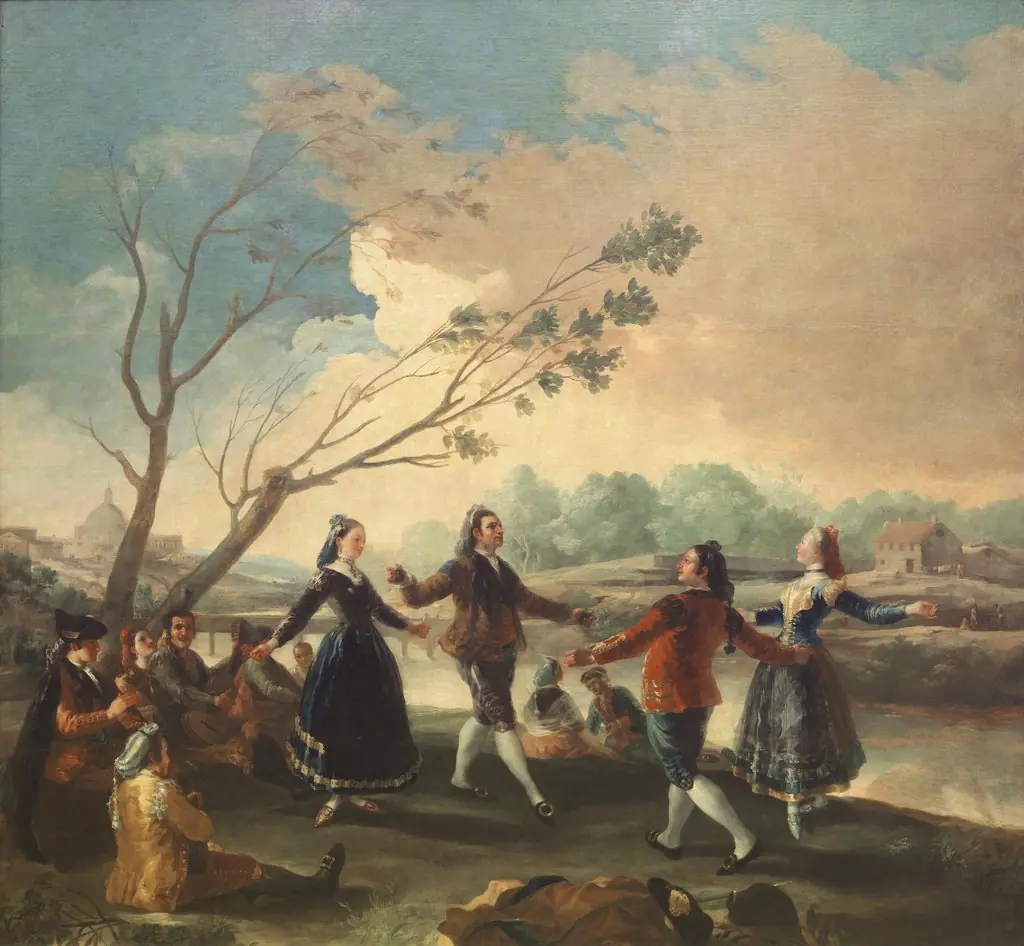 Dance of the Majos at the Banks of Manzanares
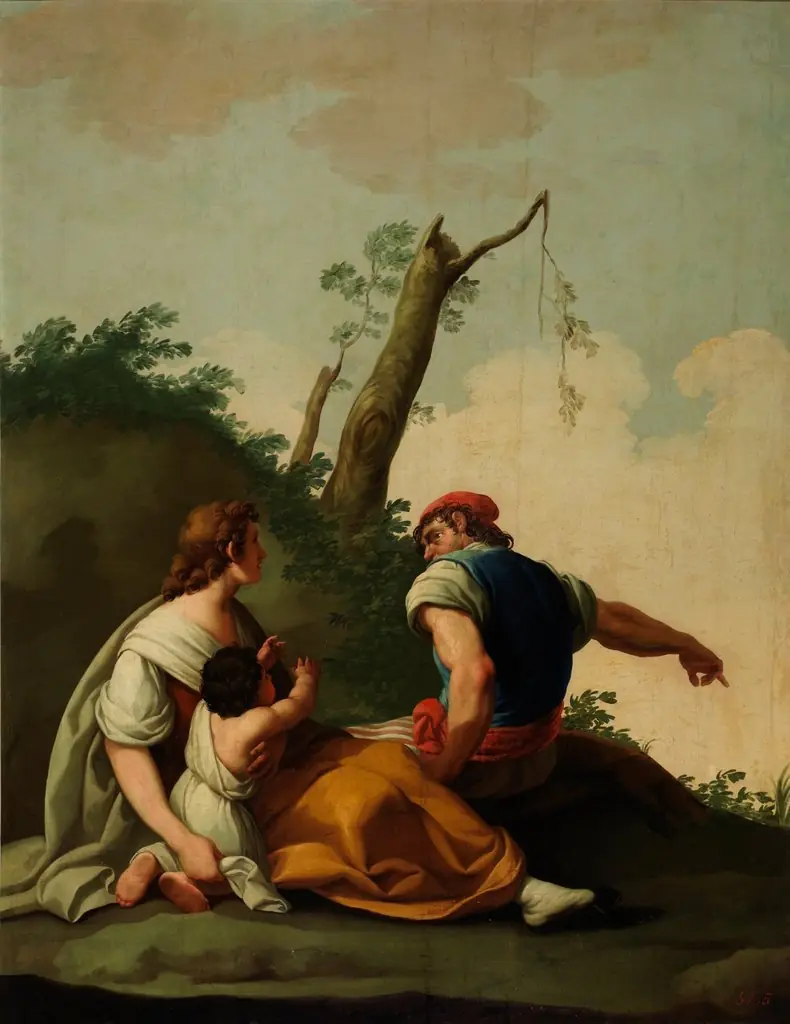 Hombre y mujer con un niño en brazos
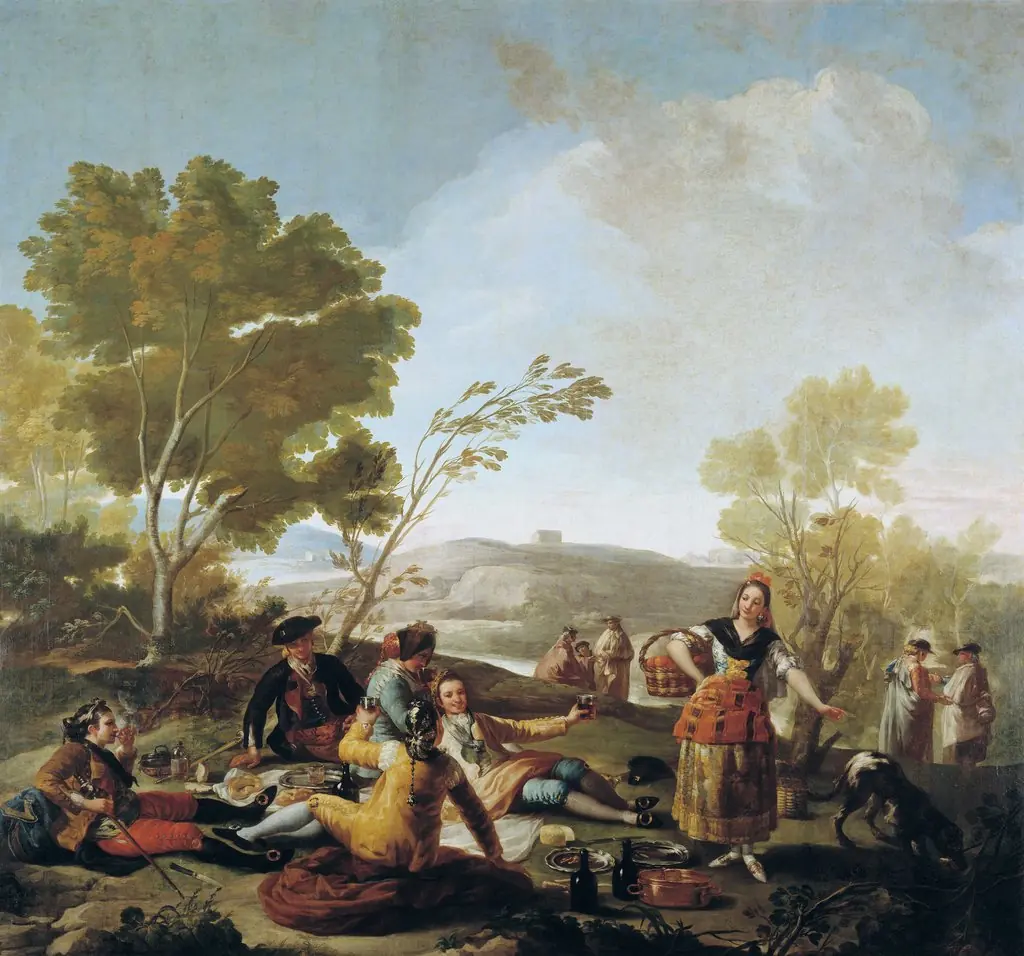 Picnic on the banks of the Manzanares
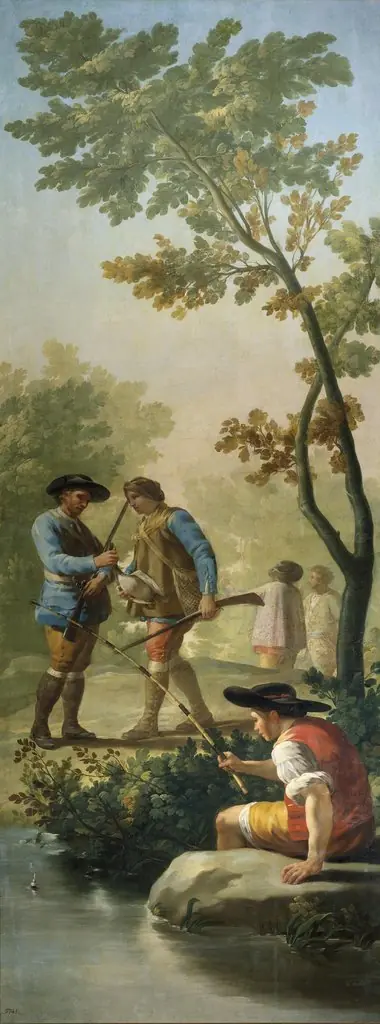 fisherman with his rod
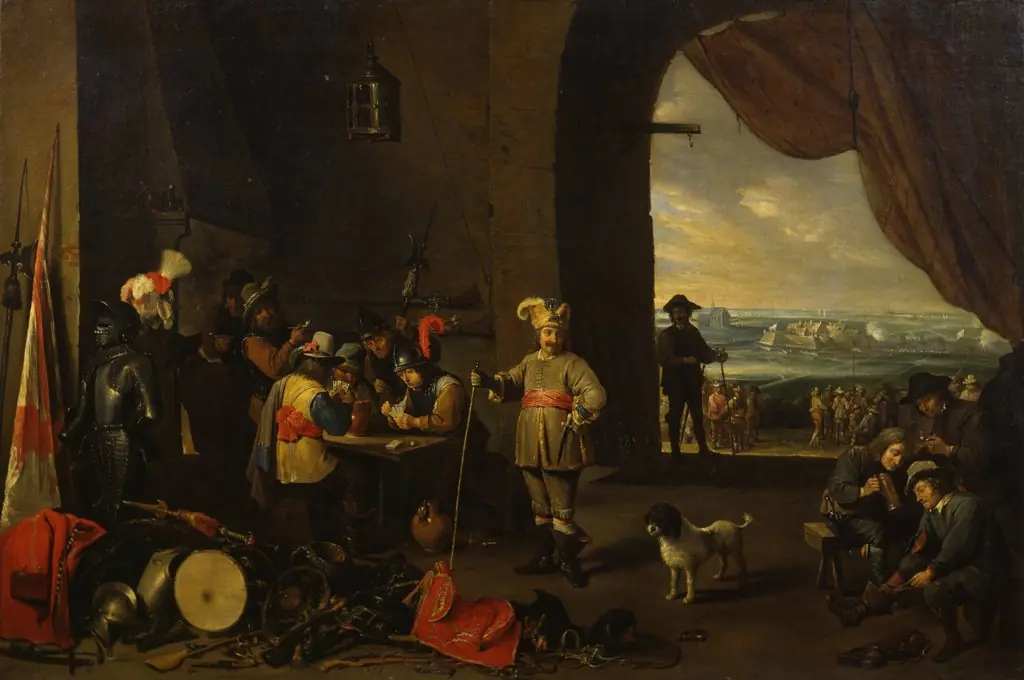 The Guard Room
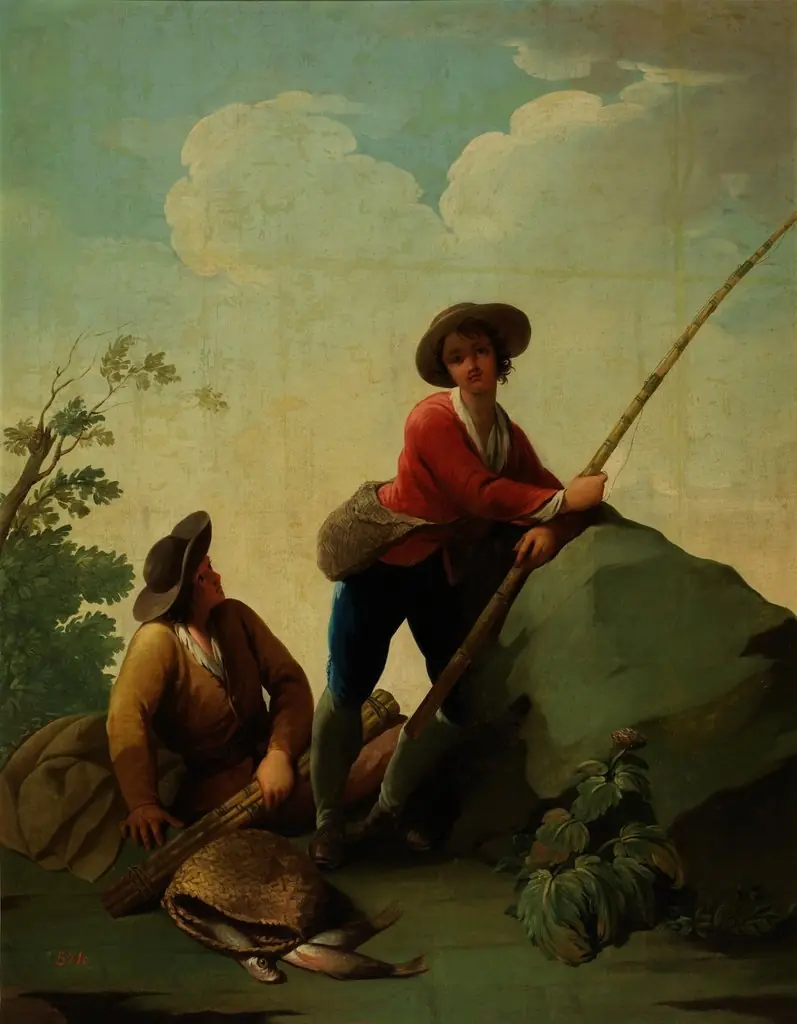 Dos pescadores uno con caña y otro sentado
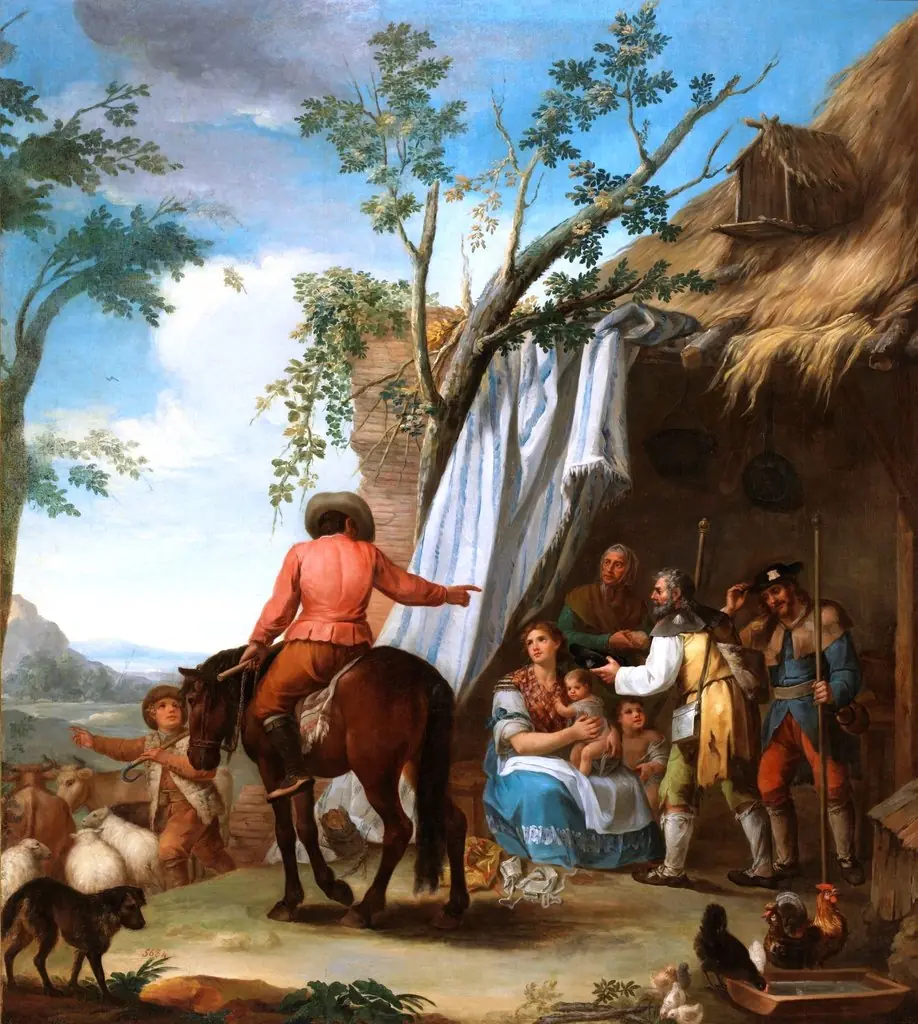 Un hombre a caballo junto a tienda de campaña
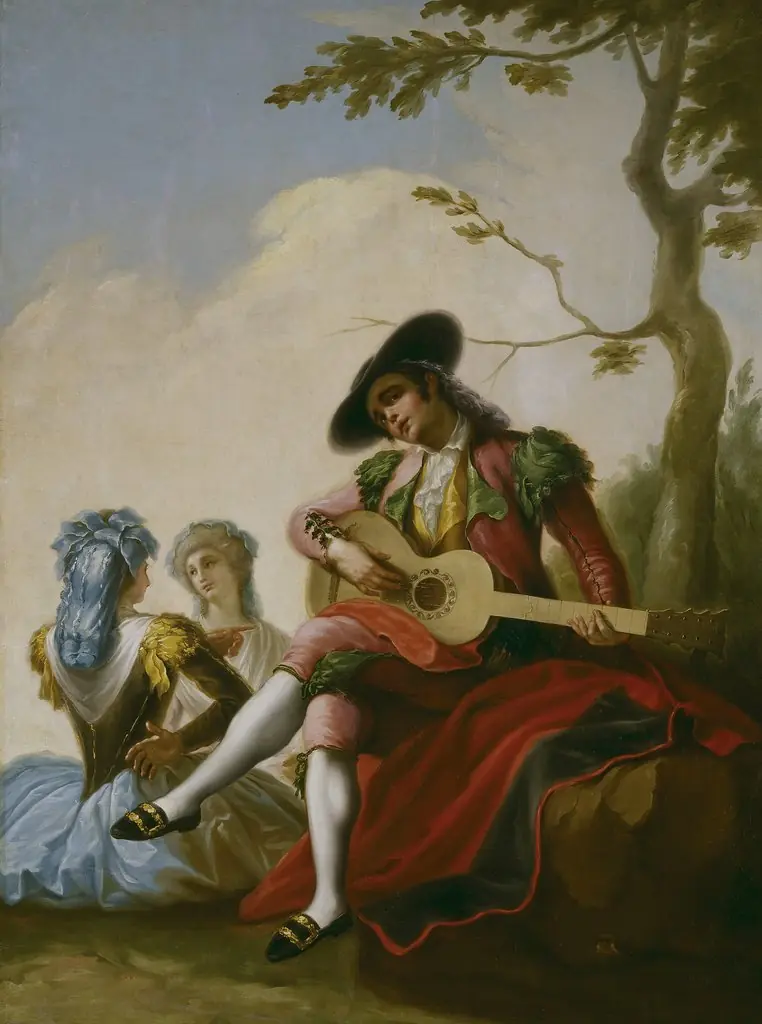 Majo with a Guitar
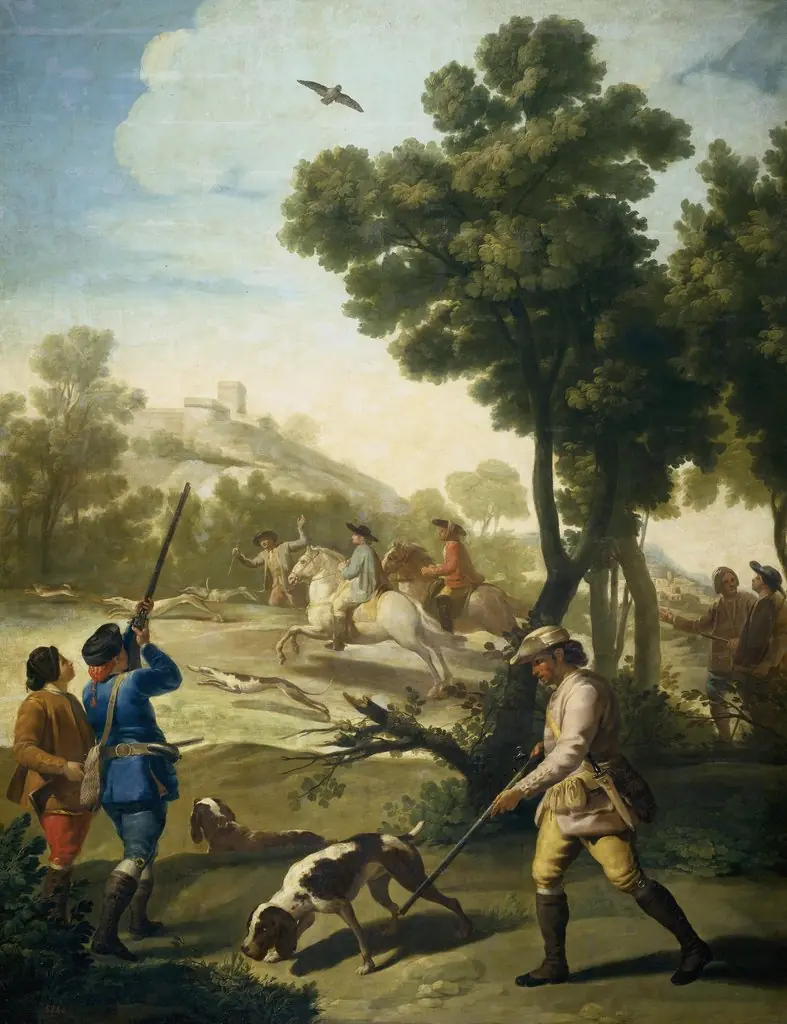 The Quail Shoot