Artwork
Hombre y mujer con un niño en brazos
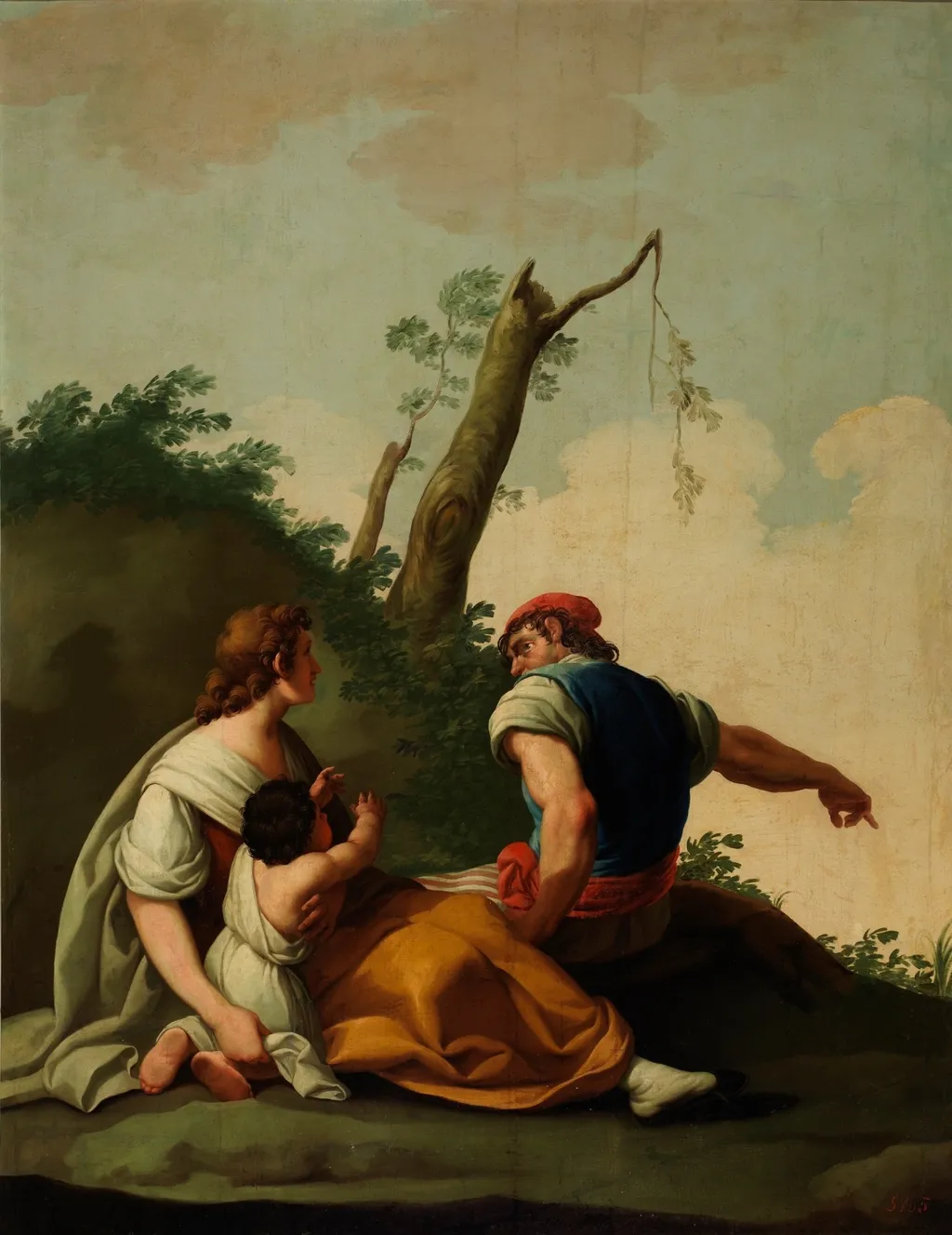
Hombre y mujer con un niño en brazos is an oil painting by the Rococo painting artist Zacarías González Velázquez. It dates from 1793 and is held in the collection of the Museo del Prado.
About this work
Overview
Painted in 1793 by Spanish artist Zacarías González Velázquez, this oil on canvas work presents a quiet domestic moment. It is part of the Museo del Prado’s collection and reflects the artist’s focus on intimate human subjects. Though rooted in the late Rococo tradition, the composition leans toward naturalism, avoiding ornamental excess in favor of emotional restraint and spatial clarity.
Subject & Meaning
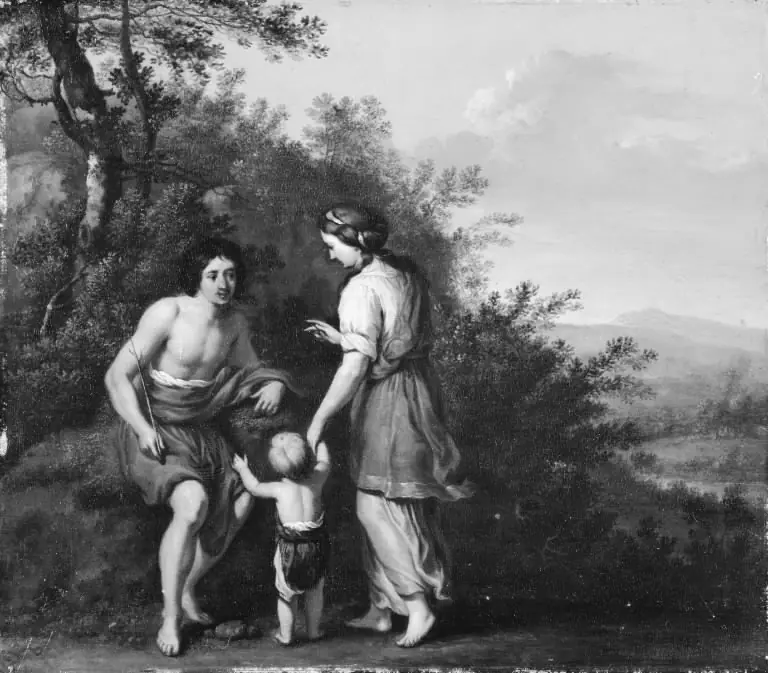
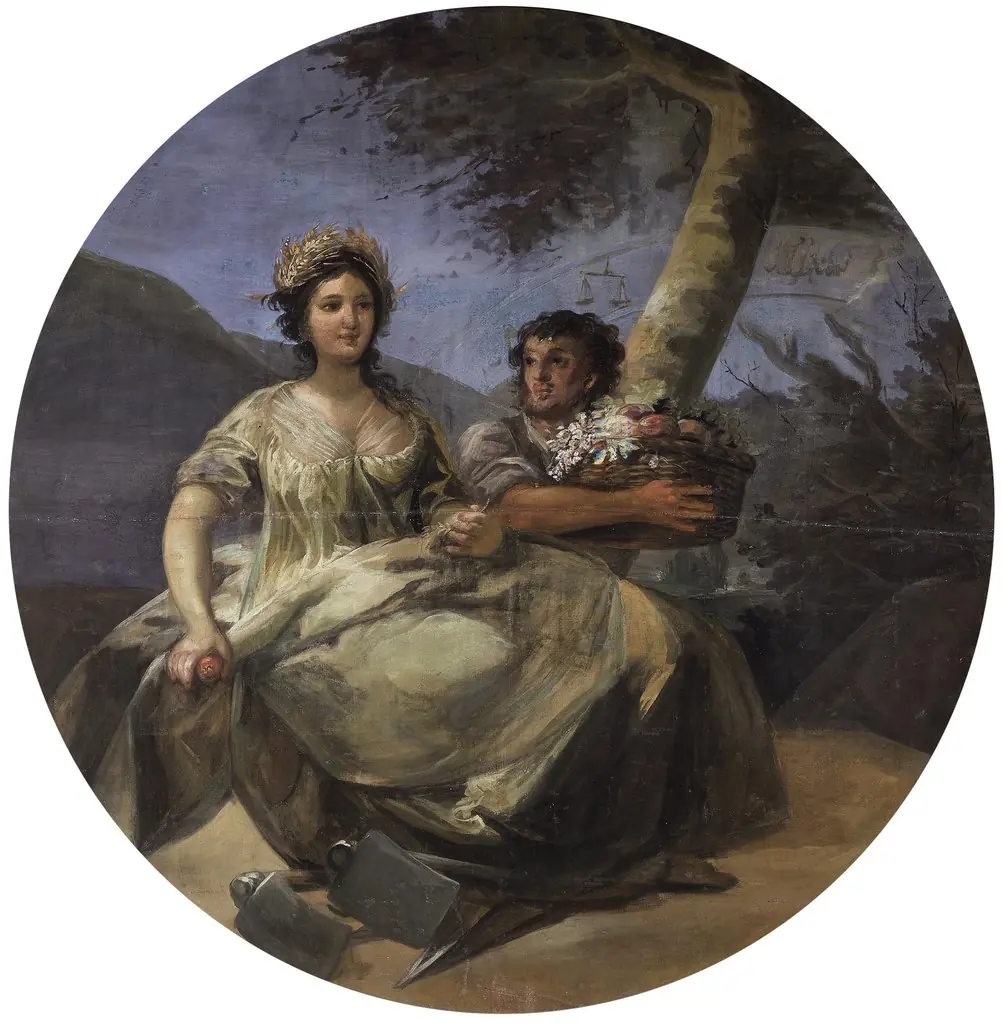
The painting shows a seated woman cradling a child, while a man stands beside her, gesturing toward an unseen point in the distance. The child reaches toward him, suggesting a moment of connection or transition. The figures’ quiet interaction implies familial tenderness, with no overt narrative or symbolism. Their grounded posture and unadorned setting emphasize ordinary life over theatricality.
Technique & Style
Velázquez employs chiaroscuro to model the figures with soft, rounded volumes, enhancing their three-dimensionality. The palette is restrained—white, blue, red, and earth tones—accented by the green shawl and bare feet of the child. Brushwork is precise yet unobtrusive, favoring clarity over flourish. The background recedes subtly, keeping focus on the trio’s physical and emotional proximity.
History & Provenance
Commissioned or created during Velázquez’s active years in Madrid, the painting entered the Museo del Prado’s collection in the 19th century. It was not widely exhibited until later, reflecting its status as a private, domestic scene rather than a public or religious commission. Its survival in good condition suggests careful stewardship within institutional holdings.
Context
In late 18th-century Spain, portraiture often served elite patrons, yet Velázquez frequently turned to middle-class subjects. This work aligns with a broader shift toward domestic realism, influenced by Enlightenment ideals and the decline of Baroque grandeur. While Rococo elegance lingers in detail, the composition’s simplicity signals a move toward Neoclassical sensibilities.
Legacy
The painting remains a quiet example of Velázquez’s skill in capturing unposed human interaction. It contributes to the understanding of Spanish painting beyond grand religious or royal themes. Though not widely reproduced, it is studied for its nuanced use of light and its depiction of everyday intimacy in a period dominated by more formal genres.
Own this work as a print
Artist & collection
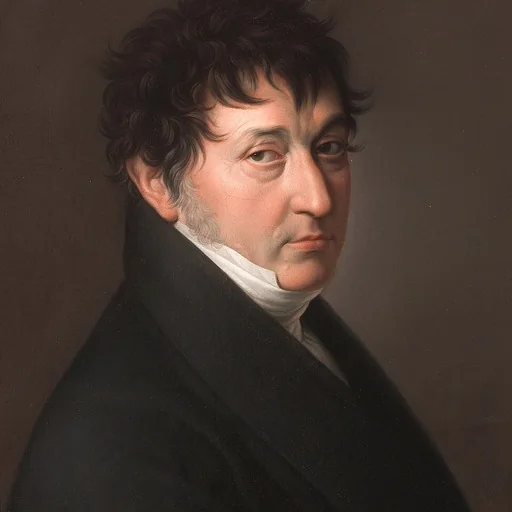
Artist
Zacarías González Velázquez (5 November 1763 – 31 January 1834) was a Spanish painter; known primarily for his portraits and religious works.