Artwork
El juicio de Salomón
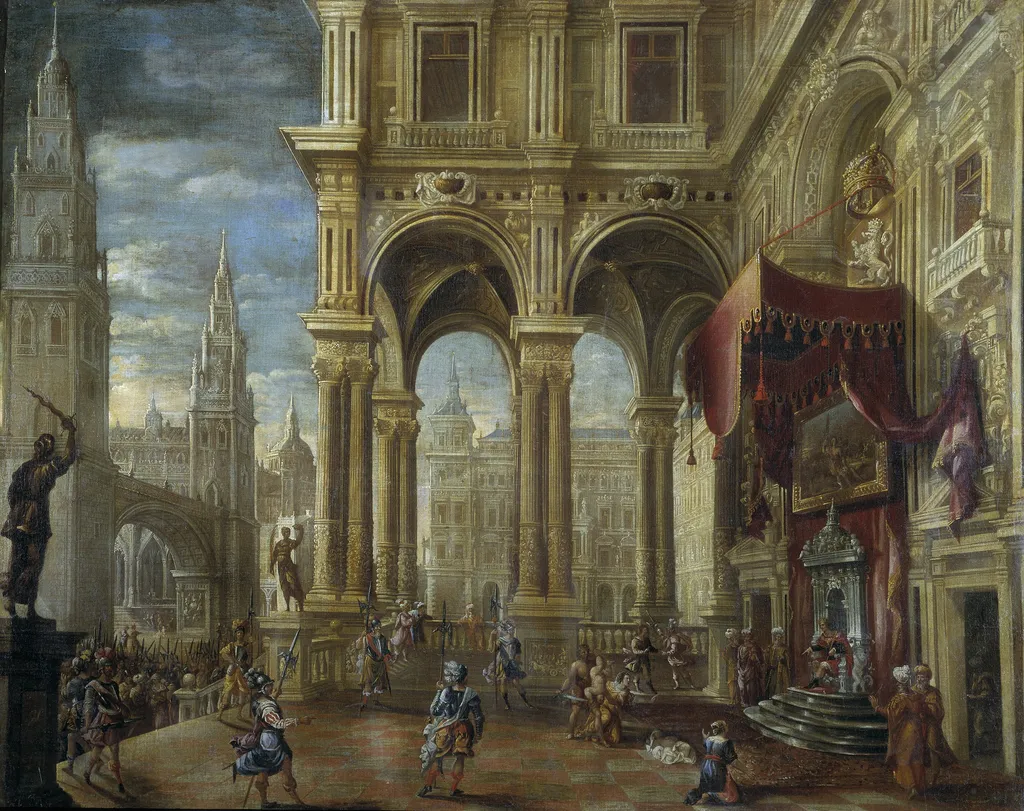
El juicio de Salomón is an oil painting by the Early Baroque Italian artist Francisco Gutiérrez Cabello. It dates from 1650 and is held in the collection of the Museo del Prado.
About this work
Overview
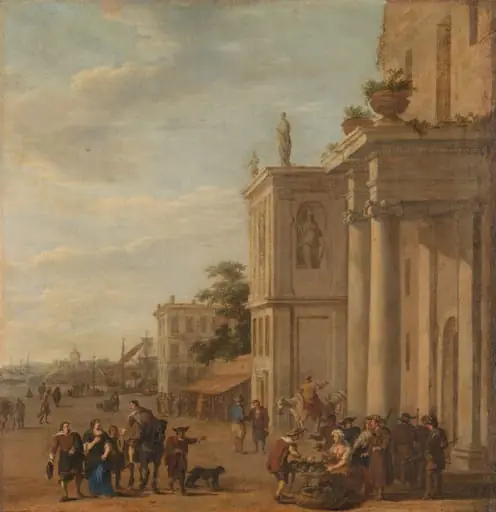
Painted around 1650 by Francisco Gutiérrez Cabello, this oil-on-canvas work depicts the biblical Judgment of Solomon. It resides in the Museo del Prado in Madrid, where it is cataloged as part of the Spanish Baroque collection. The scene is rendered with careful attention to spatial depth and architectural detail, distinguishing it from more intimate religious compositions of the period.
Subject & Meaning
Though the central action is not dramatized, the composition conveys tension through the reactions of onlookers—some alarmed, others contemplative.
The painting illustrates the moment when King Solomon orders the living child to be cut in half to reveal the true mother. Though the central action is not dramatized, the composition conveys tension through the reactions of onlookers—some alarmed, others contemplative. The setting transforms the biblical narrative into a public judicial proceeding, emphasizing justice as a civic and divine ideal.
Technique & Style
Gutiérrez employs chiaroscuro to model figures and architecture, using sharp contrasts between light and shadow to suggest volume and atmosphere. The stone buildings, adorned with ornate arches and windows, are rendered with precise linear perspective. Figures are arranged across a vast courtyard, their postures and groupings guiding the viewer’s eye through the scene without overwhelming it.
History & Provenance
The painting entered the Museo del Prado’s collection in the 19th century, likely transferred from a royal or ecclesiastical collection. Its attribution to Gutiérrez Cabello, a lesser-known Spanish painter of the mid-17th century, reflects scholarly consensus based on stylistic comparison and archival records. It has remained in the museum’s custody since acquisition.
Context
Created during Spain’s Habsburg era, the work aligns with a broader trend of using biblical stories to reinforce moral and legal authority. The grand, secular architecture suggests a connection between divine justice and royal governance. Such compositions were common in Spanish religious art, where narrative clarity and spatial order were valued over emotional intensity.
Legacy
Though not widely reproduced or studied, the painting contributes to understanding how Spanish artists interpreted biblical themes through architectural grandeur and restrained drama. It stands as an example of regional Baroque practice, where narrative was embedded within carefully constructed environments rather than centered on individual emotion.
Own this work as a print
Artist & collection
Artist
Francisco Gutiérrez Cabello (1616–1670) was an artist, born in Madrid.

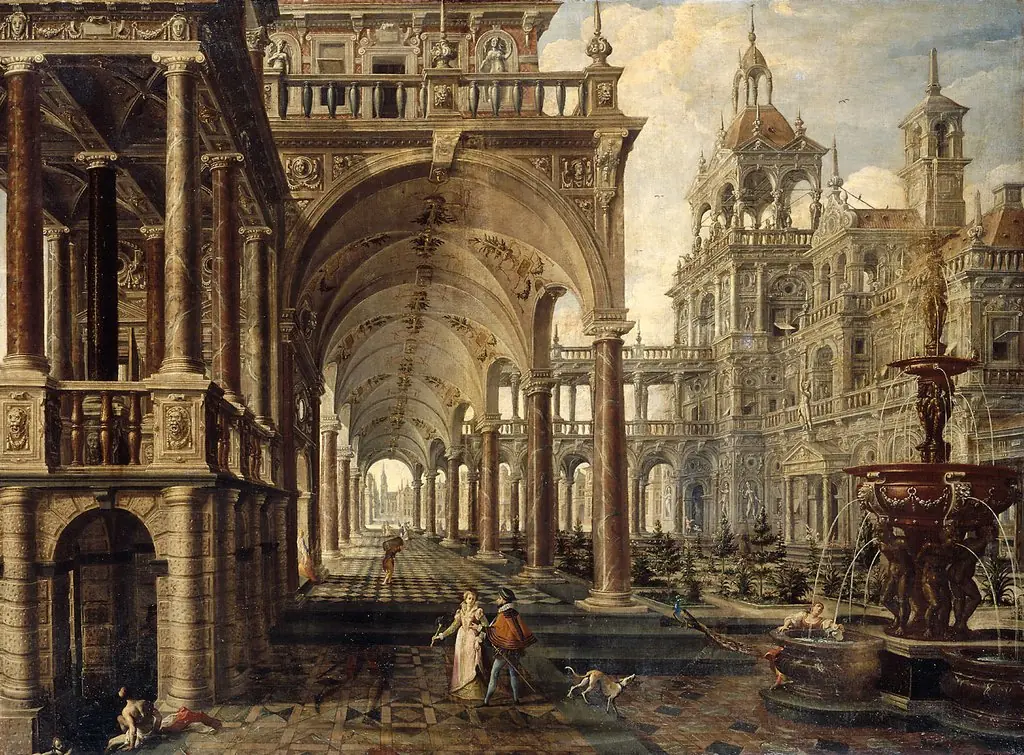 Palastarchitektur mit Badenden
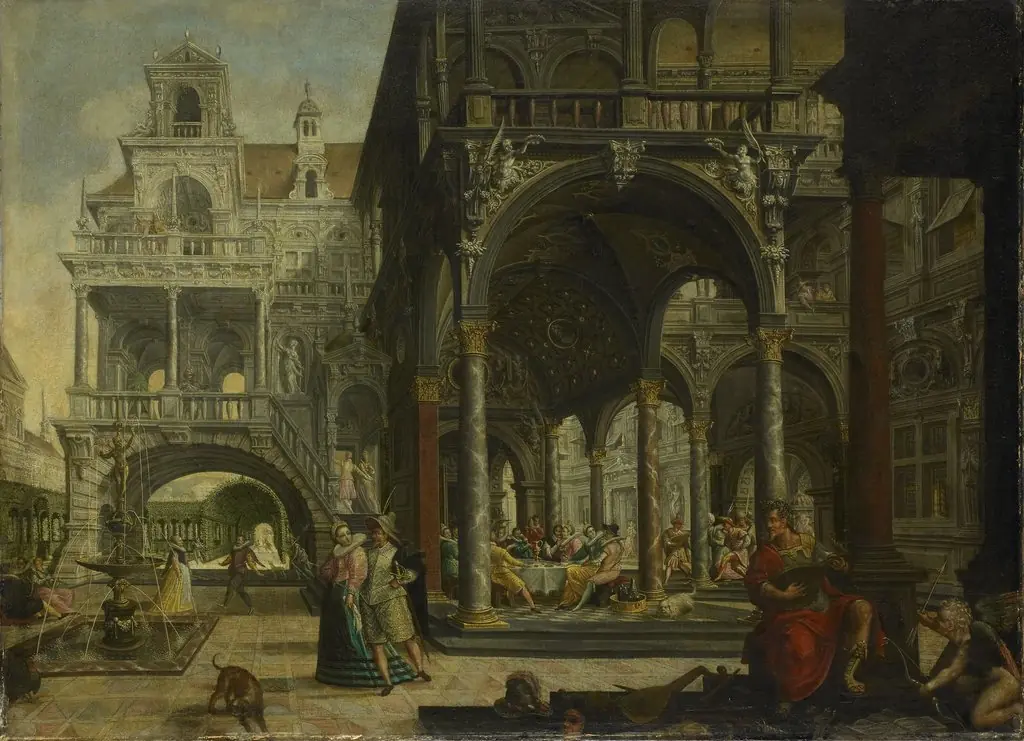 Phantasy Renaissance palace
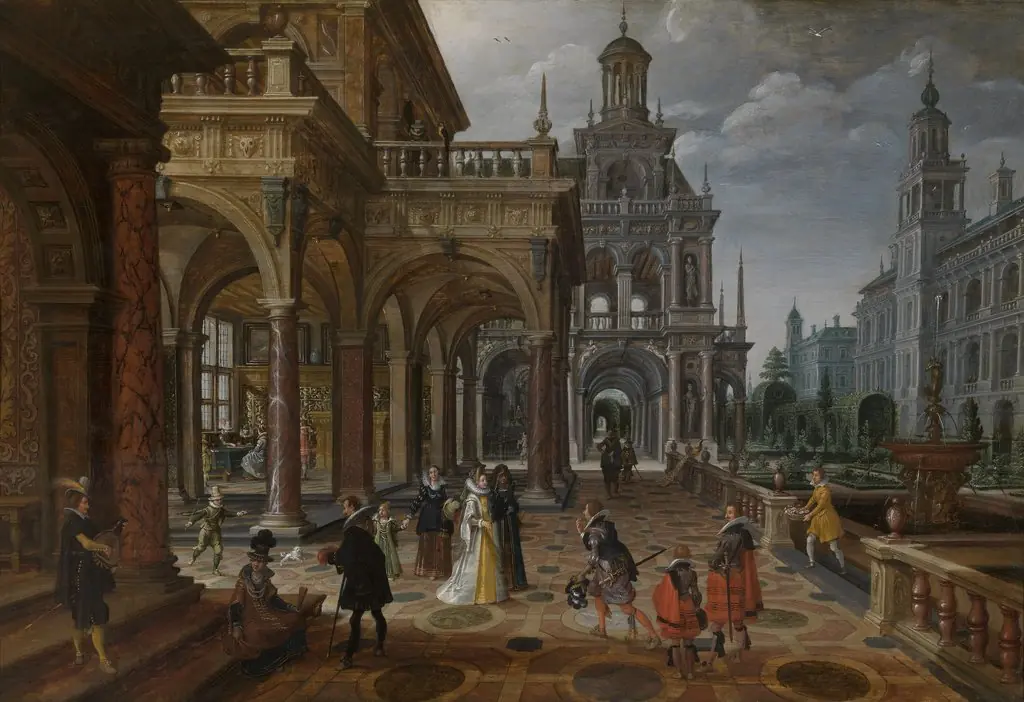 Palaces
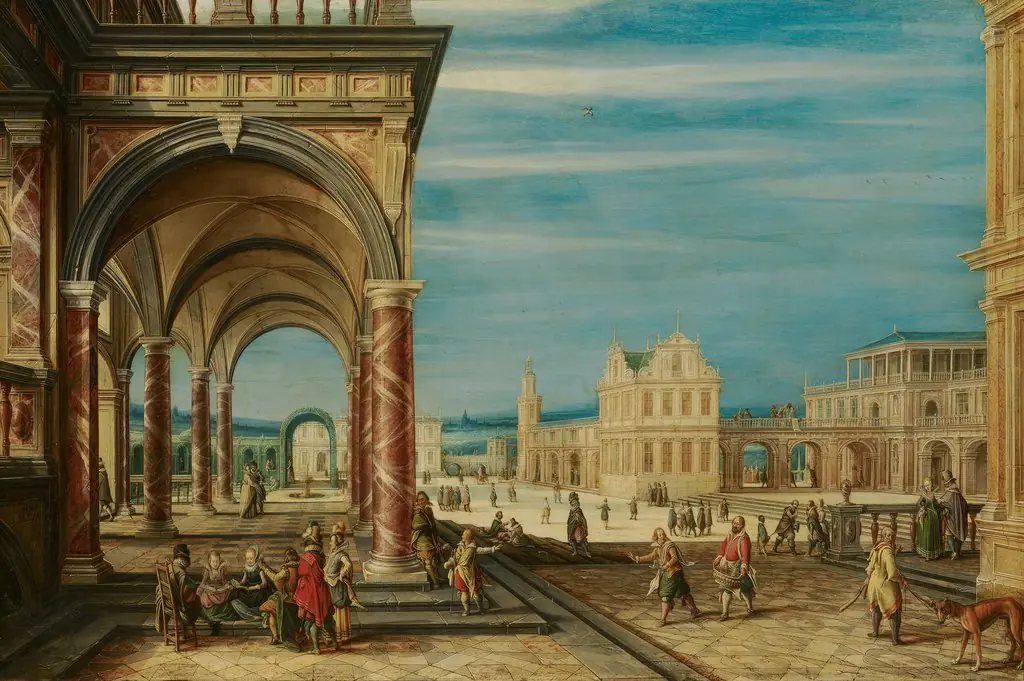 A Square with Imaginary Buildings
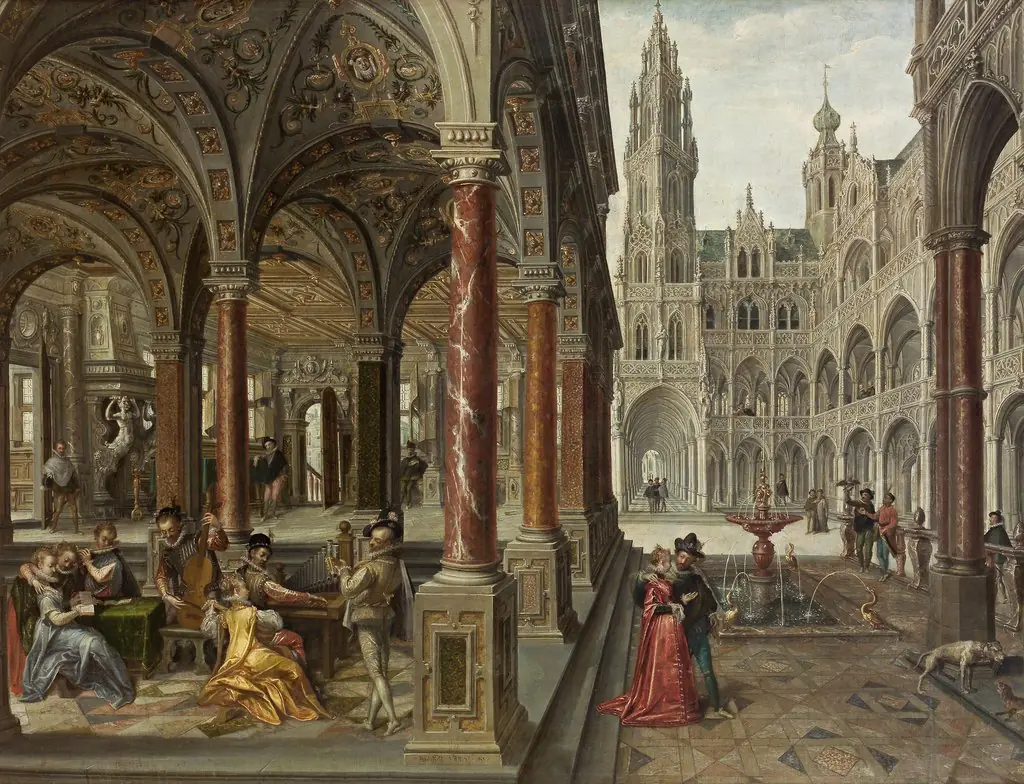 Palace architecture with musicians
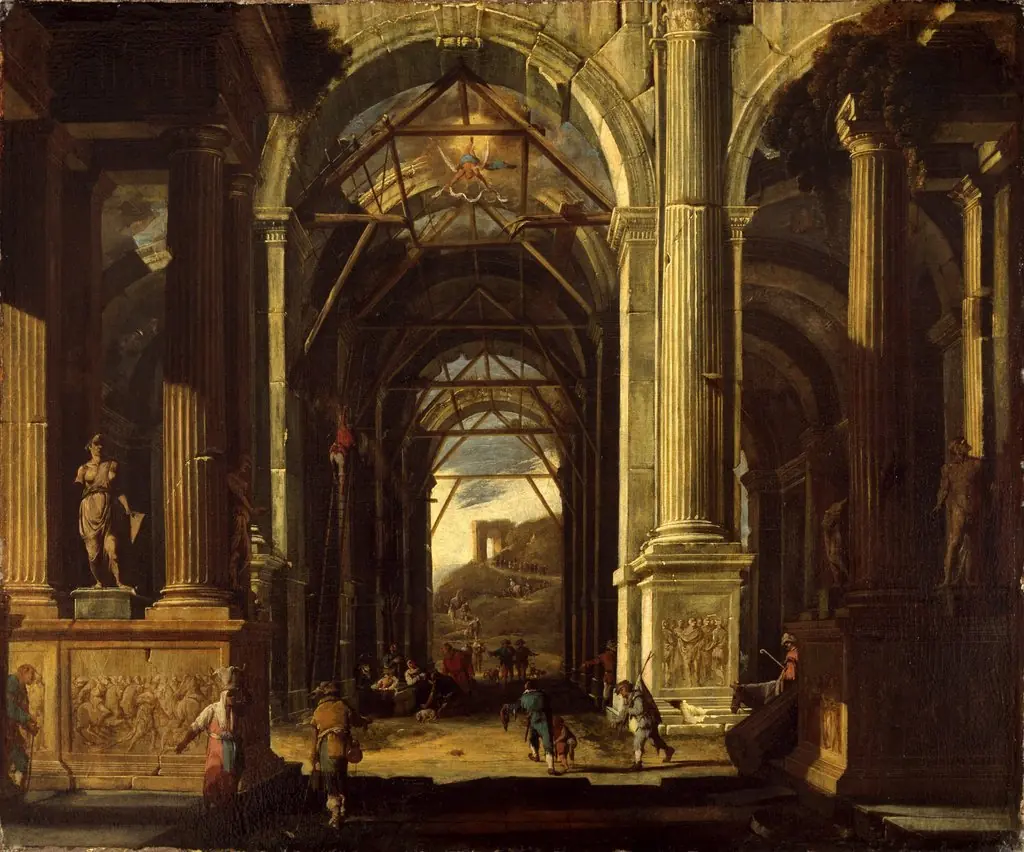 The Adoration of the Shepherds
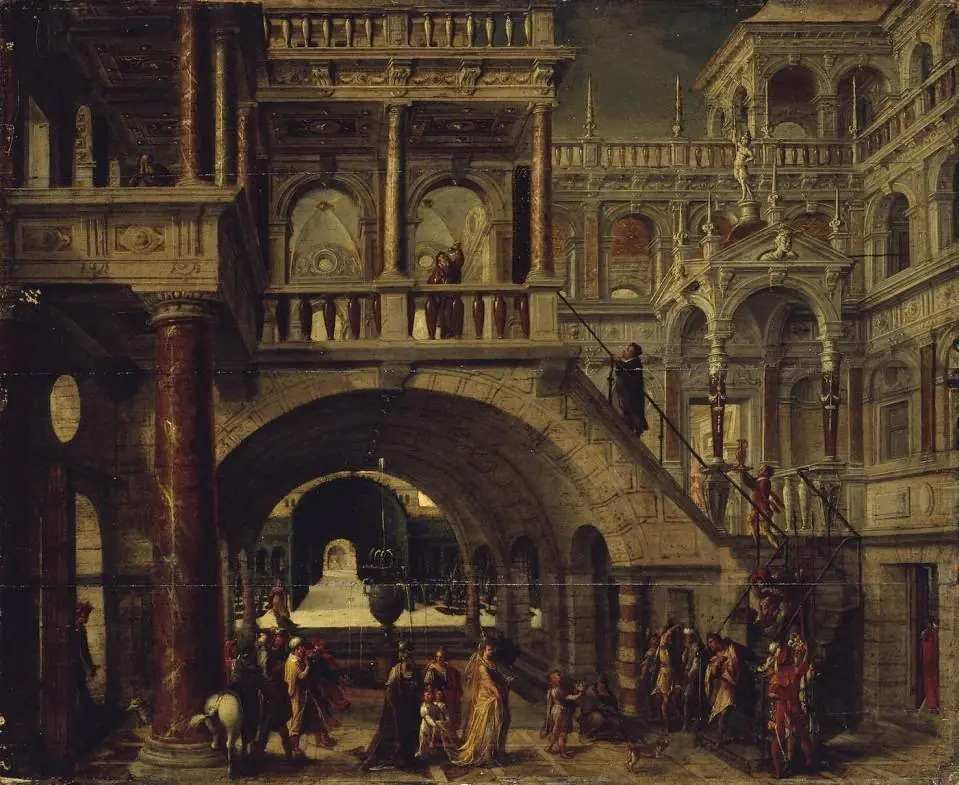 Architectural Landscape
 Imaginary church interior with a procession
 Der Hof des Dogenpalastes
 Großer Gartenpalast
 Church Interior
 Italian marketplace