Artwork
El expolio de Cristo
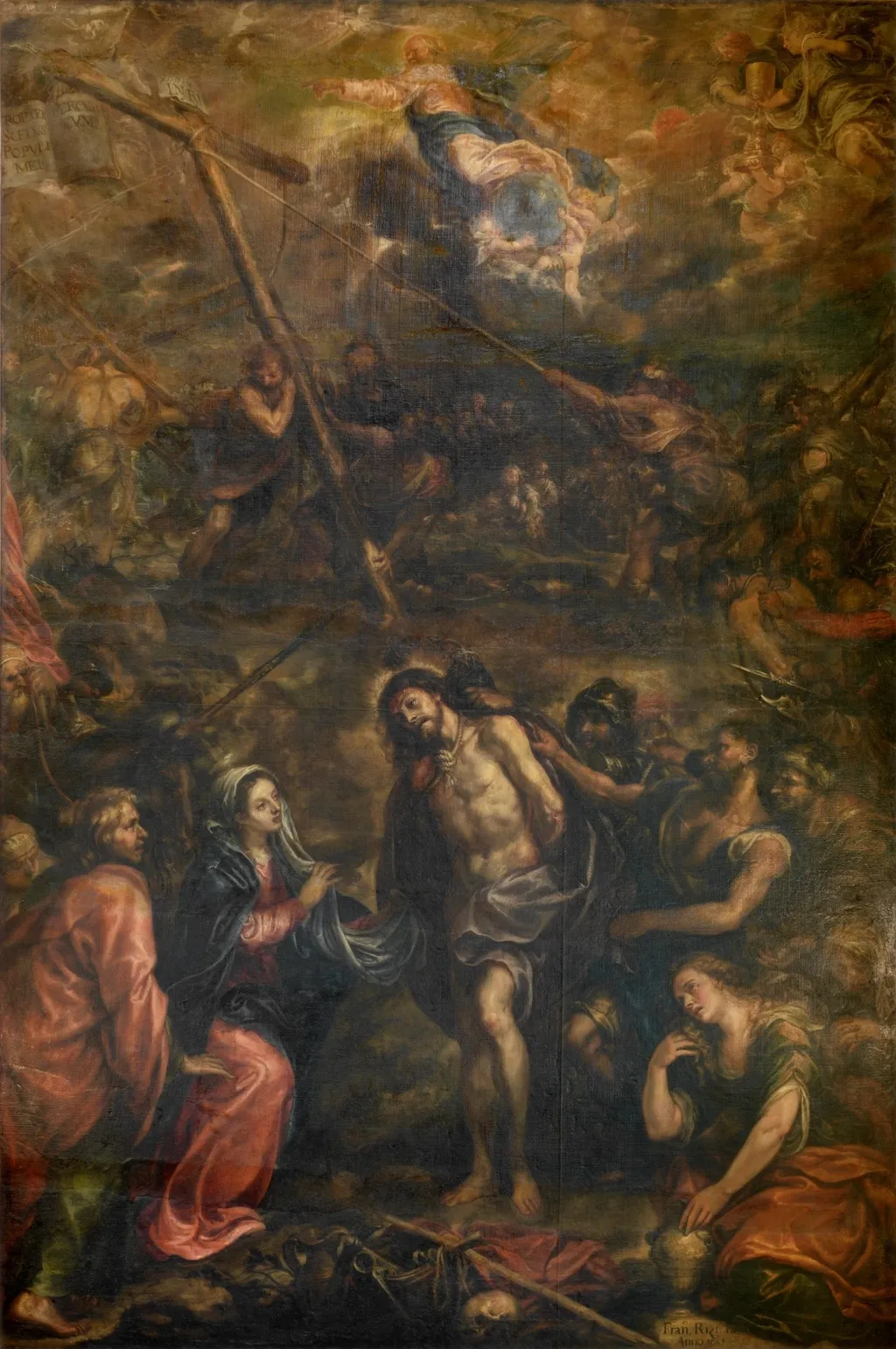
El expolio de Cristo is an oil painting by the Early Baroque Italian artist Francisco Rizi. It dates from 1651 and is held in the collection of the Museo del Prado.
About this work
Overview
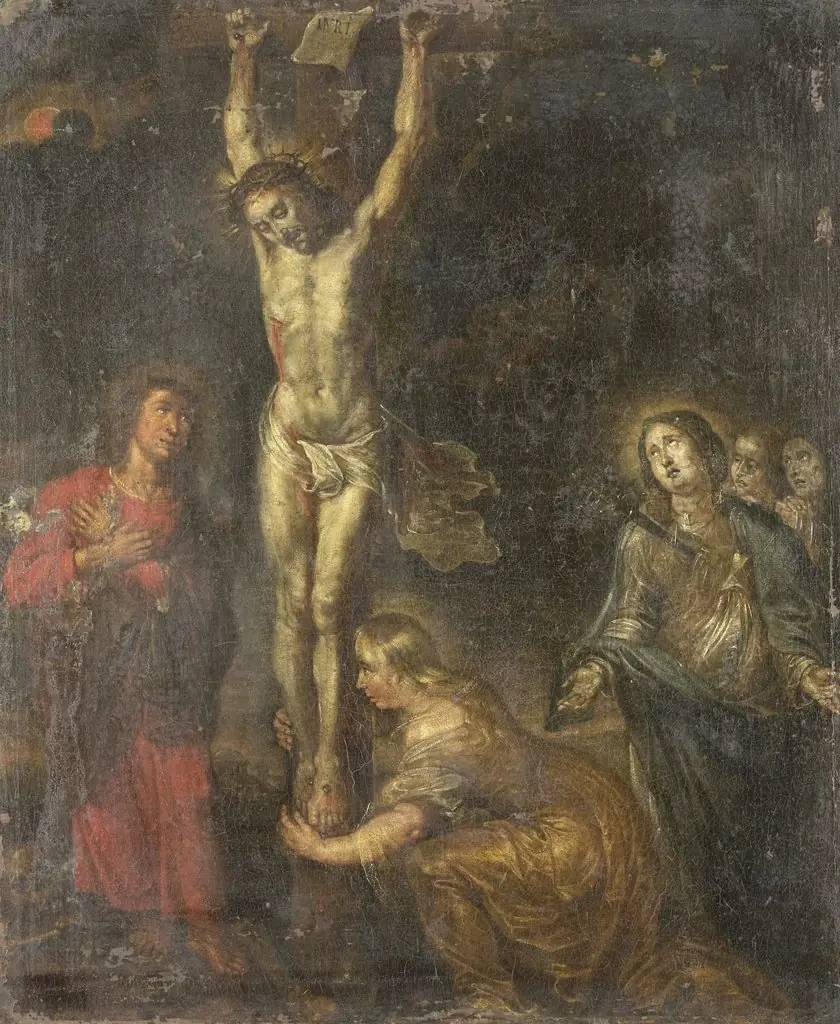
The composition centers on the crucified figure, modestly clothed in a white loincloth, his arms outstretched and head inclined.
Francisco Rizi’s oil on canvas, dated 1651, portrays the moment when Christ is stripped of his clothing. The composition centers on the crucified figure, modestly clothed in a white loincloth, his arms outstretched and head inclined. Around him stand several attendants, including soldiers and a figure holding a cloth, creating a tense, focused scene that emphasizes the vulnerability of the central figure.
Subject & Meaning
The work visualizes the biblical episode of Christ’s disrobing, a prelude to the crucifixion that underscores his humanity and suffering. Objects such as a book, chalice, and cross appear among the figures, alluding to the Eucharistic symbolism and the theological narrative of sacrifice and redemption inherent in the Passion.
Technique & Style
Rizi employs chiaroscuro, contrasting deep shadows with illuminated forms to model the bodies and give the scene a three‑dimensional presence. The dramatic lighting highlights Christ’s pale flesh against the darker background, while the loose brushwork in the surrounding figures conveys movement and emotional intensity typical of mid‑17th‑century Spanish Baroque painting.
History & Provenance
Created in the mid‑seventeenth century, the painting entered the collection of the Museo del Prado, where it remains on display. Its attribution to Rizi, a prominent court painter of the Spanish Habsburgs, reflects the period’s devotional commissions intended for ecclesiastical or royal settings.
Own this work as a print
Artist & collection