Artwork
S. Andrew
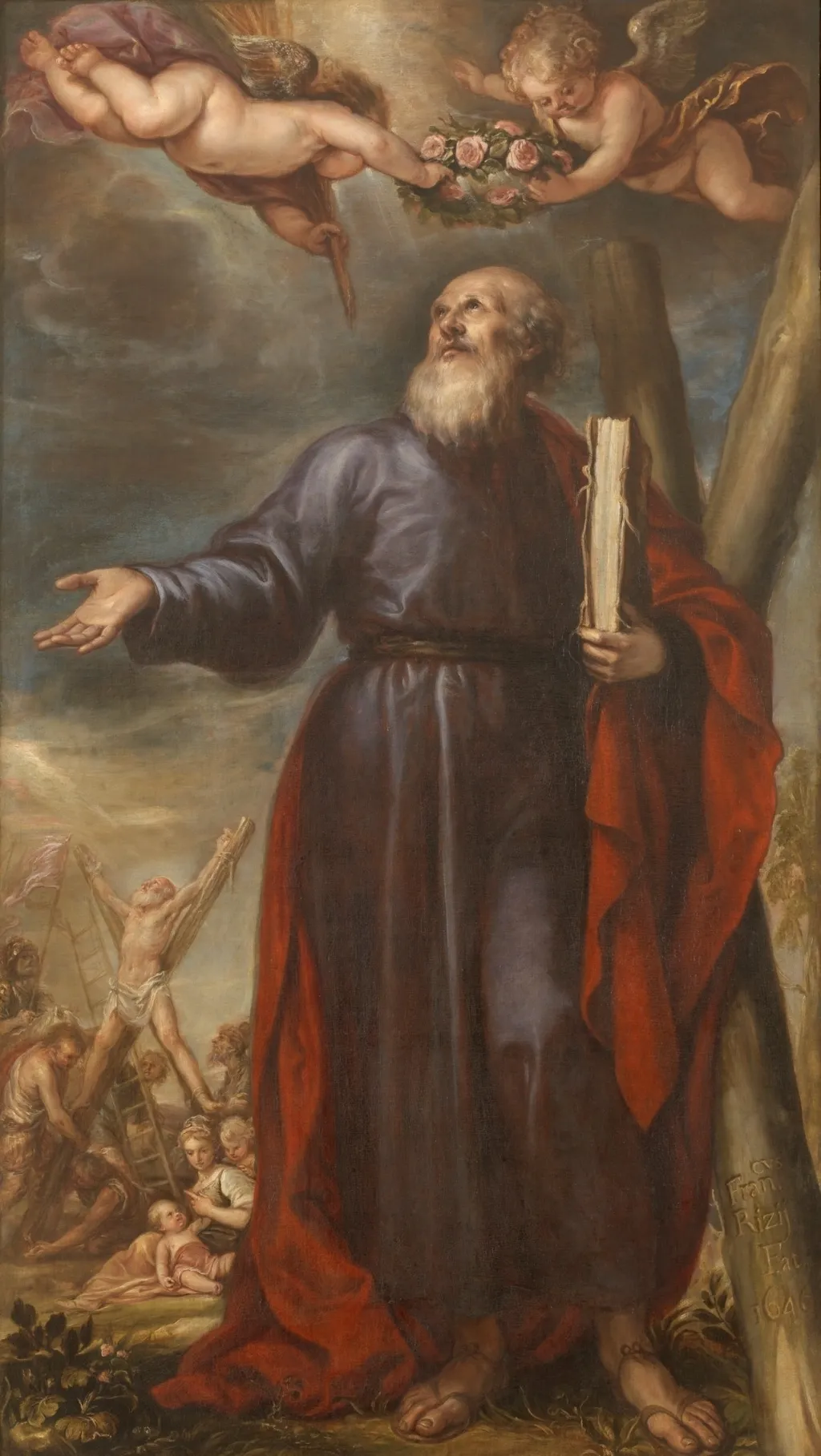
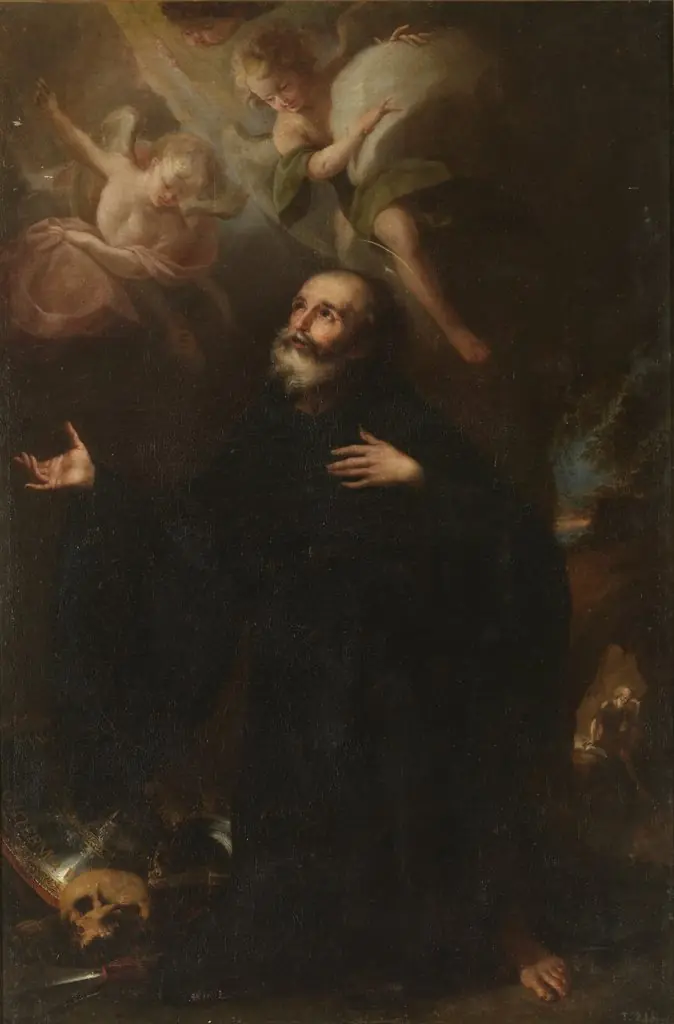
S. Andrew is an oil painting by the Early Baroque Italian artist Francisco Rizi. It dates from 1646 and is held in the collection of the Museo del Prado.
About this work
Overview
Francisco Rizi’s oil on canvas, dated 1646, presents a devotional scene centered on the Apostle Andrew. The work, now part of the Museo del Prado collection, combines a solemn figure with celestial attendants, set against a stark, rocky backdrop that emphasizes the spiritual narrative.
Subject & Meaning
At the composition’s core stands an elderly, bearded man in dark robes, clutching a wooden staff—a traditional attribute of Andrew. Above him hover two winged youths offering a floral wreath, suggesting heavenly intercession. The presence of a book and a cross reinforces the apostle’s role as a bearer of the Gospel and martyrdom.
Technique & Style
Rizi employs pronounced chiaroscuro, contrasting deep shadows with luminous highlights to model the figures dramatically. The stark lighting isolates the central apostle, while the softer illumination on the winged children creates a gentle, ethereal quality. Brushwork remains tight in the details of the staff and foliage, yet looser in the distant landscape.
History & Provenance
Created in the mid‑17th century, the painting entered the Spanish royal collection before being transferred to the Museo del Prado, where it remains on display. Its attribution to Rizi, a prominent court painter of the period, has been consistently accepted by scholars.
Context
Rizi’s work reflects the Counter‑Reformation’s emphasis on clear, emotionally resonant religious imagery. The inclusion of angelic figures and symbolic objects aligns with contemporary Spanish devotional art, which sought to inspire piety through vivid, accessible narratives.
Artist & collection