Artwork
Faggot Gatherer (recto) Study of a Head seen from Below (verso)
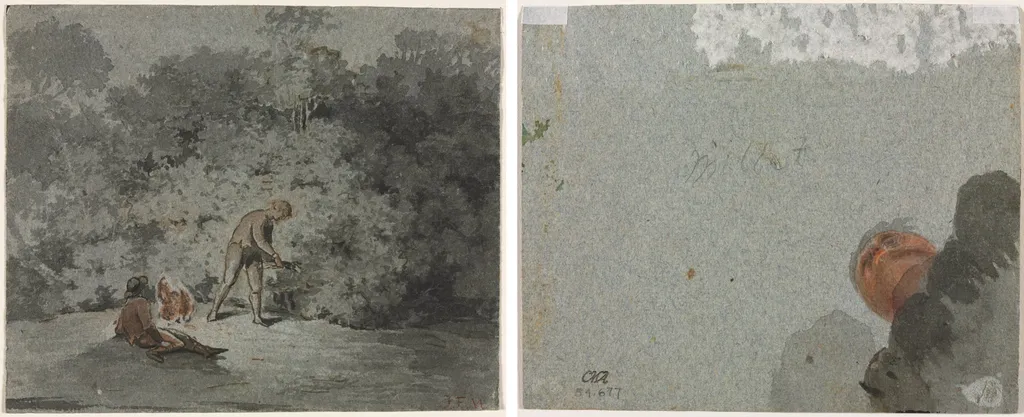
Faggot Gatherer (recto) Study of a Head seen from Below (verso) is a drawing by the Baroque artist Francisque Millet. It dates from 1604 and is held in the collection of the Cleveland Museum of Art.
About this work
Overview
The work is part of the Cleveland Museum of Art’s collection and exemplifies the practice of preparatory drawing in early 17th-century Flemish-French art.
Created around 1604 by Francisque Millet, this double-sided drawing pairs a figure study of a wood gatherer with a head viewed from below. Executed in a spontaneous, sketchlike manner, it reflects the artist’s dual focus on landscape and human form. The work is part of the Cleveland Museum of Art’s collection and exemplifies the practice of preparatory drawing in early 17th-century Flemish-French art.
Subject & Meaning
The recto portrays a rural laborer bent over near a shoreline, collecting firewood, while two other figures—a seated person tending a small fire and a standing observer—complete the scene. The setting, dominated by dark trees and a pale sky, suggests a quiet, transient moment in daily life. The composition emphasizes physical exertion and solitude, aligning with the period’s interest in unidealized peasant activity.
Technique & Style
Millet employed rapid, loose strokes and simplified forms to capture movement and posture. The drawing’s rough texture and minimal detail indicate it was made as a working study, not a finished piece. Light is suggested through contrast rather than modeled shading, hinting at an emerging use of chiaroscuro to define volume and spatial depth in a naturalistic setting.
History & Provenance
The drawing has been held by the Cleveland Museum of Art since at least the early 20th century. Its provenance prior to acquisition is not fully documented, but its style and materials align with Flemish-French drawing practices of the early 1600s. The dual-sided format suggests reuse of paper, common among artists conserving materials during this period.
Context
Millet worked during a time when landscape and genre scenes gained prominence alongside religious and mythological subjects. His drawings, often made outdoors, reflect a growing interest in direct observation of nature and labor. This piece connects to broader trends in Northern European art that valued the dignity of everyday life over idealized narratives.
Legacy
Though Millet is less known than contemporaries, this drawing illustrates the importance of preparatory studies in shaping Baroque visual language. Its unpolished quality reveals the artist’s process and contributes to understanding how figure studies informed larger compositions. It remains a quiet testament to the observational rigor of 17th-century draftsmen.
Artist & collection
Artist
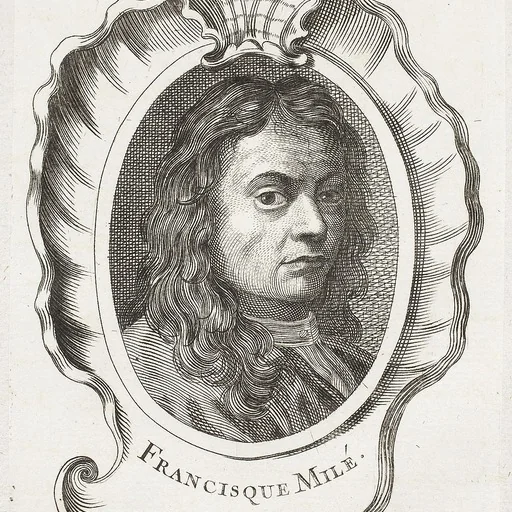
Francisque Millet (27 April 1642, in Antwerp – 3 June 1679, in Paris), also known as Jean-François Milée or Millet I, was a Flemish-French landscape painter of the Baroque era.

![Trees [verso], by David Cox](https://artifactworldgallery.com/img/david-cox--trees-verso--2f59ba73e183df09-w320.webp) Trees [verso]
Trees [verso] A thatched dwelling amid trees, Bengal
 Untitled
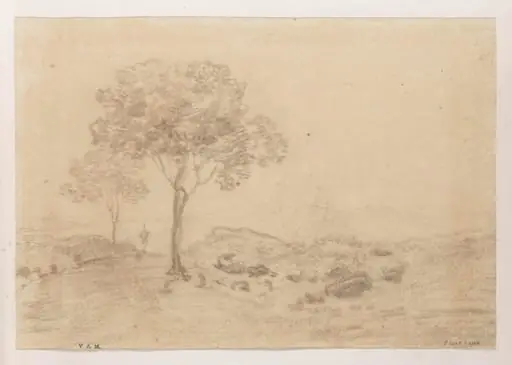 Two trees in a landscape
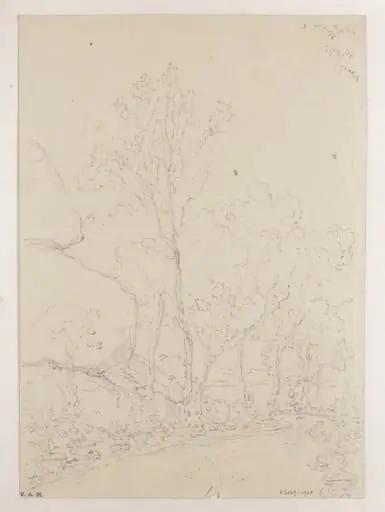 Casa Garden, Macau
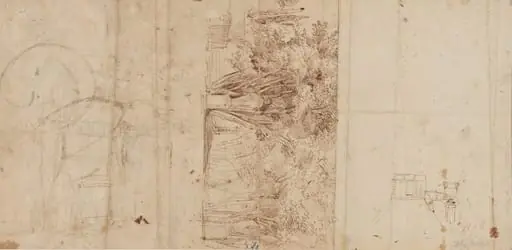 The Gardens of the Villa Medici
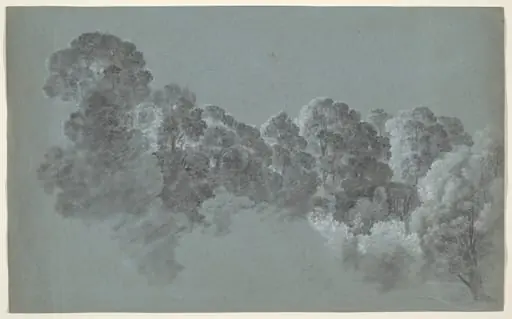 Forest Treetops Struck by Light
 Eton Wick
 Drawing in album of 51 drawings and watercolours by James Duffield Harding
 A Group of Trees in Heathland
![Treetops [verso], by Jean Antoine Watteau](https://artifactworldgallery.com/img/jean-antoine-watteau--treetops-verso--4421ba6693a6d660-w320.webp) Treetops [verso]
Treetops [verso] The Reader: The Lecture under the Trees