Artwork
Eton Wick
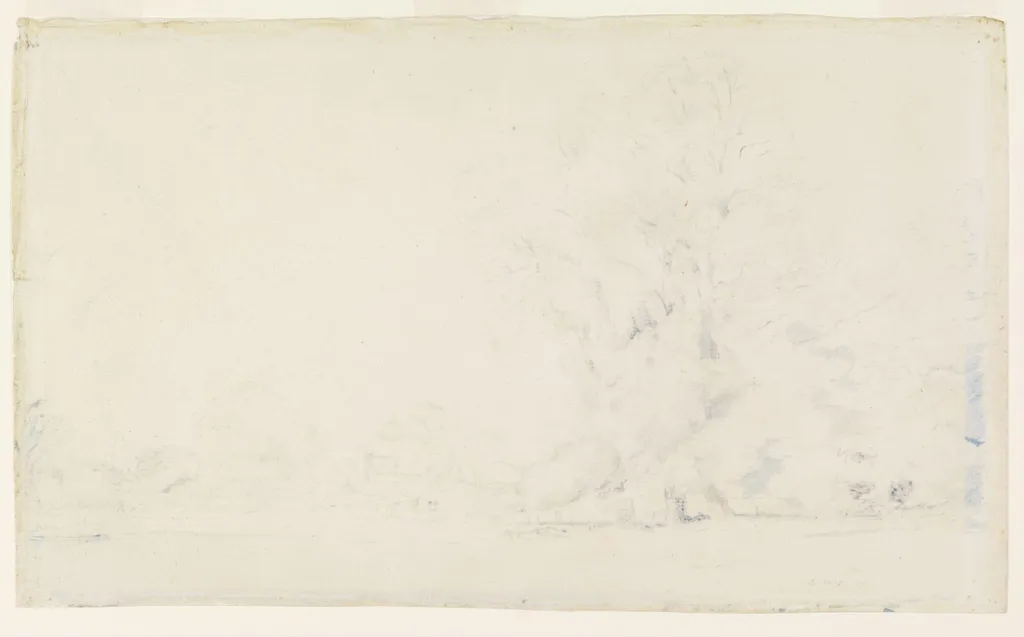
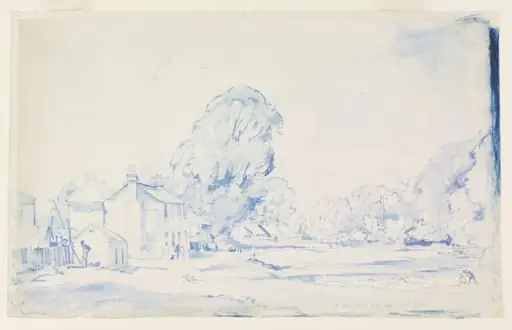
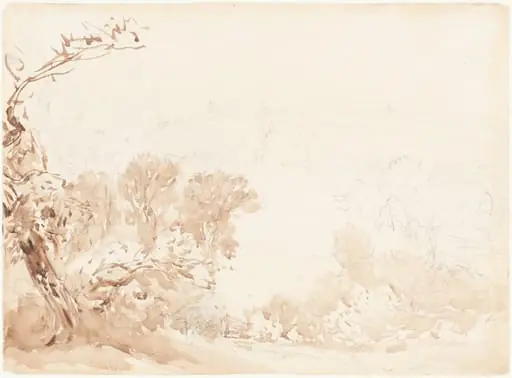
Eton Wick is a watercolor work on paper by Robins. It dates from 1941 and is held in the collection of the Victoria and Albert Museum.
About this work
Overview
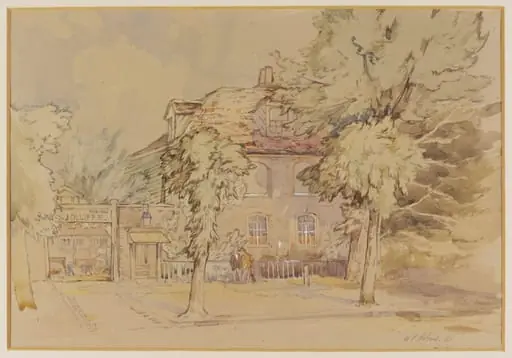
This watercolour, signed and dated 1941, depicts the village of Eton Wick in Berkshire.
This watercolour, signed and dated 1941, depicts the village of Eton Wick in Berkshire. Created as part of the Recording Britain initiative, it reflects a wartime effort to preserve visual records of rural England amid threats from conflict and modernization. The work was produced under the auspices of the Pilgrim Trust and the Ministry of Labour, with oversight by Sir Kenneth Clark, and contributes to a larger archive of topographical watercolours made by artists employed during the war.
Subject & Meaning
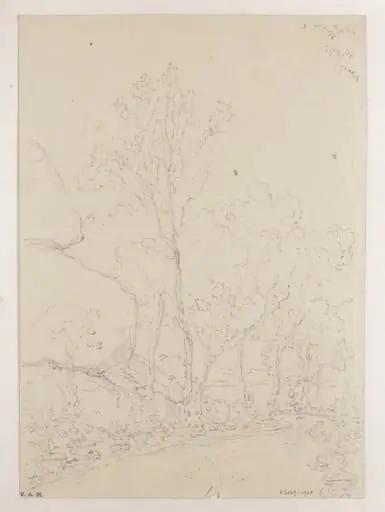
The scene centers on a prominent tree in the foreground, its limbs reaching upward against a backdrop of gentle hills and a muted sky. The composition emphasizes quiet endurance, framing the tree as both a natural landmark and a symbol of resilience. Eton Wick, a modest village near Eton College, is rendered without human figures, inviting contemplation of place rather than narrative. The absence of activity underscores a sense of stillness, aligning with the project’s aim to capture vanishing rural character.
Technique & Style
The artist employs loose, confident brushwork to suggest form and texture, using watercolour’s transparency to layer subtle hues of green, blue, and ochre. Light is suggested through washes rather than sharp contrasts, avoiding dramatic chiaroscuro in favor of atmospheric modulation. The sky and hills are rendered with soft gradients, while the tree’s foliage is built with deliberate, textured strokes that convey both volume and movement. The medium’s fluidity enhances the sense of natural spontaneity.
History & Provenance
The painting was produced during the Recording Britain project, launched in 1940 to support artists while documenting landscapes at risk. It entered the Victoria and Albert Museum’s collection as part of the project’s archive, which amassed over 1,500 works. The work’s survival and cataloging reflect its role in a deliberate cultural preservation effort, tied to national identity during wartime. Its provenance remains tied to institutional stewardship since its creation.
Context
Recording Britain emerged as a response to the Blitz and fears of cultural erosion, aiming to record vernacular architecture and countryside before they disappeared. Artists were commissioned to work across England, often in areas vulnerable to development or bombing. Eton Wick, though not a major site, represented the quiet, unassuming rural life the project sought to preserve. The initiative was both artistic and civic, blending documentation with social support for creatives during austerity.
Legacy
The Recording Britain collection remains a vital historical record of England’s mid-20th-century landscape. This watercolour, like others in the series, offers insight into how artists interpreted place during crisis. Its inclusion in the V&A’s permanent holdings ensures continued access for study and public engagement. The work contributes to broader conversations about heritage, memory, and the role of art in times of national upheaval.
Artist & collection
Artist
Robins filled thin sheets of paper with watercolour to show English villages, churchyards and ships at sea.