Artwork
Portrait of Jane Shattuck
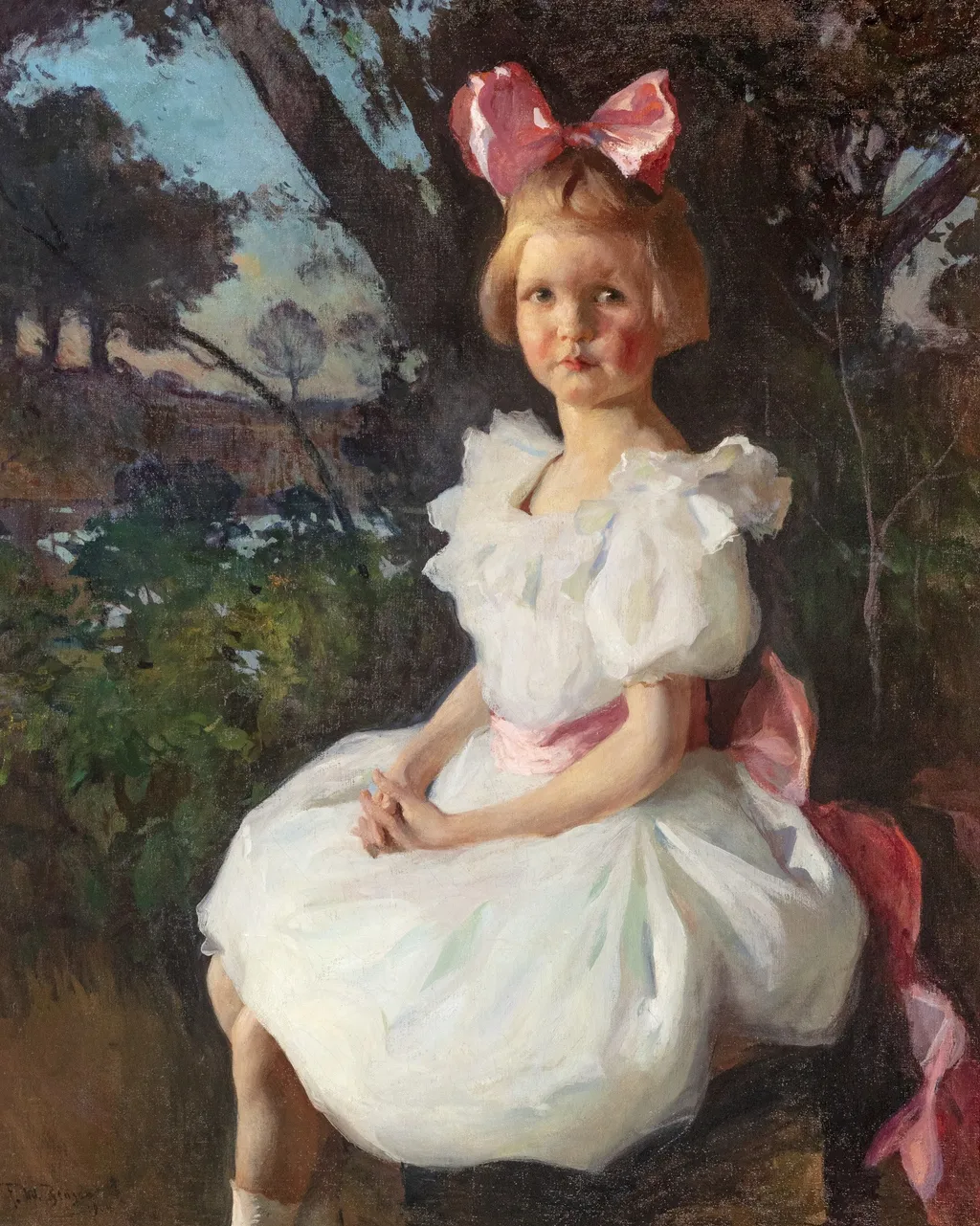
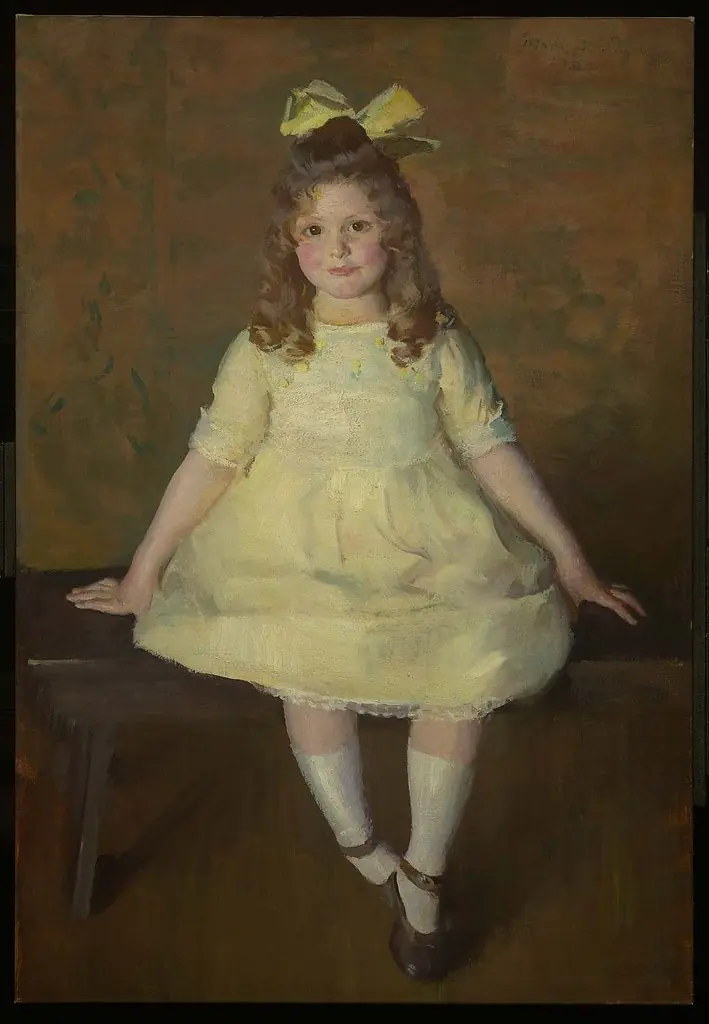
Portrait of Jane Shattuck is an oil painting by the American Impressionist artist Frank Weston Benson. It dates from 1904 and is held in the collection of the Peabody Essex Museum. Painted in 1904 by Frank W.
About this work
Overview
The work is part of the Peabody Essex Museum’s collection and reflects his broader interest in portraying individuals within intimate, sunlit environments.
Painted in 1904 by Frank W. Benson, this oil portrait captures Jane Shattuck, a young girl, seated outdoors in a quiet natural setting. Benson, known for his refined depictions of domestic and familial scenes, rendered the subject with careful attention to light and texture. The work is part of the Peabody Essex Museum’s collection and reflects his broader interest in portraying individuals within intimate, sunlit environments.
Subject & Meaning
Jane Shattuck is depicted in a simple white dress, her hands gently folded in her lap, conveying stillness and quiet composure. The large pink bow in her hair adds a subtle touch of youthfulness, while her direct yet unposed gaze suggests a sense of natural presence. The setting—dappled by trees and soft sky—enhances the impression of innocence and calm, aligning with early 20th-century ideals of childhood purity.
Technique & Style
Benson employed loose, fluid brushwork characteristic of American Impressionism, capturing the play of light across fabric and foliage without rigid definition. The background dissolves into soft greens and blues, while the girl’s form remains distinct through careful tonal modeling. He avoided harsh shadows, favoring diffused daylight to create a gentle, atmospheric harmony between figure and environment.
History & Provenance
The painting was completed during Benson’s active period as a portraitist and landscape painter, shortly after his frequent visits to his summer home in Maine. It entered the Peabody Essex Museum’s collection in the 20th century, where it has remained as part of its holdings of American Impressionist works. Its provenance traces directly to the artist’s studio, with no known intermediate owners before institutional acquisition.
Context
Benson’s work emerged alongside a broader American interest in capturing everyday life with luminous, painterly techniques. While European Impressionists often focused on urban scenes, American practitioners like Benson turned to domestic and rural settings. This portrait reflects a cultural emphasis on childhood as a subject worthy of artistic contemplation, particularly among New England’s artistic elite.
Legacy
Though not among Benson’s most widely reproduced works, this portrait exemplifies his consistent approach to portraiture: quiet, luminous, and grounded in observed reality. It contributes to the understanding of how American Impressionism adapted European methods to local subjects and environments, preserving a nuanced vision of private life in the early 1900s.
Own this work as a print
Artist & collection
Artist
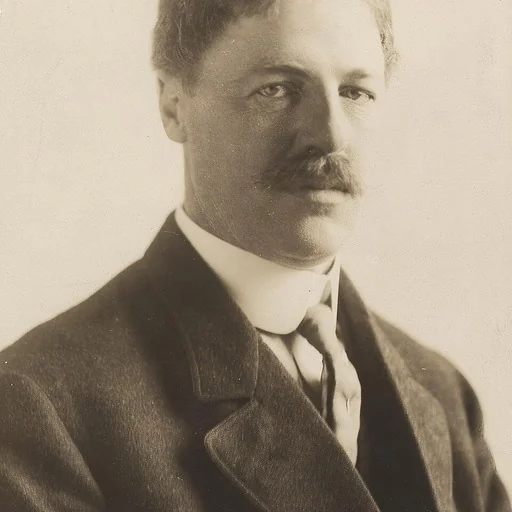
Frank Weston Benson, frequently referred to as Frank W. Benson, (March 24, 1862 – November 15, 1951) was an American artist from Salem, Massachusetts, known for his Realistic portraits, American Impressionist paintings,…

 Frances Lee Weeks
 Tytön pää, harjoitelma vapaaherra Viktor Magnus von Bornin perhemuotokuvaa varten
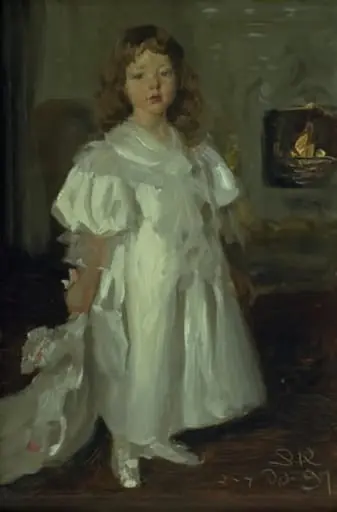 A Little Girl, Helga Melchior, in a Long Dress
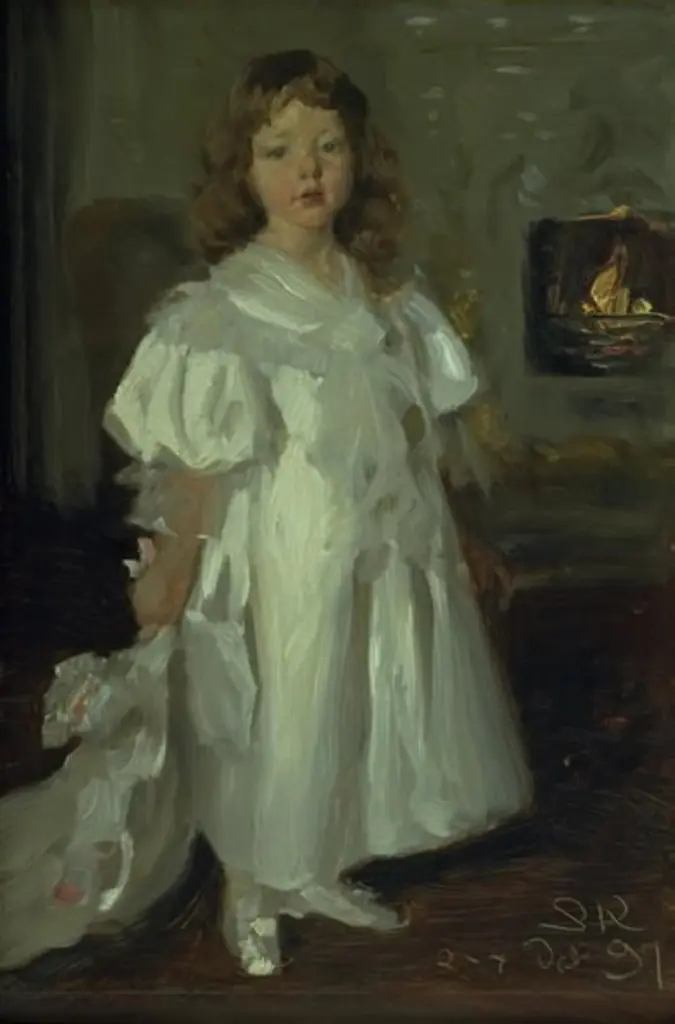 A Little Girl, Helga Melchior, in a Long Dress
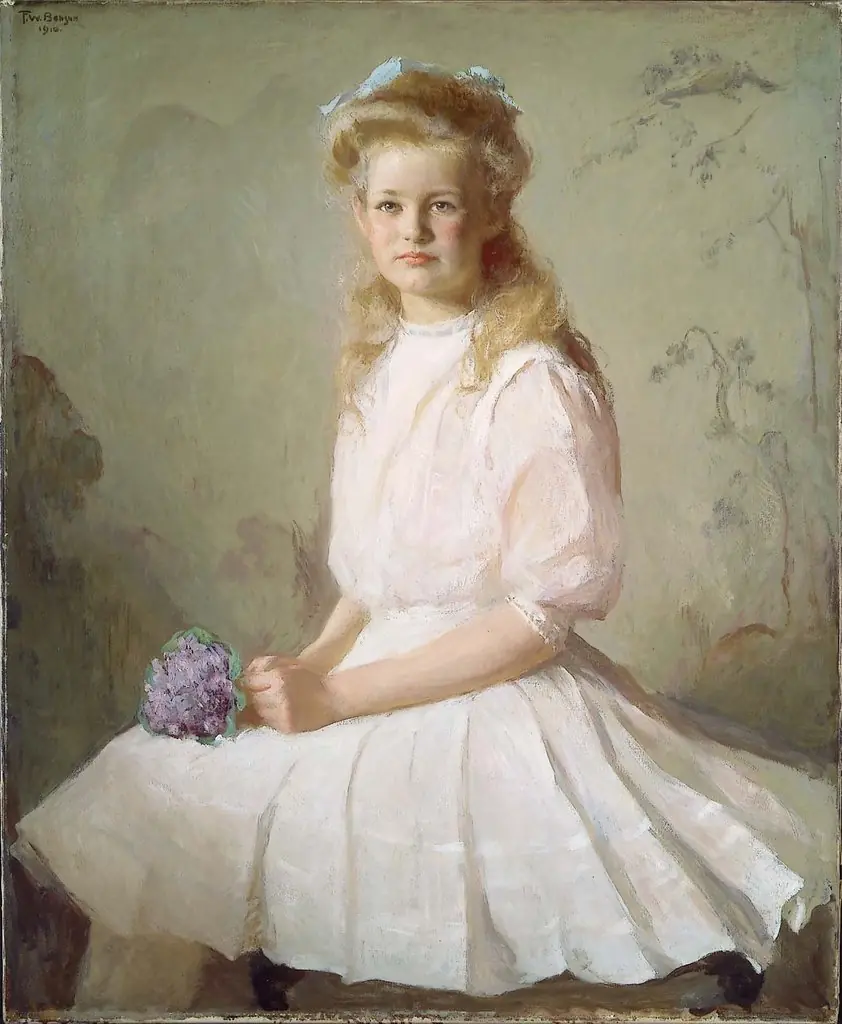 Katharine Gray Dodge
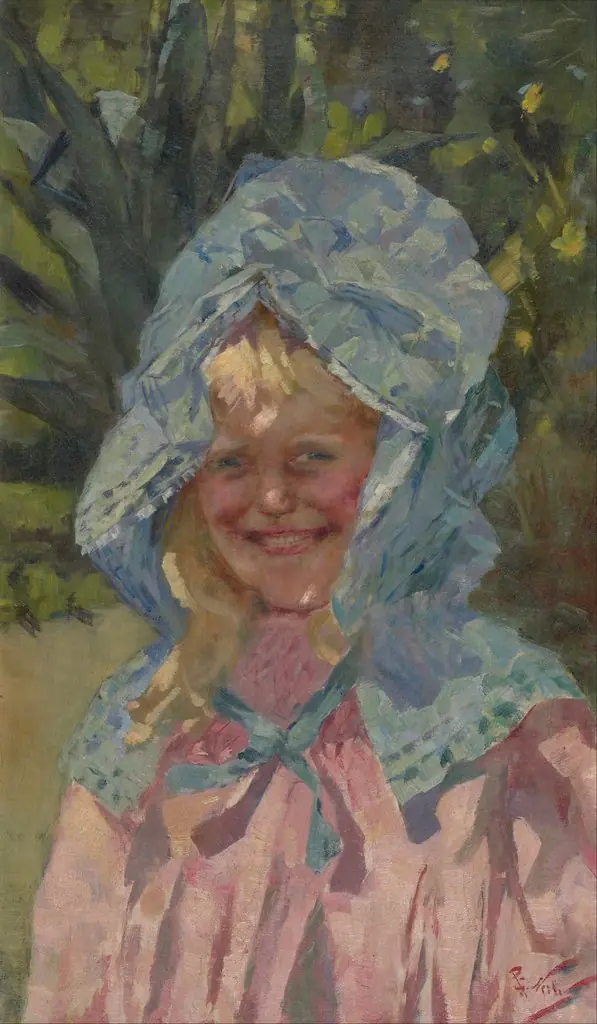 Girl in sunbonnet
 Seated Boy
 Normandialainen lapsi
 Portrait of a girl
 Delt va V- I- Repina koe iriba
 Little girl with doll
 Antti
Antti