Artwork
The Trailing Fog
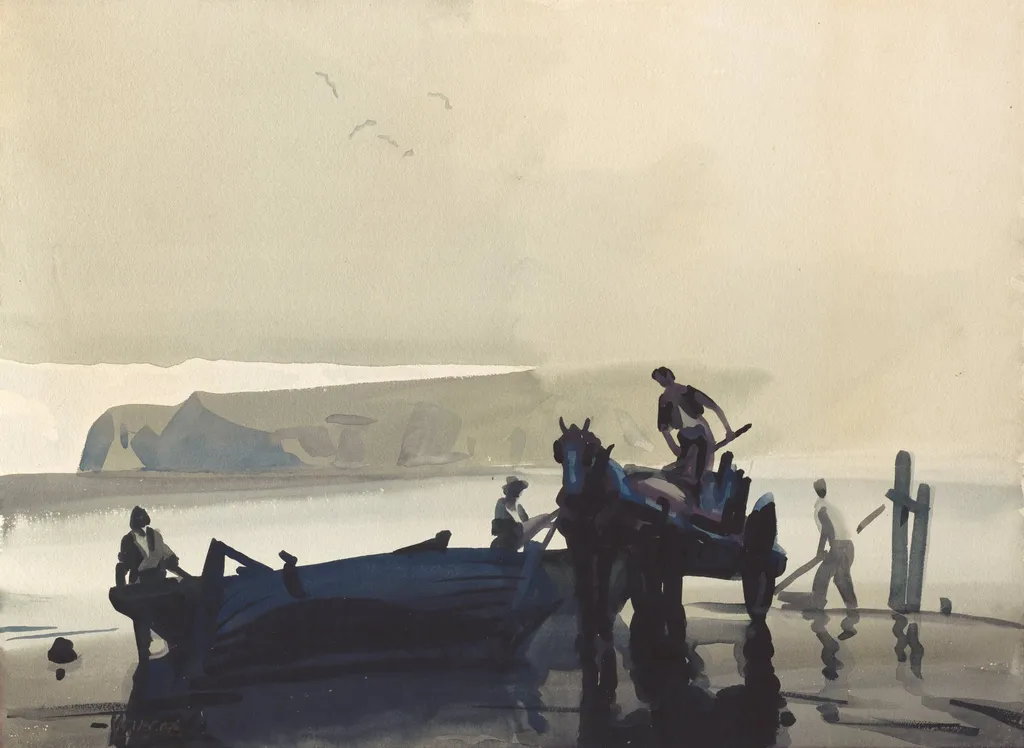
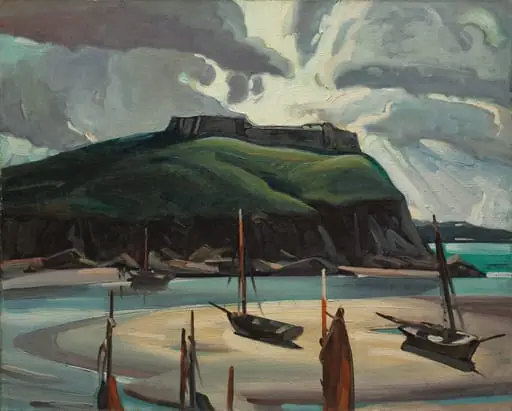
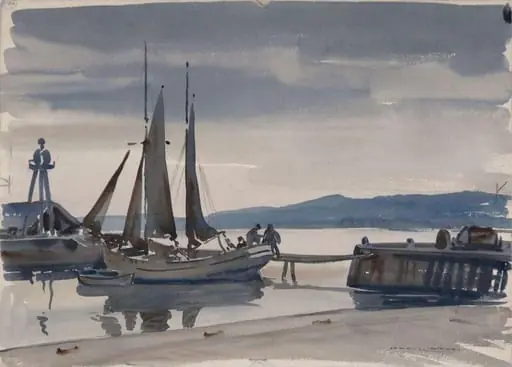
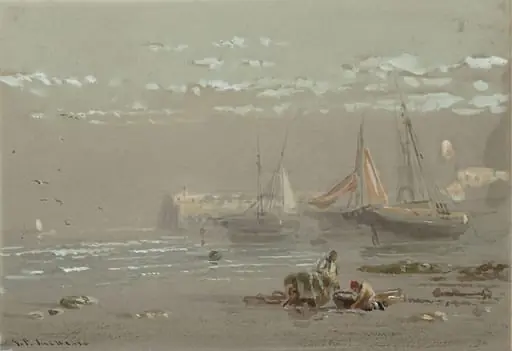
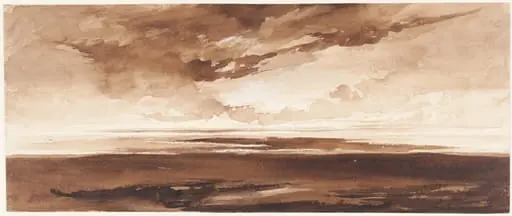
The Trailing Fog is a drawing by Frank Wilcox. It dates from 1920 and is held in the collection of the Cleveland Museum of Art.
About this work
Overview
The work is part of the permanent collection at The Cleveland Museum of Art, where it is recognized for its restrained tonal range and atmospheric sensitivity.
Created around 1920 by Frank Wilcox, The Trailing Fog is a graphite and ink drawing depicting a quiet coastal scene at twilight. The work is part of the permanent collection at The Cleveland Museum of Art, where it is recognized for its restrained tonal range and atmospheric sensitivity. Unlike oil paintings of the period, this piece relies on subtle gradations of graphite to evoke mood rather than color.
Subject & Meaning
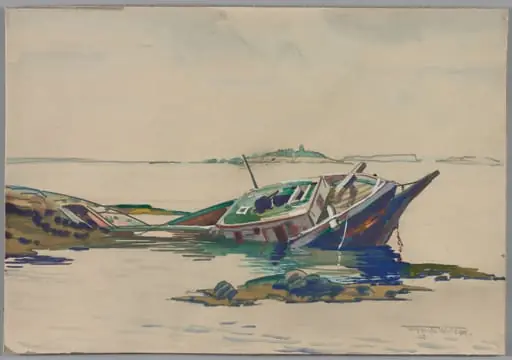
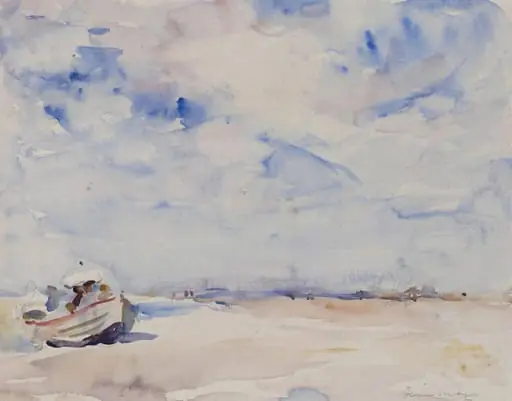
The scene captures a solitary beach at dusk, where a darkened boat rests half-submerged near the shore. Two figures attend to it—one gripping a rope, the other resting against the hull—while a horse and rider stand nearby, still and watchful. The fog obscures distant hills, dissolving boundaries between land, sea, and sky. The composition suggests a moment of pause, evoking solitude and the quiet transition between day and night.
Technique & Style
Wilcox employed fine graphite lines and soft washes to build layers of tone, allowing the paper’s natural brightness to suggest the fog’s luminosity. Dark, simplified forms—boat, figures, horse—contrast against the pale, misty background. There is no sharp detail; edges blur intentionally, reinforcing the sense of atmospheric diffusion. The technique prioritizes mood over narrative, aligning with early 20th-century American tonalism.
History & Provenance
The drawing entered The Cleveland Museum of Art’s collection in the mid-20th century, likely acquired through a donation or bequest tied to regional collectors interested in American graphic art. Its provenance before that is not fully documented, but Wilcox’s known activity in the Great Lakes region suggests it was made during a period of personal exploration along northern shorelines.
Context
Created in the early 1920s, the work reflects a broader interest among American artists in quiet, introspective landscapes, influenced by Tonalist painters like George Inness and James McNeill Whistler. While urban scenes dominated much of the era’s art, Wilcox focused on remote coastal moments, aligning with a regionalist impulse to capture the subtle poetry of everyday natural environments.
Legacy
The Trailing Fog remains a representative example of Wilcox’s skill in translating atmospheric effects into monochromatic drawing. Though not widely exhibited, it is studied for its economy of means and emotional restraint. It contributes to the understanding of lesser-known American draftsmen who prioritized mood and silence over dramatic spectacle in early 20th-century art.
Artist & collection