Artwork
The Omnibus
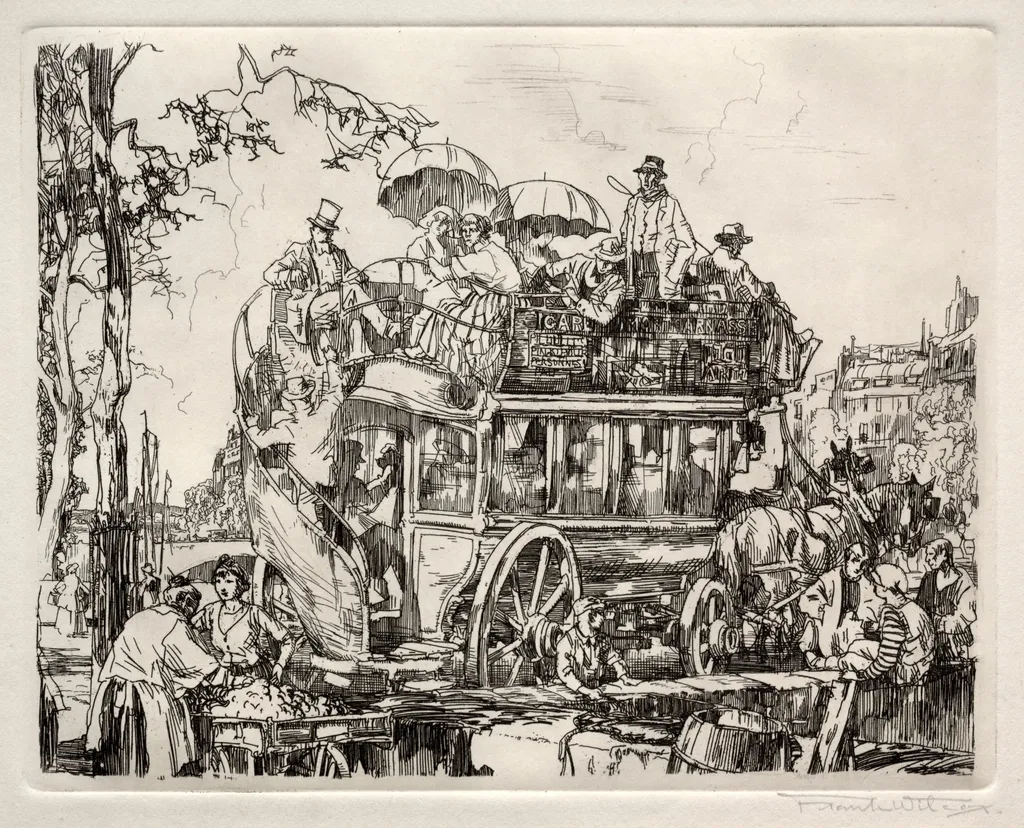
The Omnibus is a print by Frank Wilcox. It dates from 1935 and is held in the collection of the Cleveland Museum of Art.
About this work
Overview
Created around 1935 by Frank Wilcox, this ink sketch captures a horse-drawn omnibus in motion, a common urban transport of the early 20th century.
Created around 1935 by Frank Wilcox, this ink sketch captures a horse-drawn omnibus in motion, a common urban transport of the early 20th century. Executed in loose, energetic lines, the work reflects Wilcox’s interest in transient moments of city life. The piece resides in the collection of The Cleveland Museum of Art, where it is valued for its candid portrayal of public transit rather than its finish or detail.
Subject & Meaning
The scene depicts a crowded omnibus, with passengers seated inside, clinging to the sides, or standing on the curb. The mix of figures—some with umbrellas, others gazing outward—suggests a microcosm of urban society. Wilcox avoids idealization, instead emphasizing the shared, often chaotic experience of public transit, revealing how ordinary spaces became sites of fleeting human connection.
Technique & Style
Wilcox employed swift, gestural ink lines to convey motion and volume without refinement. The sketch’s spontaneity suggests it was made on-site, possibly from observation or memory. Background elements like trees and buildings are suggested rather than detailed, allowing the focus to remain on the dynamic interplay of bodies and vehicles, reinforcing the immediacy of the moment.
History & Provenance
The work entered The Cleveland Museum of Art’s collection as part of a broader effort to document American urban life in the early 20th century. While little is documented about its early ownership, its preservation reflects institutional interest in sketches as records of everyday experience, distinct from finished paintings or commercial illustrations of the period.
Context
In the 1930s, horse-drawn omnibuses were being replaced by motorized vehicles, making them symbols of a vanishing urban order. Wilcox’s sketch aligns with a broader artistic trend of capturing transitional moments in American cities, where artists turned to street scenes to document social change and the rhythm of ordinary life.
Legacy
Though not widely exhibited, the sketch endures as an example of observational drawing that prioritizes authenticity over polish. It contributes to a quiet but significant body of work by American artists who found artistic value in the unremarkable, preserving the texture of daily transit before it vanished from the streets.
Artist & collection

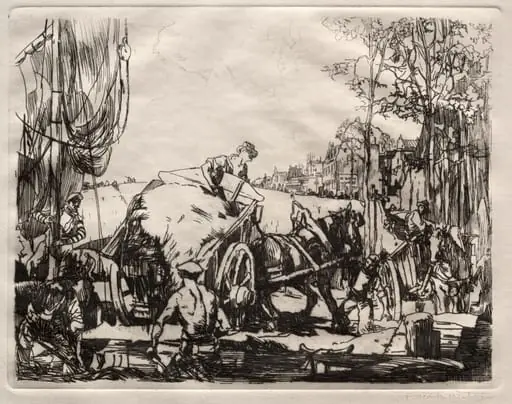 Port at Low Tide
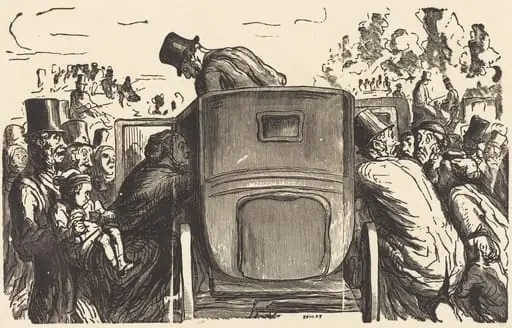 Exposition universelle: L'Etranger trouve toutes les facilites desirables...
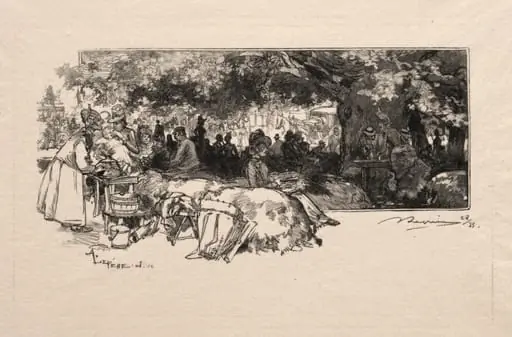 Cantine de la Mère Pichard
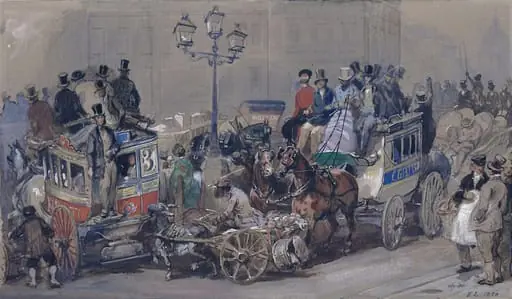 Ludgate Circus, London
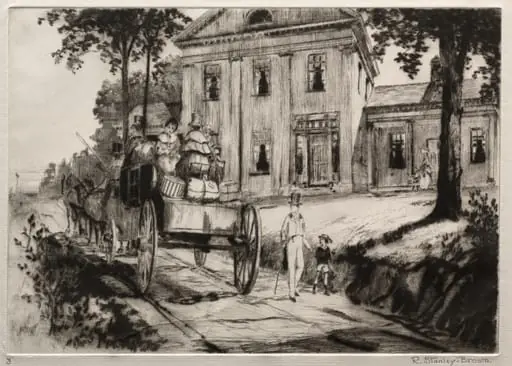 The Thirties
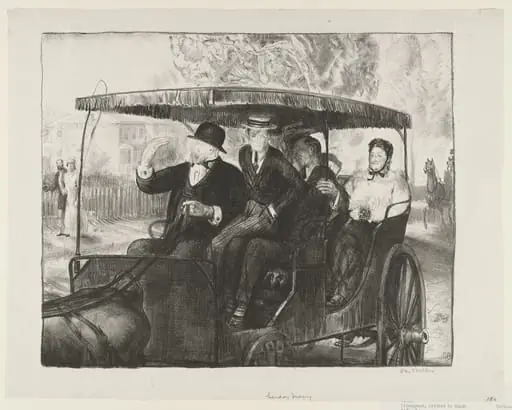 Untitled
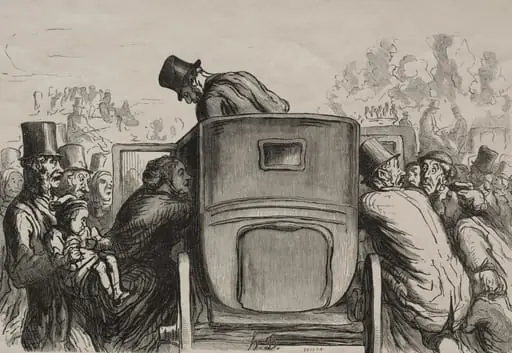 At the Universal Exhibition: The visitor will find all means of transportation desirable to return to his hotel.
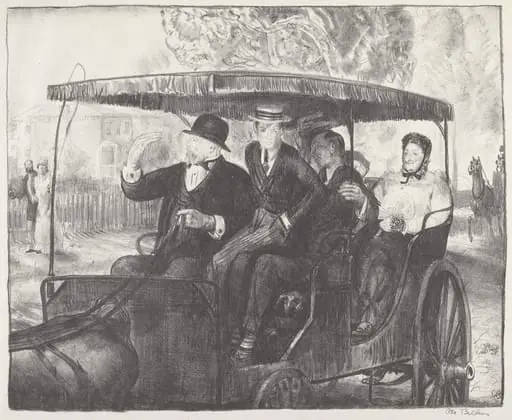 Sunday 1897
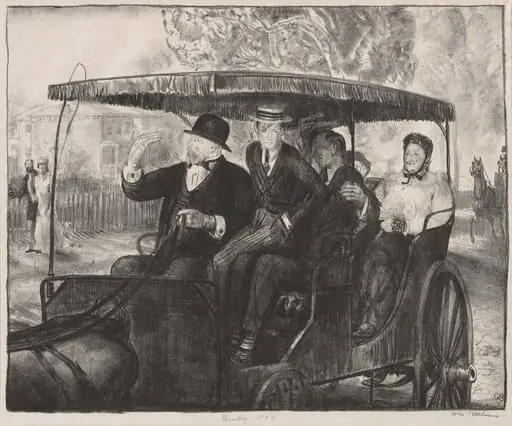 Sunday 1897
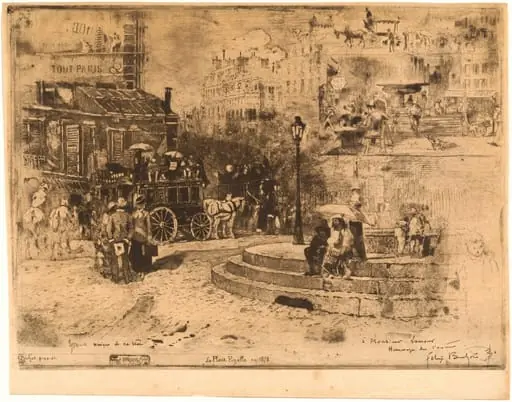 La Place Pigalle en 1878 (Place Pigalle in 1878)
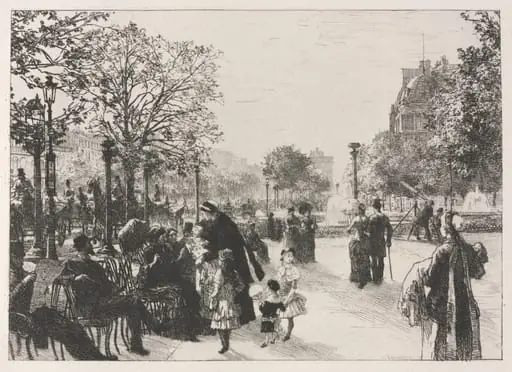 Tuileries Gardens
 Debarcadère des bateaux-omnibus