Artwork
Mountain Top
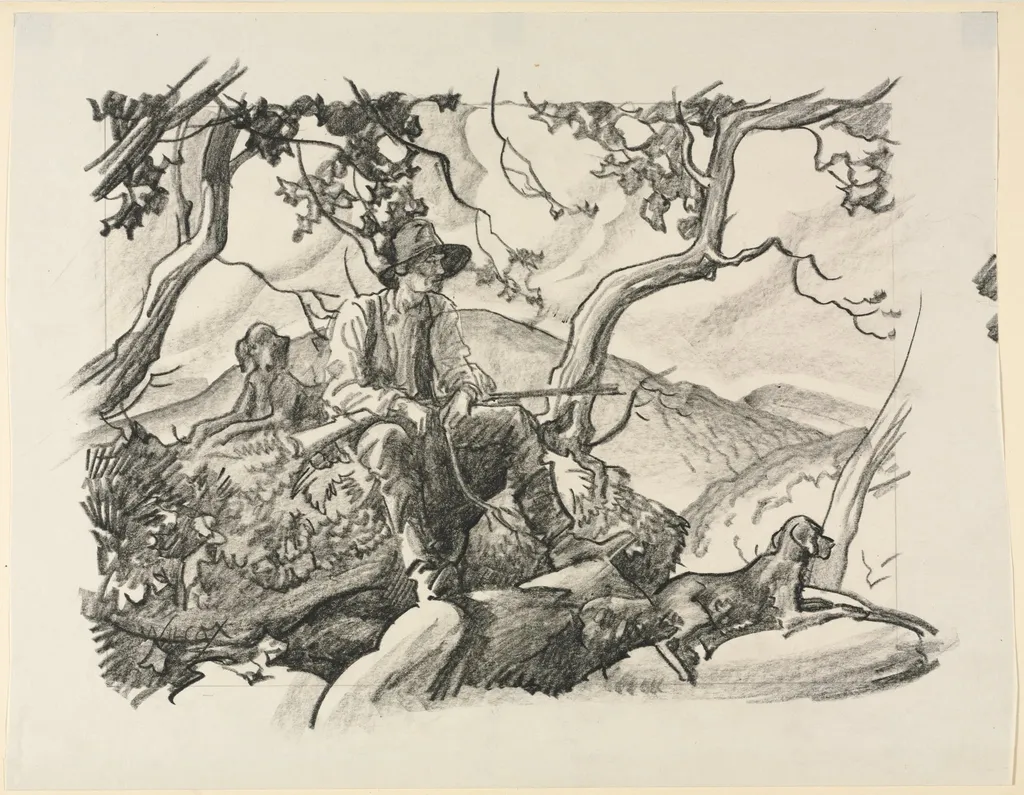
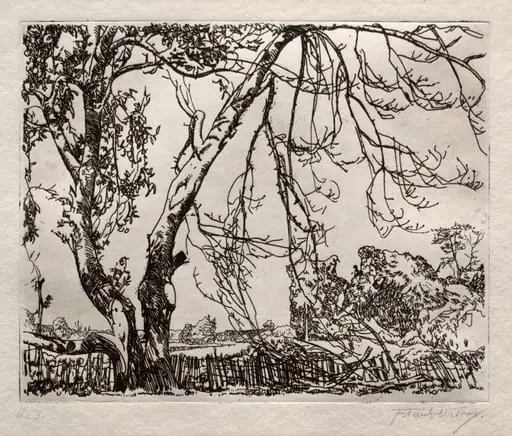
Mountain Top is a drawing by Frank Wilcox. It dates from 1928 and is held in the collection of the Cleveland Museum of Art.
About this work
A closer look reveals the intricate details of the tree branches and the texture of the rocks, adding depth to the composition.
The painting "Mountain Top" by Frank Wilcox, created around 1928, presents a serene mountain landscape. A man sits on a rocky outcrop, accompanied by a dog, surrounded by trees and a distant mountain range. The scene is rendered in a muted color palette, with the man and dog standing out against the natural backdrop.
A closer look reveals the intricate details of the tree branches and the texture of the rocks, adding depth to the composition. The artist's use of light and shadow creates a sense of atmosphere, drawing the viewer into the tranquil scene.
For more works by Frank Wilcox, explore the collection at The Cleveland Museum of Art.
Overview
Mountain Top is a graphite and ink drawing by Frank Wilcox, dated approximately 1928. It depicts a solitary figure seated on a rocky ledge with a dog at his side, set against a quiet mountain landscape. The work is part of the permanent collection at The Cleveland Museum of Art, where it is recognized for its restrained tonality and careful attention to natural detail. Unlike oil paintings of the period, this piece relies on linear precision and subtle shading to convey its mood.
Subject & Meaning
The figure, likely a traveler or observer, sits still amid an expansive, undeveloped terrain, suggesting contemplation or rest. The presence of the dog implies companionship but not urgency, reinforcing a sense of solitude and quiet engagement with nature. No narrative is overtly stated; instead, the scene invites reflection on human presence within vast, unaltered landscapes, a theme common in early 20th-century American landscape drawing.
Technique & Style
Wilcox employed fine graphite lines and light ink washes to build texture in the rocks, foliage, and distant peaks. The muted gray and brown tones unify the composition, while selective contrast draws attention to the figures. Branches and rock surfaces are rendered with deliberate, measured strokes, emphasizing tactile quality over dramatic effect. The absence of bold color or expressive brushwork aligns the work with the precisionist tendencies of American draftsmanship in the 1920s.
History & Provenance
Created during Wilcox’s early career, Mountain Top reflects his interest in regional landscapes and observational drawing. The work entered The Cleveland Museum of Art’s collection in the mid-20th century, likely through a direct acquisition or donation tied to the artist’s regional connections. It has remained in the museum’s holdings since, consistently cataloged as a representative example of Wilcox’s graphic work from the period.
Context
In the late 1920s, American artists increasingly turned to intimate, unidealized landscapes as a counterpoint to urban modernism. Wilcox, based in Ohio, was part of a regional circle that valued direct observation over romanticized scenery. Mountain Top aligns with this trend, echoing the quiet realism of contemporaries like John Steuart Curry and regionalist printmakers who sought dignity in ordinary natural settings.
Legacy
Though not widely exhibited outside institutional collections, Mountain Top remains a quiet example of Wilcox’s contribution to American draftsmanship. Its preservation in The Cleveland Museum of Art underscores its role as a representative work of regionalist drawing from the interwar period. The piece continues to inform studies of early 20th-century American landscape art, valued for its restraint and technical clarity.
Artist & collection

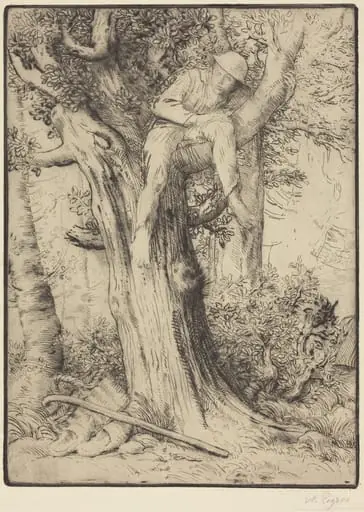 Landscape with a Boy in a Tree (Paysage avec un garcon grimpe sur un arbre, dite "Le denicheur d'oiseaux")
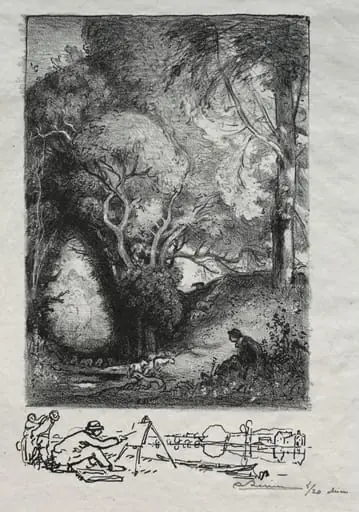 La Ravine en juin
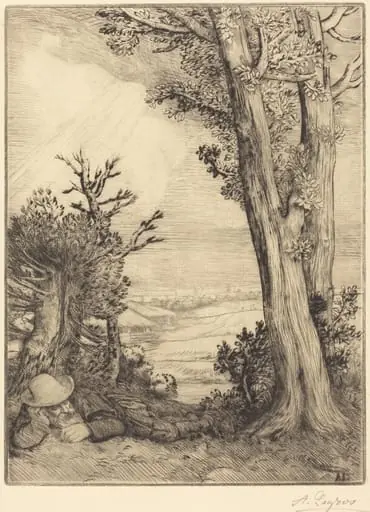 Siesta in the Country (Sieste dans la campagne)
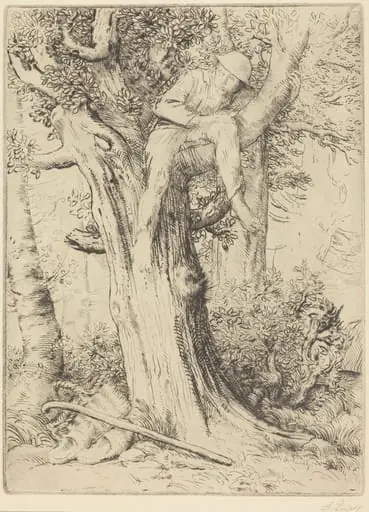 Landscape with a Boy in a Tree (Paysage avec un garcon gimpe sur un arbre dite "Le denicher d'oiseaux)
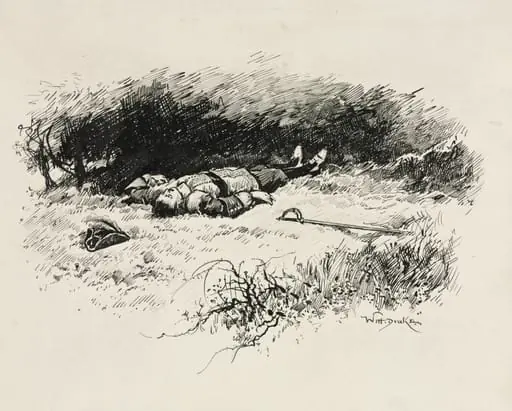 Tail Piece for Chapter XXI from "Lorna Doone"
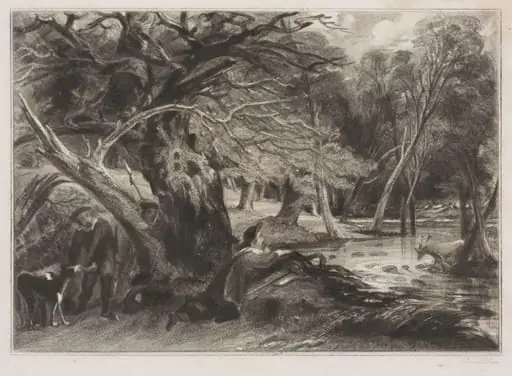 Jaques and the Wounded Stag
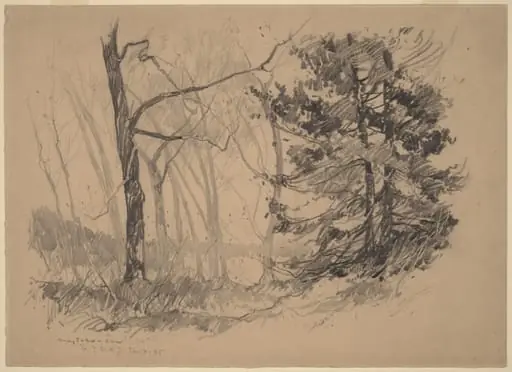 Wood Interior
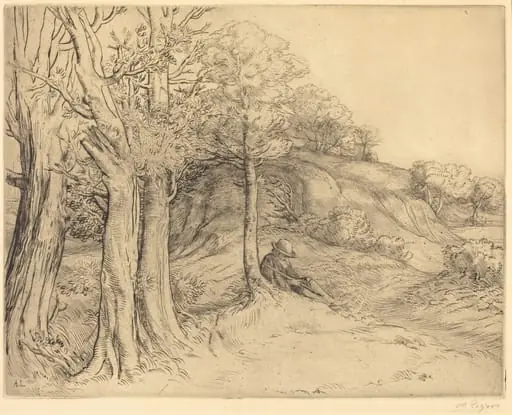 Solitude (Solitude (Paysage))
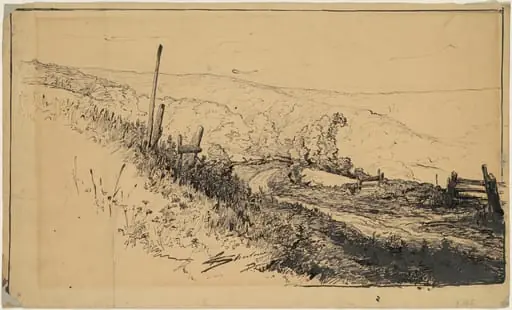 A Road in the Hills Near Dordrecht
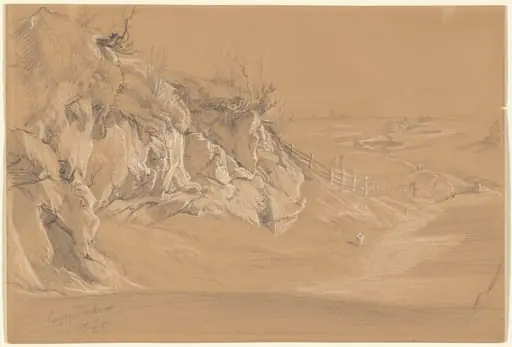 Campagna di Roma (Roman Countryside) (recto)
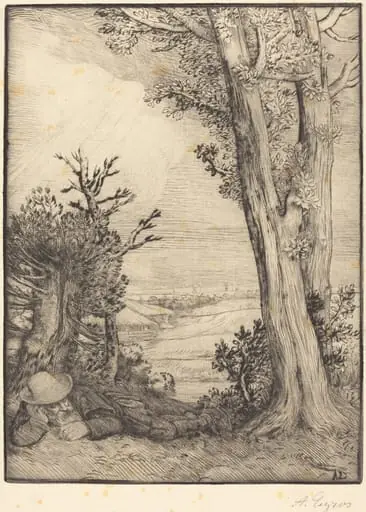 Siesta in the Country (Sieste dans la capagne)
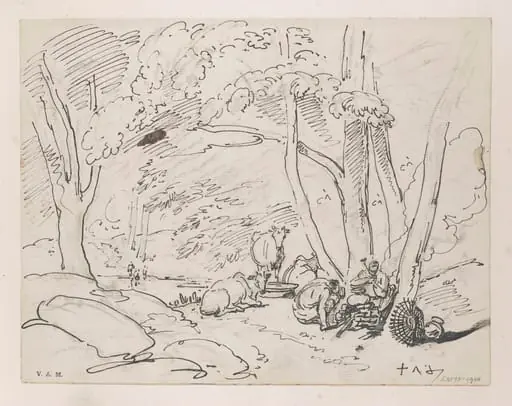 A wooded landscape with Indian figures and cattle