Artwork
Bacchanal
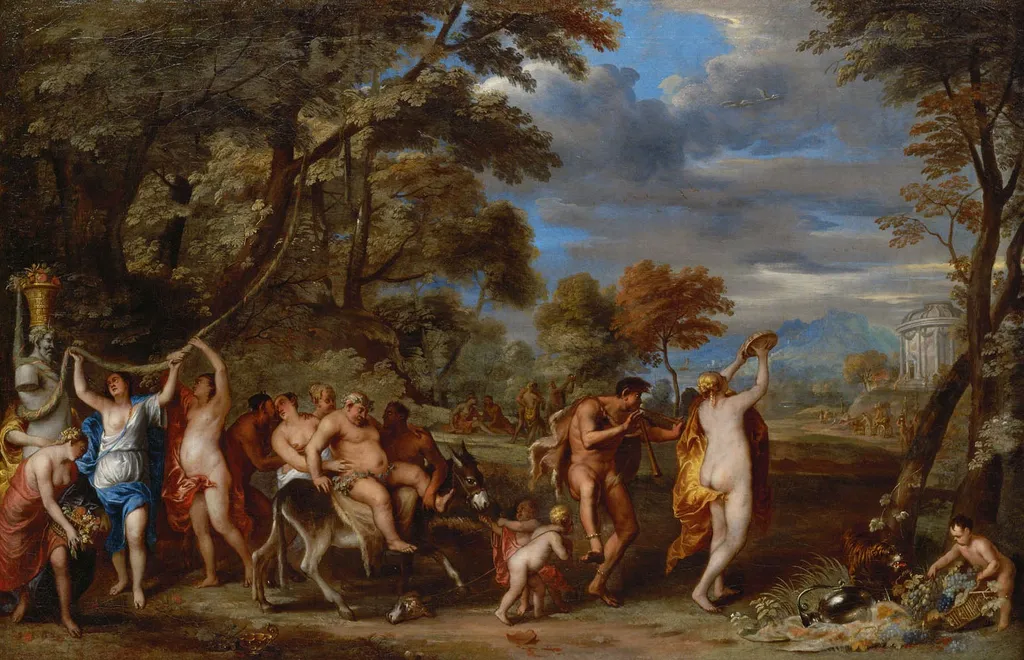
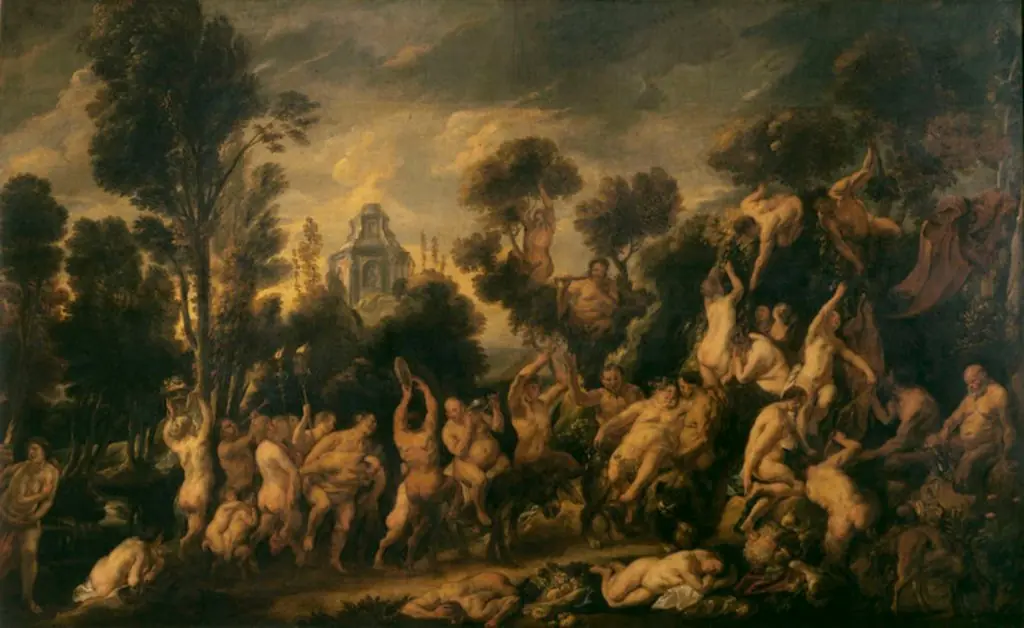
Bacchanal is an oil painting by the Flemish Baroque painting artist Frans Wouters. It dates from 1648 and is held in the collection of the Kunsthistorisches Museum.
About this work
Overview
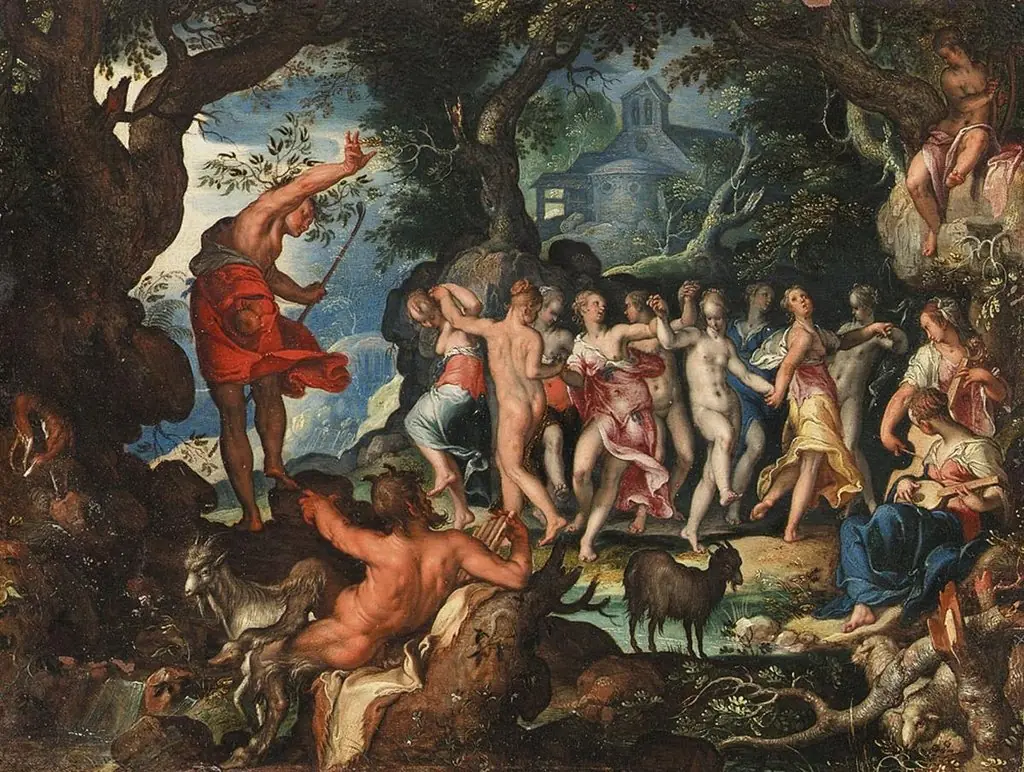
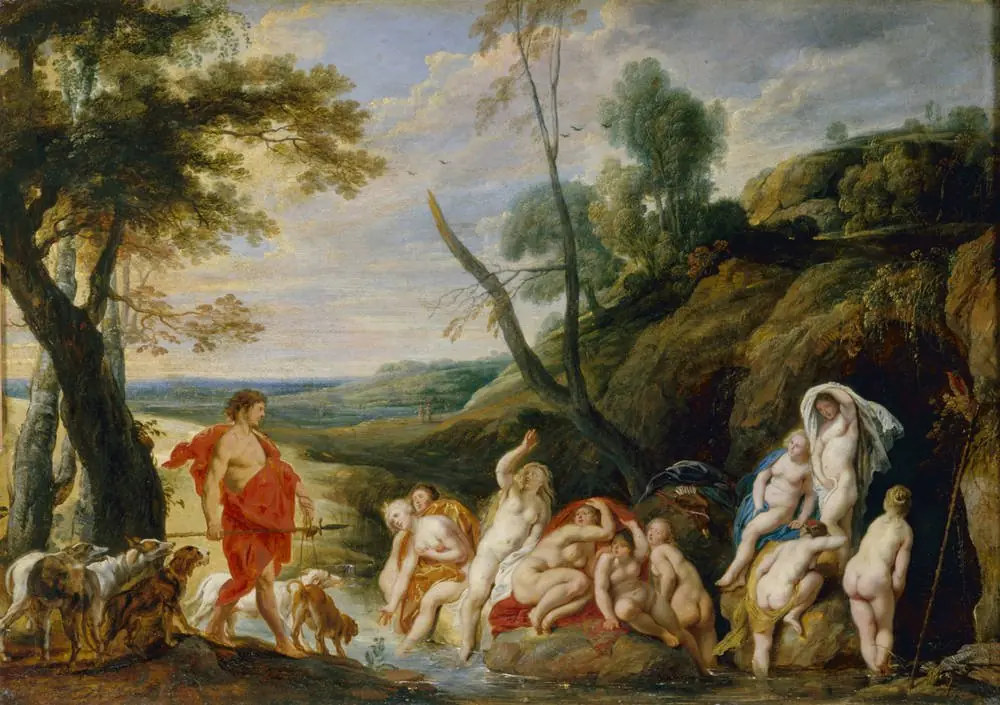
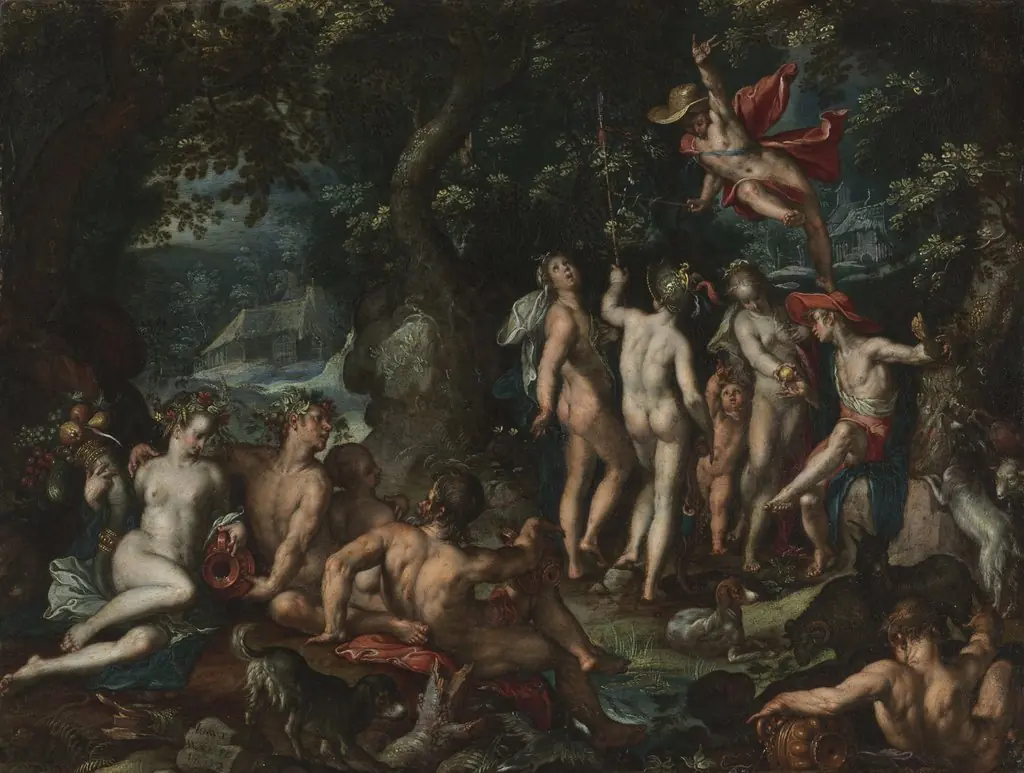
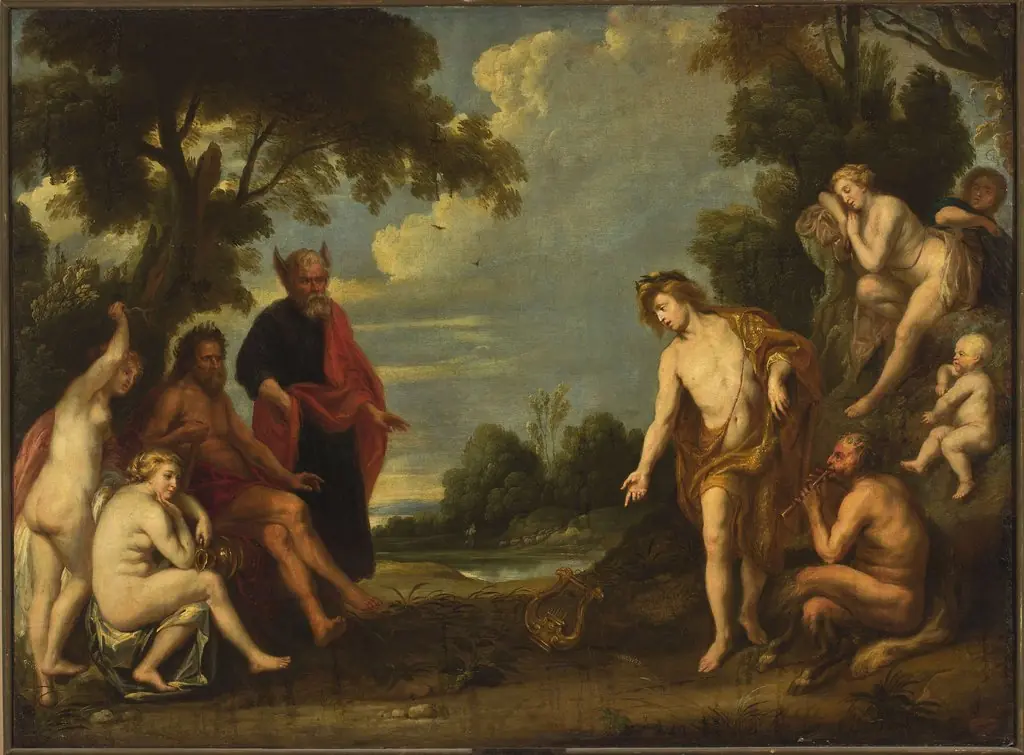
Frans Wouters’ *Bacchanal* (1648) is an oil painting that depicts a festive outdoor gathering of nude figures and animals. The composition teems with dancers, musicians, and riders amid a landscape of trees, distant hills and a cloud‑filled sky. The scene conveys a sense of motion and communal revelry, rendered in a restrained, earthy color scheme.
Subject & Meaning
The work illustrates a mythological bacchanal, a celebration associated with the Roman god of wine, Bacchus. By portraying unguarded bodies, music, and animal companions, Wouters evokes themes of abundance, freedom, and the primal joy of nature’s cycles, inviting viewers to contemplate the balance between civilization and instinct.
Technique & Style
Executed in oil on canvas, the painting reflects the Flemish Baroque tradition, employing vigorous brushwork and a dynamic arrangement of figures that guide the eye across the scene. Wouters adapts the grand gestures typical of Rubens to a more intimate scale, using muted earth tones to unify the composition while preserving depth through chiaroscuro.
History & Provenance
Created in 1648, *Bacchanal* entered the collection of the Kunsthistorisches Museum in Vienna, where it remains on display. Wouters, who served as a court painter to the Roman Emperor and the Prince of Wales, also acted as an ambassador and art dealer, facilitating the movement of works across European courts.
Context
The painting belongs to the broader Flemish Baroque movement of the early seventeenth century, a period marked by dramatic narratives and rich visual storytelling. Wouters’ adaptation of Rubens’ monumental style to smaller, more personal works reflects the era’s demand for both grand public commissions and private decorative pieces.
Artist & collection
Artist
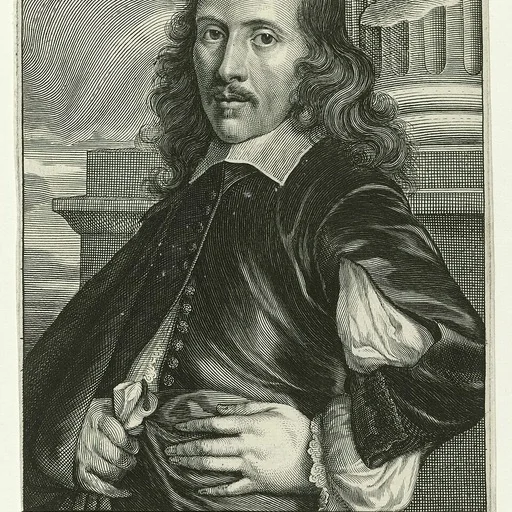
Frans Wouters (1612–1659) was a Flemish Baroque painter who translated the monumental Baroque style of Peter Paul Rubens into the small context of cabinet paintings.

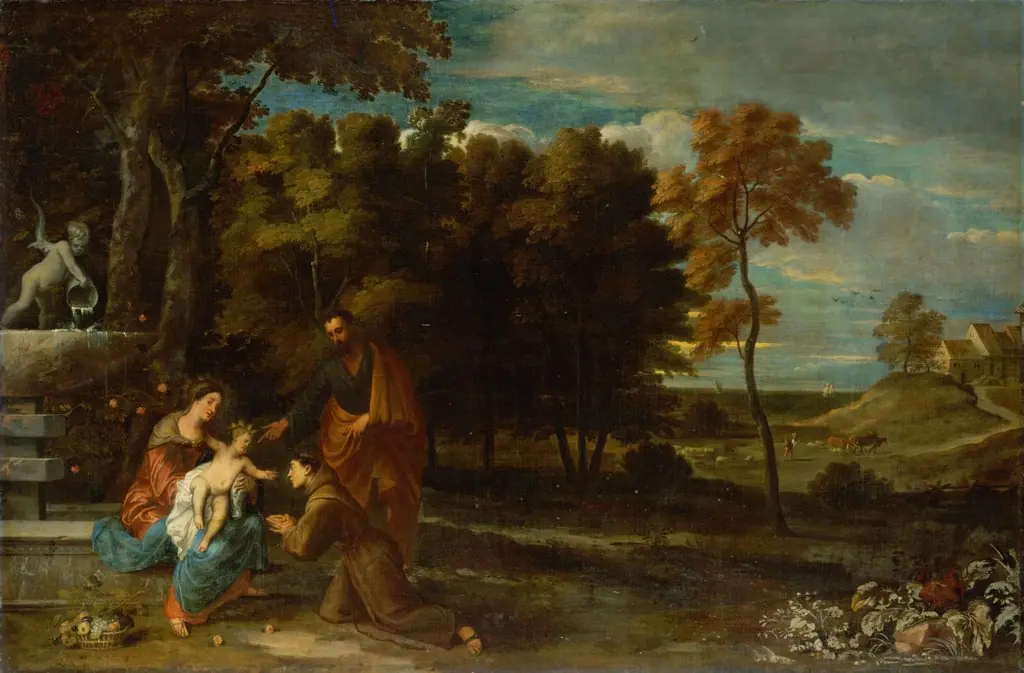 Landscape with the Holy Family and St. Anthony of Padua
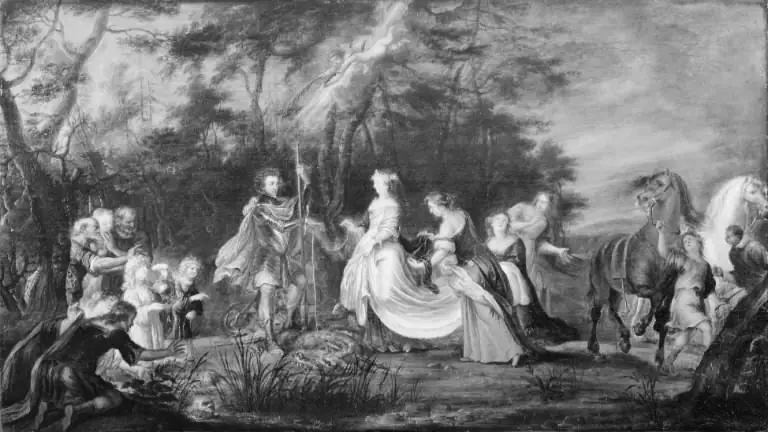 Skt. Jørgen befrier prinsessen fra dragen. Allegori
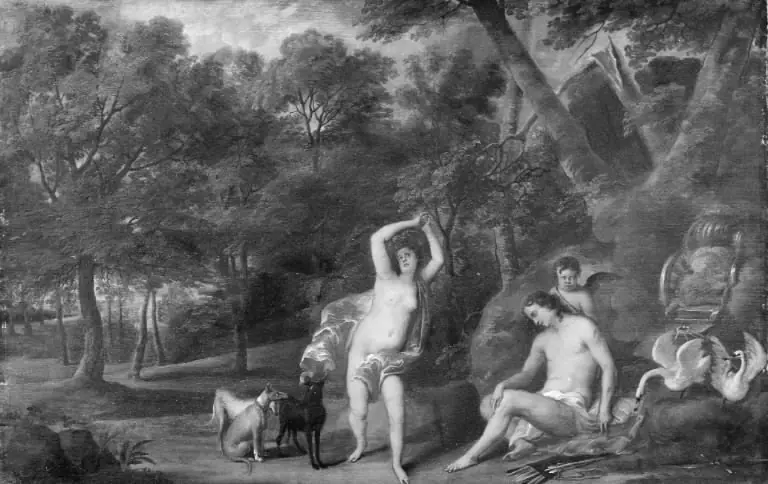 Venus Bewailing the Slain Adonis
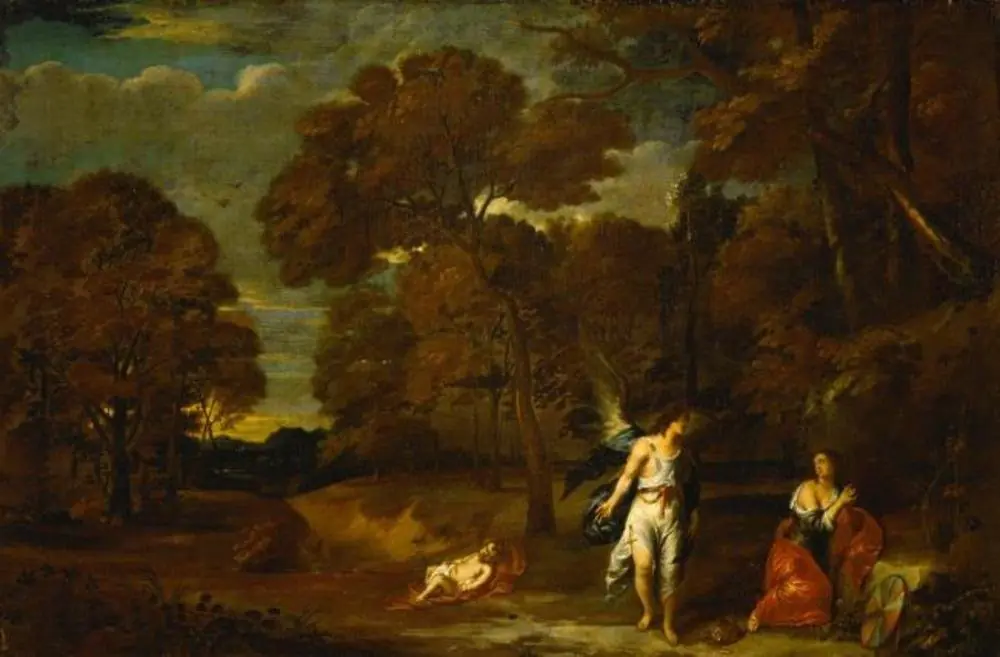 Landscape with Hagar and the angel
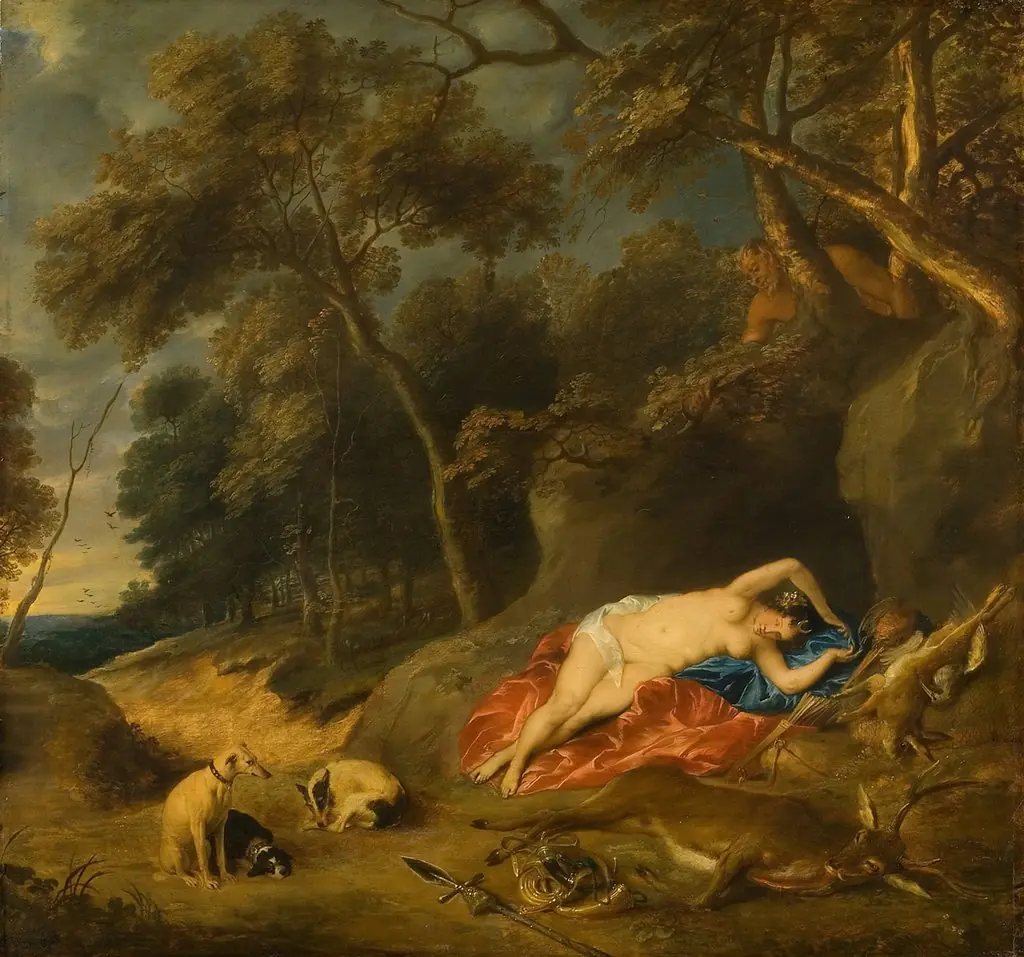 Landscape with Diana Resting
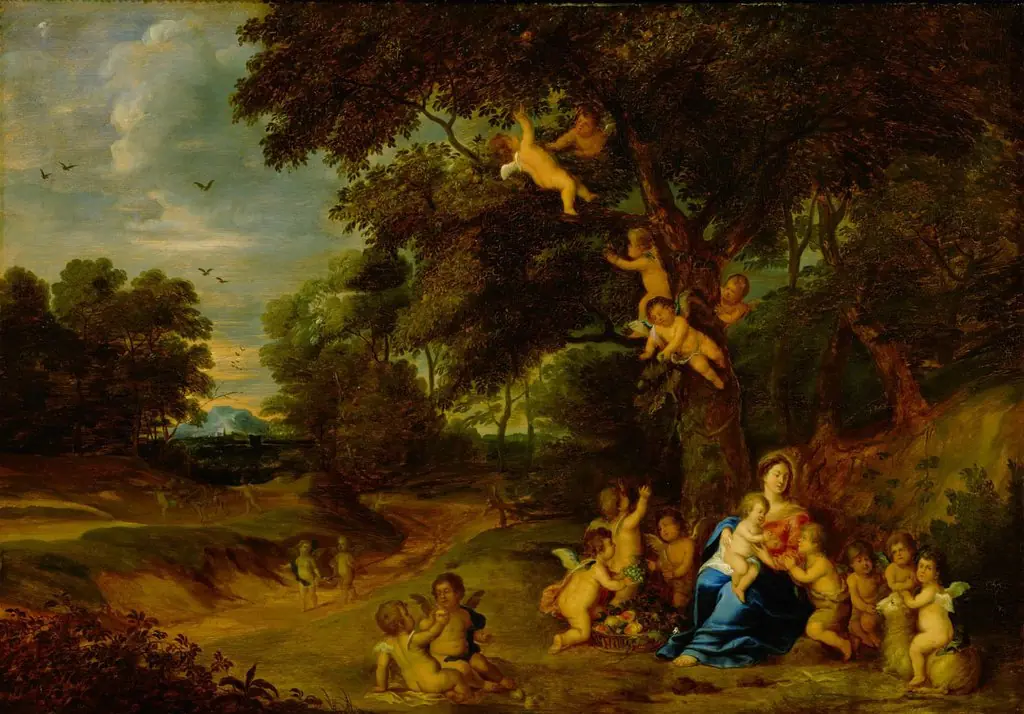 Madonna and Child, St John the Baptist as a Boy and Angels in a Woodland Landscape
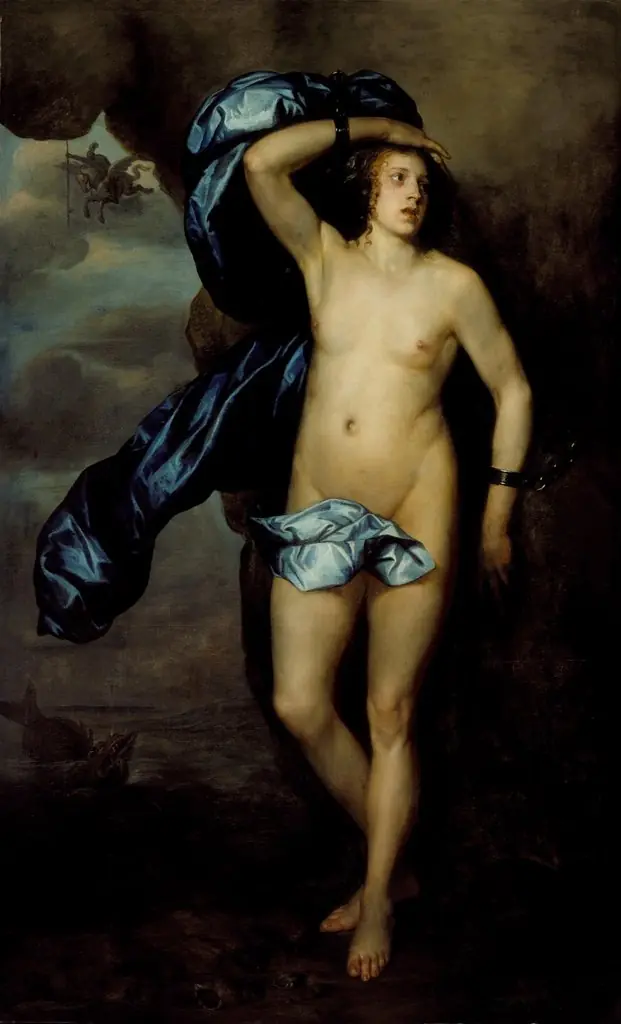 Andromeda Chained to the Rock
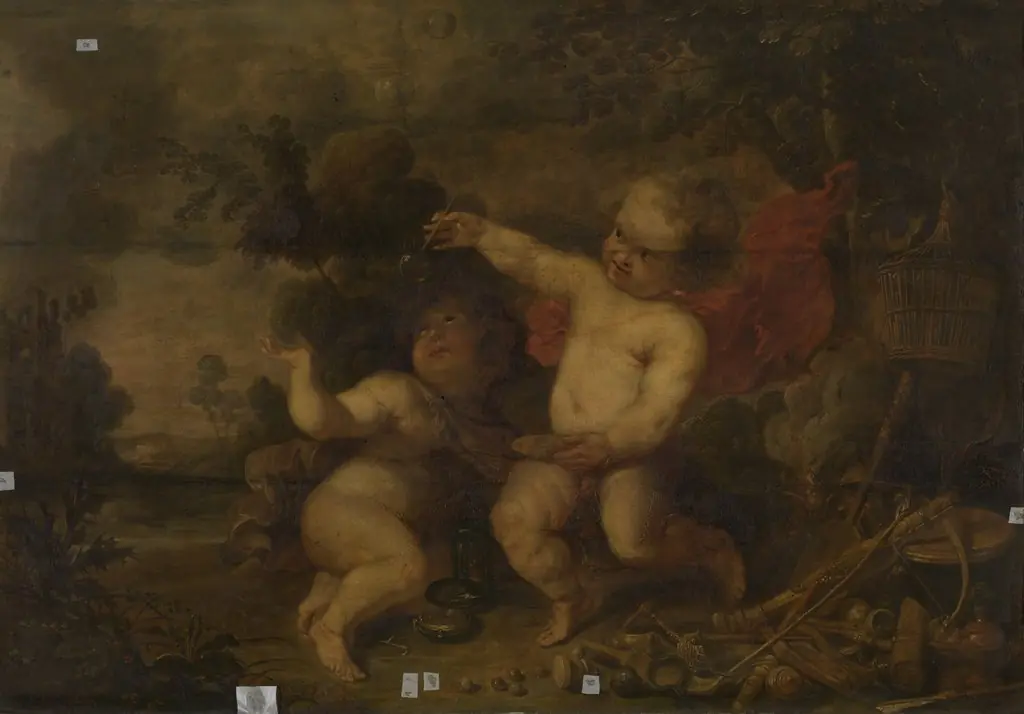 Vanitas