Artwork
Kopals letzte Nacht mit Oberst Schlechta in einer italienischen Bauernhütte
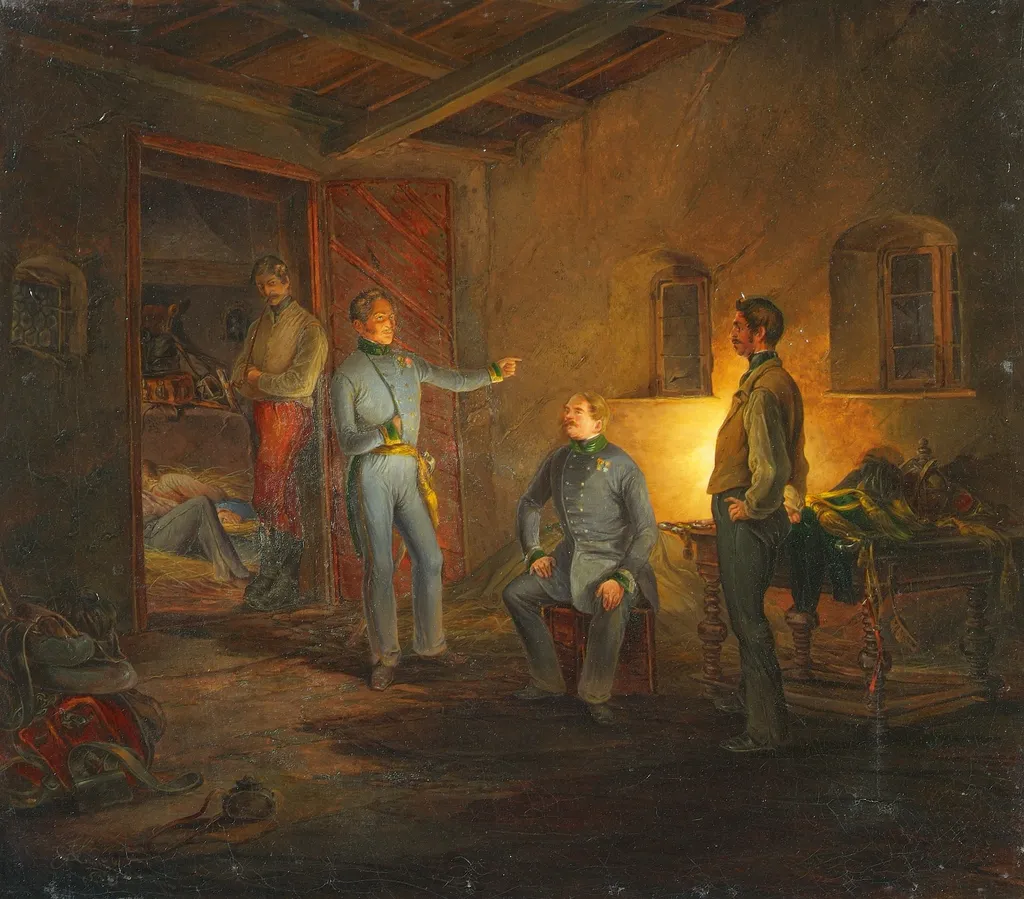
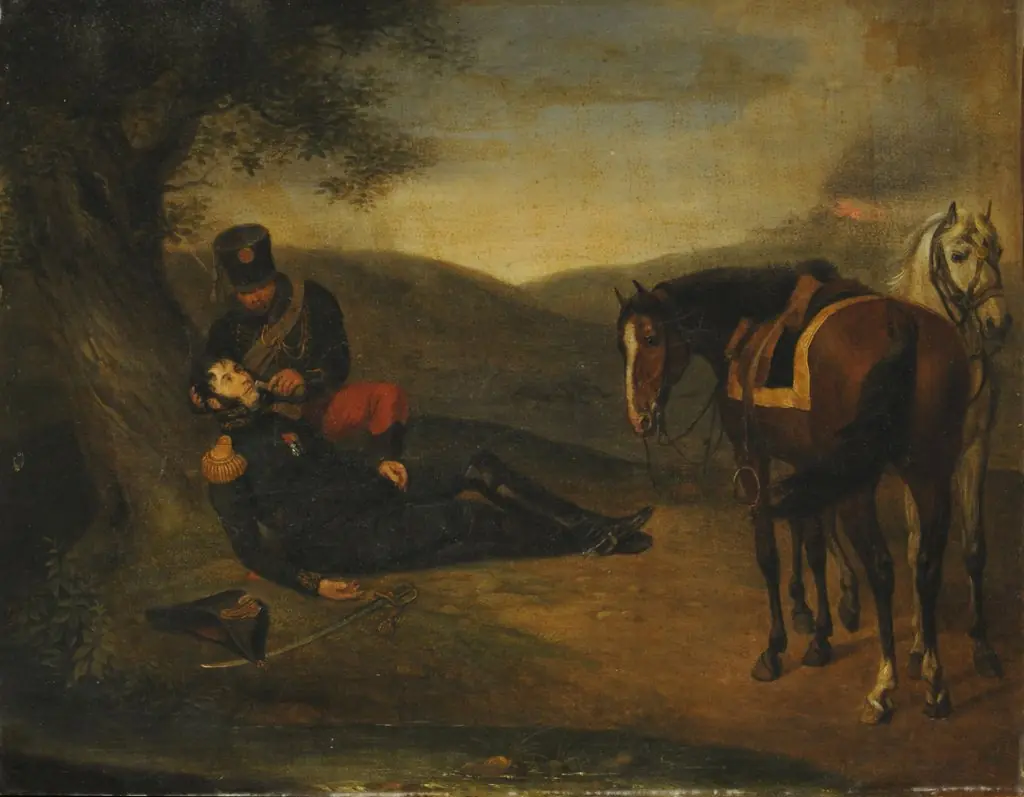
Kopals letzte Nacht mit Oberst Schlechta in einer italienischen Bauernhütte is an oil painting by the Biedermeier artist Franz Brudermann. It dates from 1850 and is held in the collection of the Kunsthistorisches Museum.
About this work
Overview
Painted around 1850 by Franz Brudermann, this oil work captures a quiet, intimate moment in a rural Italian dwelling. The scene is restrained in composition and tone, focusing on a group of men in a sparse interior. The painting resides in the collection of the Kunsthistorisches Museum in Vienna, where it is noted for its atmospheric lighting and subdued narrative.
Subject & Meaning
The central figure, dressed in a light military uniform, stands before a red door, gesturing toward something beyond the frame.
The central figure, dressed in a light military uniform, stands before a red door, gesturing toward something beyond the frame. His posture suggests urgency or warning, while the other men, dressed more plainly, observe in silence. The title references a specific historical encounter, implying a moment of tension or transition, though the exact nature of the event remains unspoken, leaving interpretation open.
Technique & Style
Brudermann employs chiaroscuro to model forms and define space, with light filtering weakly through a small window on the right. The shadows deepen the room’s intimacy, while careful rendering of fabric folds and texture grounds the figures in physical reality. The palette is muted, dominated by earth tones and dim grays, reinforcing the scene’s quiet gravity without theatricality.
History & Provenance
The painting entered the Kunsthistorisches Museum’s collection in the 19th century, likely acquired as part of broader efforts to document regional and military scenes. Its subject, tied to a specific encounter between a soldier and local figures, reflects 19th-century European interest in anecdotal historical moments, though documentation of its early ownership remains limited.
Context
Created during a period when Austrian artists increasingly turned to genre scenes set beyond imperial borders, this work aligns with a trend of depicting everyday life in southern Europe. The military figure’s presence hints at the Habsburg army’s reach into Italian territories, subtly framing the scene within broader political and cultural exchanges of the mid-1800s.
Legacy
Though not widely exhibited, the painting remains a quiet example of Brudermann’s skill in capturing psychological stillness. It contributes to the museum’s collection of 19th-century narrative paintings that prioritize mood over drama, offering insight into how artists of the time rendered private moments with restraint and observational precision.
Own this work as a print
Artist & collection

 L'Aumône
 Mon Caporal, je n'ai pu avons que ça
 Kavalerister i en stald
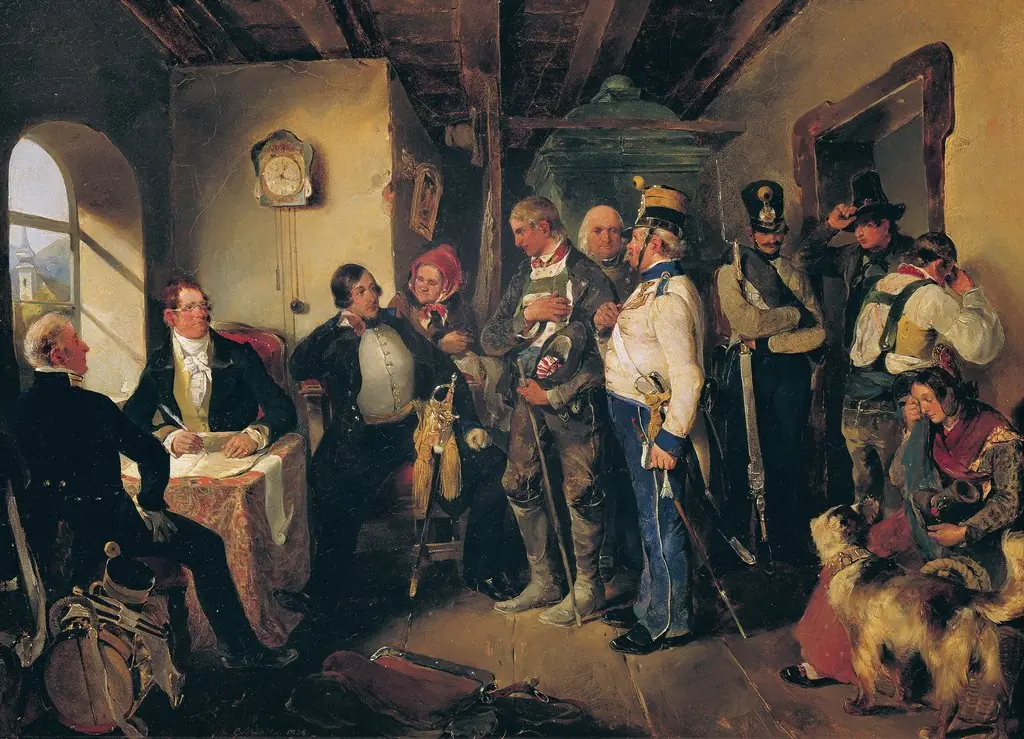 The Recruitment
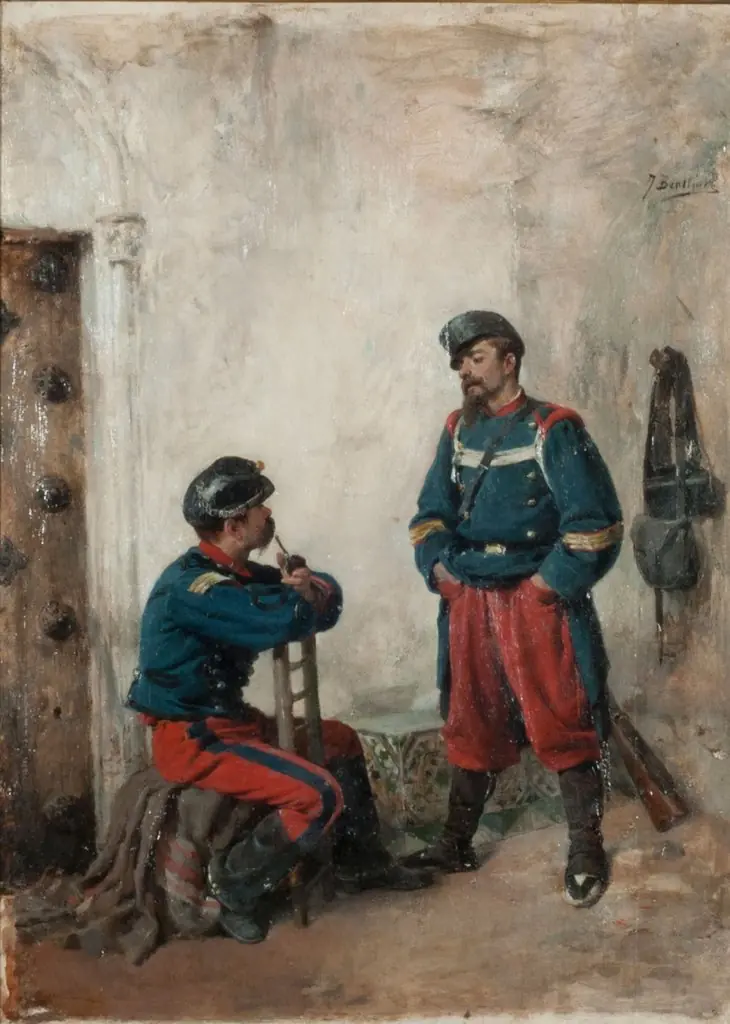 Two Soldiers
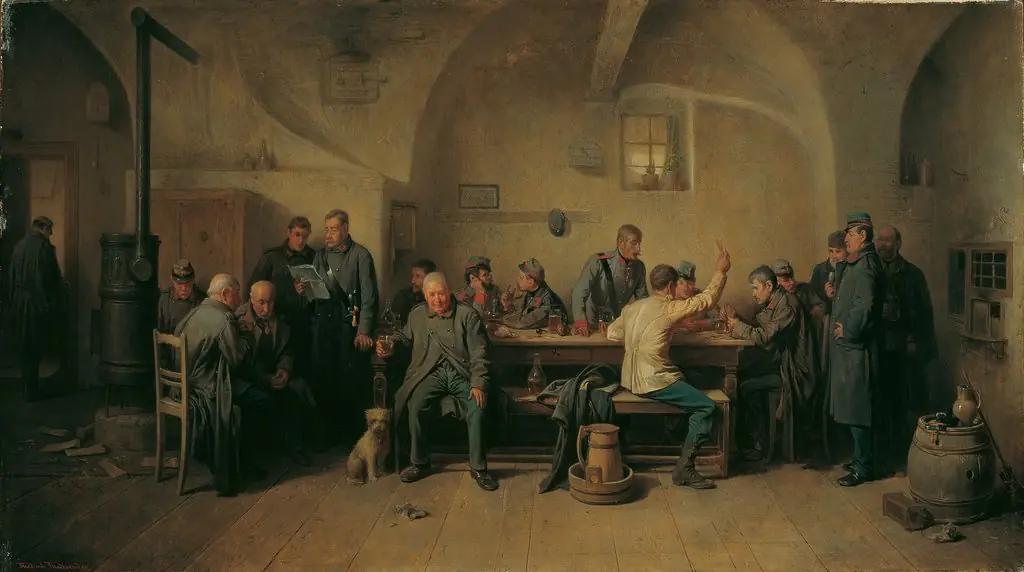 Soldaten in der Kantine
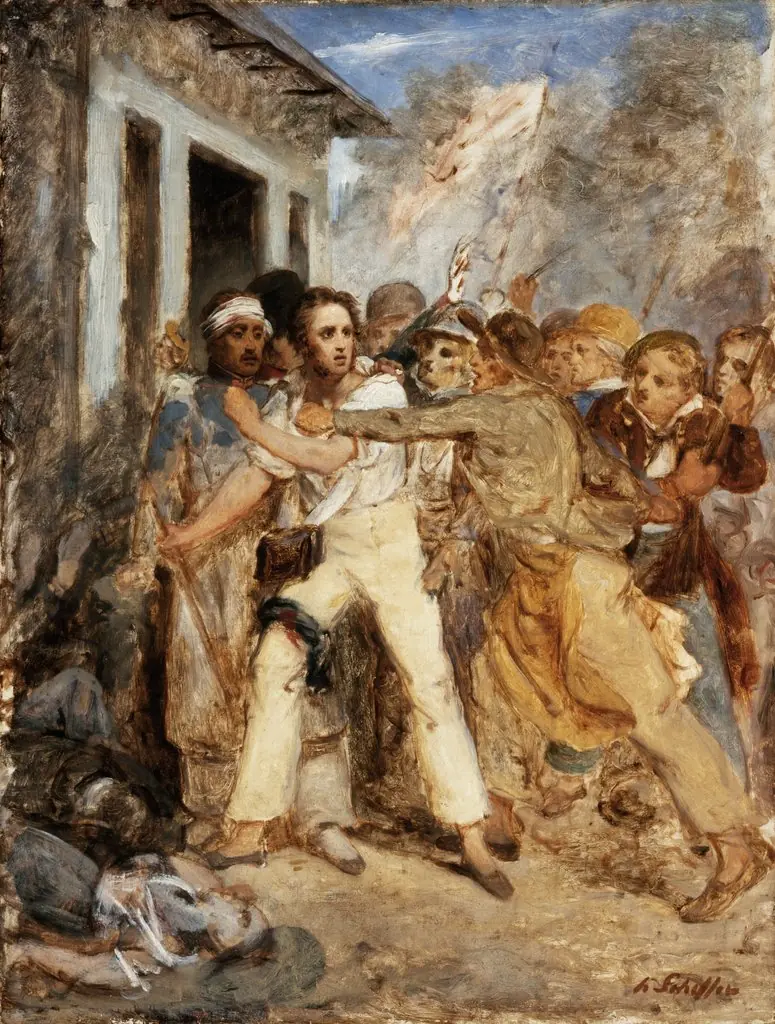 Study for a Battle Scene
 The Search for Michael Dwyer
 Death of a Russian General (Le Mort d'un general russe)
 El descanso en la marcha
 Konarski torturowany w celi więziennej
 General wounded