Artwork
Kavalerister i en stald
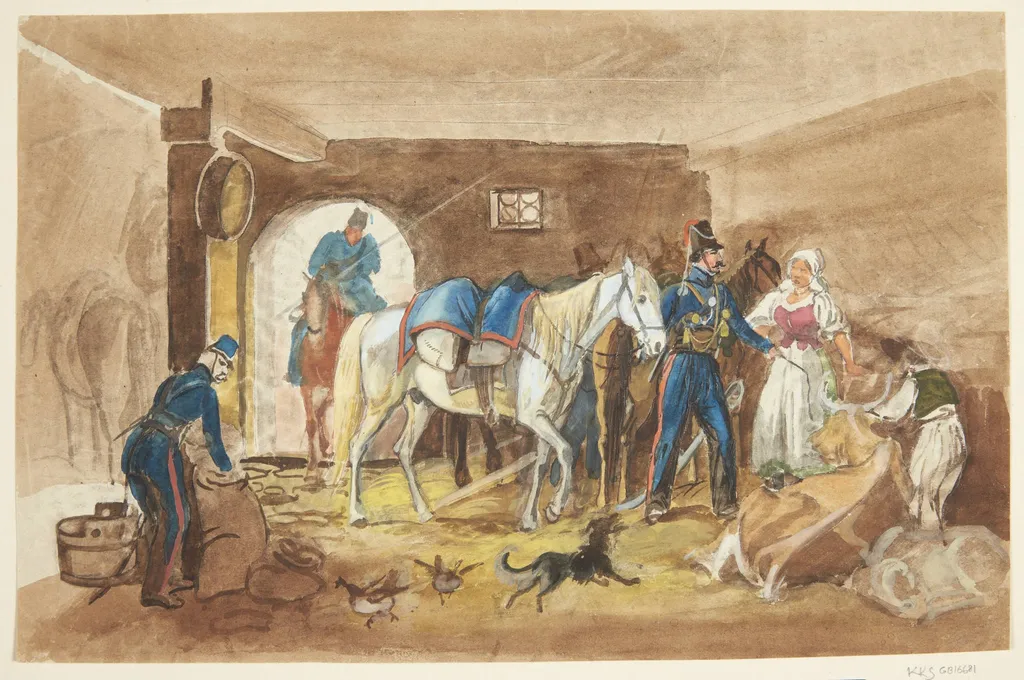
Kavalerister i en stald is an unspecified painting by Unknown. It dates from 1750 and is held in the collection of the Statens Museum for Kunst. Painted around 1750, this work depicts a moment of quiet activity within a military stable.
About this work
Overview
Painted around 1750, this work depicts a moment of quiet activity within a military stable. The scene captures a transient interaction among soldiers, a civilian woman, a child, and animals, rendered with a spontaneous brushwork that suggests immediacy. It is held in the collection of the Museum of Ethnography, where it is valued for its unidealized portrayal of daily life in the 18th century.
Subject & Meaning
The painting portrays a routine interlude in a military context: soldiers attend to horses, a woman observes, and a child plays nearby. The presence of uniformed figures and horse blankets implies a temporary halt during travel or campaign. The composition avoids grandeur, instead emphasizing ordinary human and animal coexistence, suggesting a quiet dignity in mundane moments.
Technique & Style
The artist employs loose, rapid brushstrokes that convey motion and atmosphere rather than精细 detail. Light from a hanging lantern casts soft shadows across the rough stone walls, creating subtle contrasts that define space without dramatic intensity. The palette is muted, dominated by earth tones and the blue of military uniforms, reinforcing the scene’s realism and restraint.
History & Provenance
The painting’s origin is tied to an 18th-century Scandinavian military context, though the artist’s identity remains undocumented. It entered the Museum of Ethnography’s collection in the late 19th or early 20th century, likely acquired as an ethnographic record of everyday life rather than as fine art. Its preservation reflects an interest in vernacular scenes of the period.
Context
During the mid-1700s, Scandinavian armies maintained extensive logistical networks, with stables serving as vital nodes in troop movement. This image aligns with a broader trend in Nordic art to document working-class and military life without romanticism. The inclusion of a civilian woman and child hints at the presence of camp followers, common in pre-modern armies.
Legacy
Though not widely exhibited, the painting contributes to scholarly understanding of 18th-century military logistics and social dynamics in Scandinavia. Its unpolished aesthetic anticipates later realist traditions, offering a quiet counterpoint to formal portraiture of the era. It remains a modest but valuable record of transient, unrecorded moments in history.
Artist & collection

 Domestic Scene
 Giacomo and Cardinal Marco, investing Andrea, Abbot of San Zeno, with his Benefice
 The Nymph of Fontainebleau
 Portrait of a Woman
 Madonna and Child with Saints in the Enclosed Garden
 Venus and Minerva
 Family Group of Four on Sofa
 Wall painting from Room H of the Villa of P. Fannius Synistor at Boscoreale
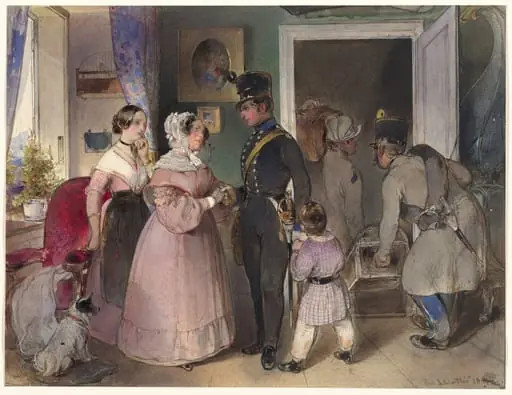 A Young Officer Saying Farewell to His Family
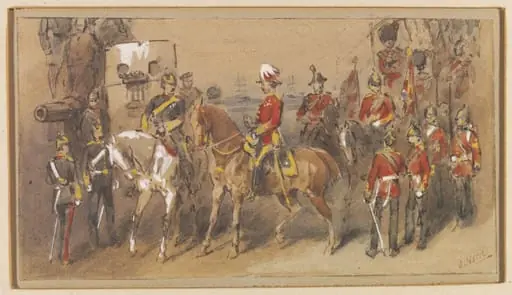 General Sir Garnet Wolseley at Alexandria
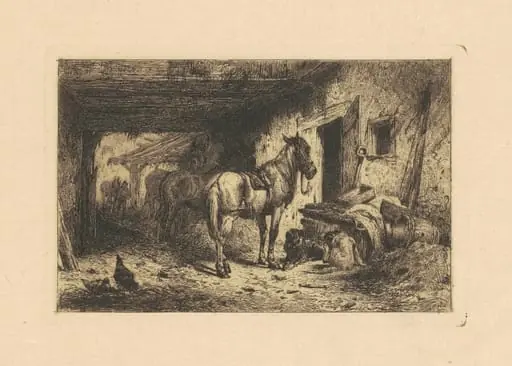 The Noonday Rest
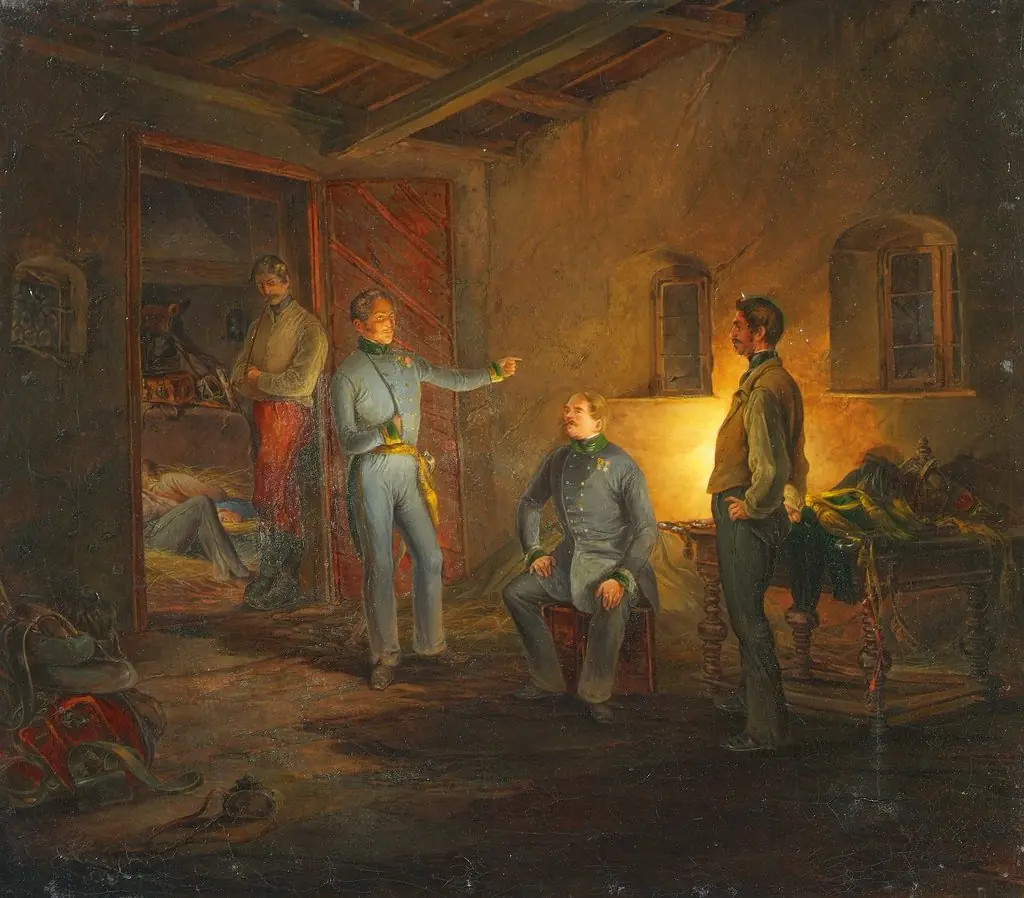 Kopals letzte Nacht mit Oberst Schlechta in einer italienischen Bauernhütte
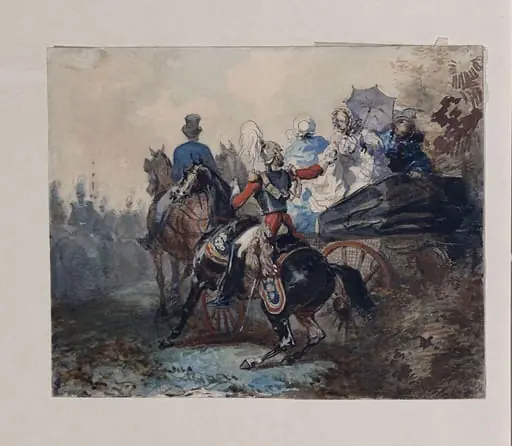 Life Guards at a Review in Windsor Park
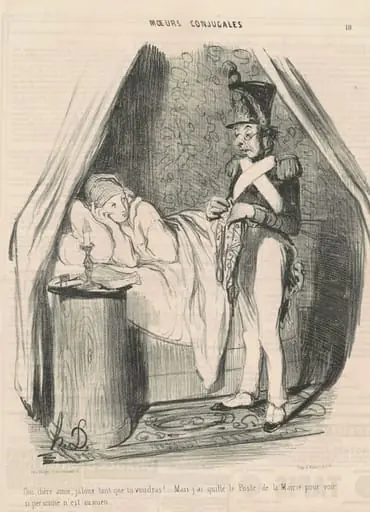 Oui, chère amie, jaloux tant que tu voudras!...
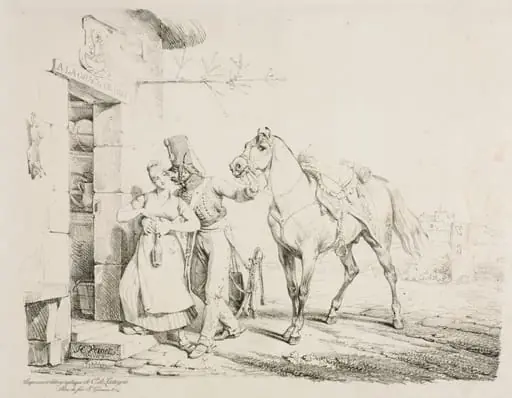 Hussar at the Door of a Cabaret, or Hussar Embracing a Servant
 The First of September, Morning
 Artilleryman Lighting a Mine
 Cavalry Charge